

 Примерить в интерьере
 Отправить
 Поделиться
 Подробнее
 Руководство

 Скачать
 Похожие объекты
 Рентгенография
 Слайд-шоу
 Статистика
Coffee Grinder
 Acrylic On Canvas
- WallArt
- Cubism
 1920
1920 81.0 x 60.0 cm
 Национальный центр современного искусства Королевы Софии
 Развернуть текст
Жикле / Арт-принты
Печать (жикле) или холст музейного качества с быстрыми сроками изготовления и широким выбором вариантов отделки. ( Заказать репродукцию ручной работы Перейти к цифровым изображениям)




P118B $10

P118H $10

P118W $10

P438Z $10

P508JH $12

P508YH $12

P805H $10

P805Z $10

P919BZ $10

P919G $10

P919XJ $10

P959ZH $10

P968JZ $12

W106C $8

W218G $10

W218JH $8

W218Y $10

W307PJ $10

W316G $10

W316PJ $8

W316Y $10

W398PJ $8

W4111J $10

W500HY $15

W500JH $15

W692G $12

W849H $8

W940BG $15

W953PJ $8




Выберите один из наших стандартных размеров, соответствующих оригинальным пропорциям произведения искусства.

Введите необходимую ширину и высоту, чтобы репродукция подошла к вашей раме или стене. При печати изображение можно только уменьшить, но нельзя увеличить больше оригинала, поэтому при выборе другого формата часть изображения может быть обрезана. Перед печатью мы отправим вам цифровой макет на утверждение. Изображение на этой странице не отображает реальную обрезку — ее можно увидеть только на макете.
Доставка по всему миру () за 2 недели вместо стандартных 4–5 недель. (22 Октябрь)

Бесплатная экспресс-доставка по всему миру

Высококачественный льняной холст

Полное страхование при транспортировке

Гарантия возврата таможенных пошлин

Гарантия точного цветового соответствия

100-дневный период возврата (только при обнаружении дефектов)

Гарантия возврата 100% средств

Скидка при заказе нескольких работ
 Вариант со стеклом доступен только для размеров менее 110 см

Coffee Grinder
Жикле / Арт-принты
Размер репродукции
-


Итоговая стоимость
$ 80
The Fragmented Dawn of Modernity
Juan Gris' "Coffee Grinder and Glass," painted in 1920, isn’t merely a still life; it’s a meticulously constructed microcosm of early 20th-century thought. Emerging from the fertile ground of Cubism, this work represents a pivotal moment in art history – a deliberate fracturing of perspective and form that simultaneously embraced abstraction and retained a surprising degree of recognizable subject matter. The painting captures a fleeting domestic scene: a coffee grinder, a glass, a bottle, a book, and a handbag—everyday objects rendered with an almost unsettling detachment. It’s a visual puzzle, inviting the viewer to reconstruct the scene not through traditional representation, but through intellectual engagement and intuitive understanding.
Cubist Deconstruction and Harmonious Reconstruction
Gris' approach during this period – often referred to as “Analytical Cubism” – moved beyond simply depicting objects from multiple viewpoints. Instead, he sought to dissect them into their fundamental geometric components, then reassemble these fragments within a flattened picture plane. The painting exemplifies this process brilliantly. The coffee grinder is not realistically rendered; it’s broken down into angular planes of color and line, suggesting its mechanical function without offering a literal depiction. Similarly, the glass appears fragmented, reflecting light in an almost crystalline manner, while the bottle and handbag are reduced to their essential shapes. Yet, despite this deconstruction, Gris masterfully orchestrates these disparate elements into a remarkably balanced composition. The use of black tones – a hallmark of his style during this time – anchors the painting, providing a grounding counterpoint to the vibrant hues and fractured forms.
A Parisian Palette: Color, Light, and Symbolism
The color palette is deliberately restrained yet intensely evocative. Gris employs a sophisticated interplay of browns, blues, greens, and yellows, creating a sense of depth and luminosity. The strategic use of black not only defines the forms but also adds a layer of melancholy and introspection – reflecting the artist’s own experiences during this period of personal upheaval. The inclusion of seemingly mundane objects—the coffee grinder, the glass, the handbag—holds symbolic weight. They represent the rhythms of daily life in Paris, a city that served as the epicenter of artistic innovation at the time. The presence of the book hints at intellectual pursuits and the pursuit of knowledge, while the bottle suggests indulgence and pleasure. The painting’s title, “Le moulin à café,” further reinforces this connection to Parisian culture.
The Legacy of a Visionary
Juan Gris' "Coffee Grinder and Glass" stands as a testament to his unique artistic vision. It embodies the spirit of Cubism – a radical departure from traditional representation that paved the way for future generations of artists. His ability to synthesize geometric abstraction with recognizable subject matter, coupled with his masterful use of color and composition, cemented his place as one of the most influential figures in 20th-century art. Reproductions of this work offer a captivating glimpse into a world where reality is fragmented, yet harmony can still be achieved through careful observation and artistic ingenuity. It’s a piece that continues to resonate with viewers today, prompting reflection on the nature of perception, representation, and the beauty found in the everyday.
Вопросы и ответы
Как я могу получить цифровой файл «Coffee Grinder», Хуан Грис?
Цифровой вариант работы «Coffee Grinder» можно приобрести как скачивание цифрового изображения в высоком разрешении, оформив заказ непосредственно на странице Цифровое изображение.
Как я могу приобрести принт «Coffee Grinder», Хуан Грис?
Чтобы заказать принт работы «Coffee Grinder», Хуан Грис, просто перейдите на страницу заказа Художественная печать: художественная печать на хлопковом холсте или архивной холст-бумаге.
Насколько насыщенны цвета в работе "Coffee Grinder"?
Цвета произведения «Coffee Grinder», Хуан Грис демонстрируют Subtle Color насыщенность при Balanced интенсивности.
Биография художника
A Spanish Visionary of Cubism: The Life and Art of Juan Gris
José Victoriano González-Pérez, a name that would become synonymous with artistic innovation, was born in Madrid on March 23, 1887. This young man, destined to be known as Juan Gris, embarked on a journey that would not only establish him as one of the most significant figures of early 20th-century art but also profoundly reshape our understanding of visual perception. Initially pursuing an engineering degree at the School of Arts and Sciences in Madrid, a logical mind began to develop alongside a burgeoning creative spirit. Even during his studies, glimpses of his artistic talent emerged – contributions to local periodicals hinted at a future dedicated to capturing the world through a unique lens. It was in 1905 that he adopted the pseudonym Juan Gris, a name imbued with a newfound sense of identity and purpose, marking a deliberate step towards embracing his artistic aspirations.Parisian Awakening and the Embrace of Cubism
The year 1906 proved to be a pivotal moment in Gris’s life – he relocated to Paris, a city then brimming with an unparalleled concentration of artistic energy. This move was not merely a geographical shift; it represented a complete immersion into a vibrant cultural landscape. He quickly established connections with luminaries such as Henri Matisse, Georges Braque, and Fernand Léger, forging friendships that would profoundly influence his artistic development. Initially, Gris engaged in the demanding world of satirical illustration for publications like *L'Assiette au Beurre*, honing his observational skills and developing a keen eye for detail – a skill he would later translate into his groundbreaking paintings. However, it was Pablo Picasso who exerted the most significant impact on his artistic trajectory. Around 1910, Gris began to dedicate himself wholeheartedly to painting, moving away from caricature and embracing the revolutionary language of Cubism. This wasn’t simply imitation; it was a deliberate quest to distill the essence of form and space, seeking a new visual order – a radical departure from traditional representation.The Geometry of Perception: Style and Key Works
Juan Gris's artistic output is characterized by an extraordinary clarity and intellectual rigor. He didn’t merely deconstruct objects; he meticulously reconstructed them, emphasizing geometric forms and employing a carefully considered palette. This approach led to what became known as his “crystal period,” exemplified in masterpieces such as *Still Life Before an Open Window* (1912) and *Place Ravignan* (1915). These works showcase a remarkable interplay of planes and angles, creating a sense of depth and solidity while simultaneously challenging conventional notions of perspective. The influence of Picasso is undeniable, yet Gris developed his own distinct style – one characterized by a precise geometric structure, a harmonious color scheme, and an innovative use of *papier collé* (collage). He incorporated real-world materials like newspaper clippings and textured papers into his compositions, blurring the boundaries between painting and sculpture. Notable examples include *Guitar in front of the sea* (1925), a testament to his simplified forms and adherence to cubist principles, and *Homage à Pablo Picasso* (1912), which signaled his growing recognition within the avant-garde art world.Synthetic Cubism and Lasting Influence
Following the initial explorations of Analytical Cubism, Gris transitioned to Synthetic Cubism around 1913, a period marked by a shift towards greater simplification and a vibrant use of color. He pioneered the extensive use of *papier collé*, incorporating fragments of everyday life – advertisements, fabrics, and even pieces of fruit – into his paintings. This technique added layers of complexity and tactile richness to his work, transforming his canvases into dynamic visual dialogues. Unlike Picasso and Braque, whose Cubist works were often monochromatic, Gris employed bold, harmonious color palettes, creating a distinctive aesthetic that resonated with the principles of Matisse’s art. His emphasis on geometric forms, combined with his innovative use of collage, established him as a pivotal figure in 20th-century art. His legacy extends beyond mere stylistic innovation; he brought a unique intellectual depth and structural clarity to the movement, profoundly influencing the Purist style championed by Amédée Ozenfant and Charles Edouard Jeanneret (Le Corbusier). Juan Gris’s work continues to inspire artists today, demonstrating the enduring power of Cubism and the visionary genius of a Spanish master who reshaped our understanding of perception and representation.Key Facts
- Full Name: José Victoriano González-Pérez
- Born: March 23, 1887, Madrid, Spain
- Died: May 11, 1927, Paris, France
- Artistic Movement: Cubism (Analytical and Synthetic)
- Influenced By: Pablo Picasso, Henri Matisse
- Notable Works: *Still Life Before an Open Window*, *Place Ravignan*, *Guitar in front of the sea*, *Homage à Pablo Picasso*

Хуан Грис
1887 - 1927 , Испания
Краткая справка
- Artistic Movement Or Style: Кубизм, Синтетический кубизм
- Artists Or Movements Influenced By This Artist:
- Пуризм
- Озенфан
- Artists Who Influenced This Artist:
- Пикассо
- Матисс
- Брак
- Date Of Birth: 23 марта 1887
- Date Of Death: 11 мая 1927
- Full Name: José Victoriano González-Pérez
- Nationality: Испанский
- Notable Artworks:
- «Гитара перед морем»
- «Художественный коллаж»
- «Дом с сине-зелеными окнами»
- Place Of Birth: Мадрид, Испания
Похожие статьи

Deconstructing Reality: Cubism's Evolution, Impact & Enduring Legacy
Explore the revolutionary world of Cubism with expert insights from OriginalUniqueArt. Discover Picasso & Braque's groundbreaking techniques, its philosophical roots, and lasting impact on modern art. Expert appraisal & custom reproductions available.
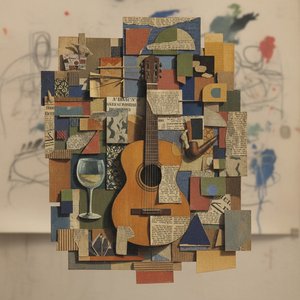
Deconstructing Reality: A Comprehensive Exploration of Synthetic Cubism's Evolution & Impact
Explore the revolutionary world of Synthetic Cubism! Discover its origins, key artists like Picasso & Braque, techniques, and lasting impact on modern art. A comprehensive guide for enthusiasts.
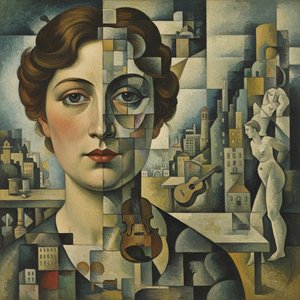
Deconstructing Reality: Cubism's Revolutionary Impact on 20th-Century Art
Explore the revolutionary world of Cubism with OriginalUniqueArt. Discover Picasso & Braque's groundbreaking techniques, its philosophical roots, and lasting impact on modern art. Expert insights for collectors.
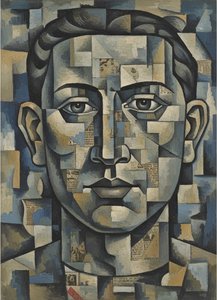
Deconstructing Identity: A Comprehensive Exploration of Cubist Portraiture
Explore the revolutionary world of Cubist portraiture with our comprehensive guide. Discover Picasso, Braque, Gris & the movement's impact on modern art. Expert analysis for collectors and enthusiasts.
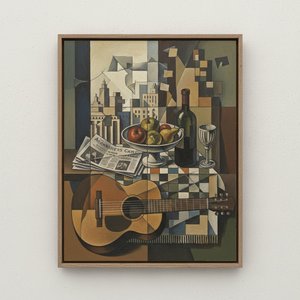
Juan Gris: Cubist Deconstruction & Synthesis – A Comprehensive Exploration
Explore the revolutionary art of Juan Gris – a master of Cubism. Discover his unique approach to deconstruction, vibrant Synthetic Cubist works, and lasting influence on modern art. Expert analysis for collectors.


