

 Предпросмотр
 Поделиться
 Поделиться
 Детали произведения

 Скачать
 Похожие работы
 Рентгенография
 Слайд-шоу
Homing Pigeon
 1856
1856 136.0 x 108.0 cm
 Читать далее
Приобретите цифровое изображение высокого разрешения в улучшенном качестве, которое значительно превосходит онлайн-превью.
Каждый файл тщательно подготавливается нашими специалистами с использованием передовых инструментов и экспертной ручной ретуши. Мы гарантируем исключительную четкость, точную цветопередачу и детальную проработку каждого изображения.
Финальный файл доставляется по электронной почте в течение 72 часов и оптимизирован для немедленного использования в профессиональной среде, при верстке и печати. Это тот же уровень качества, которому доверяют ведущие дизайнерские студии, издательства и галереи.
Цифровое изображение
Скачайте файл высокого разрешения для личного использования, печати и творческих проектов. ( Купить принт Купить картину ручной работы)
Включено в каждый заказ цифровых изображений
Гарантия экспертной цифровой доставки
Выбирая OriginalUniqueArt.com, вы получаете не просто изображение — вы приобретаете профессионально обработанное цифровое произведение искусства, созданное с безупречной точностью и под защитой гарантии качества. Вот всё, что автоматически входит в ваш заказ:

Мгновенная доставка по e-mail
Ваш цифровой файл в высоком разрешении будет отправлен вам по электронной почте в течение 72 часов после оформления заказа — и сразу станет доступен для использования.

Цифровой файл с ИИ-улучшением
Ваше произведение искусства проходит профессиональную оптимизацию с использованием передовых инструментов ИИ и ручной обработки, что гарантирует максимальную детализацию, четкость и точность цветопередачи.

Бессрочная бесплатная повторная доставка
Случайно удалили или потеряли файл? Не беспокойтесь — мы отправим его вам повторно в любое время и совершенно бесплатно.

Без импортных пошлин — навсегда
Наслаждайтесь вашим произведением искусства мгновенно без таможенных пошлин, сборов или затрат на доставку — цифровые загрузки всегда не облагаются налогом.

Гарантия точности цветопередачи
Мы гарантируем, что ваше цифровое изображение максимально точно передает оригинальные цвета благодаря использованию профессиональных инструментов и систем управления цветом.

Гарантия удовлетворения в течение 60 дней
Если вы останетесь не удовлетворены покупкой цифрового изображения, мы внесем в него правки или вернем 100% стоимости в течение 60 дней — без лишних вопросов.

100% Гарантия возврата средств
Не удовлетворены покупкой? Мы гарантируем полный возврат средств в течение 60 дней после получения вашего цифрового файла — без лишних вопросов.

Скидки на оптовые заказы
Купите 3 изображения, сэкономьте 10% — Купите 5, сэкономьте 15% — Купите 10+, сэкономьте 20%. Отличное решение для творческих проектов, галерей и агентств.
Биография художника
A Life Painted in Light: The World of József Borsos
József Borsos, a name perhaps less familiar than some of his contemporaries, nevertheless occupies a significant niche within the tapestry of 19th-century Hungarian art. Born in 1821, Borsos was a man caught between worlds – a skilled portraitist steeped in the traditions of Biedermeier aesthetics who found himself increasingly challenged by the burgeoning power of photography. His life story is one of artistic promise, societal success, financial hardship, and ultimately, adaptation in the face of change. He wasn’t merely a painter; he was a chronicler of his time, capturing the essence of distinguished Hungarians and offering glimpses into the everyday lives of the middle class with a delicate realism that resonated deeply with his patrons.Vienna's Embrace and Early Success
Borsos received his formal artistic training in Vienna, a city then brimming with cultural energy and serving as a vital crossroads for European artistic movements. It was here that he honed his skills, developing a style characterized by meticulous detail, harmonious compositions, and a subtle yet powerful use of color. His early work quickly garnered attention, particularly his portraits of prominent figures within Hungarian society. These were not simply likenesses; they were statements of status, carefully constructed images designed to convey the sitter’s importance and refinement. Alongside these commissions, Borsos also found success with his “genre” paintings – scenes depicting everyday life, imbued with a quiet dignity and emotional warmth. Works like Portrait of Kristóf Hegedűs (1844), Wine, Woman, Love (1847) and Girls after the Ball (1850) exemplify this period, showcasing his ability to capture both individual character and a broader sense of social atmosphere. The popularity of these paintings stemmed from their accessibility; they offered viewers a relatable window into a world they aspired to or recognized as their own.The Allure of Biedermeier and Artistic Style
Borsos is most often categorized as an artist of the Biedermeier period, and rightly so. This artistic movement, flourishing in the post-Napoleonic era, emphasized domesticity, sentimentality, and a focus on middle-class life. However, Borsos’s work transcends simple categorization. While he embraced the typically Biedermeier palette – realistic, strong yet delicate colors – his compositions possessed a sophistication that elevated him above many of his peers. He wasn't simply replicating scenes; he was interpreting them through a lens of refined observation and technical skill. His paintings are characterized by a sense of harmonic balance, achieved through careful attention to light, shadow, and the arrangement of figures within the frame. There’s a quiet intimacy in his work, a feeling that the viewer is privy to a private moment, carefully preserved on canvas. He excelled at portraying textures – the sheen of silk, the warmth of wood, the delicate flush of skin – bringing a tangible quality to his depictions.From Pest's Patronage to Photographic Pursuits
In 1861, Borsos made the move from Vienna to Pest (now part of Budapest). This relocation was precipitated by financial setbacks following losses in the stock exchange, a harsh reminder that artistic success did not always equate to economic security. The art market in Pest was thriving, but it was also becoming increasingly competitive. More significantly, photography was rapidly gaining popularity, posing a direct threat to the traditional portrait painting business. Unable to compete with the speed and affordability of photographic reproduction, Borsos astutely adapted to the changing times by opening his own photographic studio. This transition speaks volumes about his pragmatism and willingness to embrace new technologies. While he continued to paint, photography became his primary source of income. He ultimately died as the owner of a restaurant named “Szép Juhászné”, a poignant end for an artist who had once captured the portraits of Hungary’s elite.A Lasting Legacy: Works and Historical Significance
Despite the challenges he faced, József Borsos left behind a substantial body of work that continues to offer valuable insights into 19th-century Hungarian society and artistic sensibilities. His paintings – including Alms, Sunset, The Letter, Grapes or a Kiss, National Guard, Bathing Women, portraits of Zitterbach the architect, and Ferenc Pulszky – are scattered across museums and private collections. While perhaps not as widely celebrated as some of his contemporaries, Borsos’s work is increasingly recognized for its technical skill, emotional depth, and historical significance. He stands as a testament to the adaptability of artists in the face of technological change, and his paintings remain captivating glimpses into a bygone era – a world painted with light, realism, and a quiet dignity that continues to resonate with viewers today. His connection to Villa Róma and the Rippl-Rónai Museum further solidifies his place within Hungary’s rich artistic heritage.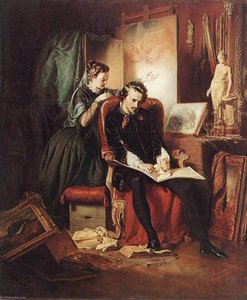
józsef borsos
1821 - 1883
Основные сведения
- Artistic Movement Or Style: Biedermeier
- Artists Or Movements Influenced By This Artist: ['Romanticism']
- Artists Who Influenced This Artist: ['Gustav Klimt']
- Date Of Death: 1883
- Full Name: József Borsos
- Nationality: Hungarian
- Notable Artworks:
- Girls after the Ball
- Alms
- Sunset
- The Letter
- Grape or Kiss
- National Guard
- Bathing Women
- The Portrait of Zichy
- Pigeon Post
- Place Of Birth: Vienna, Austria

