

 Примерить в интерьере
 Отправить
 Поделиться
 Подробнее
 Руководство

 Скачать
 Похожие объекты
 Рентгенография
 Слайд-шоу
 Статистика
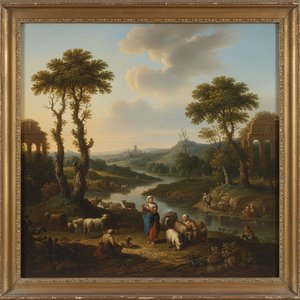
Italian Landscape
 Oil On Canvas
- WallArt
- Italianate Landscape
 31.0 x 40.0 cm
 Фитцвильямский колледж
 Развернуть текст
Жикле / Арт-принты
Печать (жикле) или холст музейного качества с быстрыми сроками изготовления и широким выбором вариантов отделки. ( Заказать репродукцию ручной работы Перейти к цифровым изображениям)




P118B $10

P118H $10

P118W $10

P438Z $10

P508JH $12

P508YH $12

P805H $10

P805Z $10

P919BZ $10

P919G $10

P919XJ $10

P959ZH $10

P968JZ $12

W106C $8

W218G $10

W218JH $8

W218Y $10

W307PJ $10

W316G $10

W316PJ $8

W316Y $10

W398PJ $8

W4111J $10

W500HY $15

W500JH $15

W692G $12

W849H $8

W940BG $15

W953PJ $8




Выберите один из наших стандартных размеров, соответствующих оригинальным пропорциям произведения искусства.

Введите необходимую ширину и высоту, чтобы репродукция подошла к вашей раме или стене. При печати изображение можно только уменьшить, но нельзя увеличить больше оригинала, поэтому при выборе другого формата часть изображения может быть обрезана. Перед печатью мы отправим вам цифровой макет на утверждение. Изображение на этой странице не отображает реальную обрезку — ее можно увидеть только на макете.
Доставка по всему миру () за 2 недели вместо стандартных 4–5 недель. (26 Октябрь)

Бесплатная экспресс-доставка по всему миру

Высококачественный льняной холст

Полное страхование при транспортировке

Гарантия возврата таможенных пошлин

Гарантия точного цветового соответствия

100-дневный период возврата (только при обнаружении дефектов)

Гарантия возврата 100% средств

Скидка при заказе нескольких работ
 Вариант со стеклом доступен только для размеров менее 110 см

Italian Landscape
Жикле / Арт-принты
Размер репродукции
-


Итоговая стоимость
$ 80
A Glimpse of Italian Pastoral: Jan Asselijn’s “Italian Landscape”
Jan Asselijn's "Italian Landscape," painted circa 1625-1652, isn’t merely a depiction of a picturesque vista; it’s an invitation to step into a carefully constructed world of serene beauty and subtle drama. This oil on canvas transports the viewer to a hypothetical Italian landscape – a deliberate choice by Asselijn that speaks volumes about the evolving artistic sensibilities of the Dutch Golden Age. The painting, now housed in collections like Bonhams, exemplifies the influence of both the Venetian masters and the burgeoning tradition of “pure” landscape painting emerging from Italy itself.
Asselijn’s style is distinctly characterized by a meticulous attention to detail and a masterful command of atmospheric perspective. He leans heavily into the techniques pioneered by Bamboccio – a contemporary painter known for his evocative, almost dreamlike landscapes – creating an image that feels both familiar and subtly unsettling. The composition unfolds with deliberate grace: a modest, classically-inspired building anchors the left foreground, its geometric solidity providing a grounding element against the undulating hills and hazy distance. The artist skillfully employs a muted palette of browns, ochres, and blues, avoiding bright colors to emphasize the painting’s contemplative mood. This restrained approach allows the subtle shifts in tone – from the dark shadows cast by distant trees to the luminous highlights reflecting off water – to create a remarkably convincing sense of depth and atmosphere.
The Influence of Venetian Masters and Italianate Tradition
Asselijn's work is deeply rooted in the artistic currents flowing through Italy at the time. He was profoundly influenced by the Venetian landscape painters, particularly those who favored a looser, more atmospheric style than their predecessors. However, unlike many of his contemporaries who simply copied Italian scenes directly, Asselijn imbued them with a distinctly Dutch sensibility – a focus on light, texture, and a carefully considered composition. This blending of influences is evident in the painting’s balanced structure, its subtle use of color, and its overall sense of quiet contemplation.
Furthermore, “Italian Landscape” reflects the broader trend toward what became known as "Italianate landscape" within Dutch art circles. This style sought to emulate the idealized landscapes depicted by artists like Claude Lorrain, who had established a dominant visual language for representing Italian scenery in Northern Europe. Asselijn’s painting isn't a literal transcription of an Italian vista; rather, it’s a carefully constructed fantasy – a “imaginary Italian Landscape” as described in some historical sources – designed to evoke the spirit and beauty of Italy while adhering to Dutch artistic conventions.
Symbolism and Emotional Resonance
Beyond its technical merits, "Italian Landscape" is rich in symbolic meaning. The solitary building, often interpreted as a villa or farmhouse, suggests themes of rural life, tranquility, and perhaps even isolation. The distant mountains, shrouded in mist, evoke a sense of mystery and the sublime – a recognition of nature’s power and grandeur. The figures scattered across the foreground, riding horses and walking along the riverbank, add a touch of human presence to the scene, reminding us of our connection to the natural world.
The painting's overall effect is one of profound serenity and contemplative beauty. It invites the viewer to slow down, to appreciate the subtle details of the landscape, and to lose themselves in its timeless atmosphere. It’s a testament to Asselijn’s skill as an artist – his ability to capture not just the appearance of a scene but also its emotional essence.
A Reproduction for Today's Spaces
Reproductions of “Italian Landscape” offer a beautiful addition to any interior space. The painting’s calming colors and evocative imagery create a sense of tranquility and sophistication, making it ideal for living rooms, bedrooms, or studies. The detailed depiction of the landscape invites contemplation and provides a visual connection to the natural world – a welcome respite from the stresses of modern life. Consider framing this piece in a classic wooden frame to further enhance its timeless appeal.
Вопросы и ответы
Какую палитру и какое настроение сочетает в себе «Italian Landscape»?
Палитра Dark в работе «Italian Landscape», Ян Асселийн гармонирует с её Melancholic эмоциональным настроем. Цвет — это один из способов, с помощью которых произведение передает чувства.
Какие сюжет и атмосферу сочетает в себе «Italian Landscape», Ян Асселийн?
На полотне «Italian Landscape» запечатлены landscape, figures, ruin, italy, asselijn, pastoral, tranquility, scenic, а передаваемая им атмосфера — Calm.
Является ли произведение «Italian Landscape», Ян Асселийн светлым или темным?
В целом, для произведения «Italian Landscape» зафиксирован уровень shadow. Воспринимаемая яркость описывает, насколько светлым или темным кажется работа.
Биография художника
A Life Forged in Landscape: The World of Jan Asselijn
Jan Asselin, born around 1610 in Dieppe, France, embarked on an artistic journey marked by profound shifts in religious belief and a fervent embrace of burgeoning landscape painting techniques. His family, Huguenots fleeing persecution, relocated to Amsterdam in 1621—a vibrant epicenter of commerce and artistic innovation during the Dutch Golden Age—a move that irrevocably shaped his formative years. This relocation immediately immersed young Jean into an environment where capturing the grandeur and subtlety of nature was rapidly transforming from traditional depictions toward scenes brimming with atmospheric depth and emotional resonance. Initially apprenticed to Jan Martszen the Younger, Asselijn honed his skills in battle paintings before discovering his true passion: meticulously portraying the splendor and drama of both natural vistas and animal life—a pursuit that would define his artistic trajectory.The Italianate Embrace & The Bentvueghels
Like many ambitious Northern European painters of his era, Asselijn recognized the importance of refinement through exposure to Italy. Likely arriving sometime after 1635, he wholeheartedly adopted *Italianate* style—a genre distinguished by sun-drenched landscapes bathed in golden light, classical ruins standing proudly against azure skies, and pastoral scenes imbued with a palpable sense of romanticism. He joined the ranks of the *Bentvueghels*, a peculiar society comprised of Dutch and Flemish artists residing in Rome. These “Birds of a Feather” defied convention—embracing audacious nicknames, prioritizing direct observation of life over studio work, and upholding an uncompromising commitment to artistic authenticity. Within this spirited community, Asselijn earned the moniker "Krabbetje"—meaning "little crab"—due to a congenital deformity affecting his hand—yet he flourished creatively nonetheless. He absorbed the stylistic innovations championed by Pieter van Laer (Bamboccio), whose depictions of Roman peasant life and landscapes powerfully resonated with Asselijn’s own evolving artistic vision. This period constituted an indispensable catalyst in shaping his ability to convey atmosphere, light, and narrative within his canvases—a hallmark that would characterize his oeuvre for decades to come.Mastering Light & Symbolism: Key Works
Returning to Amsterdam after considerable travel experience, Asselijn brought with him a refined technique and a distinctive artistic voice. His paintings are characterized by exceptional clarity of execution and masterful manipulation of light—qualities that swiftly garnered admiration from his peers and cemented his reputation as one of the era’s foremost landscape artists. While he produced historical and battle scenes alongside his landscapes, it was his depictions of rural life and animal studies that truly distinguished him from contemporaries. The Threatened Swan, completed around 1640, stands as Asselijn's magnum opus—a monumental achievement that transcends mere visual representation. More than simply capturing the beauty of waterfowl in flight, this painting became a potent emblem of Dutch national resilience against external pressures during a turbulent period marked by military conflict and political instability. The swan’s defiant posture—facing down an encroaching predator with unwavering determination—served as an allegorical invocation of Johan de Witt—a prominent Dutch statesman—and encapsulated the anxieties prevalent throughout the nation at that time. Furthermore, intriguing additions to the canvas—inscription “Holland” on one of the eggs and “Enemy of the state” positioned beside a menacing dog—underscored the painting’s profound political significance and cemented its place as an enduring symbol of Dutch patriotism. Other notable masterpieces include Cavalry Charge at Sunset—a testament to his formative training in battle art—and evocative portrayals of rural life, such as Drovers with Cattle Under An Arch of The Colosseum—which seamlessly blend Italianate landscape aesthetics with meticulous animal studies—demonstrating Asselijn’s unparalleled capacity for capturing both visual splendor and nuanced narrative. Finally, The Breach of Saint Anthony's Dike Near Amsterdam exemplifies his ability to depict a pivotal moment in Dutch history—the calamitous failure of the dike defenses during a devastating flood—reflecting the constant vulnerability faced by the Dutch people and highlighting the ingenuity required for safeguarding their land.Influence & Legacy: A Lasting Impression
Jan Asselijn’s influence extended far beyond his own prolific artistic output. He was revered by fellow artists, notably Rembrandt van Rijn—who even created etchings depicting Asselijn at work—a gesture that subtly acknowledged the artist's physical disability and conveyed respect for his dedication to craft. Moreover, he served as a mentor to Frederik de Moucheron—another accomplished Dutch landscape painter who championed the Italianate style and disseminated its principles throughout Europe. Asselijn’s innovative approach to light and atmosphere profoundly impacted subsequent generations of painters—inspiring them to prioritize naturalism and imbue their canvases with emotional depth—leaving an indelible mark on the trajectory of European art history. His enduring legacy is secured through the preservation of his artworks in prestigious institutions such as the Rijksmuseum in Amsterdam, ensuring that his vision continues to captivate audiences worldwide.
Ян Асселийн
1610 - 1652 , Франция
Краткая справка
- Artistic Movement Or Style: Итальянский стиль пейзажа
- Artists Or Movements Influenced By This Artist: ['Фредерик де Мухорон']
- Artists Who Influenced This Artist:
- Эсайас ван де Вельде
- Бамбокко
- Рембрандт
- Date Of Birth: 1610 г.
- Date Of Death: 1652 г.
- Full Name: Jan Asselin
- Nationality: Нидерланды
- Notable Artworks:
- Опасная лебедь
- В Италии
- Place Of Birth: Дипье, Франция
Похожие статьи

Mastering Light & Land: An Art Historian's Guide to the Dutch Golden Age Landscape
Explore the breathtaking mastery of Dutch Golden Age landscapes. From Italianate light to atmospheric realism, discover the techniques of 17th-century masters and learn how to bring these timeless, museum-quality masterpieces into your home through expert oil reproductions.

Золотой век Голландии: 10 шедевров, изменивших искусство | OriginalUniqueArt.com
Погрузитесь в эпоху Золотого века Нидерландов! 10 шедевров Рембрандта, Вермеера и других мастеров. Узнайте истории создания культовых картин и вдохновитесь для интерьера. Репродукции музейного качества на OriginalUniqueArt.com.

Golden Light & Dutch Skies: The Timeless Magic of Dutch Golden Age Landscapes
Discover the breathtaking beauty of Dutch Golden Age landscapes. Explore the mastery of light, chiaroscuro, and 17th-century realism through an expert art history lens, celebrating the enduring legacy of the Dutch Masters for discerning collectors and art lovers.

Golden Light & Dutch Skies: Bringing the Magic of Dutch Golden Age Landscapes into Your Home
Transform your home with the breathtaking light of Dutch Golden Age landscapes. Discover how hand-painted oil reproductions of masterworks like Ruisdael and Vermeer bring timeless elegance, atmosphere, and soulful texture to modern interiors. Elevate your space with museum-quality art.
Nicolaes Berchem: Dutch Golden Age Pastoralism & the Evolution of Landscape Painting
Explore the captivating world of Nicolaes Berchem, a leading Dutch Golden Age painter. Discover his idyllic landscapes, masterful technique & lasting influence on art history. Learn more at OriginalUniqueArt.
