Меню

() ·

A painting made for you, by hand

Self-portrait

Масляная репродукция ручной работы

Картина маслом на холсте в выбранном вами размере и раме, написанная на заказ нашими художниками. ( Переключиться на печать Перейти к цифровым изображениям)

Описание предмета

Биография художника

Джеймс Уиттлер (1834-1903) – английский художник, пионер эстетизма и тонализма. Известен картиной «Мать Уиттлера», ноктюрнами и стремлением к красоте ради красоты. Откройте мир его уникального искусства!

from ·

Chapter 1

How large should it be?

Slide to change the size; the picture on the left shows the frame at its real width. The proportions of the original are kept.

Стандартный размер
индивидуальный заказ
CM
INCH

Выберите один из наших стандартных размеров, соответствующих оригинальным пропорциям произведения искусства.

ширина
высота

Введите необходимую ширину и высоту, чтобы репродукция подошла к вашей раме или стене. Поскольку работа выполняется вручную, при изменении пропорций художник может немного увеличить область вокруг картины или, наоборот, обрезать края — выбор за вами. Перед началом работы мы пришлем вам цифровой макет на утверждение. Изображение на этой странице не является точным результатом — увидеть реальный вид можно только на макете.

Chapter 2

How should it arrive?

Choose the edges of the stretched canvas

Choose your frame

Corner sample of the WhiteWrap canvas edge finish, stretched on массив дерева bars
White $1
Corner sample of the BlurSideWrap canvas edge finish, stretched on массив дерева bars
Blurside $1
Corner sample of the ExtendedWrap canvas edge finish, stretched on массив дерева bars
Extended $1
Corner sample of the P118B picture frame: формованный полистирол, 5 cm wide and 3 cm thick
P118B $10
Corner sample of the P118H picture frame: формованный полистирол, 5 cm wide and 3 cm thick
P118H $10
Corner sample of the P118W picture frame: формованный полистирол, 5 cm wide and 3 cm thick
P118W $10
Corner sample of the P438Z picture frame: формованный полистирол, 5.5 cm wide and 3.5 cm thick
P438Z $10
Corner sample of the P508JH picture frame: формованный полистирол, 7 cm wide and 3.5 cm thick
P508JH $12
Corner sample of the P508YH picture frame: формованный полистирол, 7 cm wide and 3.5 cm thick
P508YH $12
Corner sample of the P805H picture frame: формованный полистирол, 5 cm wide and 3.5 cm thick
P805H $10
Corner sample of the P805Z picture frame: формованный полистирол, 5 cm wide and 3.5 cm thick
P805Z $10
Corner sample of the P919BZ picture frame: формованный полистирол, 7 cm wide and 3.5 cm thick
P919BZ $10
Corner sample of the P919G picture frame: формованный полистирол, 7 cm wide and 3.5 cm thick
P919G $10
Corner sample of the P919XJ picture frame: формованный полистирол, 7 cm wide and 3.5 cm thick
P919XJ $10
Corner sample of the P959ZH picture frame: формованный полистирол, 5 cm wide and 3 cm thick
P959ZH $10
Corner sample of the P968JZ picture frame: формованный полистирол, 6 cm wide and 4 cm thick
P968JZ $12
Corner sample of the W106C picture frame: массив дерева, 5 cm wide and 3 cm thick
W106C $8
Corner sample of the W218G picture frame: массив дерева, 5 cm wide and 3 cm thick
W218G $10
Corner sample of the W218JH picture frame: массив дерева, 5 cm wide and 3 cm thick
W218JH $8
Corner sample of the W218Y picture frame: массив дерева, 5 cm wide and 3 cm thick
W218Y $10
Corner sample of the W307PJ picture frame: массив дерева, 6 cm wide and 3 cm thick
W307PJ $10
Corner sample of the W316G picture frame: массив дерева, 6 cm wide and 3 cm thick
W316G $10
Corner sample of the W316PJ picture frame: массив дерева, 6 cm wide and 3 cm thick
W316PJ $8
Corner sample of the W316Y picture frame: массив дерева, 6 cm wide and 3 cm thick
W316Y $10
Corner sample of the W398PJ picture frame: массив дерева, 5 cm wide and 3 cm thick
W398PJ $8
Corner sample of the W4111J picture frame: массив дерева, 6.5 cm wide and 3.5 cm thick
W4111J $10
Corner sample of the W500HY picture frame: массив дерева, 7 cm wide and 5 cm thick
W500HY $15
Corner sample of the W500JH picture frame: массив дерева, 7 cm wide and 5 cm thick
W500JH $15
Corner sample of the W692G picture frame: массив дерева, 8 cm wide and 4 cm thick
W692G $12
Corner sample of the W849H picture frame: массив дерева, 5 cm wide and 3 cm thick
W849H $8
Corner sample of the W940BG picture frame: массив дерева, 7.5 cm wide and 4.5 cm thick
W940BG $15
Corner sample of the W953PJ picture frame: массив дерева, 6 cm wide and 3.5 cm thick
W953PJ $8
Corner sample of the H24-GOLD picture frame: резное дерево с левкасом, 10 cm wide and 6 cm thick
H24-GOLD $30
Corner sample of the H24-SILVER picture frame: резное дерево с левкасом, 10 cm wide and 6 cm thick
H24-SILVER $30
Corner sample of the H36-GOLD picture frame: резное дерево с левкасом, 15 cm wide and 6.5 cm thick
H36-GOLD $45
Corner sample of the H36-SILVER picture frame: резное дерево с левкасом, 15 cm wide and 6.5 cm thick
H36-SILVER $45
Предпросмотр в раме
В раме

Moulding: . Overall size with the frame: .

Chapter 3

Who paints it, and should anything change?

Examples of what can be changed: Replace face with customer photo; Add pet (e.g., replace cat with dog); Include hidden message in background; Change background landscape or elements.
After order, OriginalUniqueArt.com team will email client for instructions and provide a mockup preview

Доставка по всему миру () за 3–4 недели вместо стандартных 5 недель. (30 Октябрь). Без компромиссов в качестве.

Chapter 4

The finishing touches

A nameplate, as in a museum?

Детали гравировки на бронзовой плакетке

This elegant plaque features the artist's name and the title of the artwork, finely engraved for a timeless presentation.

It is made from bronze with a refined, elegant finish. The text is precisely laser-engraved for a sharp and permanent result. Measuring 9x2 cm, the plaque is compact yet easy to read. It's built to be durable and scratch-resistant, offering a professional, museum-quality look. Mounting is simple thanks to the included adhesive backing.

Информация об акриловой табличке

The plaque includes essential engraved details such as the artist's name, the title of the artwork, the date it was created, the type of media used-like oil on canvas or watercolor-a brief description of the piece, and a QR code that links to the complete artwork information.

It is crafted from clear acrylic, offering a sleek, modern appearance. The text is UV-engraved in black to ensure strong visual contrast. With a size of 10x15 cm, it ensures optimal readability. It comes equipped with two metal hooks for secure wall mounting. The plaque is designed to be weather-resistant, making it suitable for various environments, and it includes interactive features that work seamlessly with smartphone scanning.

Информация о чёрной акриловой табличке

This elegant plaque includes engraved information such as the artist's name, the title of the artwork, the date it was created, the type of media used (like oil on canvas or watercolor), a short description of the artwork, and a QR code for quick access to more information.

The plaque itself is made from refined black acrylic with a premium finish. The text is laser-engraved in white for high contrast and readability. Its size is 10x15 cm, designed to be easy to read. It comes with two metal hooks for professional mounting. The design is sleek and fits any interior style. It is also weather-resistant and durable, with built-in digital integration for mobile compatibility.

A protective varnish?

When do you need it?

Chapter 5

Your painting, as you ordered it

Self-portrait

Материал репродукции

Размер репродукции

-

Ведущий мастер элитного уровня

Более высокая детализация, изысканность и дополнительное время на создание работы

-

Рама для репродукции

-

-

Для произведений искусства или репродукций, размер которых превышает 105 см (приблизительно 41 дюйм) по любой из сторон, рама будет доставлена в разобранном виде (в виде комплекта). Этот метод обеспечивает безопасную доставку и предотвращает повреждения при транспортировке.

Требуется профессиональная сборка — это не продукт для самостоятельной сборки (DIY).
Комплект должен быть собран, а холст натянут опытным мастером по багетным рамам с использованием клеевого ПВА (не входит в комплект), струбцин для натяжки холста и зажимов, чтобы удерживать подрамник ровным до полного высыхания клея. Неправильная сборка или неравномерное натяжение холста могут привести к необратимому повреждению произведения искусства и не являются гарантийным случаем.

  • В комплект входят все бруски из массива дерева, точно вырезанные по размеру.

  • Собирается с помощью предоставляемых винтов, а также столярного клея для угловых соединений, который не входит в комплект и должен быть приобретен вашим мастером.

  • Требуются профессиональные инструменты, не входящие в комплект: щипцы для натяжки холста (натяжитель) и зажимы, чтобы удерживать рейки ровно во время высыхания клея.

Важно:
Для соединения углов требуется клей для дерева, перекладины необходимо зафиксировать струбцинами до полного высыхания клея, а для натяжки холста на собранную раму требуются щипцы для натяжки холста. Ни один из этих инструментов не входит в комплект. Пожалуйста, убедитесь в наличии опытного мастера по багетным работам перед заказом рамы такого размера.

Экспликация

-

-

Защитный лак

Глянцевый лак (насыщает цвета, защищает от воздействия света и влаги)

-

Настроить мою картину

Примеры возможных изменений: замена лица на фото клиента; добавление домашнего питомца (например, замена кошки на собаку); добавление скрытого сообщения на фоне; изменение пейзажа или элементов фона.

-

Срочно

Доставка по всему миру () за 3–4 недели вместо стандартных 5 недель. (30 Октябрь). Без компромиссов в качестве.

-

Экспресс-доставка

Доставка по всему миру () в течение 5 недель. (6 Ноябрь).

Включено

Итоговая стоимость

$ 300

Итоговая стоимость $ 300

Вариант со стеклом доступен только для размеров менее 110 см

Included with every order

  • Бесплатная экспресс-доставка по всему миру
  • Высококачественный льняной холст
  • Полное страхование при транспортировке
  • Гарантия возврата таможенных пошлин
  • Гарантия точного цветового соответствия
  • 100-дневный период возврата (только при обнаружении дефектов)
  • Гарантия возврата 100% средств
  • Скидка при заказе нескольких работ

A Study in Shadow and Silence: Whistler’s Self-Portrait of 1858

James Abbott McNeill Whistler's "Self-portrait," etched in 1858, isn’t merely a likeness; it’s a carefully constructed meditation on perception, light, and the very nature of artistic expression. This deceptively simple image, rendered in stark black and white, immediately draws the viewer into a world of quiet contemplation – a world that reflects Whistler's burgeoning aesthetic philosophy. The portrait depicts a man with short hair, gazing downward, his features etched with a subtle melancholy. A neatly trimmed mustache adds to an air of restrained formality, while the tie suggests a connection to the social conventions of the time, yet he subtly resists their full embrace.

  • The Etching Technique: Whistler was a pioneer in etching, meticulously controlling every line and tonal value. The delicate lines of this portrait demonstrate his mastery of the medium, creating an astonishingly detailed surface despite its monochrome palette. Notice how he uses hatching – closely spaced parallel lines – to build up areas of shadow, suggesting depth and volume with remarkable subtlety.
  • Compositional Restraint: The subject occupies a significant portion of the frame, anchoring the image while allowing ample negative space around him. This deliberate emptiness invites the viewer to focus entirely on the figure itself, fostering a sense of intimacy and solitude.

Echoes of Aestheticism

Whistler’s “Self-portrait” is deeply rooted in the aesthetic movement that was gaining momentum throughout Europe during this period. Rejecting the prevailing Victorian emphasis on moralistic narratives and historical subject matter, aesthetes like Whistler sought to elevate art to its purest form – an end in itself. They believed that art should be judged solely on its beauty and sensory impact, divorced from didactic or narrative content. This portrait embodies that philosophy perfectly; it’s not a story being told, but rather an experience of visual contemplation.

The year 1858 was pivotal for Whistler. He was beginning to establish his artistic identity, experimenting with tonal values and exploring the interplay between light and shadow – techniques he would later refine into his signature “Nocturnes.” This self-portrait can be seen as a preliminary study for these future works, a focused investigation of how color (represented here through value) could evoke mood and atmosphere.

Symbolism in Subtlety

While the portrait avoids overt symbolism, there are subtle clues that enrich its meaning. The downward gaze suggests introspection, perhaps even a degree of sadness or weariness. It’s not a triumphant or assertive pose; rather, it conveys a sense of quiet observation and self-awareness. The tie, while present, isn't overly emphasized – it hints at societal expectations without demanding adherence to them. Whistler was deliberately blurring the lines between art and life, suggesting that beauty could be found in the everyday, even in the act of simply looking.

Furthermore, consider the stark contrast between light and shadow. Whistler masterfully uses chiaroscuro – the dramatic interplay of light and dark – to sculpt the man’s face and create a sense of three-dimensionality. This technique not only enhances the visual impact but also contributes to the overall mood of quiet contemplation.

A Timeless Reflection

Whistler's "Self-portrait" of 1858 remains a powerfully evocative work, offering a glimpse into the mind of an artist grappling with his own identity and artistic vision. It’s a testament to Whistler’s innovative approach to etching and his commitment to aesthetic principles. A reproduction of this piece offers more than just a visual representation; it provides a window into a pivotal moment in art history – a moment when the pursuit of beauty was championed above all else. Its quiet intensity continues to resonate with viewers today, inviting us to pause, reflect, and appreciate the subtle power of a carefully crafted image.

Вопросы и ответы

Какова насыщенность цветов в работе «Self-portrait», Уистлер?

Насыщенность работы «Self-portrait», Уистлер составляет Muted.

Под какими еще именами известен Уистлер?

Уистлер также известен как Джеймс Уиттлер, Джеймс Эббот МакНилл Уистлер.

Где сегодня можно увидеть «Self-portrait», Уистлер?

Оригинал произведения «Self-portrait», Уистлер хранится в Национальный музей азиатского искусства Смитсоновского института, Вашингтон, округ Колумбия, Соединенные Штаты Америки. Репродукция позволяет украсить этим шедевром ваш дом.

More about this painting

Примерить в интерьере Примерить в AR Переключиться на печать Перейти к цифровым изображениям Отправить
Подробнее Руководство Добавить в избранное Скачать Похожие объекты Рентгенография Слайд-шоу Q&A Статистика

In numbers

  • 1858the year it was painted
  • 29frames to choose from
  • standard sizes, in its own proportions
  • 5weeks to paint and deliver it
Уистлер

Уистлер

1834 - 1903, Соединенные Штаты Америки

Quick facts about Уистлер

  • Artistic Movement Or Style: Эстетизм, тонализм
  • Artists Or Movements Influenced By This Artist:
    • Эстетическое движение
    • Современное искусство
  • Artists Who Influenced This Artist:
    • Веласкес
    • Японские гравюры
  • Date Of Birth: 14 июля 1834 г.
  • Date Of Death: 1903 г.
  • Full Name: James Abbott McNeill Whistler
  • Nationality: Американский
  • Notable Artworks:
    • Мать Уиттлера
    • Ноктюрн: Синий и Серебро
    • Forge
  • Place Of Birth: Лоуэлл, США

Биография художника

A Life Shaped by Aestheticism: The World of James Abbott McNeill Whistler

James Abbott McNeill Whistler, born in Lowell, Massachusetts in 1834, was a figure perpetually at odds with convention—a painter who championed “art for art’s sake” during an era obsessed with moralizing narratives. His early life, marked by frequent relocations due to his father's railroad engineering career, instilled within him a sense of adaptability and exposure to diverse environments. A brief, unhappy stint at West Point proved ill-suited to his artistic temperament, followed by work with the U.S. Coast and Geodetic Survey that, while delaying, did not extinguish his burgeoning passion for art. These formative years were characterized by an innate talent for drawing and a resolute desire to forge a path as a professional artist, a pursuit that would ultimately lead him across the Atlantic and into the heart of the European avant-garde. The seeds of Whistler’s artistic rebellion were sown early, nurtured by a spirit that resisted conformity and embraced aesthetic exploration above all else.

Parisian Beginnings and the Cultivation of Style

The pivotal moment in Whistler's artistic journey arrived with his move to Paris in 1855. Here, under the tutelage of Sébastien Bouré, he honed his skills in oil painting, watercolor, and printmaking, absorbing the influences of French Realism and the Barbizon School painters. However, Whistler quickly transcended mere imitation, developing a distinctive style characterized by tonal harmonies and atmospheric effects. He wasn’t interested in replicating reality; rather, he sought to capture its *essence*, its fleeting moods and subtle nuances. This period marked a crucial shift from representational accuracy towards an exploration of pure aesthetic form. His early works already hinted at the delicate balance between observation and abstraction that would define his mature style. It was in Paris that Whistler began to articulate his belief that art should be judged solely on its aesthetic qualities, free from didactic or moralizing constraints—a philosophy that would become the cornerstone of his artistic practice and a defining characteristic of the Aesthetic movement. He experimented with Japanese prints (ukiyo-e), finding inspiration in their bold compositions and evocative use of color, which profoundly influenced his own approach to design and arrangement.

Nocturnes, Portraits, and the Pursuit of Harmony

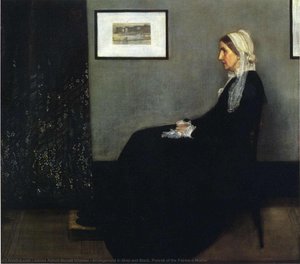
Whistler’s artistic vision crystallized in several key themes and stylistic choices. He championed the concept of “art for art’s sake,” rejecting narratives laden with moral or social commentary. His work became an exercise in capturing subtle nuances of light, color, and atmosphere—a pursuit that led to his iconic *Nocturnes*. These atmospheric paintings of twilight scenes, often depicting the Thames River at night, were not intended as literal depictions but rather as evocative impressions, studies in tonal harmony and mood. He frequently employed limited palettes and delicate brushwork, creating a sense of ethereal beauty and quiet contemplation. Whistler also developed a unique approach to portraiture, treating his sitters not merely as likenesses but as compositional elements within a carefully constructed aesthetic framework. *Arrangement in Grey and Black No. 1*—better known as *Whistler’s Mother*—demonstrates this approach perfectly, transforming a familial portrait into an iconic image of Victorian motherhood through its masterful use of form and tone. The painting's power lies not in a realistic portrayal but in the carefully balanced arrangement of shapes and colors, evoking a sense of serenity and dignity.

Controversy, Influence, and Lasting Legacy

Whistler’s career was not without controversy. The infamous libel suit brought against him by the critic John Ruskin in 1878, sparked by *Nocturne in Black and Gold – The Falling Rocket*, became a landmark moment in art history. Whistler successfully defended his artistic autonomy, arguing that his paintings were not intended to be realistic representations but rather aesthetic arrangements of color and form. This case elevated his profile and ignited important debates about the nature of art criticism and artistic freedom. Beyond this legal battle, Whistler’s influence extended far and wide. He was deeply inspired by Japanese prints (ukiyo-e), which informed his compositional principles and emphasis on decorative patterns, as well as the tonal mastery of Spanish painters like Velázquez. His advocacy for “art for art’s sake” profoundly impacted the Aesthetic movement in England and America, paving the way for modernism and challenging conventional notions about artistic purpose. He left an indelible mark on American art, inspiring generations of artists to embrace formalist approaches and explore the expressive potential of color and composition. Whistler died in London in 1903, leaving behind a body of work that continues to captivate and inspire. His unwavering commitment to artistic principles and his relentless pursuit of aesthetic beauty cemented his place as a pivotal figure in the history of art.
  • Notable Works: *The Forge* (1861), *Portrait of Charles Lang Freer* (1873), *Brown and Gold: The Gold Girl—Connie Gilchrist* (1876-77), *Arrangement in Grey and Black No. 1 (Whistler’s Mother)* (1871), *Nocturne in Black and Gold – The Falling Rocket* (1875).
  • Influences: Japanese prints, Velázquez.

Краткая справка

  • Artist: James Whistler
  • Medium: Etching
  • Title: Self-Portrait
  • Year: 1858
  • Artistic style: Symbolic, tonal

Викторина по искусству

В каждом вопросе только один правильный ответ.

Вопрос 1:
James Abbott McNeill Whistler is most closely associated with which artistic movement?
Вопрос 2:
The etching 'Self-Portrait' by Whistler primarily exemplifies what artistic philosophy?
Вопрос 3:
What is a key characteristic of Whistler's etching technique as demonstrated in this work?
Вопрос 4:
Considering Whistler's background, which of the following best describes his early career path?
Вопрос 5:
The downward gaze of the subject in the etching suggests which possible interpretation?
Откройте для себя произведения искусства, распределенные по темам, стилям и характеристикам.