

 Примерить в интерьере
 Отправить
 Поделиться
 Подробнее
 Руководство

 Скачать
 Похожие объекты
 Рентгенография
 Слайд-шоу
 Статистика
War Series: The Letter


 Развернуть текст
Произведение искусства, представленное на этой странице, защищено законом об авторском праве, что исключает возможность законного создания или продажи его точной репродукции. Данная защита обеспечивается международными соглашениями, такими как Бернская конвенция и национальным законодательством, включая положения, изложенные в Закон США об авторском праве — Раздел 17.
В качестве достойной и законной альтернативы мы предлагаем авторские картины ручной работы, вдохновленные оригиналом. Наши опытные профессиональные художники тщательно изучают стиль, настроение и художественную суть оригинала, чтобы создать новое, уникальное произведение, которое вызывает те же чувства, оставаясь при этом самостоятельным оригинальным творением.
Этот метод полностью соответствует нормам авторского права, так как он не предполагает копирования или дублирования защищенного произведения. Напротив, это творческая реинтерпретация — создание новой картины, которая вдохновлена оригиналом, но не является его точной копией.
Масляная репродукция ручной работы
Картина маслом на холсте в выбранном вами размере и раме, написанная на заказ нашими художниками. ( Переключиться на печать Перейти к цифровым изображениям)




P118B $10

P118H $10

P118W $10

P438Z $10

P508JH $12

P508YH $12

P805H $10

P805Z $10

P919BZ $10

P919G $10

P919XJ $10

P959ZH $10

P968JZ $12

W106C $8

W218G $10

W218JH $8

W218Y $10

W307PJ $10

W316G $10

W316PJ $8

W316Y $10

W398PJ $8

W4111J $10

W500HY $15

W500JH $15

W692G $12

W849H $8

W940BG $15

W953PJ $8




Выберите один из наших стандартных размеров, соответствующих оригинальным пропорциям произведения искусства.

Вы можете указать собственные размеры, чтобы картина идеально вписалась в выбранную раму или пространство. Если выбранный вами размер не соответствует пропорциям оригинала, мы либо обрежем полотно, либо расширим его за счет дополнительных элементов, написанных вручную. Цифровой макет будет отправлен вам на утверждение перед началом производства.
Обратите внимание, что предварительный просмотр на экране не отражает фактическую обрезку или расширение. Только макет точно покажет окончательную композицию.
Хотя доступны индивидуальные размеры, мы рекомендуем выбирать вариант из предопределенного списка, чтобы сохранить исходные пропорции.
После оформления заказа команда OriginalUniqueArt.com свяжется с клиентом по электронной почте для уточнения деталей и предоставит предварительный макет
Доставка по всему миру () за 3–4 недели вместо стандартных 5 недель. (13 Октябрь). Без компромиссов в качестве.

Бесплатная экспресс-доставка по всему миру

Высококачественный льняной холст

Полное страхование при транспортировке

Гарантия возврата таможенных пошлин

Гарантия точного цветового соответствия

100-дневный период возврата (только при обнаружении дефектов)

Гарантия возврата 100% средств

Скидка при заказе нескольких работ
 Вариант со стеклом доступен только для размеров менее 110 см

War Series: The Letter
Материал репродукции
Размер репродукции
-


Итоговая стоимость
$ 300
A Study in Somber Grief: Jacob Lawrence's "The Letter"
Jacob Lawrence’s “The Letter,” part of his monumental “War Series” created in 1946, is not merely a depiction of sorrow; it’s an embodiment of profound human experience distilled into its most potent form. This work, rendered with the artist's signature flattened planes and stark geometry, immediately commands attention with its emotionally charged atmosphere. The central figure, hunched and isolated within a confined space, speaks volumes about the devastating impact of war – not just on battlefields, but on the very fabric of domestic life and personal relationships. Lawrence’s deliberate simplification of form, characteristic of his Social Realist style, amplifies the raw emotion, forcing the viewer to confront the uncomfortable realities of loss and despair.
Composition and Technique: A Graphic Narrative
- Geometric Precision: The composition relies heavily on geometric shapes – rectangles defining both the backdrop and the floor, a stage for this silent drama. These forms contribute to the artwork’s graphic quality, reminiscent of woodcuts or lithographs, emphasizing clarity and directness over illusionistic realism.
- Controlled Application: Lawrence employs a technique characterized by smooth, even layers of paint, applied with minimal blending. This creates a surface that is both visually striking and subtly textured, avoiding the impression of brushstrokes while still conveying a sense of physicality. The deliberate lack of gradations in tone further intensifies the emotional impact, focusing attention on the stark contrasts between light and shadow.
- Vertical Emphasis: The prominent vertical lines flanking the central figure create a powerful sense of enclosure, reinforcing the feeling of isolation and vulnerability that permeates the entire scene.
Symbolism and Historical Context – Echoes of War’s Impact
Created in the aftermath of World War II, “The Letter” is inextricably linked to Lawrence's exploration of African-American experiences during this turbulent period. The title itself—"The Letter"—immediately evokes the devastating news that would have accompanied such a communication: the loss of a loved one on the front lines. The hunched posture of the figure isn’t simply an indication of grief; it represents defeat, resignation, and the crushing weight of unimaginable sorrow. The limited color palette – dark browns, blacks, and muted reds – mirrors the bleakness of wartime and the emotional desolation experienced by those left behind. This work reflects Lawrence's broader engagement with themes of social justice and the human cost of conflict, aligning him firmly within the Social Realist movement.
Emotional Resonance and Artistic Legacy
"The Letter" transcends a simple depiction of sadness; it’s a timeless meditation on loss, isolation, and the enduring power of human emotion. Lawrence's ability to convey such profound feeling through simplified forms and restrained color is a testament to his artistic genius. This piece remains a powerful example of his commitment to social commentary and his mastery of narrative painting. Its stark beauty and emotional depth continue to resonate with viewers today, solidifying its place as a cornerstone of American art history.
NoneВопросы и ответы
Какое место занимает «War Series: The Letter» среди привычных тем Яков Лоррейнс?
Повторяющиеся темы в творчестве Яков Лоррейнс включают lawrence’s cubism, harlem renaissance, african american history, remembrance, emotional depth; работа "War Series: The Letter" сосредоточена на grief, loss, warfare, isolation, depression, remembrance, mourning, cubism.
Доступна ли загрузка для "War Series: The Letter"?
Изображение работы «War Series: The Letter», Яков Лоррейнс можно скачать на странице Скачать: скачивание цифрового изображения в высоком разрешении.
Какой размер «War Series: The Letter» рекомендуется для Living Room?
Для помещения Living Room для работы «War Series: The Letter» рекомендуется размер печати Large.
Является ли «War Series: The Letter», Яков Лоррейнс картиной, рисунком или принтом?
«War Series: The Letter» — это произведение в технике WallArt.
Из чего выполнено произведение «War Series: The Letter» и в каком стиле оно создано?
«War Series: The Letter» выполнено в технике Acrylic On Canvas в стиле Social Realism.
Какое чувство вызывают цвета «War Series: The Letter», Яков Лоррейнс?
В работе «War Series: The Letter» цвета Earthy создают Melancholic настроение.
Какова дата создания и художественный стиль произведения «War Series: The Letter», Яков Лоррейнс?
Работа «War Series: The Letter», Яков Лоррейнс датирована 1946 годом и относится к направлению Social Realism.
Является ли «War Series: The Letter», Яков Лоррейнс известным произведением искусства?
Уровень популярности произведения «War Series: The Letter», Яков Лоррейнс оценивается как Iconic. Эта классификация отражает степень узнаваемости работы.
Биография художника
A Life Painted in Story: The World of Jacob Lawrence
Jacob Armstead Lawrence, born September 7, 1917, in Atlantic City, New Jersey, was far more than just an artist; he was a chronicler of his people’s journey—a visual storyteller whose work profoundly shaped the landscape of American art. His life unfolded as a vibrant tapestry woven with threads of displacement, resilience, and unwavering commitment to social justice. Following his parents' divorce in 1924, Lawrence experienced a childhood marked by constant movement, finding temporary refuge in foster homes before finally settling with his mother in Harlem during the exhilarating era of the Harlem Renaissance. This immersion into the heart of Black culture became the very foundation upon which he built his artistic vision—a fusion of African-American experience and modern sensibilities. It was within the bustling streets and communal spirit of Harlem that Lawrence first encountered art, enrolling in classes at Utopia Children’s House and later studying under the guidance of Charles Alston at the Harlem Art Workshop – a pivotal step on his path to becoming a powerful voice through visual narrative.Dynamic Cubism: A Style Forged from Experience
Lawrence didn't simply adopt artistic styles; he meticulously crafted his own, famously describing it as “dynamic cubism.” This wasn’t a mere imitation of European avant-garde movements but rather a deeply personal synthesis—a unique blend of modernist principles and the lived realities of his community. Inspired by the bold colors and flattened forms of African sculpture – art that prioritized narrative and social commentary – and the vibrant murals of Mexican artists, Lawrence developed a visual language characterized by strong, simplified shapes, a rich palette of colors, and a deliberate rejection of traditional perspective. This wasn’t simply an aesthetic choice; it was a conscious effort to distill the essence of his subjects, capturing their emotions and experiences with immediacy and accessibility. He sought not to replicate reality in its entirety but to reveal its spirit—the soul of a people and their history. His paintings are imbued with a sense of urgency and directness, inviting viewers into the heart of the stories he was telling.The Migration Series: A Monumental Chronicle
Lawrence’s most celebrated achievement is undoubtedly *The Migration Series*, a monumental undertaking that spanned sixty panels and chronicled the Great Migration—the mass movement of African Americans from the rural South to the industrial North between 1916 and 1970. Beginning in 1940-41, this ambitious project transformed Lawrence into an overnight sensation, catapulting him to national recognition and securing his place as a leading figure in American art. The series isn’t merely a historical record; it's a deeply emotional exploration of the hopes, fears, and struggles faced by those who embarked on this transformative journey. Each panel is meticulously rendered, filled with symbolic imagery and carefully chosen details that convey the complexities of their experiences. Lawrence masterfully captured the spirit of resilience, determination, and the yearning for a better life—a testament to the enduring strength of the African-American community. The series’ impact was immediate and profound, influencing generations of artists and sparking critical conversations about race, migration, and social justice.Beyond the Migration: Portraits of People and Places
While *The Migration Series* remains his most iconic work, Lawrence's artistic output extended far beyond this single monumental project. He continued to create a diverse range of paintings that explored various facets of African-American life—from intimate portraits of individuals to sweeping depictions of historical events and everyday scenes. His series on Toussaint L’Ouverture, the Haitian revolutionary; Frederick Douglass, the abolitionist orator; and Harriet Tubman, the conductor on the Underground Railroad, transformed these iconic figures into accessible visual narratives. He also documented the vibrant life of Harlem through paintings like *Bar and Grill*, a stark yet poignant depiction of segregation within a New Orleans café, and *Window*, which captures the energy and vitality of a bustling street scene. These works demonstrate Lawrence’s ability to distill complex social realities into powerful visual statements—a testament to his profound understanding of human nature and his unwavering commitment to portraying the experiences of marginalized communities.Legacy and Enduring Influence
Jacob Lawrence's legacy extends far beyond the impressive body of work he left behind. He was not only a gifted artist but also a dedicated educator, teaching at institutions like Black Mountain College and the University of Washington for sixteen years. Through his instruction, he nurtured generations of artists, encouraging them to find their own voices and explore themes relevant to their experiences. Lawrence paved the way for countless African-American artists who followed, challenging prevailing norms and expanding the boundaries of American art. His work continues to resonate today, prompting critical conversations about race, history, and social justice—a testament to his enduring relevance as an artist and a cultural icon. Featured in prominent museums such as the Smithsonian American Art Museum and the University of Washington’s collection, his paintings serve as powerful reminders of the struggles and triumphs of the African-American community and the transformative power of art to illuminate the human condition.
Яков Лоррейнс
1917 - 2000 , Соединенные Штаты Америки
Краткая справка
- Artistic Movement Or Style: Динамичный кубизм
- Artists Or Movements Influenced By This Artist: ['Афроамериканское искусство']
- Date Of Birth: 7 сентября 1917 г.
- Date Of Death: 9 июня 2000 г.
- Full Name: Jacob Armstead Lawrence
- Nationality: Американский
- Notable Artworks:
- Миграция
- Победа и поражение
- Place Of Birth: Город Атлантика, США
Похожие статьи

Romantic Realism's Finest: 10 Masterpieces for Your Home | OriginalUniqueArt
Explore 10 defining masterpieces of Romantic Realism! Discover Courbet, Millet & Daumier's powerful paintings—capturing emotion and social realities. Find museum-quality reproductions for your home at OriginalUniqueArt.com.
Jacob Kainen: A Pioneer of American Color Field Painting & Abstract Expressionism
Explore the life & work of Jacob Kainen, a pivotal figure in American Abstract Expressionism and Color Field painting. Discover his journey from Social Realism to vibrant abstraction and lasting influence on 20th-century art.
Echoes of Society: Exploring Social Realism's Enduring Legacy in Art
Explore the powerful world of Social Realism art! Discover key artists, masterpieces & its profound social commentary. Expert insights into this influential movement's history and enduring legacy.
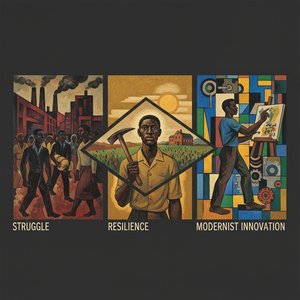
Jacob Lawrence: Narratives of Struggle, Resilience & Modernist Innovation
Explore the powerful narratives of Jacob Lawrence, a pivotal African American artist of the Harlem Renaissance. Discover his iconic 'Migration Series,' dynamic cubism style, and lasting impact on American art history.

Vasily Vereshchagin: Realism, War & Subversion in 19th-Century Russian Painting
Explore the powerful realism of Vasily Vereshchagin's war paintings & Central Asian scenes. Discover how this Russian master challenged artistic conventions and offered a brutal, honest depiction of 19th-century conflict. Learn about his legacy for discerning collectors.