Предпросмотр
 Поделиться
 Поделиться
 Детали произведения
 Руководство

 Скачать
 Похожие предметы
 Рентгенография
 Слайд-шоу
 Вопросы и ответы
 Статистика просмотров
Surf

- 43.0 x 34.0 cm


 Читать далее
Жикле и арт-принты
Печать (жикле) или холст музейного качества с быстрыми сроками изготовления и широким выбором вариантов отделки. ( Купить картину ручной работы Перейти к цифровым изображениям)




































Выберите один из наших стандартных размеров, соответствующих оригинальным пропорциям произведения искусства.

Введите необходимую ширину и высоту, чтобы репродукция подошла к вашей раме или стене. При печати изображение можно только уменьшить, но нельзя увеличить больше оригинала, поэтому при выборе другого формата часть изображения может быть обрезана. Перед печатью мы отправим вам цифровой макет на утверждение. Изображение на этой странице не отображает реальную обрезку — ее можно увидеть только на макете.
Доставка по всему миру () за 2 недели вместо стандартных 4–5 недель. (8 Ноябрь)

Бесплатная экспресс-доставка по всему миру

Высококачественный льняной холст

Полное страхование при доставке

Гарантия возмещения таможенных пошлин

Гарантия точного цветового соответствия

100-дневная гарантия возврата (только при обнаружении дефектов)

Гарантия возврата 100% средств

Скидка при оптовом заказе
 Вариант со стеклом доступен только для размеров менее 110 см

Surf
Жикле и арт-принты
Размер репродукции
-


Итоговая стоимость
$ 81
A Vision of Nature's Power: Ivan Aivazovsky’s "Surf"
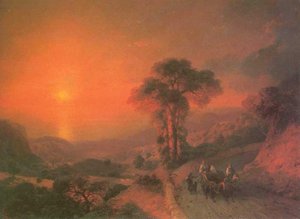
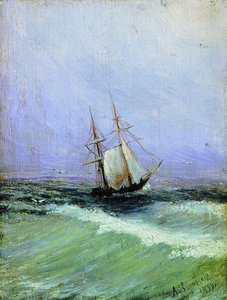
This captivating painting, “Surf,” created by Ivan Konstantinovich Aivazovsky in 1888, presents a dramatic and serene depiction of nature's raw power. The artwork showcases a majestic mountain cascading with water, rendered in striking hues of red that imbue the scene with an almost theatrical quality. Above this powerful landscape, birds soar through the sky, adding a dynamic sense of movement and life to the composition. Two figures are subtly included within the scene, hinting at human presence amidst this grand spectacle – perhaps explorers or simply observers captivated by the waterfall’s beauty. The overall effect is one of tranquil awe, inviting viewers into a world where adventure and wonder intertwine.The Romantic Style & Aivazovsky's Technique
“Surf” exemplifies the hallmarks of Romanticism, an artistic movement prevalent in the 19th century that emphasized emotion, individualism, and the sublime power of nature. Aivazovsky, considered one of the greatest masters of marine art, skillfully translates these ideals onto canvas. While primarily known for his seascapes, this work demonstrates his versatility in capturing other natural elements with equal intensity. His technique is characterized by a masterful use of light and color to create atmospheric depth and dramatic effect. The bold application of red on the mountain face isn't realistic but serves to heighten the emotional impact, drawing the eye and conveying a sense of grandeur. The loose brushwork in the sky suggests movement and vastness, while the details of the figures are rendered with a delicate touch, emphasizing their smallness against the backdrop of nature’s immensity.Historical Context & Aivazovsky's Legacy
Born in Feodosia, Crimea, to an Armenian family, Ivan Aivazovsky (1817-1900) spent his life immersed in the beauty of the Black Sea and surrounding landscapes. He received formal training at the Imperial Academy of Arts in Saint Petersburg but developed a unique style that transcended academic conventions. During the 19th century, Russia experienced significant cultural shifts, embracing Romantic ideals and fostering a renewed appreciation for national identity and artistic expression. Aivazovsky’s prolific output – estimated to be around 6,000 paintings – reflects this vibrant period. He achieved international acclaim, exhibiting his works across Europe and the United States, solidifying his reputation as a leading figure in Russian Romantic art. His ability to capture the essence of light and atmosphere made him highly sought after by collectors and institutions alike.Symbolism & Emotional Resonance
Beyond its aesthetic appeal, "Surf" carries symbolic weight. The mountain itself can be interpreted as representing strength, resilience, and enduring power. The cascading water symbolizes the constant flow of time and change, while the birds in flight represent freedom and aspiration. The inclusion of human figures subtly underscores humanity's relationship with nature – a sense of both awe and humility. Emotionally, the painting evokes feelings of serenity, wonder, and perhaps even a touch of melancholy as we contemplate the vastness of the natural world. The dramatic use of color—particularly the striking red—amplifies these emotions, creating a visually arresting and deeply moving experience for the viewer.A Timeless Addition to Any Space
This reproduction of "Surf" offers an opportunity to bring Aivazovsky’s masterful vision into your home or office. Its captivating imagery and rich symbolism make it a compelling conversation starter, while its serene atmosphere creates a sense of tranquility and inspiration. Whether you are an avid art collector, an interior designer seeking a statement piece, or simply someone who appreciates the beauty of nature, this painting is sure to resonate with you.Вопросы и ответы
Можно ли с помощью дополненной реальности увидеть «Surf», Иван Константинович Айвазовский в своем интерьере?
Страница Просмотр в AR для работы «Surf», Иван Константинович Айвазовский использует дополненную реальность, чтобы показать произведение в вашем интерьере на совместимом устройстве.
Где я могу скачать «Surf», Иван Константинович Айвазовский?
Цифровое изображение работы «Surf», Иван Константинович Айвазовский доступно для скачивания на странице произведения Скачать цифровое изображение: скачивание цифрового изображения в высоком разрешении.
«Surf», Иван Константинович Айвазовский — это светлое или темное произведение искусства?
С точки зрения воспринимаемой яркости, «Surf», Иван Константинович Айвазовский — это balanced.
Биография художника
A Life Embraced by the Waves
Ivan Konstantinovich Aivazovsky, born Hovhannes Aivazian in 1817, was more than a painter of seascapes; he was a conduit to the ocean’s soul. His very existence seemed inextricably linked to the Black Sea—a vast, unpredictable expanse that would forever dominate his artistic vision and fuel an extraordinary career spanning nearly six decades. Born in the Crimean port city of Feodosia, Aivazovsky didn't merely observe the sea; he felt it – its raw energy, sublime beauty, and inherent danger becoming the very essence of his art. From a young age, this connection was nurtured, initially by local architect Jacob Koch who recognized the boy’s talent, then blossoming within the rigorous academic environment of the Imperial Academy of Arts in Saint Petersburg. Yet, formal training alone couldn't account for the depth of Aivazovsky’s understanding; it was the constant presence of salt-laced air and the cries of gulls that truly shaped his artistic sensibility. His Armenian heritage also played a significant role, as he was baptized at the St. Sargis Armenian Church in Feodosia and maintained strong cultural ties throughout his life, occasionally incorporating Armenian themes into his expansive body of work.The Early Years and Artistic Foundations
Aivazovsky’s early years were steeped in the maritime traditions of Feodosia, a bustling port city with deep roots in trade and seafaring. His family, originally from Western Armenia, had migrated to Crimea centuries earlier, establishing themselves as merchants and artisans. This exposure to diverse cultures and the rhythms of the sea undoubtedly influenced his artistic development. Recognizing his exceptional talent at a young age, Jacob Koch, a local architect, encouraged Aivazovsky’s artistic pursuits. Subsequently, he enrolled in the Simferopol gymnasium No.1 and later attended the Imperial Academy of Arts in Saint Petersburg, where he honed his skills under the guidance of established masters. However, it was his time spent observing the Black Sea—the ships, the sailors, the ever-changing moods of the water—that truly shaped his artistic vision. Unlike many artists who relied solely on academic instruction, Aivazovsky’s art was deeply rooted in direct experience and observation, a characteristic that would become a hallmark of his style.The Rise to Prominence: Italy and the Russian Navy
In the early 1840s, Aivazovsky embarked on a transformative journey through Europe, particularly Italy. He spent time in Venice, Florence, and Naples, immersing himself in the landscapes and light of the Mediterranean region. This period proved crucial for his artistic development, allowing him to refine his technique and develop a distinctive style characterized by dramatic compositions and masterful use of color. Returning to Russia, Aivazovsky’s career took an unprecedented turn when he was appointed as the main painter of the Russian Navy in 1845. This appointment provided him with unparalleled access to naval life—ships, sailors, battles, and firsthand observation—transforming his art forever. He became intimately acquainted with maritime life, lending an authenticity to his depictions that resonated deeply with both military officials and the public. His paintings of naval engagements, such as *The Battle of Navarino*, became immensely popular, capturing the drama and intensity of these historical events.A Master of Light and Atmosphere: Style and Technique
Aivazovsky’s artistic style is instantly recognizable for its dramatic lighting effects, turbulent seascapes, and evocative atmosphere. He possessed an extraordinary ability to capture the fleeting qualities of light on water—the shimmering reflections, the hazy mists, and the dramatic contrasts between light and shadow. His technique involved working *en plein air* whenever possible, directly from nature, allowing him to accurately render the nuances of color and texture. He employed a layering technique, applying paint in thin glazes to create luminous surfaces and achieve remarkable depth. Aivazovsky’s paintings are not merely representations of scenes; they are emotional experiences—portraying the power, beauty, and sometimes the terrifying nature of the sea. His most celebrated works include *The Ninth Wave*, a harrowing depiction of a shipwreck, and *Ships in a Storm*, which captures the drama and chaos of a violent storm at sea.Legacy and Enduring Influence
Ivan Konstantinovich Aivazovsky remains one of Russia’s greatest marine artists—a legacy cemented by his technical skill, emotional depth, and prolific output. His paintings are celebrated not only for their aesthetic beauty but also for their ability to evoke powerful emotions and capture the essence of the sea. He significantly contributed to the development of Russian landscape painting, influencing generations of artists with his innovative techniques and dramatic compositions. Aivazovsky’s work continues to resonate with audiences worldwide, exhibited in museums and galleries across the globe. His paintings are a testament to the enduring power of nature and the human spirit—a reminder of our vulnerability in the face of the elements and our capacity for resilience and hope. He wasn't simply a painter of seascapes; he was a poet of the ocean, translating its moods, mysteries, and majesty onto canvas with unparalleled skill and passion.
Иван Константинович Айвазовский
1817 - 1900 , Россия
Об авторе
- Artistic Movement Or Style: Романтизм, морское искусство
- Artists Or Movements Influenced By This Artist: ['Русская живопись']
- Artists Who Influenced This Artist: ['Дж. М. В. Тёрнер']
- Date Of Birth: 29 июля 1817 г.
- Date Of Death: 5 мая 1900 г.
- Full Name: Иван Константинович Айвазовский
- Nationality: Русско-армянский
- Notable Artworks:
- Девятая волна
- Корабль в шторм
- Морской пейзаж с полной луной
- Place Of Birth: Феодосия, Россия
Похожие статьи
Alexei Bogolyubov: Bridging Realism & Romanticism in the Russian Landscape Tradition
Explore the captivating world of Alexei Bogolyubov, a master of Russian Realism & Romanticism. Discover his stunning landscapes, maritime scenes, and lasting influence on 19th-century art. Learn more at OriginalUniqueArt.
Fyodor Vasilyev: A Poetic Vision of Russian Landscape – Life, Legacy, and the Transience of Nature
Explore the captivating world of Fyodor Vasilyev, a pioneering Russian landscape painter. Discover his lyrical style, influential works like 'Clouds' & lasting legacy. Learn about his life, artistic journey & impact on Russian art history.

Evocations of Place: A Historical Journey Through Landscape Art
Explore the rich history of landscape art with OriginalUniqueArt. Discover renowned artists, movements like Impressionism & Romanticism, and expert guidance for collecting timeless pieces. Find your perfect serene escape today!

Романтический пейзаж: 10 шедевров, изменивших искусство | OriginalUniqueArt.com
Погрузитесь в мир романтического пейзажа! 10 шедевров Фридриха, Тёрнера и других гениев. Узнайте историю создания культовых картин и вдохновитесь для декора интерьера. Репродукции высокого качества на OriginalUniqueArt.com.

Джон Констебль: 25 шедевров английского пейзажа для вашего интерьера
Погрузитесь в мир английского пейзажа с Джоном Констеблом! 25 шедевров романтизма, история создания картин и вдохновение для вашего интерьера. Репродукции высокого качества на OriginalUniqueArt.com – искусство для ценителей.