Примерить в интерьере
 Отправить
 Поделиться
 Подробнее
 Руководство

 Скачать
 Похожие объекты
 Рентгенография
 Слайд-шоу
 Статистика
Sea view
 Oil On Canvas
- WallArt
- Romanticism
 1841
1841- 19th Century
 74.0 x 100.0 cm
 Развернуть текст
Жикле / Арт-принты
Печать (жикле) или холст музейного качества с быстрыми сроками изготовления и широким выбором вариантов отделки. ( Заказать репродукцию ручной работы Перейти к цифровым изображениям)




P118B $10

P118H $10

P118W $10

P438Z $10

P508JH $12

P508YH $12

P805H $10

P805Z $10

P919BZ $10

P919G $10

P919XJ $10

P959ZH $10

P968JZ $12

W106C $8

W218G $10

W218JH $8

W218Y $10

W307PJ $10

W316G $10

W316PJ $8

W316Y $10

W398PJ $8

W4111J $10

W500HY $15

W500JH $15

W692G $12

W849H $8

W940BG $15

W953PJ $8




Выберите один из наших стандартных размеров, соответствующих оригинальным пропорциям произведения искусства.

Введите необходимую ширину и высоту, чтобы репродукция подошла к вашей раме или стене. При печати изображение можно только уменьшить, но нельзя увеличить больше оригинала, поэтому при выборе другого формата часть изображения может быть обрезана. Перед печатью мы отправим вам цифровой макет на утверждение. Изображение на этой странице не отображает реальную обрезку — ее можно увидеть только на макете.
Доставка по всему миру () за 2 недели вместо стандартных 4–5 недель. (27 Октябрь)

Бесплатная экспресс-доставка по всему миру

Высококачественный льняной холст

Полное страхование при транспортировке

Гарантия возврата таможенных пошлин

Гарантия точного цветового соответствия

100-дневный период возврата (только при обнаружении дефектов)

Гарантия возврата 100% средств

Скидка при заказе нескольких работ
 Вариант со стеклом доступен только для размеров менее 110 см

Sea view
Жикле / Арт-принты
Размер репродукции
-


Итоговая стоимость
$ 80
The Sublime Embrace of the Sea: An Encounter with Aivazovsky's "Sea View"
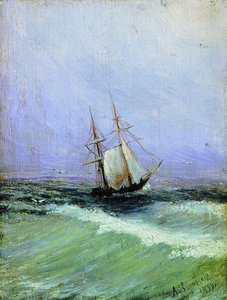
To stand before Ivan Aivazovsky’s "Sea view," is not merely to observe a painting; it is to be enveloped by the very breath of the ocean itself. This masterful oil on canvas, dating from 1841, transports the viewer to a moment suspended between day and night—a sublime confluence where the vastness of nature meets the fleeting warmth of human experience. Aivazovsky, whose life seemed inextricably linked to the rhythms of the Black Sea, captured more than just a vista; he bottled an emotion. The composition is breathtaking in its scope, drawing the eye from the foreground activity upon the water toward the monumental drama unfolding in the sky.
Mastery of Light and Atmosphere
The technical brilliance at play here lies in Aivazovsky’s unparalleled handling of light. The sunset is not just a backdrop; it is an active participant in the scene, casting a warm, ethereal glow that bathes the mountains in hues of gold and rose. Observe how the clouds are rendered—they possess a palpable weight, yet they seem to drift with effortless grace across the canvas. This dramatic sky contrasts beautifully with the deep, shifting blues and greens of the water below. The technique employed is characteristic of Romantic seascape painting: bold, visible brushstrokes that suggest movement rather than meticulously detailing every ripple. It is this suggestion, this vibrant energy beneath the surface calm, that gives the piece its enduring power.
Narrative Elements and Human Presence
While the ocean dominates, Aivazovsky thoughtfully includes signs of life. Several boats dot the water's expanse, their presence anchoring the immense scale of the sea to a human narrative. Furthermore, the inclusion of figures—one near the center and another toward the right—lends an intimate quality to what could otherwise be an overwhelming depiction of nature’s might. These people, seemingly caught in contemplation as they watch the dying light, serve as emotional conduits for the viewer. They invite us to pause, to breathe deeply, and to share in their quiet moment of awe before such grandeur.
Symbolism and Emotional Resonance
Artistically, "Sea view" resonates with themes of transience and eternity. The setting sun is a universal symbol of endings, yet Aivazovsky imbues it with profound beauty, suggesting that every ending contains the promise of renewal. The sea itself has always symbolized the unknown, the subconscious depths of human emotion—a perfect mirror for the Romantic sensibility of the era. For the collector or decorator, owning this piece means acquiring not just art, but a meditation object; a visual anchor to moments of profound tranquility amidst life's inevitable storms.
Bringing the Ocean Home
For those seeking to integrate such powerful artistry into a modern space, reproductions of "Sea view" offer an unparalleled opportunity. The rich palette and dynamic energy translate beautifully across mediums, allowing one to capture the sublime drama of 1841 within your own walls. It is a piece that commands attention while simultaneously inviting quiet contemplation—a true centerpiece for any gallery wall or grand living area.
Вопросы и ответы
Доступна ли загрузка для "Sea view"?
Изображение работы «Sea view», Иван Константинович Айвазовский можно скачать на странице Скачать: скачивание цифрового изображения в высоком разрешении.
К какой эпохе относится «Sea view»?
«Sea view», Иван Константинович Айвазовский относится к периоду 19th Century. Этот период определяет исторический контекст произведения.
Какова форма и размеры произведения «Sea view», Иван Константинович Айвазовский?
Формат произведения «Sea view» — Landscape, а оригинальная работа имеет размер 74 x 100 cm. Эти данные полезны при планировании репродукции.
Биография художника
A Life Embraced by the Waves
Ivan Konstantinovich Aivazovsky, born Hovhannes Aivazian in 1817, was more than a painter of seascapes; he was a conduit to the ocean’s soul. His very existence seemed inextricably linked to the Black Sea—a vast, unpredictable expanse that would forever dominate his artistic vision and fuel an extraordinary career spanning nearly six decades. Born in the Crimean port city of Feodosia, Aivazovsky didn't merely observe the sea; he felt it – its raw energy, sublime beauty, and inherent danger becoming the very essence of his art. From a young age, this connection was nurtured, initially by local architect Jacob Koch who recognized the boy’s talent, then blossoming within the rigorous academic environment of the Imperial Academy of Arts in Saint Petersburg. Yet, formal training alone couldn't account for the depth of Aivazovsky’s understanding; it was the constant presence of salt-laced air and the cries of gulls that truly shaped his artistic sensibility. His Armenian heritage also played a significant role, as he was baptized at the St. Sargis Armenian Church in Feodosia and maintained strong cultural ties throughout his life, occasionally incorporating Armenian themes into his expansive body of work.The Early Years and Artistic Foundations
Aivazovsky’s early years were steeped in the maritime traditions of Feodosia, a bustling port city with deep roots in trade and seafaring. His family, originally from Western Armenia, had migrated to Crimea centuries earlier, establishing themselves as merchants and artisans. This exposure to diverse cultures and the rhythms of the sea undoubtedly influenced his artistic development. Recognizing his exceptional talent at a young age, Jacob Koch, a local architect, encouraged Aivazovsky’s artistic pursuits. Subsequently, he enrolled in the Simferopol gymnasium No.1 and later attended the Imperial Academy of Arts in Saint Petersburg, where he honed his skills under the guidance of established masters. However, it was his time spent observing the Black Sea—the ships, the sailors, the ever-changing moods of the water—that truly shaped his artistic vision. Unlike many artists who relied solely on academic instruction, Aivazovsky’s art was deeply rooted in direct experience and observation, a characteristic that would become a hallmark of his style.The Rise to Prominence: Italy and the Russian Navy
In the early 1840s, Aivazovsky embarked on a transformative journey through Europe, particularly Italy. He spent time in Venice, Florence, and Naples, immersing himself in the landscapes and light of the Mediterranean region. This period proved crucial for his artistic development, allowing him to refine his technique and develop a distinctive style characterized by dramatic compositions and masterful use of color. Returning to Russia, Aivazovsky’s career took an unprecedented turn when he was appointed as the main painter of the Russian Navy in 1845. This appointment provided him with unparalleled access to naval life—ships, sailors, battles, and firsthand observation—transforming his art forever. He became intimately acquainted with maritime life, lending an authenticity to his depictions that resonated deeply with both military officials and the public. His paintings of naval engagements, such as *The Battle of Navarino*, became immensely popular, capturing the drama and intensity of these historical events.A Master of Light and Atmosphere: Style and Technique
Aivazovsky’s artistic style is instantly recognizable for its dramatic lighting effects, turbulent seascapes, and evocative atmosphere. He possessed an extraordinary ability to capture the fleeting qualities of light on water—the shimmering reflections, the hazy mists, and the dramatic contrasts between light and shadow. His technique involved working *en plein air* whenever possible, directly from nature, allowing him to accurately render the nuances of color and texture. He employed a layering technique, applying paint in thin glazes to create luminous surfaces and achieve remarkable depth. Aivazovsky’s paintings are not merely representations of scenes; they are emotional experiences—portraying the power, beauty, and sometimes the terrifying nature of the sea. His most celebrated works include *The Ninth Wave*, a harrowing depiction of a shipwreck, and *Ships in a Storm*, which captures the drama and chaos of a violent storm at sea.Legacy and Enduring Influence
Ivan Konstantinovich Aivazovsky remains one of Russia’s greatest marine artists—a legacy cemented by his technical skill, emotional depth, and prolific output. His paintings are celebrated not only for their aesthetic beauty but also for their ability to evoke powerful emotions and capture the essence of the sea. He significantly contributed to the development of Russian landscape painting, influencing generations of artists with his innovative techniques and dramatic compositions. Aivazovsky’s work continues to resonate with audiences worldwide, exhibited in museums and galleries across the globe. His paintings are a testament to the enduring power of nature and the human spirit—a reminder of our vulnerability in the face of the elements and our capacity for resilience and hope. He wasn't simply a painter of seascapes; he was a poet of the ocean, translating its moods, mysteries, and majesty onto canvas with unparalleled skill and passion.
Иван Константинович Айвазовский
1817 - 1900 , Россия
Краткая справка
- Artistic Movement Or Style: Романтизм, морское искусство
- Artists Or Movements Influenced By This Artist: ['Русская живопись']
- Artists Who Influenced This Artist: ['Дж. М. В. Тёрнер']
- Date Of Birth: 29 июля 1817 г.
- Date Of Death: 5 мая 1900 г.
- Full Name: Иван Константинович Айвазовский
- Nationality: Русско-армянский
- Notable Artworks:
- Девятая волна
- Корабль в шторм
- Морской пейзаж с полной луной
- Place Of Birth: Феодосия, Россия
Похожие статьи
Ivan Aivazovsky: Mastering Light & Emotion in 19th-Century Marine Painting
Explore the captivating world of Ivan Aivazovsky, a master of 19th-century marine painting. Discover his techniques, iconic artworks & lasting legacy in this expert guide.
The Allure of the Horizon: A Comprehensive Exploration of Seascape Art Through History & Emotion
Explore the captivating world of seascape art! Discover its history, key artists & movements – from Dutch Masters to Impressionism. Expert insights for collectors and enthusiasts at OriginalUniqueArt.
The Azure Depths: Exploring Representations of the Ocean in Art History
Explore the rich history of ocean art! Discover Romantic seascapes, renowned artists like Aivazovsky & Harris, and expert guidance for collectors at OriginalUniqueArt.com.

The Enduring Legacy of Oil on Canvas: Technique, History & Aesthetic Impact
Explore the rich history & techniques of oil painting – from Renaissance masters to Impressionism. Discover pigments, layering methods, and why this timeless medium endures. Expert insights for artists & art enthusiasts.
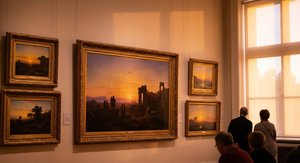
Golden Hours: Sunset Motifs in Western Art History
Explore the captivating history of sunset motifs in Western art! Discover iconic paintings by Monet, Van Gogh & Kuindzhi. Learn about Romanticism, Impressionism & collecting these timeless masterpieces. Expert insights at OriginalUniqueArt.