Примерить в интерьере
 Отправить
 Поделиться
 Подробнее
 Руководство

 Скачать
 Похожие объекты
 Рентгенография
 Слайд-шоу
 Статистика
Odessa
 Oil On Canvas
- WallArt
- Romanticism
 1840
1840 Государственный музей изобразительных искусств имени А. С. Пушкина
 Развернуть текст
Жикле / Арт-принты
Печать (жикле) или холст музейного качества с быстрыми сроками изготовления и широким выбором вариантов отделки. ( Заказать репродукцию ручной работы Перейти к цифровым изображениям)




P118B $10

P118H $10

P118W $10

P438Z $10

P508JH $12

P508YH $12

P805H $10

P805Z $10

P919BZ $10

P919G $10

P919XJ $10

P959ZH $10

P968JZ $12

W106C $8

W218G $10

W218JH $8

W218Y $10

W307PJ $10

W316G $10

W316PJ $8

W316Y $10

W398PJ $8

W4111J $10

W500HY $15

W500JH $15

W692G $12

W849H $8

W940BG $15

W953PJ $8




Выберите один из наших стандартных размеров, соответствующих оригинальным пропорциям произведения искусства.

Введите необходимую ширину и высоту, чтобы репродукция подошла к вашей раме или стене. При печати изображение можно только уменьшить, но нельзя увеличить больше оригинала, поэтому при выборе другого формата часть изображения может быть обрезана. Перед печатью мы отправим вам цифровой макет на утверждение. Изображение на этой странице не отображает реальную обрезку — ее можно увидеть только на макете.
Доставка по всему миру () за 2 недели вместо стандартных 4–5 недель. (26 Октябрь)

Бесплатная экспресс-доставка по всему миру

Высококачественный льняной холст

Полное страхование при транспортировке

Гарантия возврата таможенных пошлин

Гарантия точного цветового соответствия

100-дневный период возврата (только при обнаружении дефектов)

Гарантия возврата 100% средств

Скидка при заказе нескольких работ
 Вариант со стеклом доступен только для размеров менее 110 см

Odessa
Жикле / Арт-принты
Размер репродукции
-


Итоговая стоимость
$ 80
A Symphony of Sea and Light: Ivan Aivazovsky’s “Odessa”
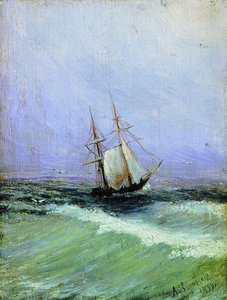
Ivan Aivazovsky's "Odessa," painted in 1840, isn’t merely a depiction of a coastal city; it’s an immersive experience. The canvas breathes with the salty air of the Black Sea, capturing not just the physical landscape but also the very spirit of maritime life and the sublime beauty that captivated Aivazovsky throughout his extraordinary career. This work, currently residing in the Pushkin State Museum in Moscow, stands as a testament to the artist’s unparalleled ability to translate the dynamism of water onto canvas – a skill honed by a lifetime spent intimately connected with the sea.
The scene unfolds with remarkable clarity and depth. A cluster of boats, rendered with meticulous detail, dances across the water's surface, ranging from smaller skiffs near the shore to larger vessels receding into the distance. The buildings lining Odessa’s harbor are subtly integrated into the composition, providing a grounding element while simultaneously contributing to the overall sense of bustling activity. Notice how Aivazovsky masterfully employs atmospheric perspective – the colors and details become softer and less distinct with increasing distance – creating an illusion of vastness and drawing the viewer's eye into the heart of the seascape.
Romanticism’s Embrace: Emotion and the Sublime
“Odessa” is firmly rooted in the Romantic movement, a period characterized by its emphasis on emotion, imagination, and the power of nature. Aivazovsky wasn’t simply recording what he saw; he was conveying *how* he felt when confronted with the sea's grandeur. The painting’s luminosity—achieved through his signature layering technique—evokes a sense of tranquility and almost ethereal beauty. The light, particularly as it reflects off the water, is not merely descriptive but actively contributes to the emotional impact of the scene. It suggests an underlying energy, a constant movement beneath the surface that mirrors the turbulent spirit of the Romantic ideal.
Aivazovsky’s use of color is equally crucial. He employs a rich palette of blues and greens, punctuated by flashes of white foam and the warm hues of the distant shoreline. These colors aren't blended smoothly; instead, they are applied in distinct brushstrokes, creating a textured surface that adds to the painting’s dynamism and sense of immediacy. This technique, combined with his masterful handling of light and shadow, imbues the scene with a palpable sense of life.
The Artist’s Process: Layering and Light
Aivazovsky's technique was revolutionary for its time. He built up layers upon layers of thin washes of paint, allowing each subsequent layer to subtly alter the colors and values beneath it. This method, known as *alla prima*, created a remarkable sense of depth and luminosity – a hallmark of his style. He often worked directly onto the wet surface of the canvas, blending the colors with his brush rather than relying on traditional glazing techniques. This approach resulted in a vibrant, almost luminous quality that is particularly evident in “Odessa,” where the reflections on the water shimmer with an otherworldly brilliance.
Furthermore, Aivazovsky’s meticulous study of light and its effects on water were unparalleled. He spent countless hours observing the sea, meticulously documenting how sunlight interacted with the waves, creating a dazzling array of colors and patterns. This deep understanding is evident in every brushstroke, transforming “Odessa” into more than just a seascape; it's a celebration of the sea’s transformative power.
A Legacy of Maritime Mastery
“Odessa” stands as one of Aivazovsky’s most celebrated works, alongside pieces like "View of Odessa by Moonlight" and “Tempest by Cape Aiya.” These paintings collectively demonstrate his extraordinary ability to capture the drama and beauty of the sea under a multitude of conditions. Reproductions of this masterpiece offer an exceptional opportunity to bring the evocative power of Aivazovsky’s vision into any space, whether as a striking centerpiece or a subtle accent. OriginalUniqueArt offers meticulously crafted reproductions that faithfully recreate the artist's original techniques and colors, ensuring that you experience the full emotional impact of “Odessa” for years to come.
Вопросы и ответы
Какое национальное происхождение лежит в основе Romanticism произведения «Odessa»?
«Odessa» связывает направление Romanticism с Россия через место рождения его создателя.
Насколько выражен контраст в «Odessa», Иван Константинович Айвазовский?
Уровень контрастности произведения «Odessa», Иван Константинович Айвазовский составляет Gentle.
Доступна ли загрузка для "Odessa"?
Изображение работы «Odessa», Иван Константинович Айвазовский можно скачать на странице Скачать: скачивание цифрового изображения в высоком разрешении.
Биография художника
A Life Embraced by the Waves
Ivan Konstantinovich Aivazovsky, born Hovhannes Aivazian in 1817, was more than a painter of seascapes; he was a conduit to the ocean’s soul. His very existence seemed inextricably linked to the Black Sea—a vast, unpredictable expanse that would forever dominate his artistic vision and fuel an extraordinary career spanning nearly six decades. Born in the Crimean port city of Feodosia, Aivazovsky didn't merely observe the sea; he felt it – its raw energy, sublime beauty, and inherent danger becoming the very essence of his art. From a young age, this connection was nurtured, initially by local architect Jacob Koch who recognized the boy’s talent, then blossoming within the rigorous academic environment of the Imperial Academy of Arts in Saint Petersburg. Yet, formal training alone couldn't account for the depth of Aivazovsky’s understanding; it was the constant presence of salt-laced air and the cries of gulls that truly shaped his artistic sensibility. His Armenian heritage also played a significant role, as he was baptized at the St. Sargis Armenian Church in Feodosia and maintained strong cultural ties throughout his life, occasionally incorporating Armenian themes into his expansive body of work.The Early Years and Artistic Foundations
Aivazovsky’s early years were steeped in the maritime traditions of Feodosia, a bustling port city with deep roots in trade and seafaring. His family, originally from Western Armenia, had migrated to Crimea centuries earlier, establishing themselves as merchants and artisans. This exposure to diverse cultures and the rhythms of the sea undoubtedly influenced his artistic development. Recognizing his exceptional talent at a young age, Jacob Koch, a local architect, encouraged Aivazovsky’s artistic pursuits. Subsequently, he enrolled in the Simferopol gymnasium No.1 and later attended the Imperial Academy of Arts in Saint Petersburg, where he honed his skills under the guidance of established masters. However, it was his time spent observing the Black Sea—the ships, the sailors, the ever-changing moods of the water—that truly shaped his artistic vision. Unlike many artists who relied solely on academic instruction, Aivazovsky’s art was deeply rooted in direct experience and observation, a characteristic that would become a hallmark of his style.The Rise to Prominence: Italy and the Russian Navy
In the early 1840s, Aivazovsky embarked on a transformative journey through Europe, particularly Italy. He spent time in Venice, Florence, and Naples, immersing himself in the landscapes and light of the Mediterranean region. This period proved crucial for his artistic development, allowing him to refine his technique and develop a distinctive style characterized by dramatic compositions and masterful use of color. Returning to Russia, Aivazovsky’s career took an unprecedented turn when he was appointed as the main painter of the Russian Navy in 1845. This appointment provided him with unparalleled access to naval life—ships, sailors, battles, and firsthand observation—transforming his art forever. He became intimately acquainted with maritime life, lending an authenticity to his depictions that resonated deeply with both military officials and the public. His paintings of naval engagements, such as *The Battle of Navarino*, became immensely popular, capturing the drama and intensity of these historical events.A Master of Light and Atmosphere: Style and Technique
Aivazovsky’s artistic style is instantly recognizable for its dramatic lighting effects, turbulent seascapes, and evocative atmosphere. He possessed an extraordinary ability to capture the fleeting qualities of light on water—the shimmering reflections, the hazy mists, and the dramatic contrasts between light and shadow. His technique involved working *en plein air* whenever possible, directly from nature, allowing him to accurately render the nuances of color and texture. He employed a layering technique, applying paint in thin glazes to create luminous surfaces and achieve remarkable depth. Aivazovsky’s paintings are not merely representations of scenes; they are emotional experiences—portraying the power, beauty, and sometimes the terrifying nature of the sea. His most celebrated works include *The Ninth Wave*, a harrowing depiction of a shipwreck, and *Ships in a Storm*, which captures the drama and chaos of a violent storm at sea.Legacy and Enduring Influence
Ivan Konstantinovich Aivazovsky remains one of Russia’s greatest marine artists—a legacy cemented by his technical skill, emotional depth, and prolific output. His paintings are celebrated not only for their aesthetic beauty but also for their ability to evoke powerful emotions and capture the essence of the sea. He significantly contributed to the development of Russian landscape painting, influencing generations of artists with his innovative techniques and dramatic compositions. Aivazovsky’s work continues to resonate with audiences worldwide, exhibited in museums and galleries across the globe. His paintings are a testament to the enduring power of nature and the human spirit—a reminder of our vulnerability in the face of the elements and our capacity for resilience and hope. He wasn't simply a painter of seascapes; he was a poet of the ocean, translating its moods, mysteries, and majesty onto canvas with unparalleled skill and passion.
Иван Константинович Айвазовский
1817 - 1900 , Россия
Краткая справка
- Artistic Movement Or Style: Романтизм, морское искусство
- Artists Or Movements Influenced By This Artist: ['Русская живопись']
- Artists Who Influenced This Artist: ['Дж. М. В. Тёрнер']
- Date Of Birth: 29 июля 1817 г.
- Date Of Death: 5 мая 1900 г.
- Full Name: Иван Константинович Айвазовский
- Nationality: Русско-армянский
- Notable Artworks:
- Девятая волна
- Корабль в шторм
- Морской пейзаж с полной луной
- Place Of Birth: Феодосия, Россия
Похожие статьи
Ivan Aivazovsky: Mastering Light & Emotion in 19th-Century Marine Painting
Explore the captivating world of Ivan Aivazovsky, a master of 19th-century marine painting. Discover his techniques, iconic artworks & lasting legacy in this expert guide.

The Enduring Legacy of Oil on Canvas: Technique, History & Aesthetic Impact
Explore the rich history & techniques of oil painting – from Renaissance masters to Impressionism. Discover pigments, layering methods, and why this timeless medium endures. Expert insights for artists & art enthusiasts.
The Allure of the Horizon: A Comprehensive Exploration of Seascape Art Through History & Emotion
Explore the captivating world of seascape art! Discover its history, key artists & movements – from Dutch Masters to Impressionism. Expert insights for collectors and enthusiasts at OriginalUniqueArt.

Топ-10 знаменитых картин в черных тонах: шедевры искусства для вашего интерьера
Погрузитесь в мир темных шедевров! Топ-10 знаменитых картин в черных тонах от Гойи, Рембрандта и Мунка. История искусства, техники живописи и вдохновение для вашего интерьера. Купите репродукции высокого качества на OriginalUniqueArt.com

Oil on Canvas: A Historical & Technical Exploration of a Timeless Artistic Medium
Explore the rich history & enduring techniques of oil painting on canvas. Discover the science behind its longevity, conservation practices, and contemporary relevance. Expert insights for art enthusiasts.