

 Предпросмотр
 Поделиться
 Поделиться
 Детали произведения

 Скачать
 Похожие работы
 Рентгенография
 Слайд-шоу
Spring Breeze
 Oil On Canvas
- WallArt
- Post-Impressionist Painting
 1905
1905- 19th Century
 79.0 x 79.0 cm
 Читать далее
Жикле / Арт-принт
Печать (жикле) или холст музейного качества с быстрыми сроками изготовления и широким выбором вариантов отделки. ( Купить картину ручной работы Купить изображение)




P118B $10

P118H $10

P118W $10

P438Z $10

P508JH $12

P508YH $12

P805H $10

P805Z $10

P919BZ $10

P919G $10

P919XJ $10

P959ZH $10

P968JZ $12

W106C $8

W218G $10

W218JH $8

W218Y $10

W307PJ $10

W316G $10

W316PJ $8

W316Y $10

W398PJ $8

W4111J $10

W500HY $15

W500JH $15

W692G $12

W849H $8

W940BG $15

W953PJ $8




Выберите один из наших стандартных размеров, соответствующих оригинальным пропорциям произведения искусства.

Вы можете указать свои собственные размеры, чтобы репродукция идеально подошла под конкретную раму или пространство. Если выбранный вами размер не будет соответствовать пропорциям оригинала, мы либо обрежем произведение, либо дополним изображение зеркальным отражением краев или однотонной заливкой. Перед началом производства вам будет отправлен цифровой макет для утверждения.
Пожалуйста, обратите внимание, что предварительный просмотр на экране не отображает фактическую обрезку или расширение изображения. Только макет точно покажет финальную композицию.
Несмотря на возможность заказа индивидуальных размеров, мы рекомендуем выбирать размер из предопределенного списка, чтобы сохранить оригинальные пропорции.
Доставка по всему миру () за 2 недели вместо стандартных 4/5 недель. (21 Август)

Бесплатная экспресс-доставка по всему миру

Высококачественный льняной холст

Полное страхование доставки

Гарантия возмещения таможенных пошлин

Гарантия точного соответствия цветов

Политика возврата в течение 60 дней (только при наличии дефектов)

Гарантия возврата 100% средств

Предложение оптовых скидок
 Вариант со стеклом доступен только для размеров менее 110 см

Spring Breeze
Жикле / Арт-принт
Размер репродукции
-


Итоговая стоимость
$ 80
Описание предмета коллекционирования
Igor Emmanuilovich Grabar’s ‘Spring Breeze’: A Window into Post-Impressionist Serenity
“Spring Breeze,” painted in 1905 by the Russian Post-Impressionist artist Igor Emmanuilovich Grabar, is more than just a depiction of a bedroom; it's an immersive experience of light, color, and quiet contemplation. Created during a pivotal period in Grabar’s career – his peak artistic output between 1903 and 1907 – the painting exemplifies his distinctive approach to divisionist technique, a method that sought to capture fleeting moments through meticulously placed dots of pure color, creating an almost shimmering effect. Measuring 79 x 79 cm on canvas, this intimate scene invites viewers into a world of warmth and tranquility, reflecting Grabar’s profound interest in capturing the subtle nuances of domestic life.
A Symphony of Color and Light – The Divisionist Technique
Grabar's mastery lies in his skillful deployment of the divisionist technique. Rather than blending colors on the canvas, he applied small, distinct brushstrokes—often described as bordering on pointillism—to build up the image. This approach isn’t simply a stylistic choice; it’s a deliberate attempt to mimic the way light itself is perceived – fragmented and shimmering. Observe how the sunlight streaming through the two windows is rendered not with smooth gradations, but with a mosaic of yellows, oranges, and whites, creating an ethereal glow that bathes the room in warmth. The careful arrangement of these color fragments generates a remarkable sense of depth and texture, drawing the eye across the canvas.
Historical Context: Post-Impressionism and the Russian Avant-Garde
‘Spring Breeze’ emerged from the broader context of Post-Impressionism, a movement that arose as a reaction against the Impressionists' focus on objective observation of light. While Impressionists sought to capture fleeting moments, Post-Impressionists aimed for something more – a deeper emotional and symbolic resonance within their work. Grabar, influenced by artists like Ilya Repin and Anton Azbe, pushed this movement further with his unique divisionist style. His work aligns with the broader Russian avant-garde of the early 20th century, exploring themes of domesticity and spirituality through a highly personal artistic lens.
Symbolism Within the Still Life – A Room of Quiet Reflection
Beyond its technical brilliance, ‘Spring Breeze’ is rich in subtle symbolism. The piano, positioned prominently in the corner, suggests both musical contemplation and perhaps a yearning for creative expression. The carefully arranged vases, each placed with intention, contribute to the overall sense of order and serenity. The potted plant adds a touch of nature, connecting the interior space with the outside world. The composition as a whole evokes a feeling of peaceful solitude – a sanctuary from the bustle of daily life. It’s a scene designed not just to be observed, but to be felt.
Technical Specifications
- Title: Spring Breeze
- Artist: Igor Emmanuilovich Grabar
- Date: 1905
- Medium: Oil on Canvas
- Size: 79 x 79 cm
This exceptional reproduction captures the essence of Grabar’s ‘Spring Breeze,’ offering a stunning addition to any art collection or interior design scheme. Its evocative beauty and masterful technique make it a timeless piece, reflecting the enduring appeal of Post-Impressionist artistry.
Биография художника
Early Life and Education
Igor Emmanuilovich Grabar (1871 – 1960) was a Russian Post-Impressionist painter, publisher, restorer and historian of art. Grabar, descendant of a wealthy Rusyn family, was born in Budapest (then the Austro-Hungarian Empire, now Hungary) on March 25, 1871. His parents, and grand-parents, were active participants of the Slav liberation movement and were persecuted by the government. The little boy saw his parents very rarely. In 1876 his father had to flee to Russia; his wife and the boy follow in 1880. In 1882, after graduating from a gymnasium in the provincial town of Egorievsk, Grabar studied at the Moscow Lyceum, where, along with academic studies he learnt painting, studied art, visited galleries and exhibitions and made acquaintances with artists, art patrons and critics. His classmates and teachers in the Lyceum served as models for his first paintings; he was also fond of landscapes. In 1889, he entered the Saint Petersburg University, where he majored simultaneously in two subjects – jurisprudence and philology. He had to work to earn his living and he did so by writing humorous short stories for magazines and dr. His interest in drawing was sparked by the stream of magazine publications following the 1881 murder of Alexander II of Russia. He later enrolled in Mikhail Katkov's boarding school in Moscow, making contacts with students from the Moscow School of Painting, Sculpture, and Architecture.Artistic Career and Notable Works
Grabar trained under Ilya Repin in Saint Petersburg and Anton Àžbe in Munich. He reached his peak in painting between 1903–1907, notable for a peculiar divisionist technique bordering on pointillism and his rendition of snow. Some of his notable works include:- Landscape with a haystack
- The Embroideress
- Going to work
Museum and Art Restoration
In 1913, Grabar was appointed executive director of the Tretyakov Gallery in Moscow. He undertook an ambitious reform program that continued until 1926. Grabar diversified the Tretyakov collection into modern art and in 1917 published its first comprehensive catalogue. As a professor of art restoration at Moscow State University (1921), he played a crucial role in establishing Soviet art education and promoting the preservation of cultural heritage. Notable Museums Featuring Grabar’s Work:- Novokuznetsk Art Museum
- Tretyakov Gallery
- Museo Kharkov Museum of Art
Legacy and Later Life
Grabar remained at the top of the Soviet art establishment until his death on May 16, 1960. He managed art-restoration workshops (present-day Grabar Centre) during 1918–1930 and from 1944 to 1960. His work continued to inspire artists and scholars alike, cementing his place as one of Russia’s most influential figures in the realm of artistic expression and cultural preservation. He took active part in redistribution of former church art nationalized by the Bolsheviks and established new museums for the confiscated treasures. In 1943, he formulated the Soviet doctrine of compensating World War II losses with art looted in Germany. After the war, he personally advised Joseph Stalin on the preservation of architectural heritage.References:
igor grabar - wikipedia igor emmanuilovich grabar - OriginalUniqueArt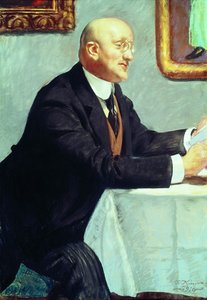
igor emmanuilovich grabar
1871 - 1960 , Венгрия
Основные сведения
- Artistic Movement Or Style: Постимпрессионизм
- Artists Who Influenced This Artist:
- Илья Репин
- Антон Àžбе
- Date Of Birth: 25 марта 1871 г.
- Date Of Death: 16 мая 1960 г.
- Full Name: Игорь Эммануилович Грабар
- Nationality: Русский
- Notable Artworks:
- Ландшафт с сеном
- Эмильсионка
- Иду на работу
- Place Of Birth: Будапешт, Венгрия
Похожие статьи
Giclée Prints: Archival Quality & Aesthetic Nuances for the Discerning Collector
Explore the world of giclée prints with OriginalUniqueArt. Learn about archival quality, aesthetic nuances & investment potential. Expert guidance for discerning art collectors seeking museum-quality reproductions and lasting value.

The Soul of Impressionism: Why Oil on Canvas Captures Eternal Light and Timeless Emotion
Discover the enchanting alchemy of Impressionism. Explore how the mastery of oil on canvas, through glazing and impasto, captures eternal light and emotion. Perfect for lovers of Monet and Van Gogh seeking the profound depth of hand-painted fine art.
The Magic of Lithography: Capturing Light and Texture in Every Impressionist Print
Discover the enchanting world of lithography through an Impressionist lens. Explore how this timeless technique captures the luminous light and delicate textures of masters like Monet and Renoir, offering a profound way to bring art history into your home with elegance and soul.
Igor Grabar: Bridging Impressionism & National Identity in Russian Modern Art
Explore the life & art of Igor Grabar, a pivotal figure in Russian Modernism. Discover his Impressionist landscapes, crucial role in art history, and legacy at the Tretyakov Gallery. A deep dive into a master painter & scholar.

10 Шедевров Постимпрессионизма, Определивших Эпоху | OriginalUniqueArt.com
Погрузитесь в мир постимпрессионизма! Откройте 10 шедевров Ван Гога, Моне, Сезанна и других великих художников. История искусства, техники живописи и вдохновение для вашего интерьера на OriginalUniqueArt.com. Изысканные репродукции картин ждут вас!

