
 Предпросмотр
 Поделиться
 Поделиться
 Детали произведения

 Скачать
 Похожие работы
 Рентгенография
 Слайд-шоу
 Статистика
Study for No tempo (Into Time)
 Expressionism
 1991
1991 24.0 x 32.0 cm
 Iberê Camargo Foundation
 Читать далее
Жикле / Арт-принт
Печать (жикле) или холст музейного качества с быстрыми сроками изготовления и широким выбором вариантов отделки. ( Купить картину ручной работы Перейти к цифровым изображениям)




































Выберите один из наших стандартных размеров, соответствующих оригинальным пропорциям произведения искусства.

Вы можете указать свои собственные размеры, чтобы репродукция идеально подошла под конкретную раму или пространство. Если выбранный вами размер не будет соответствовать пропорциям оригинала, мы либо обрежем произведение, либо дополним изображение зеркальным отражением краев или однотонной заливкой. Перед началом производства вам будет отправлен цифровой макет для утверждения.
Пожалуйста, обратите внимание, что предварительный просмотр на экране не отображает фактическую обрезку или расширение изображения. Только макет точно покажет финальную композицию.
Несмотря на возможность заказа индивидуальных размеров, мы рекомендуем выбирать размер из предопределенного списка, чтобы сохранить оригинальные пропорции.
Доставка по всему миру () за 2 недели вместо стандартных 4/5 недель. (12 Сентябрь)

Бесплатная экспресс-доставка по всему миру

Высококачественный льняной холст

Полное страхование доставки

Гарантия возмещения таможенных пошлин

Гарантия точного соответствия цветов

100-дневная политика возврата (только при обнаружении дефектов)

Гарантия возврата 100% средств

Предложение оптовых скидок
 Вариант со стеклом доступен только для размеров менее 110 см

Study for No tempo (Into Time)
Жикле / Арт-принт
Размер репродукции
-


Итоговая стоимость
$ 80
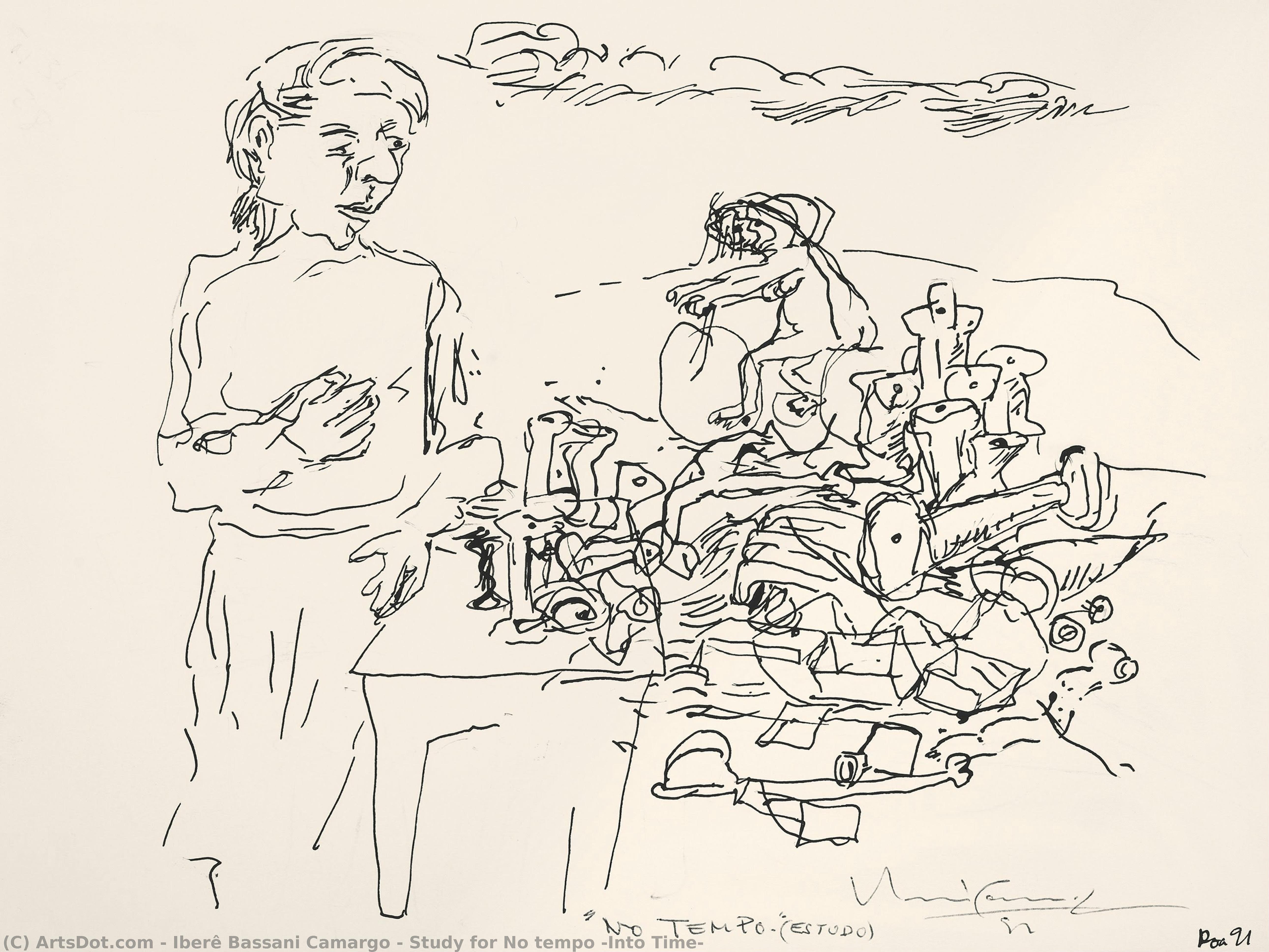
A Moment of Contemplation: "Study for No tempo (Into Time)" by Iberê Bassani Camargo
This evocative black and white drawing, titled “Study for No tempo (Into Time),” offers a glimpse into the mind of Brazilian Expressionist master, Iberê Bassani Camargo. Created in 1991, it's more than just a preparatory sketch; it’s a poignant exploration of time, memory, and the quiet moments that define our existence. The image depicts a woman standing beside a table laden with bottles, seemingly lost in thought as she examines the objects before her. This isn't a scene of bustling activity but one steeped in introspection – a pause within the relentless flow of "No tempo" (Into Time).Style and Technique: Expressive Lines and Atmospheric Depth
Camargo’s signature style is immediately recognizable, even in this smaller-scale study. The drawing showcases his masterful use of line to create both form and atmosphere. Notice the deliberate variations in line weight – thicker lines define the woman's silhouette and the substantial table, while finer, more delicate strokes suggest the fragility of the bottles and the surrounding space. The absence of color intensifies the focus on texture and composition. The artist employs a technique that borders on abstraction; while recognizable forms are present, they’re rendered with an expressive looseness that prioritizes feeling over precise representation. This approach is characteristic of his later work, moving away from more figurative depictions towards a deeper exploration of emotional resonance.Historical Context and Symbolism
Created late in Camargo's career (he passed away in 1994), "Study for No tempo (Into Time)" reflects a period of profound personal reflection. The bottles on the table can be interpreted as symbols of memory, experience, or perhaps even the passage of time itself – vessels holding fragments of a life lived. The woman’s contemplative gaze suggests an attempt to understand these accumulated experiences, to make sense of the "No tempo" that shapes our lives. Camargo's work often grappled with themes of isolation and the human condition within a rapidly changing world, and this drawing encapsulates that sentiment beautifully. The study itself hints at larger, more ambitious works – it’s a window into the artist’s creative process, revealing how he distilled complex ideas into powerful visual forms.Emotional Impact and Artistic Legacy
"Study for No tempo (Into Time)" evokes a sense of quiet melancholy and profound introspection. The scene is both familiar and unsettling – we recognize the domestic setting but are drawn to the woman’s solitary contemplation. The drawing's power lies in its ability to resonate with universal human experiences: our relationship with time, memory, and the search for meaning. Iberê Camargo’s legacy continues to grow through the Iberê Camargo Foundation, which houses a remarkable collection of his work and promotes his artistic vision. Owning a reproduction of this piece allows you to bring a touch of Brazilian Expressionism into your space, inviting contemplation and sparking conversation about the complexities of life and time.- Size: 24 x 32 cm
- Date: 1991
Биография художника
Жизнь и творчество
Иберэ Бассани Камарго, выдающаяся фигура в бразильском искусстве, родился 18 ноября 1914 года в Рестинга-Сека, Бразилия. Он оставил неизгладимый след в мире искусства своими экспрессионистскими шедевраraми, прежде чем уйти из жизни 8 августа 1994 года в Порту-Алегри.Художественное наследие и Фонд Иберэ Камарго
После его смерти вдова художника, Мария Коссират Камарго, основала Фонд Иберэ Камарго, который сыграл ключевую роль в сохранении и продвижении его работ. С 2008 года штаб-квартира фонда и музей, спроектированные знаменитым португальским архитектором Алвару Сизой, служат домом для тысяч полотен Камарго.Значимые работы и коллекции
Среди наиболее примечательных работ Иберэ Бассани Камарго можно выделить следующие:- Ciclista 3 (Велосипедист 3) — произведение, демонстрирующее его уникальный экспрессионистский стиль, является частью коллекции Фонда Иберэ Камарго в Порту-Алегри, Бразилия. [https://OriginalUniqueArt.com/@@/d7b6up-ibere-bassani-camargo-ciclista-3-(cyclist-3)]
- Missa do pedido (Месса по заказу) — еще одно значимое полотно, демонстрирующее многогранность Камарго, также хранится в Фонде Иберэ Камарго. [https://OriginalUniqueArt.com/@@/d7b5uj-ibere-bassani-camargo-missa-do-pedido-(mess-to-order-)]
- Study for No Tempo (Этюд к «В потоке времени») — пример его подготовительной работы, свидетельствующий о тщательном подходе мастера. [https://OriginalUniqueArt.com/@@/d7b6ln-ibere-bassani-camargo-study-for-no-tempo-(into-time)]
- Study for Mesa com espelho (Этюд к «Столу и зеркалу») — графическая работа, подчеркивающая его экспериментальную натуру. [https://OriginalUniqueArt.com/@@/d7b63k-ibere-bassani-camargo-study-for-mesa-com-espelho-(table-and-mirror)]
- Безымянная работа, выполненная маслом на бумаге, раскрывает его сторону абстрактного экспрессионизма. [https://OriginalUniqueArt.com/@@/d9hd9u-ibere-bassani-camargo-untitled]
Заключение
Наследие Иберэ Бассани Камарго является свидетельством непреходящей силы экспрессионизма. Благодаря его творчеству и деятельности Фонда Иберэ Камарго, он продолжает вдохновлять новые поколения художников и ценителей искусства. Для дальнейшего чтения: - [https://OriginalUniqueArt.com/@/ibere-bassani-camargo](страница художника на OriginalUniqueArt) - [https://en.wikipedia.org/wiki/iber%c3%aa_camargo](Wikipedia)
Иберэ Бассани Камарго
1914 - 1994 , Бразилия
Основные сведения
- Artistic Movement Or Style: Экспрессионизм
- Artists Who Influenced This Artist:
- Франц Марк
- Анри Матисс
- Date Of Birth: 18 ноября 1914 г.
- Date Of Death: 8 августа 1994 г.
- Full Name: Иберэ Бассани Камаргу
- Nationality: Бразилец
- Notable Artworks:
- Циклиста 3
- Мисса ду педидо
- Этюд к 'No tempo'
- Этюд к 'Mesa com espelho'
- Без названия
- Place Of Birth: Рестинга-Сека, Бразилия
Похожие статьи

Mastering the Line: A Comprehensive Expert Guide to Technical Precision and Expressive Depth in Drawing
Elevate your artistic practice with this expert guide to mastering the line. Discover advanced techniques in graphite, charcoal, and contour drawing designed for art students seeking technical precision and expressive depth in their fine art studies.
The Nuances of Graphite: Exploring Emotional Depth & Technical Mastery in Pencil Drawing
Explore the captivating world of graphite drawing! Discover its rich history, master essential techniques like chiaroscuro, and learn how artists evoke emotion through this timeless medium. Expert insights for art enthusiasts.
Топ-10 шедевров в оттенках черного: искусство, история и декор с OriginalUniqueArt
Погрузитесь в мир великих шедевров, где черный цвет – символ страсти и драмы. От Караваджо до Мунка, откройте историю искусства с OriginalUniqueArt. Купите репродукции картин онлайн и преобразите свой интерьер! Explore the full collection on OriginalUniqueArt.com
Топ-10 шедевров в тонах сажи: Искусство, история и декор от OriginalUniqueArt
Погрузитесь в мир темных тонов и драматизма! От Караваджо до Гойи – топ-10 знаменитых картин, где сажа создает неповторимую атмосферу. Репродукции высокого качества для вашего интерьера на OriginalUniqueArt.com

Топ-10 знаменитых картин в черных тонах: шедевры искусства для вашего интерьера
Погрузитесь в мир темных шедевров! Топ-10 знаменитых картин в черных тонах от Гойи, Рембрандта и Мунка. История искусства, техники живописи и вдохновение для вашего интерьера. Купите репродукции высокого качества на OriginalUniqueArt.com