Примерить в интерьере
 Отправить
 Поделиться
 Подробнее
 Руководство

 Скачать
 Похожие объекты
 Рентгенография
 Слайд-шоу
 Статистика
Tree-Man
 Ink
Ink- WallArt
- Northern Renaissance
 Renaissance
 277.0 x 211.0 cm
 Графическая коллекция Альбертина
 Развернуть текст
Масляная репродукция ручной работы
Картина маслом на холсте в выбранном вами размере и раме, написанная на заказ нашими художниками. ( Переключиться на печать Перейти к цифровым изображениям)




P118B $10

P118H $10

P118W $10

P438Z $10

P508JH $12

P508YH $12

P805H $10

P805Z $10

P919BZ $10

P919G $10

P919XJ $10

P959ZH $10

P968JZ $12

W106C $8

W218G $10

W218JH $8

W218Y $10

W307PJ $10

W316G $10

W316PJ $8

W316Y $10

W398PJ $8

W4111J $10

W500HY $15

W500JH $15

W692G $12

W849H $8

W940BG $15

W953PJ $8




Выберите один из наших стандартных размеров, соответствующих оригинальным пропорциям произведения искусства.

Введите необходимую ширину и высоту, чтобы репродукция подошла к вашей раме или стене. Поскольку работа выполняется вручную, при изменении пропорций художник может немного увеличить область вокруг картины или, наоборот, обрезать края — выбор за вами. Перед началом работы мы пришлем вам цифровой макет на утверждение. Изображение на этой странице не является точным результатом — увидеть реальный вид можно только на макете.
После оформления заказа команда OriginalUniqueArt.com свяжется с клиентом по электронной почте для уточнения деталей и предоставит предварительный макет
Доставка по всему миру () за 3–4 недели вместо стандартных 5 недель. (22 Октябрь). Без компромиссов в качестве.

Бесплатная экспресс-доставка по всему миру

Высококачественный льняной холст

Полное страхование при транспортировке

Гарантия возврата таможенных пошлин

Гарантия точного цветового соответствия

100-дневный период возврата (только при обнаружении дефектов)

Гарантия возврата 100% средств

Скидка при заказе нескольких работ
 Вариант со стеклом доступен только для размеров менее 110 см

Tree-Man
Материал репродукции
Размер репродукции
-


Итоговая стоимость
$ 300
A Descent into Surreal Delight: The Vision of Bosch’s Tree-Man
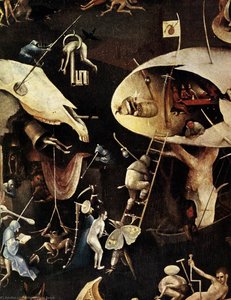
In the quiet, haunting corridors of art history, few images possess the unsettling magnetism of Hieronymus Bosch’s "Tree-Man." Created around 1505, this monochrome masterpiece serves as a profound window into a psyche that danced on the edge of the medieval and the modern. As a pen drawing of extraordinary technical precision, it does not merely depict a landscape; it invites the viewer into a fever dream where the boundaries between the organic and the grotesque dissolve. The work stands as a singular testament to Bosch’s ability to weave moral allegory with a surrealist sensibility that predates the formal Surrealist movement by centuries. To gaze upon this piece is to encounter a world where every line carries the weight of spiritual consequence, making it an irresistible focal point for those who appreciate art that challenges the soul and stimulates the intellect.
The composition is dominated by the eponymous Tree-Man, an anthropomorphic entity whose hollowed trunk forms a vessel for a strange, miniature civilization. Its roots burrow deep into a rocky, primordial earth, suggesting a primal connection to the very foundations of existence. Surrounding this central figure, the landscape teasingly unfolds with birds circling a turbulent sky and diminutive human figures engaged in activities that oscillate between innocent play and profound corruption. This intricate layering of life creates a sense of overwhelming complexity, where the eye is constantly led from the textured bark of the central figure to the distant, atmospheric hills. For the collector or interior designer, this piece offers a profound depth; its dense, detailed nature allows it to command a room, acting as a conversational anchor that rewards prolonged contemplation.
Mastery of Line and the Language of Symbolism
The technical brilliance of "Tree-Man" lies in Bosch’s masterful command of hatching and cross-hatching. Using only the precision of a pen, the artist builds up tonal values with astonishing subtlety, creating a range of grays that evoke everything from the stark brightness of a cloudy sky to the deepest, most impenetrable shadows within the tree's hollow core. This meticulous technique lends a startling realism to an otherwise fantastical subject. The textures are palpable—one can almost feel the rough, weathered bark and the cold, stony base upon which the figure rests. It is this marriage of technical rigor and imaginative freedom that gives the artwork its enduring power; it feels grounded in reality even as it depicts the impossible.
Beyond its aesthetic splendor, the work is a dense tapestry of symbolic meaning. The Tree-Man itself has been interpreted by scholars as a mirror of humanity’s vulnerability to sin—a grotesque parody of divine creation that reflects the struggle between earthly desires and spiritual salvation. The birds, often seen as symbols of wandering souls, add a layer of existential unease to the scene. This emotional complexity makes the artwork particularly poignant for modern spaces; it brings an element of historical gravity and philosophical depth. Whether rendered as a high-quality reproduction in a private study or as a striking statement piece in a contemporary gallery, "Tree-Man" continues to evoke a sense of wonder and mystery, reminding us of the eternal human fascination with the shadows of the subconscious.
Вопросы и ответы
Какую атмосферу передает «Tree-Man»?
Общее настроение «Tree-Man», Еронимий Босх — Mystical. Это настроение передает общую атмосферу произведения.
Какова насыщенность и интенсивность цветов в работе «Tree-Man», Еронимий Босх?
Насыщенность цвета в работе «Tree-Man» составляет Muted, а интенсивность — Monochromatic.
Находится ли «Tree-Man», Еронимий Босх в родной стране автора?
Нет — произведение находится за границей. Страна рождения Еронимий Босх — Нидерланды, а музей, в котором хранится оригинал произведения «Tree-Man», находится в Австрия.
Биография художника
Hieronymus Bosch: A Netherlandish Enigma
Born around 1450 in the vibrant, bustling town of ’s-Hertogenbosch in the Netherlands—then part of Brabant—Hieronymus Bosch, originally Jheronimus van Aken, remains one of art history’s most compelling and mysterious figures. His world was steeped in late medieval religious fervor, folklore, and a growing sense of societal unease, all of which would profoundly shape his uniquely unsettling artistic vision. Coming from a family with a long tradition of painting—his grandfather, Jan van Aken, and father, Anthonius van Aken, were both artists—Bosch likely received his earliest training within the family workshop, absorbing the techniques and conventions of Netherlandish painting. However, even in his formative years, he began to diverge from established norms, hinting at the extraordinary imagination that would define his career. Biographical details are frustratingly scarce; records are fragmented, leaving much open to speculation and interpretation, adding to the aura of mystique surrounding both the man and his work. He married Aleyt Goyaerts van den Meerveen sometime before 1481, a union that provided him with some financial security through her family’s holdings, but little else is known about their personal life. His years were spent primarily in ’s-Hertogenbosch, where he worked as a painter for wealthy patrons and the church, creating a remarkable body of work that continues to fascinate and challenge viewers today.Fantastical Visions and Symbolic Depths
Bosch's artistic style is instantly recognizable—a captivating blend of meticulous detail and wildly imaginative imagery. He primarily worked with oil on oak panels, demonstrating a masterful command of the medium, achieving luminous colors and intricate textures. While his early works show influences from traditional Netherlandish painting, particularly in their realism and attention to detail, he quickly moved beyond mere imitation, developing a profoundly original vision. His paintings are not simply representations of reality; they are allegorical landscapes populated by bizarre creatures, hybrid beings, and unsettling scenes that seem plucked from dreams—or nightmares. Religious themes form the core of much of his work, but these are rarely straightforward depictions of biblical stories. Instead, Bosch uses symbolism to explore complex moral and theological concepts, often focusing on the dangers of sin, the fragility of earthly pleasures, and the inevitability of divine judgment. His creatures—grotesque demons, fantastical animals, and strangely human figures—are not merely decorative elements; they are embodiments of vice, temptation, and spiritual corruption. The blending of the sacred and the profane, the beautiful and the grotesque, creates a uniquely unsettling effect that continues to captivate viewers centuries later. He frequently employed a technique of *trompe-l'oeil*, creating illusions of depth and perspective within his densely populated scenes, further enhancing their surreal quality.Masterpieces of Moral Allegory
Among Bosch’s most celebrated achievements is The Garden of Earthly Delights (c. 1490-1510), a triptych that remains one of the most enigmatic and debated works in art history. When opened, it presents a panoramic vision of paradise, earthly life, and hell—a complex allegorical representation of humanity’s fall from grace. The left panel depicts the Garden of Eden, teeming with fantastical creatures and lush vegetation; the central panel portrays a world consumed by sensual pleasure and unrestrained desire; and the right panel offers a terrifying glimpse into the torments of hell. The Triptych of the Last Judgement (c. 1480-1490) is another powerful example of his skill in portraying both heavenly bliss and infernal torment, while *The Ascent of the Blessed* (c. 1480-1490) demonstrates his ability to create ethereal and dreamlike scenes. Even smaller works like *Epiphany* (c. 1495) showcase his innovative use of oil on wood and complex symbolism, revealing a mind constantly grappling with profound questions about faith, morality, and the human condition. These works are not easily interpreted; Bosch deliberately leaves much open to the viewer’s imagination, encouraging contemplation and debate about their meaning.Influences and Artistic Context
Identifying Bosch’s direct influences is a challenging task, given the originality of his vision. Scholars suggest possible connections to medieval folklore—particularly tales of demons and devils—religious texts—particularly those emphasizing apocalyptic themes—and the prevailing anxieties of the time, including fears of heresy and social upheaval. The work of earlier Netherlandish painters, such as Pieter Bruegel the Elder, undoubtedly informed his style, but Bosch transcended mere imitation, forging a uniquely personal and unsettling vision. It’s believed that he drew inspiration from illuminated manuscripts, woodcuts, and even popular prints, incorporating these diverse sources into his own distinctive imagery. The intellectual climate of the late 15th century—marked by religious reform movements and growing skepticism towards established authority—likely contributed to Bosch's preoccupation with moral transgression and spiritual corruption.Legacy and Enduring Influence
Bosch’s work has had a profound and lasting impact on art history. Pieter Bruegel the Elder directly followed in his footsteps, adopting similar themes and compositional techniques, while later movements, such as Surrealism, also drew inspiration from Bosch’s dreamlike imagery and exploration of the subconscious. Artists like Salvador Dalí and Max Ernst openly acknowledged their debt to his unsettling visions. Even today, Bosch's work continues to fascinate and provoke debate, solidifying his place as a master of Netherlandish painting and a visionary artist whose influence extends far beyond his own time. His paintings offer valuable insights into the religious, social, and psychological climate of the late 15th and early 16th centuries, challenging conventional norms and paving the way for new forms of artistic expression. He died in 1516, leaving behind a body of work that continues to haunt and inspire, ensuring his enduring legacy as one of art history’s most singular and unforgettable voices.
Еронимий Босх
1450 - 1516 , Нидерланды
Краткая справка
- Artistic Movement Or Style: Сюрреализм, Символизм
- Artists Or Movements Influenced By This Artist: ['Питер Брюггель Старший']
- Date Of Birth: ок. 1450 г.
- Date Of Death: 1516 г.
- Full Name: Иероним Босх
- Nationality: Нидерландский
- Notable Artworks:
- Сад земных наслаждений
- Последний суд
- Восхождение блаженных
- Place Of Birth: Домбош, Нидерланды
Похожие статьи

Beyond the Horizon: 10 Masterpieces That Redefine Landscape Art
Journey through history with 10 iconic landscape paintings that capture the soul of nature. From Impressionist light to dramatic vistas, explore the stories behind these timeless masterpieces and find museum-quality reproductions for your decor. Discover all masterpieces on OriginalUniqueArt.com

Романтический пейзаж: 10 шедевров, изменивших искусство | OriginalUniqueArt.com
Погрузитесь в мир романтического пейзажа! 10 шедевров Фридриха, Тёрнера и других гениев. Узнайте историю создания культовых картин и вдохновитесь для декора интерьера. Репродукции высокого качества на OriginalUniqueArt.com.

10 Breathtaking Artworks That Capture the Beauty of Rural Landscapes
Journey through 10 iconic rural landscape paintings that capture the soul of the countryside. From Impressionist masters to timeless oil classics, explore the stories and techniques behind these breathtaking scenes. Find museum-quality reproductions on OriginalUniqueArt.com. Explore the full collection online.

Джон Констебль: 25 шедевров английского пейзажа для вашего интерьера
Погрузитесь в мир английского пейзажа с Джоном Констеблом! 25 шедевров романтизма, история создания картин и вдохновение для вашего интерьера. Репродукции высокого качества на OriginalUniqueArt.com – искусство для ценителей.

Arboreal Echoes: A Historical & Artistic Exploration of Trees in Painting
Explore the rich history of trees in painting! Discover symbolism, Romantic masterpieces by Caspar David Friedrich & beyond. A curated journey for art enthusiasts.