
 Предпросмотр
 Поделиться
 Поделиться
 Детали произведения
 Руководство

 Скачать
 Похожие предметы
 Рентгенография
 Слайд-шоу
 Вопросы и ответы
 Статистика просмотров
Fall of Man

- 204.0 x 134.0 cm


 Читать далее
Жикле и арт-принты
Печать (жикле) или холст музейного качества с быстрыми сроками изготовления и широким выбором вариантов отделки. ( Купить картину ручной работы Перейти к цифровым изображениям)




P118B $10

P118H $10

P118W $10

P438Z $10

P508JH $12

P508YH $12

P805H $10

P805Z $10

P919BZ $10

P919G $10

P919XJ $10

P959ZH $10

P968JZ $12

W106C $8

W218G $10

W218JH $8

W218Y $10

W307PJ $10

W316G $10

W316PJ $8

W316Y $10

W398PJ $8

W4111J $10

W500HY $15

W500JH $15

W692G $12

W849H $8

W940BG $15

W953PJ $8




Выберите один из наших стандартных размеров, соответствующих оригинальным пропорциям произведения искусства.

Введите необходимую ширину и высоту, чтобы репродукция подошла к вашей раме или стене. При печати изображение можно только уменьшить, но нельзя увеличить больше оригинала, поэтому при выборе другого формата часть изображения может быть обрезана. Перед печатью мы отправим вам цифровой макет на утверждение. Изображение на этой странице не отображает реальную обрезку — ее можно увидеть только на макете.
Доставка по всему миру () за 2 недели вместо стандартных 4–5 недель. (8 Ноябрь)

Бесплатная экспресс-доставка по всему миру

Высококачественный льняной холст

Полное страхование при доставке

Гарантия возмещения таможенных пошлин

Гарантия точного цветового соответствия

100-дневная гарантия возврата (только при обнаружении дефектов)

Гарантия возврата 100% средств

Скидка при оптовом заказе
 Вариант со стеклом доступен только для размеров менее 110 см

Fall of Man
Жикле и арт-принты
Размер репродукции
-


Итоговая стоимость
$ 81
A Descent into Shadow and Desire: Hendrick Goltzius’s “Fall of Man”
Hendrik Goltzius's "Fall of Man," painted in 1608, isn’t merely a depiction of a biblical narrative; it’s a masterclass in Northern Mannerism—a visual embodiment of human temptation, regret, and the poignant loss of innocence. This meticulously rendered scene, measuring 204 x 134 cm, transports us to the Garden of Eden, not as a paradise of idyllic beauty, but as a stage for a profound emotional drama. Goltzius, a pivotal figure in the transition from engraving to painting, masterfully employs dramatic chiaroscuro—a stark contrast between light and dark—to sculpt the figures and imbue the composition with an almost theatrical intensity. The elongated forms, characteristic of Mannerism, lend a sense of heightened emotion and psychological depth, while the subtle details, from the texture of Adam’s skin to the delicate veins in the leaves, reveal Goltzius's extraordinary technical skill.
The painting centers on Adam and Eve, rendered with an arresting realism that belies their mythological status. They are not presented as naive figures but as individuals grappling with a momentous decision. Eve’s hand, reaching towards Adam, is particularly captivating – a gesture of both desire and apprehension. The positioning of the couple, reclining near the imposing apple tree, immediately draws the eye, establishing a clear visual hierarchy that emphasizes their vulnerability and impending doom. Noticeably absent are any overt signs of punishment or divine judgment; instead, Goltzius focuses on the immediate emotional consequences of their transgression – the burgeoning awareness of their own nakedness and the nascent stirrings of desire.
The Language of Symbolism: Apples, Cherubs, and the Serpent’s Whisper
At the heart of the composition lies the apple itself—a potent symbol of temptation and forbidden knowledge. Its crimson hue explodes against the muted tones of the surrounding landscape, immediately arresting the viewer's attention. The inclusion of two cherubs nestled amongst the foliage adds a layer of mythological complexity, hinting at the divine presence that has been irrevocably disrupted by Adam and Eve’s actions. These winged figures, often associated with innocence and protection, now seem to witness the unfolding tragedy with a sense of sorrow or perhaps even judgment. The subtle suggestion of a serpent coiled within the branches of the tree—a visual echo of the biblical narrative—further reinforces the theme of deception and the allure of transgression.
Technique and Artistic Process: A Master of Detail
Goltzius’s technical prowess is evident in every brushstroke. The painting was likely executed using oil paints on panel, a medium that allowed for the rich textures and subtle color variations he so skillfully employed. The smooth blending of colors creates an illusion of depth and volume, while the meticulous rendering of Adam and Eve's musculature demonstrates his deep understanding of human anatomy. Close examination reveals the use of glazes—thin layers of translucent paint applied over dried underlayers—to achieve a luminous quality and enhance the sense of realism. The directional lines carved into the branches of the tree not only guide the viewer’s eye through the composition but also contribute to the overall feeling of drama and movement.
A Window into the 17th Century: Northern Mannerism and Beyond
"Fall of Man" stands as a powerful testament to the artistic sensibilities of the early Baroque period. Goltzius’s work exemplifies the key characteristics of Northern Mannerism—a style known for its elongated figures, dramatic lighting, and intense emotional expression. The painting reflects the intellectual currents of the time, grappling with themes of sin, redemption, and the human condition. It's a poignant reminder of our shared origins and the enduring power of storytelling to illuminate the complexities of morality and desire. Reproductions of this evocative artwork offer a unique opportunity to bring this masterpiece into your home or office, allowing you to contemplate its timeless message and appreciate Goltzius’s extraordinary artistic vision.
Вопросы и ответы
В какой технике и в каком стиле выполнено произведение «Fall of Man», Гендрик Голтциус?
«Fall of Man», Гендрик Голтциус сочетает в себе технику Oil On Canvas и стиль Northern Mannerism. Техника и направление определяют способ создания и художественный стиль произведения.
Для какого использования и в каком интерьере рекомендуется размещать «Fall of Man», Гендрик Голтциус?
Для работы «Fall of Man», Гендрик Голтциус предусмотрены две рекомендации: по способу использования (Statement) и по размещению в интерьере (Living Room).
Можно ли заказать масляную репродукцию картины «Fall of Man»?
Написанные вручную копии работы «Fall of Man», Гендрик Голтциус можно приобрести на сайте данный сайт: масляная репродукция ручной работы на льняном холсте, оформив заказ на странице Репродукция маслом ручной работы.
Биография художника
Early Life and Artistic Foundations
Hendrik Goltzius, a name synonymous with the vibrant dynamism of Northern Mannerism in Dutch art, was born in Braunschweig (Braunschweig), Germany, in 1558. His early years were steeped in artistic tradition; his family’s lineage included painters who had served as court artists in Venlo, and his father, Jan Goltz II, was a skilled glass painter in Duisburg. This environment fostered an appreciation for visual arts from a young age, laying the groundwork for his future endeavors. At the tender age of three, tragedy struck when a fire claimed his childhood home, leaving him with a permanently deformed right hand – a physical characteristic that would ironically become a defining feature of his distinctive engraving style. Recognizing this unique adaptation, Goltzius’s father secured his apprenticeship under Dirck Volckertszoon Coornhert, a renowned printmaker and master engraver in Haarlem, the burgeoning artistic center of the Dutch Republic. This formative period instilled within him not only technical proficiency but also an understanding of the intricate processes involved in creating detailed prints – a foundation upon which he would build his illustrious career.A Career Forged in Haarlem
Moving to Haarlem in 1577, Goltzius quickly established himself as a prominent figure in the city’s thriving printmaking scene. He secured employment with Philip Galle, a leading printer and publisher of the time, where he honed his skills and gained invaluable experience working on large-scale projects, including the celebrated series depicting the history of Lucretia. This association exposed him to diverse artistic styles and broadened his creative horizons. The marriage of Goltzius to Margaretha Jansdr. in 1579 proved pivotal, providing him with financial stability and allowing him to establish an independent printmaking business – a bold move for the time. He quickly gained recognition for his meticulous attention to detail, his innovative approach to line work, and his ability to capture both the grandeur and the subtle nuances of his subjects. His distinctive style, characterized by a sense of movement and dramatic intensity, began to distinguish him from his contemporaries.Technique and Innovation: The "Swelling Line"
Goltzius’s artistic legacy rests significantly on his revolutionary technique – what is now known as the “swelling line.” This innovative approach involved manipulating the burin (a sharp tool used in engraving) to create varying thicknesses of lines, effectively simulating tonal shading without resorting to hatching or cross-hatching. This technique, born from the limitations imposed by his deformed right hand—allowing for a more fluid and expressive swing of the burin—resulted in engravings that possessed an unprecedented depth and richness of tone. He was a pioneer of the “dot and lozenge” technique, meticulously placing dots within lozenge-shaped spaces created through cross-hatching to further refine tonal shading and create a sense of texture. His command of the burin was widely considered to rival that of Albrecht Dürer, one of the greatest printmakers of all time, and he frequently produced engravings of works by other masters like Bartholomaeus Spranger and Annibale Carracci, elevating their fame through his skilled reproductions.Influence and Legacy
Hendrik Goltzius’s influence extended far beyond the borders of the Netherlands. He was a sought-after engraver throughout Europe, producing prints for royalty and nobility across the continent. His work served as a bridge between the artistic traditions of Northern Europe and Italy, introducing Mannerist styles to a wider audience. His engravings are now housed in major museums worldwide, including the Metropolitan Museum of Art, the Rijksmuseum Amsterdam, and the British Museum, testament to their enduring value and significance. Goltzius’s legacy is not merely one of technical mastery; it's also a reflection of his artistic vision—a bold embrace of dynamism, dramatic intensity, and an innovative approach to printmaking that continues to inspire artists today. His work stands as a powerful reminder of the transformative potential of individual creativity and the enduring power of art to captivate and move us across centuries.
Гендрик Голтциус
1558 - 1617 , Германия
Об авторе
- Artistic Movement Or Style: Северный маньеризм
- Artists Or Movements Influenced By This Artist: ['Бartholomeus Spranger']
- Artists Who Influenced This Artist: ['Дирк Волкертсзон Корнхерт']
- Date Of Birth: Янв/Фев 1558
- Date Of Death: 1617
- Full Name: Hendrik Goltzius
- Nationality: Нидерландский
- Notable Artworks:
- Встреча Юпитера и Геро
- Минерва
- Пророк Михаи
- Place Of Birth: Брауншвейг, Италия
Похожие статьи
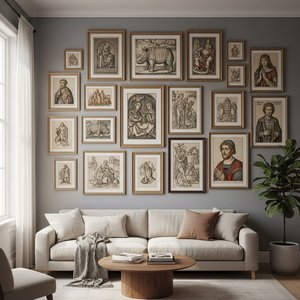
Альбрехт Дюрер: 25 шедевров эпохи Возрождения для вашего интерьера | OriginalUniqueArt
Погрузитесь в мир Альбрехта Дюрера! 25 величайших гравюр и картин немецкого Ренессанса. Узнайте историю создания шедевров, символизм и технику художника. Репродукции высокого качества для вашего интерьера на OriginalUniqueArt.com.

Леонардо да Винчи: Топ-25 шедевров для ценителей искусства и роскошного интерьера
Погрузитесь в мир гения Леонардо да Винчи! 25 шедевров эпохи Возрождения, истории создания картин и техники великого мастера. Репродукции высокого качества для вашего интерьера на OriginalUniqueArt.com. Откройте всю коллекцию онлайн!
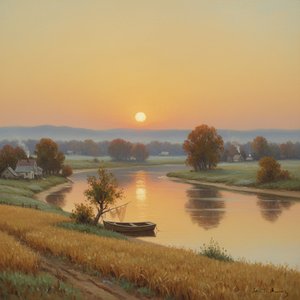
John Ottis Adams: Capturing Rural Indiana's Luminist Spirit
Explore the serene landscapes of John Ottis Adams, a key American Impressionist of the Hoosier Group. Discover his Luminist style & forgotten legacy with OriginalUniqueArt.
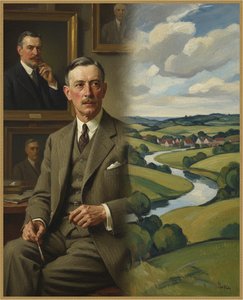
Reginald Grenville Eves: Bridging Portraiture & Modern British Landscape Painting
Explore the life & work of Reginald Grenville Eves, a leading British portraitist who transitioned to captivating landscape painting. Discover his legacy and prominent works at OriginalUniqueArt.

Hendrick Goltzius: Master Engraver & the Flourishing of Dutch Mannerism
Explore the life & art of Hendrick Goltzius, a master engraver of Dutch Mannerism. Discover his innovative techniques, iconic engravings like 'Jahel', and lasting influence on Baroque art. Learn about collecting Goltzius today.

