Примерить в интерьере
 Отправить
 Поделиться
 Подробнее
 Руководство

 Скачать
 Похожие объекты
 Рентгенография
 Слайд-шоу
 Статистика
la mere gregoire


 Развернуть текст
Масляная репродукция ручной работы
Картина маслом на холсте в выбранном вами размере и раме, написанная на заказ нашими художниками. ( Переключиться на печать Перейти к цифровым изображениям)




P118B $10

P118H $10

P118W $10

P438Z $10

P508JH $12

P508YH $12

P805H $10

P805Z $10

P919BZ $10

P919G $10

P919XJ $10

P959ZH $10

P968JZ $12

W106C $8

W218G $10

W218JH $8

W218Y $10

W307PJ $10

W316G $10

W316PJ $8

W316Y $10

W398PJ $8

W4111J $10

W500HY $15

W500JH $15

W692G $12

W849H $8

W940BG $15

W953PJ $8




Выберите один из наших стандартных размеров, соответствующих оригинальным пропорциям произведения искусства.

Введите необходимую ширину и высоту, чтобы репродукция подошла к вашей раме или стене. Поскольку работа выполняется вручную, при изменении пропорций художник может немного увеличить область вокруг картины или, наоборот, обрезать края — выбор за вами. Перед началом работы мы пришлем вам цифровой макет на утверждение. Изображение на этой странице не является точным результатом — увидеть реальный вид можно только на макете.
После оформления заказа команда OriginalUniqueArt.com свяжется с клиентом по электронной почте для уточнения деталей и предоставит предварительный макет
Доставка по всему миру () за 3–4 недели вместо стандартных 5 недель. (23 Октябрь). Без компромиссов в качестве.

Бесплатная экспресс-доставка по всему миру

Высококачественный льняной холст

Полное страхование при транспортировке

Гарантия возврата таможенных пошлин

Гарантия точного цветового соответствия

100-дневный период возврата (только при обнаружении дефектов)

Гарантия возврата 100% средств

Скидка при заказе нескольких работ
 Вариант со стеклом доступен только для размеров менее 110 см

la mere gregoire
Материал репродукции
Размер репродукции
-


Итоговая стоимость
$ 300
A Portrait of Quiet Dignity: Exploring Gustave Courbet’s *La Mère Grégoire*
Gustave Courbet's *La Mère Grégoire*, painted in 1859, is a deeply affecting portrait that exemplifies the artist’s commitment to Realism and his revolutionary approach to depicting everyday life. This isn’t a glamorous depiction of aristocracy; instead, Courbet presents us with an honest and dignified portrayal of an elderly woman, radiating a quiet strength born from years lived.Subject & Composition: A Moment Frozen in Time
The painting centers on *La Mère Grégoire* herself – a woman seated at a simple wooden table. Her hands are gently open in her lap, suggesting both vulnerability and acceptance. The composition is deliberately straightforward; she dominates the frame, drawing our immediate attention to her face and expression. A still life arrangement—a vase of flowers and a small book—sits beside her, hinting at domesticity and perhaps intellectual pursuits. This isn’t merely a likeness; it's an intimate glimpse into a private moment.Style & Technique: The Brushstrokes of Realism
Courbet masterfully employs the techniques of academic realism but infuses them with his own distinctive style. Visible brushstrokes create texture and depth, while a muted color palette—predominantly browns, greys, reds, and whites—contributes to the painting’s somber yet warm atmosphere. The application of paint is rich and layered, particularly noticeable in the drapery and skin tones, suggesting an *impasto* technique that gives the surface a tactile quality. He eschews idealization, presenting his subject with all her wrinkles and imperfections – a radical departure from the polished portraits favored by earlier generations.Historical Context: A Challenge to Artistic Conventions
Painted during a period of significant social and artistic change, *La Mère Grégoire* represents Courbet’s deliberate rejection of academic conventions. In an era that prized mythological or historical subjects, he chose to elevate the ordinary individual—a working-class woman—to the status traditionally reserved for nobility or religious figures. This was a bold statement, aligning him with the burgeoning Realist movement and paving the way for future artistic revolutions. Courbet’s philosophy – “to record the customs, the ideas, the appearance of my time” – is powerfully embodied in this work.Symbolism & Emotional Impact: Wisdom and Resilience
While seemingly straightforward, *La Mère Grégoire* carries subtle symbolic weight. The book suggests a life enriched by learning, while the flowers may represent beauty and fragility. More profoundly, the painting evokes themes of age, wisdom, resilience, and the dignity of labor. The woman’s gaze is direct and unwavering, conveying a sense of inner strength and quiet contemplation. It's a portrait that invites empathy and reflection, prompting viewers to consider the lives and stories behind ordinary faces. The overall emotional impact is one of profound respect and tenderness.For Collectors & Designers
- A Statement Piece: *La Mère Grégoire* offers a timeless elegance that complements both traditional and contemporary interiors.
- Color Palette Versatility: The muted tones blend seamlessly with various color schemes, providing a grounding element in any space.
- Historical Significance: Owning a reproduction of this work is not just acquiring art; it’s embracing a pivotal moment in art history and supporting the legacy of a groundbreaking artist.
- Consider pairing with antique furniture or neutral-toned textiles to enhance its classic appeal.
Вопросы и ответы
К какому стилю относится «la mere gregoire»?
Художественное направление, к которому относится «la mere gregoire», Курбе, — это Contemporary Realism. Такая классификация позволяет соотнести данную работу с другими произведениями и мастерами того же периода.
Какую атмосферу привносит «la mere gregoire», Курбе в интерьер?
Благодаря своей Calm атмосфере, работа «la mere gregoire» идеально подойдет для Living Room.
Можно ли увидеть «la mere gregoire», Курбе на своей стене перед покупкой?
Вы можете примерить работу «la mere gregoire», Курбе на свою стену с помощью страницы Предпросмотр в AR, используя технологию дополненной реальности на совместимом устройстве.
Биография художника
A Rebel’s Brush: The Life and Legacy of Gustave Courbet
Jean Désiré Gustave Courbet (1819-1877) stands as a monumental figure in the history of art, recognized unequivocally as the progenitor of Realism – a movement that irrevocably altered the trajectory of 19th-century painting. More than simply capturing visual impressions; his artistic endeavor was driven by a profound conviction: to depict the world precisely as he perceived it—unvarnished, brutally honest, and imbued with an unwavering regard for its tangible reality. His journey began in Ornans, France, a modest village that nurtured within him a spirit of defiance against the prevailing artistic dogma of his era.Early Life and Artistic Training
Courbet’s upbringing instilled in him a certain independence and intellectual curiosity—qualities that would prove instrumental in shaping his artistic vocation. Encouraged by his mother to pursue his passions, he embarked on formal training at the École des Beaux-Arts in Paris in 1839, yet swiftly recognized the limitations imposed by the academy’s adherence to Romantic idealism. While acknowledging influences from luminaries like Eugène Delacroix and Théodore Géricault—artists who wrestled with grand narratives of heroism and emotion—Courbet resolutely forged his own path, prioritizing observation over imaginative embellishment and truthfulness above convention. He wasn't seduced by the allure of mythological tales or idealized portraits; instead, he turned his gaze toward the everyday lives of ordinary individuals – laborers, peasants, and rural landscapes – subjects largely ignored by the artistic establishment of his time.The Birth of Realism: A Revolutionary Vision
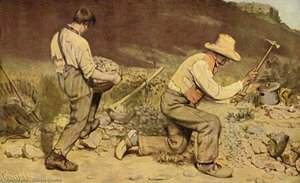
Courbet’s artistic breakthrough arrived with a deliberate rejection of Romantic conventions. He eschewed the theatrical grandeur favored by Delacroix and Géricault, opting for a starkly realistic portrayal of human experience. This decision wasn't merely stylistic; it represented a fundamental assertion about the dignity inherent in portraying commonplace existence. His early canvases explored landscapes and portraits, but soon focused on scenes of working-class life—executed on monumental scales traditionally reserved for historical or religious paintings. Consider The Stone Breakers (1849), tragically destroyed during World War II – an image that encapsulates Courbet’s revolutionary ethos. The painting depicts two laborers engaged in arduous toil, their faces obscured by exhaustion and grime; Courbet deliberately avoided romanticizing their plight, presenting them with unflinching honesty—a bold departure from the idealized depictions prevalent in academic circles. This uncompromising commitment to realism established him as a champion of artistic integrity and challenged the prevailing aesthetic sensibilities of his time.Notable Works and Artistic Philosophy
Courbet’s oeuvre is marked by an extraordinary range of subjects and stylistic approaches, reflecting his unwavering belief in the transformative power of art. Among his most celebrated paintings are A Burial at Ornans (1850-51), a monumental canvas depicting a rural funeral—a scene rendered with meticulous detail and devoid of sentimental embellishment. Its sheer scale—typically reserved for grand historical canvases—served as a deliberate provocation, signaling Courbet’s refusal to conform to artistic expectations. He championed the use of *impasto*, applying paint thickly onto the canvas surface, thereby emphasizing its materiality and capturing the textures of the natural world with remarkable accuracy. Similarly, The Painter's Studio (1855) is an allegorical masterpiece—a self-portrait that embodies Courbet’s artistic convictions and engages in a dialogue with contemporary social issues. He sought to convey not merely what he saw but also *how* he perceived the world—a perspective informed by his unwavering belief in the importance of truthful representation.Legacy and Influence
Gustave Courbet's impact on subsequent generations of artists is undeniable. His pioneering spirit ignited the flame of Realism, inspiring Impressionists and Post-Impressionists to liberate themselves from academic constraints and explore new avenues for artistic expression. He championed social justice through his art—a stance that resonated deeply with artists committed to confronting societal inequities. Courbet’s legacy extends beyond stylistic innovation; it embodies a profound philosophical commitment: the conviction that art should serve as a mirror reflecting the complexities of human experience, unafraid to confront uncomfortable truths and challenge prevailing ideologies. He died in 1877, leaving behind an artistic corpus that continues to captivate audiences worldwide—a testament to his enduring influence on the history of art and its ongoing capacity to provoke contemplation and inspire change.
Курбе
1819 - 1877 , Франция
Краткая справка
- Artistic Movement Or Style: Реализм
- Artists Or Movements Influenced By This Artist:
- Импрессионизм
- Послеимпрессионизм
- Artists Who Influenced This Artist:
- Эжен Делакруа
- Теодор Жерико
- Date Of Birth: 10 июня 1819 г.
- Date Of Death: 31 декабря 1877 г.
- Full Name: Gustave Courbet
- Nationality: Французский
- Notable Artworks:
- Сбор камней
- Похороны в Орнане
- Художественная мастерская
- Place Of Birth: Орланс, Франция
Похожие статьи
Реализм в живописи: 10 шедевров, изменивших искусство | OriginalUniqueArt.com
Погрузитесь в мир реализма! 10 шедевров Курбе, Милле, Мане и других великих художников. Узнайте историю создания культовых картин и вдохновитесь для интерьера с OriginalUniqueArt.com – музейное качество репродукций.
Реализм в живописи: 10 шедевров, вдохновляющих на декор интерьера
Погрузитесь в мир реализма! От Courbet до Manet – 10 величайших картин, отражающих жизнь и эмоции. Узнайте историю шедевров и вдохновитесь для создания уникального интерьера с OriginalUniqueArt.com. Explore the full collection online!
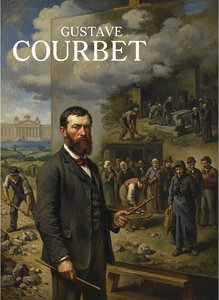
Gustave Courbet: Realism's Revolutionary Vision & the Social Canvas of 19th-Century France
Explore the revolutionary art of Gustave Courbet, pioneer of Realism. Discover his iconic paintings, social commentary, and lasting impact on 19th-century French art history. Expert analysis & insights.
Топ-25 шедевров Венецианской биеннале: искусство для вашего дома от OriginalUniqueArt
Откройте для себя 25 шедевров Венецианской биеннале! Узнайте истории великих художников, техники и вдохновение за культовыми работами. Репродукции картин высокого качества от OriginalUniqueArt.com – искусство для вашего дома. Explore the full collection online!
25 Шедевров Густава Климта: Искусство, Декор и Золотой Век Австрийского Модерна
Погрузитесь в мир Густава Климта! 25 шедевров австрийского модерна, символизма и золотой живописи. Узнайте истории создания знаменитых картин Климта и вдохновитесь для декора интерьера. Репродукции музейного качества на OriginalUniqueArt.com.