St.Peter Penitent
Baroque Painting
Renaissance
97.0 x 110.0 cm
The Kremer Collection
Масляная репродукция ручной работы
Картина маслом на холсте в выбранном вами размере и раме, написанная на заказ нашими художниками.
Выберите один из наших стандартных размеров, соответствующих оригинальным пропорциям произведения искусства.
Вы можете указать собственные размеры, чтобы картина идеально вписалась в выбранную раму или пространство. Если выбранный вами размер не соответствует пропорциям оригинала, мы либо обрежем полотно, либо расширим его за счет дополнительных элементов, написанных вручную. Цифровой макет будет отправлен вам на утверждение перед началом производства.
Обратите внимание, что предварительный просмотр на экране не отражает фактическую обрезку или расширение. Только макет точно покажет окончательную композицию.
Хотя доступны индивидуальные размеры, мы рекомендуем выбирать вариант из предопределенного списка, чтобы сохранить исходные пропорции.
После оформления заказа команда OriginalUniqueArt.com свяжется с клиентом по электронной почте для уточнения деталей и предоставит предварительный макет
Доставка по всему миру () за 3–4 недели вместо стандартных 5 недель. (22 Июль). Без компромиссов в качестве.
Бесплатная экспресс-доставка по всему миру
Высококачественный льняной холст
Полное страхование доставки
Гарантия возмещения таможенных пошлин
Гарантия точного соответствия цветов
Политика возврата в течение 60 дней (только при наличии дефектов)
Гарантия возврата 100% средств
Предложение оптовых скидок
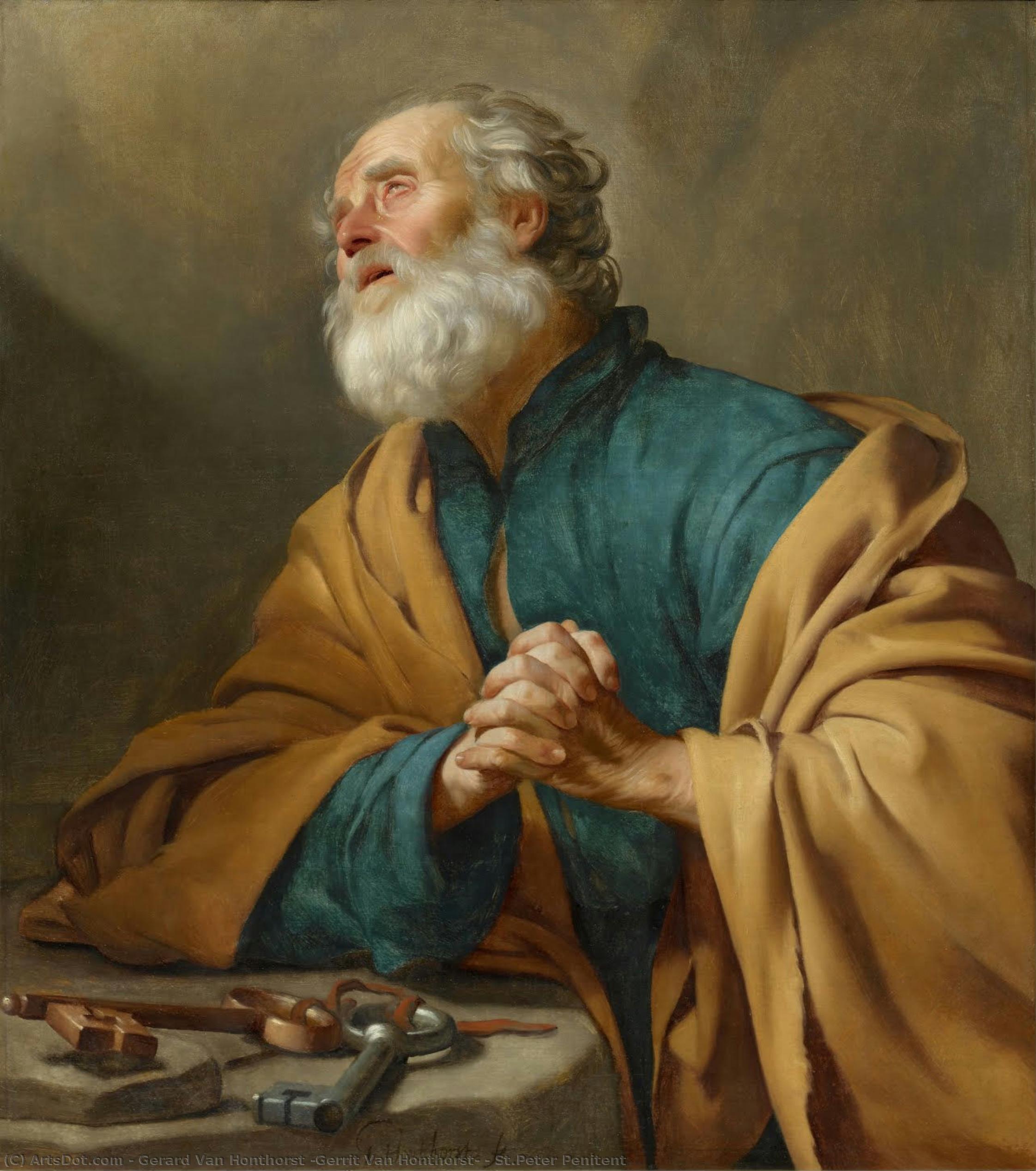
St.Peter Penitent
Техника репродукции
Размер репродукции
-
Итоговая стоимость
-
Описание произведения
A Study in Shadow and Faith: Gerard van Honthorst’s ‘St. Peter Penitent’
Gerard van Honthorst's “St. Peter Penitent” is more than just a portrait; it’s a profound meditation on faith, repentance, and the dramatic interplay of light and darkness – hallmarks of the artist’s distinctive style forged in the crucible of the Roman Baroque. Painted circa 1618-20, this work offers a rare glimpse into the artistic sensibilities of a master who skillfully blended Caravaggio's revolutionary tenebrism with his own nuanced approach to human emotion.
- The Figure: The central subject is an elderly man, rendered with remarkable realism and sensitivity. His posture – head bowed, hands clasped in prayer – immediately conveys a sense of deep introspection and sorrow. The details of his weathered face, the furrowed brow, and the carefully observed folds of his blue robe speak to a life lived, perhaps one marked by both virtue and regret.
- Caravaggio’s Legacy: Honthorst's debt to Caravaggio is undeniable. Just as Caravaggio used stark contrasts to heighten emotional impact, Honthorst employs dramatic lighting to isolate Peter within a sphere of illumination, drawing the viewer’s eye directly to his face and intensifying the sense of his inner turmoil.
- Technical Mastery: The painting demonstrates a sophisticated understanding of oil paint techniques. Notice the subtle gradations in tone, achieved through meticulous layering and blending, creating a rich texture that adds depth and realism to the figure. The use of impasto – thick application of paint – particularly around the folds of the robe, further enhances the three-dimensional effect.
The Language of Light: Tenebrism and its Impact
Honthorst’s masterful manipulation of light is central to the painting's power. The tenebrist technique, popularized by Caravaggio, isn’t merely a stylistic choice; it’s a deliberate strategy for conveying psychological states. The deep shadows enveloping Peter suggest a hidden world of doubt and remorse, while the single source of illumination – likely from an unseen window – symbolizes divine grace or perhaps the flickering hope of redemption. This contrast creates a palpable tension within the composition, forcing the viewer to confront the complexities of faith and human fallibility.
“The darkness is not merely the absence of light,” Honthorst seems to suggest, “but an active element in the drama of the soul.”Symbolism and Context
Beyond its immediate devotional subject matter, "St. Peter Penitent" resonates with broader symbolic meanings. The tools scattered around the figure – wrenches and screwdrivers – are a striking anomaly, introducing an element of earthly labor and repair into a scene traditionally associated with spiritual contemplation. This juxtaposition could represent the ongoing struggle between faith and worldly concerns, or perhaps the need for constant vigilance against temptation. Painted during a period of intense religious fervor and artistic innovation, the work reflects the broader cultural anxieties and aspirations of its time.
- Historical Context: Honthorst was working in Utrecht during a period of significant artistic change, influenced by the influx of Italian artists and ideas.
- Royal Patronage: The painting’s creation coincided with Honthorst's increasing prominence within European royal circles, including Queen Elizabeth of Bohemia, who commissioned numerous works from him.
A Timeless Masterpiece
"St. Peter Penitent" remains a compelling and emotionally resonant work of art. Its dramatic lighting, meticulous detail, and profound subject matter continue to captivate viewers centuries after its creation. It’s a testament to Gerard van Honthorst's artistic genius – a master of light, shadow, and the human condition.
Биография художника
A Master of Light and Shadow: The Life and Art of Gerard van Honthorst
Gerard van Honthorst, a name synonymous with dramatic intensity and masterful light manipulation, emerged from Utrecht in 1592 as a pivotal figure poised to enrich the Dutch Golden Age. Initially guided by his father, a skilled decorative painter, young Gerard’s innate talent blossomed under the tutelage of Abraham Bloemaert, establishing a solid foundation in draftsmanship and composition – a crucial stepping stone towards his future brilliance. However, it was a transformative journey to Rome that irrevocably altered the course of his artistic development, forever shaping his signature style and earning him the evocative nickname “Gherardo delle Notti,” or Gerard of the Nights. The encounter with Caravaggio’s revolutionary approach to light and shadow – the bold use of tenebrism – became the cornerstone of Honthorst's oeuvre, imbuing his canvases with a palpable sense of drama, psychological depth, and an undeniable theatricality. He didn’t merely imitate Caravaggio; he skillfully translated the Italian master’s innovations into a distinctly Dutch sensibility, focusing on intimate scenes bathed in the warm glow of candlelight, lamps, and flickering hearth fires – creating an atmosphere simultaneously realistic and profoundly captivating. This mastery over light wasn't simply technical prowess; it was a deliberate means of revealing character, of drawing the viewer directly into the emotional core of each depicted scene, inviting them to witness secrets and unspoken narratives.Roman Acclaim and the Foundations of His Style
Honthorst’s time in Rome between 1616 and approximately 1620 was a period of remarkable success and significant patronage. He quickly established himself within the city's vibrant artistic circles, gaining favor amongst its elite, including Vincenzo Giustiniani, for whom he created the monumental “Christ Before the High Priest,” now residing in London’s National Gallery. This painting stands as a prime example of Honthorst’s technical mastery and his ability to convey profound psychological complexity within his figures – a testament to his deep understanding of human emotion. Beyond simply replicating Caravaggio's techniques, Honthorst subtly adapted them to suit the Dutch aesthetic, prioritizing clarity and a more restrained emotional palette compared to the Italian master’s often overwhelming intensity. He also benefited from exposure to other influential artists of the era, including Bartolomeo Manfredi and the Carracci family, absorbing their diverse approaches to composition, color theory, and subject matter. The Palazzo Giustiniani, where he resided, served as a hub for artistic exchange, fostering an environment conducive to experimentation and innovation. This Roman period wasn’t just about technical refinement; it was a crucible in which Honthorst forged his unique artistic identity – a synthesis of Italian drama and Dutch realism.Return to the Netherlands and Royal Commissions
Upon returning to Utrecht around 1620, Honthorst swiftly established himself as a leading portrait painter within the burgeoning Dutch Republic. His ability to capture not just physical likeness but also the character, social standing, and inner life of his subjects made him exceptionally sought after by wealthy merchants, noble families, and even members of the royal court. He became president of the St. Luke’s Guild in Utrecht in 1623 – a prestigious appointment that underscored his growing influence within the artistic community. This period witnessed a prolific output of commissions, allowing Honthorst to further refine his style and develop a distinctive visual language characterized by dramatic lighting, dynamic compositions, and an acute awareness of human psychology. He produced numerous portraits of prominent figures, including members of the Stadtholder’s family and wealthy merchants, each imbued with a sense of realism and psychological depth. His work during this time demonstrates a remarkable versatility, ranging from formal court portraits to more intimate genre scenes depicting everyday life.The Utrecht Caravaggisti and Artistic Collaboration
Honthorst was a key figure in the *Utrecht Caravaggisti* movement – a group of Dutch painters who were deeply influenced by the dramatic realism and tenebrism pioneered by Caravaggio. Alongside artists like Hendrick ter Brugghen and Dirck van Baburen, Honthorst helped to establish a distinctly Dutch interpretation of Italian Baroque style, adapting its intensity and emotional power to suit the sensibilities of the Dutch Republic. This movement represented a significant shift in Dutch painting, moving away from the more restrained Mannerist styles prevalent in earlier decades. The *Utrecht Caravaggisti* were not simply imitators; they developed their own unique approaches to light, color, and composition, creating works that were both deeply rooted in Italian tradition and distinctly Dutch in character. Furthermore, Honthorst’s willingness to collaborate with other artists – notably Peter Paul Rubens during a visit to Utrecht – speaks volumes about his open-mindedness and artistic generosity. These collaborations weren't merely pragmatic arrangements; they represented intellectual exchanges that enriched the artistic landscape and broadened the horizons of both artists involved.Legacy and Enduring Influence
Gerard van Honthorst’s influence resonated far beyond his lifetime. He remains a pivotal figure in Dutch art history, celebrated for his dramatic use of light and shadow, his insightful portraits, and his ability to capture the complexities of human emotion. His paintings continue to captivate audiences today, offering a glimpse into the vibrant artistic world of the Dutch Golden Age. The *Diana and Apollo* painting, now housed at Hampton Court Palace, stands as a testament to his skill and artistry, while his numerous drawings provide valuable insights into his creative process. Honthorst’s legacy extends beyond individual works; he helped to shape the development of Dutch Baroque painting, inspiring generations of artists who followed in his footsteps. His ability to seamlessly blend Italian influences with Dutch sensibilities ensured his lasting impact on the artistic landscape, reminding us that true artistry lies not just in technical skill but also in the capacity to evoke emotion and illuminate the human condition.Герхард ван Хонторст
1590 - 1656 , Нидерланды
Основные сведения
- Artistic Movement Or Style: Барокко, Караваджизм
- Artists Or Movements Influenced By This Artist: ['Утрехтский Караваджизм']
- Artists Who Influenced This Artist: ['Микеланджело да Караваджо']
- Date Of Birth: 1592 г.
- Date Of Death: 1656 г.
- Full Name: Герхард ван Хонторст
- Nationality: Нидерландский
- Notable Artworks:
- Христос перед высоким жрецом
- Взятие Христа
- Place Of Birth: Утрехт, Нидерланды

Вариант со стеклом доступен только для размеров менее 110 см