

 Предпросмотр
 Поделиться
 Поделиться
 Детали произведения

 Скачать
 Похожие работы
 Рентгенография
 Слайд-шоу
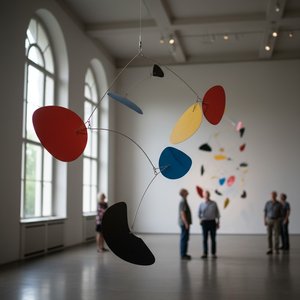
Twenty four Lines


 Читать далее
Масляная репродукция ручной работы
Картина маслом на холсте в выбранном вами размере и раме, написанная на заказ нашими художниками. ( Перейти к печати Переключиться на изображение)




































Выберите один из наших стандартных размеров, соответствующих оригинальным пропорциям произведения искусства.

Вы можете указать собственные размеры, чтобы картина идеально вписалась в выбранную раму или пространство. Если выбранный вами размер не соответствует пропорциям оригинала, мы либо обрежем полотно, либо расширим его за счет дополнительных элементов, написанных вручную. Цифровой макет будет отправлен вам на утверждение перед началом производства.
Обратите внимание, что предварительный просмотр на экране не отражает фактическую обрезку или расширение. Только макет точно покажет окончательную композицию.
Хотя доступны индивидуальные размеры, мы рекомендуем выбирать вариант из предопределенного списка, чтобы сохранить исходные пропорции.
После оформления заказа команда OriginalUniqueArt.com свяжется с клиентом по электронной почте для уточнения деталей и предоставит предварительный макет
Доставка по всему миру () за 3–4 недели вместо стандартных 5 недель. (10 Август). Без компромиссов в качестве.

Бесплатная экспресс-доставка по всему миру

Высококачественный льняной холст

Полное страхование доставки

Гарантия возмещения таможенных пошлин

Гарантия точного соответствия цветов

Политика возврата в течение 60 дней (только при наличии дефектов)

Гарантия возврата 100% средств

Предложение оптовых скидок
 Вариант со стеклом доступен только для размеров менее 110 см

Twenty four Lines
Техника репродукции
Размер репродукции
-


Итоговая стоимость
$ 300
Биография художника
The Poetry of Motion: The Life and Legacy of George Rickey
George Rickey stands as a singular figure in American sculpture, recognized for his groundbreaking approach to kinetic art—a fusion of geometric abstraction and mechanical movement that captivated audiences throughout the mid-century. Born in South Bend, Indiana, in 1907, Rickey’s formative years were marked by an early fascination with simple mechanisms, specifically the conical latches found in historic buildings, which instilled a lifelong preoccupation with paradoxical design principles. This intuitive understanding would become a cornerstone of his artistic vision, informing countless sculptures that defy conventional notions of static form and inviting viewers to contemplate dynamism within seemingly austere structures. His childhood was deeply influenced by the industrial atmosphere of Glasgow, Scotland, where his father, an engineer for the Singer Sewing Machine Company, fostered a spirit of innovation. Growing up near the River Clyde and learning to sail around the outer islands provided Rickey with a firsthand education in the fluid, unpredictable rhythms of nature—a sensory foundation that would later manifest in his wind-driven masterpieces.From Canvas to Kinetic Engineering
The trajectory of Rickey’s career was far from linear, evolving from the static world of painting into the complex realm of mechanical engineering. After studying at Trinity College Dublin and Balliol College Oxford, he ventured into Paris in 1926, immersing himself in the avant-garde energy of the Académie L'Hote and Académie Moderne. These years exposed him to the principles of Constructivism, yet his early professional output was rooted in much more traditional mediums; during the 1930s and early 40s, he worked as a painter and muralist, even completing commissions through the WPA. It was not until his service in the Army Air Corps during World War II that a dormant aptitude for mechanics resurfaced, fundamentally altering his artistic trajectory. He began to move away from the fixed image toward an exploration of movement itself, seeking to capture what he called the "waving of branches and the trembling of stems." Unlike many of his contemporaries who relied on motorized components, Rickey sought a more organic connection to the environment, engineering his stainless steel forms to react to the most delicate alterations in wind currents.The Architecture of Air and Steel
Rickey’s mature work is characterized by a profound elegance, where heavy, industrial materials like stainless steel are transformed into lyrical, weightless entities. He often referred to his creations as "useless machines," a playful nod to their lack of utilitarian function, yet they served a vital purpose in redefining the relationship between sculpture and space. His sculptures, such as the celebrated Peristyle series, utilized the principle of the pendulum to create a dialogue between gravity and air. In these works, metal blades were precisely calibrated to "talk" to one another through motion, moving in a slow, deliberate, yet entirely unpredictable dance that ensured they would never collide. This mastery of balance allowed his large-scale installations to reshape landscapes, turning public squares and museum gardens into active stages where light, shadow, and wind perform in constant flux.A Lasting Impression on Modernism
The historical significance of George Rickey lies in his ability to bridge the gap between the rigid geometry of abstraction and the ephemeral beauty of the natural world. While he shared much common ground with legends like Alexander Calder, Rickey carved out a unique niche by eschewing the motorized for the atmospheric, focusing less on the physical shape of the object and more on the patterns of its movement. His dedication to "movement as means" earned him international acclaim and prestigious honors, including the Lifetime Achievement Award from the International Sculpture Center in 1999. Today, his legacy persists in major museum collections across North America, Europe, and Asia, where his gleaming, burnished surfaces continue to catch the light and invite a sense of wonder. Through his work, the viewer is reminded that art is not merely something to be observed in stillness, but a living, breathing participant in the ever-changing environment.
George Rickey
1907 - 2002 , United States of America
Основные сведения
- Artistic Movement Or Style: Kinetic Sculpture
- Artists Or Movements Influenced By This Artist: ['Wind Sculpture']
- Artists Who Influenced This Artist: ['Constructivism']
- Date Of Birth: June 6, 1907
- Date Of Death: July 17, 2002
- Full Name: George Warren Rickey
- Nationality: American
- Notable Artworks:
- The Departure
- Twenty four Lines
- Place Of Birth: South Bend, United States
Похожие статьи

Монохромная магия интерьера: исследование роли чёрного, белого и серого в создании атмосферы современного пространства
Изучите силу монохромного дизайна! Экспертные советы по созданию элегантных интерьеров в черном, белом и сером цветах. Вдохновение, тренды и практические решения для вашего дома.

Абстрактная гармония интерьера: текстурный резонанс в сочетании искусства, мебели и отделочных материалов
Создайте гармоничный интерьер своей мечты! Экспертные советы по сочетанию искусства, мебели и текстур. Вдохновение, идеи и практические рекомендации для стильного дома.

Фрагментированные перспективы, объединенные пространства: Кубизм в дизайне современных вилл – руководство по эстетике и праву
Руководство по интеграции кубизма в дизайн современных вилл. Эстетика, практические советы и юридические аспекты от экспертов. Создайте уникальный проект и повысьте стоимость недвижимости!

The Enduring Allure of Marble in Art History: From Classical Sculpture to Modern Abstraction
Explore the captivating history of marble sculpture from ancient Greece to modern art. Discover renowned artists like Canova & Michelangelo, carving techniques, and investment insights at OriginalUniqueArt.
Alexander Calder: Kinetic Sculpture, Mobile Art & the Poetics of Chance
Explore the revolutionary world of Alexander Calder's kinetic sculptures & mobiles. Discover insights for collectors, acquisition advice, and the enduring legacy of this modern master. Expert analysis & art valuation.

