
 Предпросмотр
 Поделиться
 Поделиться
 Детали произведения
 Руководство

 Скачать
 Похожие предметы
 Рентгенография
 Слайд-шоу
 Вопросы и ответы
 Статистика просмотров
Composition No. 15

- 150.0 x 125.0 cm

 Читать далее
Произведение искусства, представленное на этой странице, защищено законом об авторском праве, что исключает возможность законного создания или продажи его точной репродукции. Данная защита обеспечивается международными соглашениями, такими как Бернская конвенция и национальным законодательством, включая положения, изложенные в Закон США об авторском праве — Раздел 17.
Этот метод полностью соответствует нормам авторского права, так как он не предполагает копирования или дублирования защищенного произведения. Напротив, это творческая реинтерпретация — создание новой картины, которая вдохновлена оригиналом, но не является его точной копией.
Жикле и арт-принты
Печать (жикле) или холст музейного качества с быстрыми сроками изготовления и широким выбором вариантов отделки. ( Купить картину ручной работы Перейти к цифровым изображениям)




































Выберите один из наших стандартных размеров, соответствующих оригинальным пропорциям произведения искусства.

Введите необходимую ширину и высоту, чтобы репродукция подошла к вашей раме или стене. При печати изображение можно только уменьшить, но нельзя увеличить больше оригинала, поэтому при выборе другого формата часть изображения может быть обрезана. Перед печатью мы отправим вам цифровой макет на утверждение. Изображение на этой странице не отображает реальную обрезку — ее можно увидеть только на макете.
Доставка по всему миру () за 2 недели вместо стандартных 4–5 недель. (8 Ноябрь)

Бесплатная экспресс-доставка по всему миру

Высококачественный льняной холст

Полное страхование при доставке

Гарантия возмещения таможенных пошлин

Гарантия точного цветового соответствия

100-дневная гарантия возврата (только при обнаружении дефектов)

Гарантия возврата 100% средств

Скидка при оптовом заказе
 Вариант со стеклом доступен только для размеров менее 110 см

Composition No. 15
Жикле и арт-принты
Размер репродукции
-


Итоговая стоимость
$ 81
Биография художника
Friedrich Vordemberge-Gildewart: Architect of Geometric Abstraction
Born in Osnabrück, Germany, in 1899, Friedrich Vordemberge-Gildewart’s artistic journey was a radical departure from traditional representation, charting instead a course toward pure abstraction and the exploration of geometric forms. His life, intertwined with the burgeoning movements of De Stijl and Abstraction-Création, reflects a profound engagement with modernism's quest for universal visual language. From his early studies in architecture and sculpture at Hanover’s prestigious art institutions to his eventual exile from Germany due to the rise of Nazism, Vordemberge-Gildewart’s career was marked by both artistic innovation and personal displacement.
Vordemberge-Gildewart's formative years were deeply influenced by the intellectual currents swirling around him. He initially studied architecture and sculpture, disciplines that instilled in him a meticulous understanding of structure and form – qualities he would later translate into his abstract compositions. Crucially, he became involved with *Gruppe K* (K for Konstructivismus) in Hanover, a group dedicated to exploring constructivist principles within the context of German art. This association exposed him to the ideas of El Lissitzky, a Russian pioneer of geometric abstraction, and provided a crucial foundation for his later work. His time in Hanover also coincided with his encounter with Theo van Doesburg, one of the founders of De Stijl, a movement that championed a reductive aesthetic based on primary colors, black, white, and bold geometric shapes. This exposure to De Stijl’s philosophy – emphasizing universal harmony through simplified forms – profoundly shaped Vordemberge-Gildewart's artistic vision.
The Rise of Geometric Abstraction
Vordemberge-Gildewart’s artistic development during the 1920s witnessed a pivotal shift toward abstraction. He began experimenting with non-objective compositions, moving away from representational imagery and embracing a purely visual language built upon geometric elements. His early works, such as “Composition No. 15” (1925), demonstrate this transition – dynamic arrangements of intersecting lines, rectangles, and circles that eschew any illusionistic depth or narrative content. These paintings weren’t merely decorative; they were explorations of spatial relationships, color theory, and the inherent balance within geometric forms.
His involvement with De Stijl extended beyond mere stylistic influence. He actively participated in the group's theoretical discussions, contributing to their exploration of universal harmony and the potential of abstract art to transcend cultural boundaries. He also formed the ‘Abstrakten Hannover’ group alongside Kurt Schwitters and Carl Buchheister, further solidifying his position within the avant-garde artistic landscape of Germany. This period saw him experimenting with collage techniques, incorporating paper and other materials into his paintings to create layered textures and complex visual rhythms.
Exile and Artistic Evolution
The rise of Nazism in Germany dramatically altered Vordemberge-Gildewart’s trajectory. His work was deemed “degenerate” by the regime, leading to its confiscation and his forced exile in 1937. This displacement marked a significant turning point in his career, propelling him to Amsterdam where he continued to develop his abstract style, albeit under challenging circumstances.
In Amsterdam, Vordemberge-Gildewart’s artistic practice evolved further. He embraced the principles of Abstraction-Création, a group that sought to revitalize abstraction after a period of relative decline. He explored new techniques and materials, including collage, creating works that combined geometric forms with textural elements. His later paintings, such as “Composition No. 154” (1946), demonstrate a refined mastery of color and composition, characterized by a sense of quiet contemplation and understated elegance. Despite the hardships he faced during World War II, Vordemberge-Gildewart remained committed to his artistic vision, producing a significant body of work that continues to resonate with viewers today.
Legacy and Influence
Friedrich Vordemberge-Gildewart’s contribution to the development of abstract art is undeniable. He was one of the first artists to dedicate his entire career to an exclusively abstract style, pioneering a visual language based on geometric forms and color relationships. His work profoundly influenced subsequent generations of abstract painters, including Josef Albers and Barnett Newman. His exploration of spatial relationships and dynamic compositions established new possibilities for non-representational art, demonstrating that abstraction could be both intellectually stimulating and aesthetically compelling.
Vordemberge-Gildewart’s legacy extends beyond his individual artworks. He played a crucial role in shaping the theoretical foundations of De Stijl and Abstraction-Création, contributing to the broader discourse on modernism and the potential of art to express universal truths. His story serves as a poignant reminder of the challenges faced by artists during times of political upheaval and the enduring power of artistic vision to transcend adversity.

Об авторе
- Full Name: Friedrich Vordemberge-Gildewart
- Nationality: German
- Date Of Birth: 1899
- Date Of Death: December 19, 1962
- Place Of Birth: Osnabrück, Germany
- Notable Artworks:
- Composition No. 15
- Composition No. 104
- Composition No. 154
- Artistic Movement Or Style: Neo-Plasticism (De Stijl)
- Artists Who Influenced This Artist:
- Theo van Doesburg
- Kurt Schwitters
- Artists Or Movements Influenced By This Artist:
- El Lissitzky
- De Stijl
Похожие статьи

25 Iconic Masterpieces by Valentin Laurent de Courcey: The Ultimate Art Deco Collection
Explore 25 iconic works by Valentin de Courcey. Discover high Art Deco fashion masterpieces on OriginalUniqueArt.com.
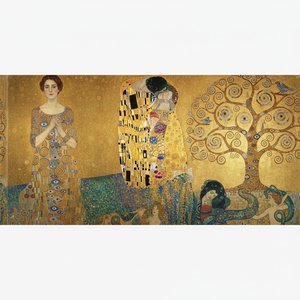
25 Шедевров Густава Климта: Искусство, Декор и Золотой Век Австрийского Модерна
Погрузитесь в мир Густава Климта! 25 шедевров австрийского модерна, символизма и золотой живописи. Узнайте истории создания знаменитых картин Климта и вдохновитесь для декора интерьера. Репродукции музейного качества на OriginalUniqueArt.com.

Golden Splendor: The Top 25 Masterpieces by Gustav Klimt
Immerse yourself in the golden splendor of Gustav Klimt. Explore 25 iconic masterpieces from the Vienna Secession, featuring breathtaking Art Nouveau textures and gold leaf beauty. Find museum-quality reproductions for your decor. Discover all masterpieces on OriginalUniqueArt.com.

Golden Splendor: The 25 Most Iconic Masterpieces by Gustav Klimt
Immerse yourself in the golden splendor of Gustav Klimt. Explore 25 iconic Art Nouveau masterpieces, from The Kiss to his legendary portraits. Discover the stories behind these timeless works and find museum-quality art reproductions at OriginalUniqueArt.com.

Golden Splendor: The 25 Most Iconic Masterpieces by Gustav Klimt
Immerse yourself in the golden splendor of Gustav Klimt. Explore 25 iconic Art Nouveau masterpieces, from The Kiss to his legendary portraits. Discover the stories behind these timeless works and find museum-quality art reproductions on OriginalUniqueArt.com.