

 Примерить в интерьере
 Отправить
 Поделиться
 Подробнее
 Руководство

 Скачать
 Похожие объекты
 Рентгенография
 Слайд-шоу
 Статистика
On the wallaby track
 Acrylic On Canvas
- WallArt
- Heidelberg School
 1896
1896- 19th Century
 176.0 x 278.0 cm
 Галерея Нового Южного Уэльса
 Развернуть текст
Масляная репродукция ручной работы
Картина маслом на холсте в выбранном вами размере и раме, написанная на заказ нашими художниками. ( Переключиться на печать Перейти к цифровым изображениям)




P118B $10

P118H $10

P118W $10

P438Z $10

P508JH $12

P508YH $12

P805H $10

P805Z $10

P919BZ $10

P919G $10

P919XJ $10

P959ZH $10

P968JZ $12

W106C $8

W218G $10

W218JH $8

W218Y $10

W307PJ $10

W316G $10

W316PJ $8

W316Y $10

W398PJ $8

W4111J $10

W500HY $15

W500JH $15

W692G $12

W849H $8

W940BG $15

W953PJ $8




Выберите один из наших стандартных размеров, соответствующих оригинальным пропорциям произведения искусства.

Введите необходимую ширину и высоту, чтобы репродукция подошла к вашей раме или стене. Поскольку работа выполняется вручную, при изменении пропорций художник может немного увеличить область вокруг картины или, наоборот, обрезать края — выбор за вами. Перед началом работы мы пришлем вам цифровой макет на утверждение. Изображение на этой странице не является точным результатом — увидеть реальный вид можно только на макете.
После оформления заказа команда OriginalUniqueArt.com свяжется с клиентом по электронной почте для уточнения деталей и предоставит предварительный макет
Доставка по всему миру () за 3–4 недели вместо стандартных 5 недель. (21 Октябрь). Без компромиссов в качестве.

Бесплатная экспресс-доставка по всему миру

Высококачественный льняной холст

Полное страхование при транспортировке

Гарантия возврата таможенных пошлин

Гарантия точного цветового соответствия

100-дневный период возврата (только при обнаружении дефектов)

Гарантия возврата 100% средств

Скидка при заказе нескольких работ
 Вариант со стеклом доступен только для размеров менее 110 см

On the wallaby track
Материал репродукции
Размер репродукции
-


Итоговая стоимость
$ 300
A Moment Suspended in the Australian Bush
To gaze upon On the wallaby track is to be gently ushered into a sun-dappled moment of profound stillness within the vast, embracing landscape of colonial Australia. This masterful painting by Frederick McCubbin captures more than just a scene; it encapsulates a feeling—the quiet resilience of life continuing amidst the grandeur and occasional harshness of nature. The composition centers on a tender tableau: a woman seated upon the earth, cradling her baby close to her heart. Her posture speaks volumes of weariness mixed with deep maternal connection, suggesting a necessary pause during a journey through the bushland. In the background, two male figures stand near the shelter of trees and rocks, their presence adding a narrative depth—are they guides, companions, or simply observers? The entire scene breathes with an evident empathy for the rhythms of rural labouring life, making it instantly relatable to anyone who has ever found solace in open air.
The Heart of Heidelberg School Realism
Painted in 1896, this work stands as a quintessential example of the Heidelberg School movement. McCubbin, a principal figure within this influential group, was instrumental in defining a distinctly Australian visual language for art. The style eschews academic formality for an immediacy and naturalism that speaks directly to the local experience. His technique is characterized by a masterful handling of light—the way sunlight filters through unseen foliage, dappling the grass beneath the woman’s resting place. This attention to atmospheric detail, combined with his commitment to depicting everyday Australian life, elevated genre painting to a level of national significance. For collectors and designers alike, this piece offers not merely decoration, but a tangible piece of cultural history rendered with breathtaking technical skill.
Symbolism of Connection and Journey
The symbolism woven into On the wallaby track is rich and multi-layered. The mother and child represent continuity, the enduring cycle of life that persists regardless of external challenges. Their grounded placement emphasizes a deep connection to the land itself—the earth beneath them seems as much a part of their repose as they are. Conversely, the men in the background, framed by the sturdy permanence of rock and tree, suggest community and shared endeavor. The title itself hints at movement, suggesting that this moment of rest is temporary, a breath taken before continuing along life’s winding path. It speaks to the pioneering spirit, the necessary reliance on one another, and the enduring beauty found in simple human connection.
An Emotional Resonance for Modern Spaces
For those seeking art that transcends mere aesthetics, this reproduction offers profound emotional resonance. Its warm palette—the ochres of the earth, the deep greens of the foliage, and the soft tones of skin—lends itself beautifully to creating an atmosphere of calm contemplation within any interior space. Whether placed in a study evoking scholarly reflection or a living area desiring a connection to nature, this painting acts as a visual anchor. It invites the viewer to slow down, to breathe deeply, and to appreciate the quiet dignity found in moments of rest amidst the grand sweep of existence.
Вопросы и ответы
Позволяет ли авторское право на «On the wallaby track», Фредерик МакКубин делать репродукции?
Оригинал произведения «On the wallaby track» находится в Галерея Нового Южного Уэльса, и работа является является общественным достоянием — срок действия авторского права истек.
К какой исторической эпохе относится «On the wallaby track», Фредерик МакКубин?
«On the wallaby track», Фредерик МакКубин относится к периоду 19th Century. Этот период определяет исторический контекст произведения.
Доступна ли предварительный просмотр в дополненной реальности для «On the wallaby track»?
Вы можете примерить работу «On the wallaby track», Фредерик МакКубин на свою стену с помощью страницы Предпросмотр в AR, используя технологию дополненной реальности на совместимом устройстве.
Биография художника
Frederick McCubbin - A Life Rooted in the Australian Landscape
Frederick McCubbin, born February 25th, 1855, in Melbourne, Australia, stands as a cornerstone of Australian art—a figure inextricably linked to the nation’s evolving identity and its distinctive visual language. His journey from humble beginnings—the son of bakers who instilled in him a profound work ethic—to becoming a pivotal voice within the Heidelberg School is a testament to his unwavering dedication and artistic vision. McCubbin's formative years were marked by diverse experiences, beginning with his education at William Willmett’s West Melbourne Common School and St Paul’s School, Swanston Street, where he absorbed foundational knowledge of Victorian society. He subsequently honed his skills as solicitor’s clerk and assisted in the family bakery business—activities that instilled a deep understanding of everyday Australian life, informing much of his artistic output. Crucially, he received formal training at the National Gallery of Victoria's School of Design, studying under luminaries like Eugene von Guerard and George Folingsby, absorbing the stylistic currents of the time and mastering techniques vital to landscape painting.The Heidelberg School: Defining a National Aesthetic
A transformative alliance with Tom Roberts in 1885 ignited McCubbin’s artistic trajectory—establishing the Box Hill Artists' Camp alongside Arthur Streeton and Charles Conder. This plein air collective deliberately rejected the conventions of European academic art, venturing into the Australian bushland with an unprecedented spirit of immediacy and authenticity. Their aim was to capture not merely scenery but the very essence of Australian life—its hardships, its triumphs, and its relationship with the vast wilderness. McCubbin’s contribution during this period was instrumental in shaping what would become known as the Heidelberg School aesthetic. Works like *Down on His Luck* (1889), *On the Wallaby Track* (1896), and *The Pioneer* (1904) exemplify this style—characterized by bold brushstrokes, luminous color palettes, and a focus on depicting rural life with remarkable detail and emotional resonance. These paintings weren’t simply representations of landscapes; they were narratives imbued with social commentary, reflecting the anxieties and aspirations of a nation grappling with its newfound independence. The Heidelberg School artists sought to express the spirit of Australia—its beauty and its challenges—in ways that distinguished it from European artistic traditions.Early Influences and Artistic Development
McCubbin’s early artistic influences included Eugène von Guerard, whose Romantic landscapes instilled in him a love for capturing atmospheric effects and conveying emotion through color. George Folingsby's academic training provided him with technical skills—particularly in figure painting—which would later inform his approach to portraying human subjects alongside the Australian landscape. The friendship with Tom Roberts proved particularly significant—inspiring McCubbin to embrace a more expressive style and fostering a collaborative spirit that enriched their artistic output. Roberts’ return from Europe in 1885 brought exposure to Impressionist techniques, subtly influencing McCubbin's evolving palette and brushwork. Notably, McCubbin was profoundly moved by Jules Bastien-Lepage’s paintings—particularly *The Shepherdess*, which championed a humanist vision of rural life and encouraged McCubbin to explore themes of solitude and contemplation.Major Achievements and Legacy
McCubbin's magnum opus, *On the Wallaby Track* (1896), stands as an iconic representation of Australian Impressionism—a monumental painting that captures the spirit of pioneering life with breathtaking detail and emotional depth. It exemplifies McCubbin’s ability to synthesize stylistic influences—drawing inspiration from Bastien-Lepage and Millet—into a powerfully evocative narrative tableau. His later landscapes, particularly those depicting Mt Macedon—where he resided for many years—demonstrate a deepening engagement with atmospheric effects and a more subjective interpretation of the natural world. McCubbin’s work continues to inspire artists today—serving as a testament to his enduring vision of Australia and its place in the broader artistic landscape. He is remembered not merely as a painter but as a cultural icon—a symbol of Australian identity and resilience, whose legacy ensures that his art will resonate for generations to come. His contribution extends beyond individual paintings; he helped establish a national artistic ethos—one rooted in observation, empathy, and an unwavering appreciation for the beauty of the Australian bush.
Фредерик МакКубин
1855 - 1917 , Австралия
Краткая справка
- Artistic Movement Or Style: Хайдельбергская школа
- Artists Who Influenced This Artist:
- Эрнест фон Гюérard
- Джордж Фолингсби
- Date Of Birth: 25 февраля 1855 г.
- Date Of Death: 20 декабря 1917 г.
- Full Name: Frederick McCubbin
- Nationality: Австралиец
- Notable Artworks:
- Эх Мистелтоу
- О На пути к Уолби
- Пионер
- Place Of Birth: М Melbourne, Австралия
Похожие статьи

The Sublime Landscape: Exploring the Hudson River School Movement
Explore the captivating world of the Hudson River School! Discover the history, artists, and defining characteristics of this iconic American art movement. Learn about Romanticism's influence & find inspiration for your collection.

Джон Констебль: 25 шедевров английского пейзажа для вашего интерьера
Погрузитесь в мир английского пейзажа с Джоном Констеблом! 25 шедевров романтизма, история создания картин и вдохновение для вашего интерьера. Репродукции высокого качества на OriginalUniqueArt.com – искусство для ценителей.

Evocations of Place: A Historical Journey Through Landscape Art
Explore the rich history of landscape art with OriginalUniqueArt. Discover renowned artists, movements like Impressionism & Romanticism, and expert guidance for collecting timeless pieces. Find your perfect serene escape today!

Романтический пейзаж: 10 шедевров, изменивших искусство | OriginalUniqueArt.com
Погрузитесь в мир романтического пейзажа! 10 шедевров Фридриха, Тёрнера и других гениев. Узнайте историю создания культовых картин и вдохновитесь для декора интерьера. Репродукции высокого качества на OriginalUniqueArt.com.
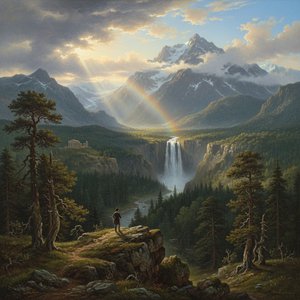
Evoking Nature's Sublime: A Comprehensive Exploration of 19th-Century Landscape Painting
Explore the captivating world of 19th-century landscape painting! Discover renowned artists like Friedrich & Monet, key movements, and find the perfect artwork to bring nature's serenity into your home. Expert insights at OriginalUniqueArt.
