

 Примерить в интерьере
 Отправить
 Поделиться
 Подробнее
 Руководство

 Скачать
 Похожие объекты
 Рентгенография
 Слайд-шоу
 Статистика
Falls Bridge, Melbourne


 Развернуть текст
Масляная репродукция ручной работы
Картина маслом на холсте в выбранном вами размере и раме, написанная на заказ нашими художниками. ( Переключиться на печать Перейти к цифровым изображениям)




P118B $10

P118H $10

P118W $10

P438Z $10

P508JH $12

P508YH $12

P805H $10

P805Z $10

P919BZ $10

P919G $10

P919XJ $10

P959ZH $10

P968JZ $12

W106C $8

W218G $10

W218JH $8

W218Y $10

W307PJ $10

W316G $10

W316PJ $8

W316Y $10

W398PJ $8

W4111J $10

W500HY $15

W500JH $15

W692G $12

W849H $8

W940BG $15

W953PJ $8




Выберите один из наших стандартных размеров, соответствующих оригинальным пропорциям произведения искусства.

Введите необходимую ширину и высоту, чтобы репродукция подошла к вашей раме или стене. Поскольку работа выполняется вручную, при изменении пропорций художник может немного увеличить область вокруг картины или, наоборот, обрезать края — выбор за вами. Перед началом работы мы пришлем вам цифровой макет на утверждение. Изображение на этой странице не является точным результатом — увидеть реальный вид можно только на макете.
После оформления заказа команда OriginalUniqueArt.com свяжется с клиентом по электронной почте для уточнения деталей и предоставит предварительный макет
Доставка по всему миру () за 3–4 недели вместо стандартных 5 недель. (23 Октябрь). Без компромиссов в качестве.

Бесплатная экспресс-доставка по всему миру

Высококачественный льняной холст

Полное страхование при транспортировке

Гарантия возврата таможенных пошлин

Гарантия точного цветового соответствия

100-дневный период возврата (только при обнаружении дефектов)

Гарантия возврата 100% средств

Скидка при заказе нескольких работ
 Вариант со стеклом доступен только для размеров менее 110 см

Falls Bridge, Melbourne
Материал репродукции
Размер репродукции
-


Итоговая стоимость
$ 300
A Moment Frozen in Time: Frederick McCubbin’s Falls Bridge
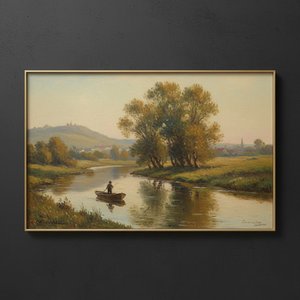
Frederick McCubbin's “Falls Bridge, Melbourne” isn’t merely a depiction of a river crossing; it’s a poignant snapshot of late 19th-century Australian life. Painted in 1882 during his formative years within the Heidelberg School, this oil on canvas transports us to a serene and familiar landscape – a scene both intimately local and profoundly evocative. The painting captures a fleeting moment: a warm afternoon light bathing the Yarra River, the sturdy Falls Bridge spanning its course, and the quiet activity of daily life unfolding along its banks. McCubbin’s genius lies in his ability to distill this experience into a composition that is simultaneously detailed and deeply atmospheric, inviting the viewer to step directly into the scene.

The painting’s strength resides in its masterful use of light and color. Notice how McCubbin employs loose, expressive brushstrokes – a hallmark of the Heidelberg School – to capture the shimmering reflections on the water's surface. The warm hues of gold and amber dominate, suggesting either a setting sun or rising dawn, imbuing the scene with a sense of tranquility and nostalgia. The artist’s deliberate blurring of details, characteristic of Impressionism, prioritizes mood and atmosphere over photographic accuracy. This technique creates an almost dreamlike quality, drawing us into the heart of the moment.
Technique and Style: Heidelberg's Legacy
McCubbin’s style is a fascinating blend of naturalism and Impressionistic influence. He meticulously observes the details of his subject – the bridge’s construction, the boats navigating below, the figures strolling along the bank – yet he renders them with a loose, painterly approach. This technique, deeply rooted in the Heidelberg School's philosophy, sought to capture the essence of Australian light and landscape rather than creating a strictly realistic representation. The visible brushstrokes aren’t haphazard; they contribute significantly to the painting’s texture and dynamism, suggesting movement and life within the scene.
The composition itself is carefully considered. The horizontal format emphasizes the expanse of the river and the bridge's dominance. The foreground, anchored by a muddy bank and a horse-drawn cart, provides a grounding element while drawing the eye towards the midground – the bustling activity beneath the bridge. The distant hills and hazy sky create a sense of depth and perspective, further enhancing the painting’s immersive quality. McCubbin's use of atmospheric perspective—making distant elements paler and less defined—is particularly effective in conveying the vastness of the landscape.
A Window into Melbourne’s Past
“Falls Bridge, Melbourne” offers more than just a beautiful landscape; it provides a valuable glimpse into the social and cultural fabric of late 19th-century Melbourne. The presence of the bridge itself – a vital link between the city and its surrounding areas – symbolizes progress and connectivity. The figures on the bridge represent everyday life: workers, travelers, perhaps families enjoying a leisurely afternoon. The horse-drawn cart hints at the region’s agricultural roots and the reliance on traditional modes of transport. This painting is not simply about a physical location; it's about capturing the spirit of a community and its relationship to the land.
Furthermore, McCubbin’s work reflects a broader trend in Australian art at the time – a desire to establish a distinctly national identity through depictions of familiar landscapes and scenes. His paintings often explored themes of rural life, pioneering spirit, and the challenges faced by settlers in a new land. “Falls Bridge, Melbourne” stands as a testament to this artistic movement and its enduring legacy.
Bringing McCubbin’s Vision Home: High-Quality Reproductions
For art enthusiasts seeking to experience the beauty and historical significance of “Falls Bridge, Melbourne,” OriginalUniqueArt.com offers meticulously crafted hand-painted reproductions that faithfully capture the essence of this iconic artwork. Our skilled artists utilize premium materials and techniques to ensure a faithful representation of McCubbin’s original vision, bringing the painting's atmosphere and detail to life in stunning clarity. Explore our collection today and own a piece of Australian art history.
Вопросы и ответы
Можно ли предварительно просмотреть «Falls Bridge, Melbourne», Фредерик МакКубин перед заказом?
Предварительный просмотр работы «Falls Bridge, Melbourne», Фредерик МакКубин доступен на странице Предпросмотр произведения.
Является ли произведение «Falls Bridge, Melbourne» работы Фредерик МакКубин общественным достоянием, и почему?
Статус авторского права на произведение «Falls Bridge, Melbourne» — является общественным достоянием — срок действия авторского права истек — определяется датой смерти автора в 1917.
Где я могу купить написанную вручную репродукцию картины «Falls Bridge, Melbourne», Фредерик МакКубин?
Написанные вручную копии работы «Falls Bridge, Melbourne», Фредерик МакКубин можно приобрести на сайте этот сайт: репродукция маслом ручной работы на льняном холсте, оформив заказ на странице Репродукция маслом ручной работы.
Биография художника
Frederick McCubbin - A Life Rooted in the Australian Landscape
Frederick McCubbin, born February 25th, 1855, in Melbourne, Australia, stands as a cornerstone of Australian art—a figure inextricably linked to the nation’s evolving identity and its distinctive visual language. His journey from humble beginnings—the son of bakers who instilled in him a profound work ethic—to becoming a pivotal voice within the Heidelberg School is a testament to his unwavering dedication and artistic vision. McCubbin's formative years were marked by diverse experiences, beginning with his education at William Willmett’s West Melbourne Common School and St Paul’s School, Swanston Street, where he absorbed foundational knowledge of Victorian society. He subsequently honed his skills as solicitor’s clerk and assisted in the family bakery business—activities that instilled a deep understanding of everyday Australian life, informing much of his artistic output. Crucially, he received formal training at the National Gallery of Victoria's School of Design, studying under luminaries like Eugene von Guerard and George Folingsby, absorbing the stylistic currents of the time and mastering techniques vital to landscape painting.The Heidelberg School: Defining a National Aesthetic
A transformative alliance with Tom Roberts in 1885 ignited McCubbin’s artistic trajectory—establishing the Box Hill Artists' Camp alongside Arthur Streeton and Charles Conder. This plein air collective deliberately rejected the conventions of European academic art, venturing into the Australian bushland with an unprecedented spirit of immediacy and authenticity. Their aim was to capture not merely scenery but the very essence of Australian life—its hardships, its triumphs, and its relationship with the vast wilderness. McCubbin’s contribution during this period was instrumental in shaping what would become known as the Heidelberg School aesthetic. Works like *Down on His Luck* (1889), *On the Wallaby Track* (1896), and *The Pioneer* (1904) exemplify this style—characterized by bold brushstrokes, luminous color palettes, and a focus on depicting rural life with remarkable detail and emotional resonance. These paintings weren’t simply representations of landscapes; they were narratives imbued with social commentary, reflecting the anxieties and aspirations of a nation grappling with its newfound independence. The Heidelberg School artists sought to express the spirit of Australia—its beauty and its challenges—in ways that distinguished it from European artistic traditions.Early Influences and Artistic Development
McCubbin’s early artistic influences included Eugène von Guerard, whose Romantic landscapes instilled in him a love for capturing atmospheric effects and conveying emotion through color. George Folingsby's academic training provided him with technical skills—particularly in figure painting—which would later inform his approach to portraying human subjects alongside the Australian landscape. The friendship with Tom Roberts proved particularly significant—inspiring McCubbin to embrace a more expressive style and fostering a collaborative spirit that enriched their artistic output. Roberts’ return from Europe in 1885 brought exposure to Impressionist techniques, subtly influencing McCubbin's evolving palette and brushwork. Notably, McCubbin was profoundly moved by Jules Bastien-Lepage’s paintings—particularly *The Shepherdess*, which championed a humanist vision of rural life and encouraged McCubbin to explore themes of solitude and contemplation.Major Achievements and Legacy
McCubbin's magnum opus, *On the Wallaby Track* (1896), stands as an iconic representation of Australian Impressionism—a monumental painting that captures the spirit of pioneering life with breathtaking detail and emotional depth. It exemplifies McCubbin’s ability to synthesize stylistic influences—drawing inspiration from Bastien-Lepage and Millet—into a powerfully evocative narrative tableau. His later landscapes, particularly those depicting Mt Macedon—where he resided for many years—demonstrate a deepening engagement with atmospheric effects and a more subjective interpretation of the natural world. McCubbin’s work continues to inspire artists today—serving as a testament to his enduring vision of Australia and its place in the broader artistic landscape. He is remembered not merely as a painter but as a cultural icon—a symbol of Australian identity and resilience, whose legacy ensures that his art will resonate for generations to come. His contribution extends beyond individual paintings; he helped establish a national artistic ethos—one rooted in observation, empathy, and an unwavering appreciation for the beauty of the Australian bush.
Фредерик МакКубин
1855 - 1917 , Австралия
Краткая справка
- Artistic Movement Or Style: Хайдельбергская школа
- Artists Who Influenced This Artist:
- Эрнест фон Гюérard
- Джордж Фолингсби
- Date Of Birth: 25 февраля 1855 г.
- Date Of Death: 20 декабря 1917 г.
- Full Name: Frederick McCubbin
- Nationality: Австралиец
- Notable Artworks:
- Эх Мистелтоу
- О На пути к Уолби
- Пионер
- Place Of Birth: М Melbourne, Австралия
Похожие статьи

Школа реки Гудзон: 10 шедевров, изменивших американскую живопись | OriginalUniqueArt
Погрузитесь в мир Школы реки Гудзон! 10 шедевров Томаса Коула, Фредерика Чёрча и других мастеров американского романтизма. Купите репродукции картин высокого качества для вашего интерьера на OriginalUniqueArt.com.

The Sublime Landscape: Exploring the Hudson River School Movement
Explore the captivating world of the Hudson River School! Discover the history, artists, and defining characteristics of this iconic American art movement. Learn about Romanticism's influence & find inspiration for your collection.
Jean-Baptiste-Camille Corot: A Poetic Realism – Bridging the Barbizon School and Early Impressionism
Explore the life & art of Camille Corot, a pivotal figure bridging the Barbizon School & Impressionism. Discover his poetic realism, signature style, and lasting influence on landscape painting. Learn more at OriginalUniqueArt.

John Frederick Kensett: Luminosity, Landscape & the American Identity
Explore the luminous landscapes of John Frederick Kensett, a master of Luminism and key figure in the Hudson River School. Discover his serene paintings & enduring legacy with OriginalUniqueArt.

The Hague School: Realism, Atmosphere & the Dawn of Dutch Impressionism
Explore the Hague School's pivotal role in Dutch art history. Discover realism, atmospheric landscapes & its influence on Impressionism. Learn about key artists like Mauve & Maris with OriginalUniqueArt.
