 Предпросмотр
 Поделиться
 Поделиться
 Детали произведения
 Руководство

 Скачать
 Похожие предметы
 Рентгенография
 Слайд-шоу
 Вопросы и ответы
 Статистика просмотров
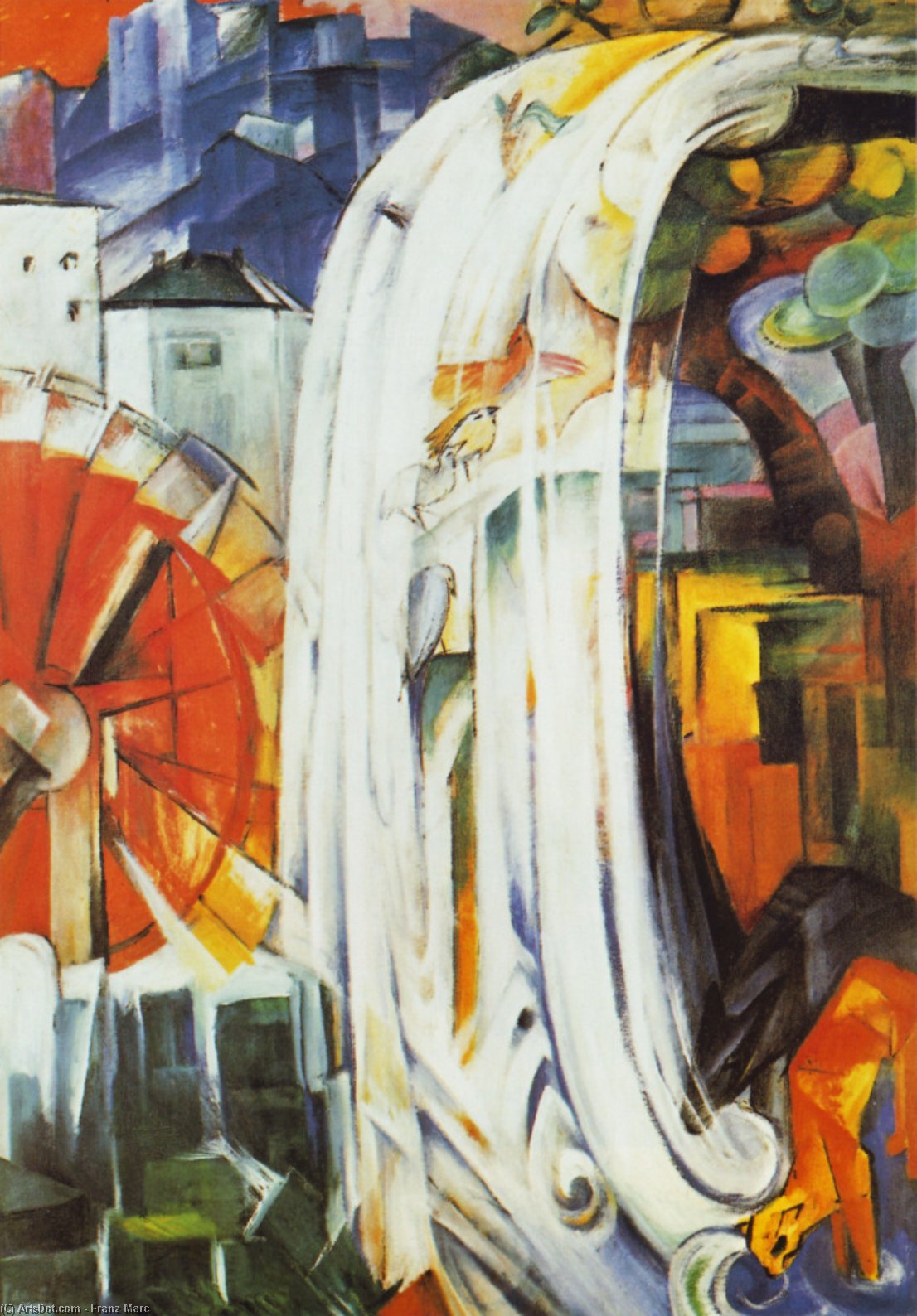
The Enchanted Mill

- 130.0 x 90.0 cm


 Читать далее
Жикле и арт-принты
Печать (жикле) или холст музейного качества с быстрыми сроками изготовления и широким выбором вариантов отделки. ( Купить картину ручной работы Перейти к цифровым изображениям)




P118B $10

P118H $10

P118W $10

P438Z $10

P508JH $12

P508YH $12

P805H $10

P805Z $10

P919BZ $10

P919G $10

P919XJ $10

P959ZH $10

P968JZ $12

W106C $8

W218G $10

W218JH $8

W218Y $10

W307PJ $10

W316G $10

W316PJ $8

W316Y $10

W398PJ $8

W4111J $10

W500HY $15

W500JH $15

W692G $12

W849H $8

W940BG $15

W953PJ $8




Выберите один из наших стандартных размеров, соответствующих оригинальным пропорциям произведения искусства.

Введите необходимую ширину и высоту, чтобы репродукция подошла к вашей раме или стене. При печати изображение можно только уменьшить, но нельзя увеличить больше оригинала, поэтому при выборе другого формата часть изображения может быть обрезана. Перед печатью мы отправим вам цифровой макет на утверждение. Изображение на этой странице не отображает реальную обрезку — ее можно увидеть только на макете.
Доставка по всему миру () за 2 недели вместо стандартных 4–5 недель. (10 Ноябрь)

Бесплатная экспресс-доставка по всему миру

Высококачественный льняной холст

Полное страхование при доставке

Гарантия возмещения таможенных пошлин

Гарантия точного цветового соответствия

100-дневная гарантия возврата (только при обнаружении дефектов)

Гарантия возврата 100% средств

Скидка при оптовом заказе
 Вариант со стеклом доступен только для размеров менее 110 см

The Enchanted Mill
Жикле и арт-принты
Размер репродукции
-


Итоговая стоимость
$ 81
The Enchanted Mill
Franz Marc’s “The Enchanted Mill” stands as an emblem of German Expressionism, a movement that sought to convey emotion and spiritual experience through bold color and distorted forms. Created in 1913, this monumental oil on canvas—measuring 130 x 90 cm—currently resides at the Art Institute of Chicago, offering visitors a glimpse into the artistic fervor of its time. More than just a depiction of a rural landscape, it’s an exploration of primal forces and the interconnectedness of nature and humanity.Composition and Elements
At first glance, the painting overwhelms with its sheer scale and vibrant palette. Dominating the canvas is a colossal wheel—a symbol of relentless energy and cyclical time—spinning furiously against a backdrop of towering trees and rolling hills. This central element isn’t merely decorative; it embodies the dynamism inherent in existence itself. Complementing this monumental form are several carefully positioned elements: a clock on the left side, serving as a reminder of human temporality and mortality; a bird perched atop one of the trees, representing freedom and aspiration; and two figures—one positioned centrally near the wheel’s axis, embodying stillness and contemplation, while another resides closer to the bottom right corner, suggesting an active engagement with the surrounding environment.Color Palette
Marc’s masterful use of color is arguably the painting's most striking characteristic. He employs a rich tapestry of hues—deep reds, intense blues, verdant greens, luminous yellows, and ethereal whites—to generate a palpable atmosphere of enchantment. These colors aren’t applied randomly; they are meticulously blended to create subtle gradations and contrasts that heighten visual impact. The artist's deliberate manipulation of light and shadow adds depth and dimensionality to the scene, fostering an immersive experience for the viewer. Shades of red convey passion and vitality, while blues evoke serenity and contemplation—a harmonious blend reflecting Marc’s profound belief in the spiritual significance of color.Artistic Style
Franz Marc was a pivotal figure in German Expressionism, co-founder of Der Blaue Reiter (“The Blue Rider”), a journal that championed artistic experimentation and spiritual exploration. His mature works are characterized by expressive brushstrokes—often thick and impasto—that convey emotion rather than precise representation. Marc’s stylistic approach aligns closely with Cubism, albeit infused with Surrealist sensibilities. He dismantles traditional perspective, fracturing forms into geometric planes to capture multiple viewpoints simultaneously. This technique underscores the artist's desire to transcend objective observation and delve into the realm of subconscious thought—a hallmark of Expressionist aesthetics.Relevance to Modern Art
“The Enchanted Mill” transcends its immediate historical context, foreshadowing developments in Surrealism and influencing subsequent generations of artists. Its audacious blend of Cubist fragmentation and Surrealist symbolism anticipates the exploration of dreamlike imagery and irrational associations that would define Surrealist art. The painting’s enduring appeal lies in its ability to communicate profound ideas about life, death, and the relationship between humanity and nature—themes that continue to resonate with audiences today. It stands as a testament to Marc's unwavering conviction that art could serve as a conduit for spiritual insight, cementing his place among the most influential artists of the 20th century.- Other Works by Franz Marc
- The Enchanted Mill | The Art Institute of Chicago
- Franz Marc Museum
- Franz Marc
For more information on Franz Marc and his works, visit Franz Marc at OriginalUniqueArt.com.
Вопросы и ответы
Как цвета в работе «The Enchanted Mill», Франц Марк связаны с её эмоциональным настроем?
Палитра Neutrals в работе «The Enchanted Mill», Франц Марк гармонирует с её Mysterious эмоциональным настроем. Цвет — это один из способов, с помощью которых произведение передает чувства.
К какому виду относится произведение «The Enchanted Mill»?
«The Enchanted Mill» — это произведение в технике WallArt.
Что изображено на картине «The Enchanted Mill», Франц Марк и какое настроение она передает?
«The Enchanted Mill», Франц Марк сочетает в себе animal, mill, wheel, clock, color palette, expressionism, surrealism с Serene атмосферой.
Биография художника
Ранние годы, семья и обучение
Франц Марк родился в Мюнхене, Германия, в семье, где визуальный язык пейзажа уже был глубоко укоренен. Его отец, Вильгельм Марк, был профессиональным художником-пейзажистом, что обеспечило сыну прямое, хотя и не сразу определенное, знакомство с механикой искусства. Эта семейная связь означала, что инструменты мастерства были в его распоряжении с самого начала, однако путь Марка не был прямой линией от наследства к холсту. Прежде чем полностью посвятить себя живописи, он провел время, погружаясь в теологию — период духовных поисков, который впоследствии определил невероятную интенсивность его визуального языка. Именно это напряжение между сакральным и материальным придает его поздним работам особую, глубокую значимость.
Его формальное обучение началось в 1900 году, когда он поступил на художественный факультет Мюнхского университета имени Людвига и Максимилиана. Эта академическая база не была простой формальностью; она заложила техническую строгость, необходимую для того, чтобы в будущем решительно разрушить каноны традиционной репрезентации. После обучения в университете он перешел в Мюнхенскую академию изящных искусств. Такая последовательность обучения вела его от общих академических принципов к специализированной, предельной концентрации, необходимой для тех радикальных перемен, которые он впоследствии возглавит. Он не был продуктом случайного таланта, но стал результатом осознанного, структурированного погружения в формальные традиции Мюнхена.
Художественное становление и истоки вдохновения
Ранние работы Марка несут в себе глубокий отпечаток академической живописи и импрессионизма. Эти традиционные основы заложили тот технический фундамент, который он впоследствии решит разрушить. Переломным моментом стали его поездки во Францию, в частности визиты в Париж в 1903 и 1907 годах, ставшие катализатором его творческого отрыва от канонов. Именно в Париже он открыл для себя искусство Винсента Ван Гога. Эта встреча подарила ему необходимую альтернативу жестким структурам академического обучения, предложив новый путь: использование цвета как прямого инструмента эмоционального самовыражения, а не просто средства описания действительности.
Переход к абстракции не был внезапным скачком; он стал выверенным ответом на эволюцию визуального языка начала XX века. Исследования Робера Делоне в области абстрактных форм и насыщенных цветовых палитр послужили своего рода чертежом для собственного движения Марка в сторону упрощения. Он постепенно уходил от буквального воспроизведения пейзажа, стремясь обнажить суть предметов, сводя их к первозданным, эссенциальным формам. Этот процесс позволил ему выйти за пределы внешней оболочки природного мира и обрести более субъективный, эмоционально заряженный стиль экспрессии.
Синий всадник и экспрессионизм
Переход от простого подражания реальности к поиску духовной истины стал определяющим вкладом Франца Марка в модернизм. Прежде чем основать собственное движение, он экспериментировал в рамках «Нового союза художников» в Мюнхене. Этот период проб и ошибок был необходим, чтобы вырваться из оков академических канонов того времени. К 1911 году Марк вместе с Васильем Кандинским стал сооснователем группы Der Blaue Reiter («Синий всадник»). Это не было просто творческим объединением или светским клубом; это был радикальный разрыв с устоявшимся порядком вещей. Через одноименный журнал группа продвигала особую идею: использование абстракции и символического цвета для выражения глубоких духовных реальностей. Они стремились пробиться сквозь поверхностную оболочку физического мира, чтобы достичь чего-то более существенного и вечного.
Это движение стало прямым вызовом индустриальной, серой реальности начала XX века. Марк и его коллеги искали такой визуальный язык, который мог бы взывать к душе, а не просто радовать глаз. Они двигались в сторону стиля, где цвет функционировал как духовная частота. Речь шла не о том, чтобы запечатлеть увиденное, а о том, чтобы уловить внутреннюю сущность предмета. Фокус сместился с внешнего ландшафта на ритмичную, символическую интерпретацию самой жизни. Именно этот период стал моментом, когда немецкий экспрессионизм обрел свой самый мощный, нелинейный и глубокий голос.
Техника и символический стиль
Визуальный язык Франца Марка опирается на строгую, выверенную систему цветового символизма, которая решительно отвергает стремление к описательной точности. Он использовал оттенки не для того, чтобы подражать природному миру, а чтобы выстроить духовную иерархию. В его палитре синий олицетворяет мужественность и духовность, желтый символизирует женственность и радость, а красный воплощает материальность и насилие. Это не было случайным эстетическим выбором; перед нами — структурированная попытка передать внутренние истины через внешний пигмент. Отсекая всё буквальное, он заставлял зрителя взаимодействовать с эмоциональным весом самого цвета.
Его техника эволюционировала в сторону радикального упрощения формы. Он сводил сложные биологические структуры к сущностным, ритмичным очертаниям. Этот редукционизм в сочетании с дерзкими, нереалистичными цветами создавал ощущение напряжения между объектом и окружающей его средой. Короткие, уверенные мазки и техника импасто позволяли ему выстраивать богатую текстуру, придавая композициям физическую осязаемость, которая вступает в парадоксальный диалог с абстрактностью его сюжетов. В результате рождался стиль, в котором животное перестает быть просто плотью, становясь сосудом для особой, зашифрованной энергии.
- Башня синих лошадей (1913)
- Мировая корова (1913)
- Лисы (1913)
Ключевые произведения и тематика
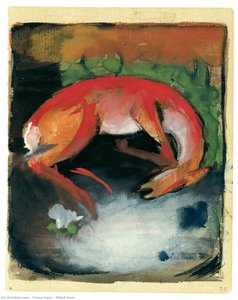
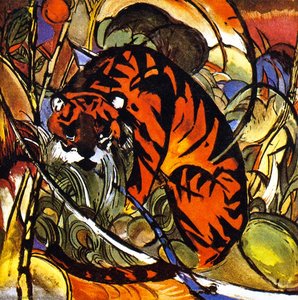
Зрелое творчество Франца Марка неразрывно связано с миром животных. Он постепенно уходит от статичных пейзажей, сосредотачивая свое внимание на таких существах, как лошади, олени и лисы. В его понимании эти образы были не просто объектами биологического изучения, а священными сосудами, наполненными духовной энергией. В 1911 году он создал «Больших синих коней» — полотно, которое окончательно утвердило его приверженность нереалистичному, символическому цвету. К 1912 году его композиции стали более экспрессивными и структурированными, что отчетливо проявилось в работах «Тигр» и «Красный олень». Эти картины свидетельствуют о стремлении художника уловить внутреннюю сущность своих героев через упрощенные, ритмичные формы.
Эволюция его стиля демонстрирует четкую траекторию движения к абстракции. Работа 1913 года «Лисы» несет в себе отголоски французского кубизма, используя кристаллическую композицию для деконструкции формы. Этот путь достиг своего апогея в полотне «Мировая корова», написанном в том же 1913 году, где предмет становится символом космического бытия. Творческий метод Марка зиждется на особой логике цвета: синий олицетворяет мужественность и духовность, желтый — женственность и радость, а красный воплощает материальность и насилие. Благодаря этой системе каждый его анималистический портрет превращается в глубокое философское высказывание, а не просто в буквальное изображение природы.
- «Большие синие кони» (1911)
- «Тигр» (1912)
- «Красный олень» (1912)
- «Лисы» (1913)
- «Мировая корова» (1913)
Последние годы и смерть
Траектория творческого пути Франца Марка была внезапно прервана началом Первой мировой войны в 1914 году. Несмотря на его статус художника, он был призван в немецкую армию, где служил в кавалерии. Этот конфликт вынудил его совершить резкий переход от духовных поисков абстракции к суровым реалиям военной службы. Даже посреди хаоса войны он продолжал писать, пытаясь обрести смысл через кисть в то время, когда окружающий мир буквально распадался на части.
Его жизнь оборвалась 4 марта 1916 года в битве при Вердене. Эта смерть наступила спустя два года после начала войны. Он погиб от осколка снаряда — столь жестокий финал оборвал карьеру, определяемой стремлением к чистоте. Внезапность его гибели под Верденом оставила пустоту в развитии немецкого экспрессионизма, остановив его движение к еще более радикальной абстракции прежде, чем он успел достичь ее логического завершения.
Наследие и влияние
Франц Марк остается центральной фигурой в истории немецкого экспрессионизма. Его влияние измеряется тем, как его подход к цвету и форме сместил фокус современного искусства с внешнего наблюдения на внутреннюю духовную истину. Хотя его творческий путь был трагически прерван, его влияние сохраняется благодаря постоянному присутствию его работ в крупнейших музеях по всему миру. Способность художника дистиллировать сущность животных, превращая их в символические, не натуралистичные формы, навсегда изменила траекторию живописи начала XX века.
Политический ландшафт 1930-х годов пытался стереть этот вклад из истории. Нацистский режим заклеймил Франца Марка как «дегенеративного художника» в рамках более широкой кампании по подавлению модернизма. Несмотря на это систематическое преследование, большая часть его наследия пережила разрушения Второй мировой войны. Это выживание гарантирует, что его визуальный язык остается доступным для современных зрителей. Его работы продолжают находить отклик в сердцах людей, поскольку они предлагают прямой, эмоциональный отклик на мир природы, избегая оков буквального реализма.
- Лисы (1913)
- Мировая корова (1913)
- Рыжий олень (1912)
Где можно увидеть его работы сегодня
Чтобы соприкоснуться с осязаемой реальностью видений Марка, необходимо обратиться к специализированным музейным коллекциям, которые сохранили его наследие, пронеся его сквозь все потрясения XX века. Музей Франца Марка в Кохель-ам-Зе, Германия, является главным хранителем его творческого пути, объединяя в себе более 150 его произведений. Эта коллекция позволяет увидеть непосредственную эволюцию художника на фоне баварских пейзажей. В Мюнхене музей Lenbachhaus располагает обширным собранием, предлагая глубокое погружение в его вклад в немецкий экспрессионизм. Государственная галерея современного искусства в Мюнхене также хранит значимые полотна, подтверждая, что имя художника остается центральным в истории искусства этого города.
Творческий охват Марка выходит далеко за пределы немецких границ: его полотна хранятся в крупнейших международных музеях. В Соединенных Штатах Институт искусств Чикаго обладает таким шедевром, как «Зачарованная мельница». Такое географическое разнообразие позволяет по-настоящему осознать масштаб его влияния на современную абстракцию в глобальном смысле. Личная встреча с этими работами открывает зрителю истинную текстуру мазков и ту особую интенсивность цветовых решений, которая зачастую утрачивается при цифровом воспроизведении.
- «Зачарованная мельница» (1913)
- «Башня синих лошадей» (1913)
- «Олень II» (1912)
- «Тигр» (1912)

Франц Марк
1880 - 1916 , Германия
Об авторе
- Artistic Movement Or Style: Немецкий экспрессионизм
- Artists Or Movements Influenced By This Artist: ['Немецкий экспрессионизм']
- Artists Who Influenced This Artist:
- Винсент ван Гог
- Робер Делоне
- Date Of Birth: 1880
- Date Of Death: 1916
- Full Name: Франц Мориц Вильгельм Марк
- Nationality: Немец
- Notable Artworks:
- Большие синие лошади
- Тигр
- Красный олень II
- Мировая корова
- Place Of Birth: Мюнхен, Германия
Похожие статьи

Franz Marc: Expressionism, Spirituality & the Animal Symbolism of a Modern Master
Explore the profound world of Franz Marc's Expressionist paintings. Discover his spiritual connection to animals, innovative use of color, and lasting impact on modern art history. Learn more at OriginalUniqueArt.

Топ-10 знаменитых картин в оттенках серо-голубого: искусство и декор от OriginalUniqueArt
Погрузитесь в мир серо-голубых оттенков! От Моне до Ренуара – 10 знаменитых картин, вдохновляющих на создание уникального интерьера. Репродукции высокого качества от OriginalUniqueArt.com. Explore the full collection online!

10 Шедевров Немецкого Экспрессионизма: Искусство Эмоций и Вдохновения | OriginalUniqueArt
Погрузитесь в мир немецкого экспрессионизма! Узнайте истории создания шедевров Мунка, Кирхнера, Кандинского и других великих художников. Репродукции картин высокого качества для вашего интерьера на OriginalUniqueArt.com. Откройте всю коллекцию онлайн!
Животные в искусстве: вдохновение для вашего интерьера
Вдохновитесь миром искусства и животных! Узнайте о символике, истории изображения животных в живописи и идеях для декора интерьера от экспертов .
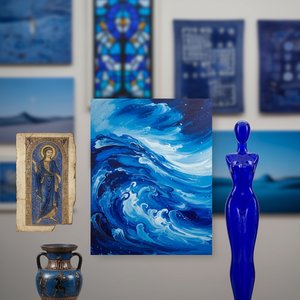
The Allure of Azure: Exploring the Symbolic & Aesthetic Depths of Blue in Art History
Explore the rich history of blue in art! Discover its symbolism, from ancient pigments to modern masterpieces by Kandinsky & Seurat. Uncover the psychological impact and cultural meanings behind this captivating hue.