

 Предпросмотр
 Поделиться
 Поделиться
 Детали произведения

 Скачать
 Похожие работы
 Рентгенография
 Слайд-шоу
Caucasian Soldier


 Читать далее
Масляная репродукция ручной работы
Картина маслом на холсте в выбранном вами размере и раме, написанная на заказ нашими художниками. ( Купить принт Купить изображение)




P118B $10

P118H $10

P118W $10

P438Z $10

P508JH $12

P508YH $12

P805H $10

P805Z $10

P919BZ $10

P919G $10

P919XJ $10

P959ZH $10

P968JZ $12

W106C $8

W218G $10

W218JH $8

W218Y $10

W307PJ $10

W316G $10

W316PJ $8

W316Y $10

W398PJ $8

W4111J $10

W500HY $15

W500JH $15

W692G $12

W849H $8

W940BG $15

W953PJ $8




Выберите один из наших стандартных размеров, соответствующих оригинальным пропорциям произведения искусства.

Вы можете указать собственные размеры, чтобы картина идеально вписалась в выбранную раму или пространство. Если выбранный вами размер не соответствует пропорциям оригинала, мы либо обрежем полотно, либо расширим его за счет дополнительных элементов, написанных вручную. Цифровой макет будет отправлен вам на утверждение перед началом производства.
Обратите внимание, что предварительный просмотр на экране не отражает фактическую обрезку или расширение. Только макет точно покажет окончательную композицию.
Хотя доступны индивидуальные размеры, мы рекомендуем выбирать вариант из предопределенного списка, чтобы сохранить исходные пропорции.
После оформления заказа команда OriginalUniqueArt.com свяжется с клиентом по электронной почте для уточнения деталей и предоставит предварительный макет
Доставка по всему миру () за 3–4 недели вместо стандартных 5 недель. (21 Август). Без компромиссов в качестве.

Бесплатная экспресс-доставка по всему миру

Высококачественный льняной холст

Полное страхование доставки

Гарантия возмещения таможенных пошлин

Гарантия точного соответствия цветов

Политика возврата в течение 60 дней (только при наличии дефектов)

Гарантия возврата 100% средств

Предложение оптовых скидок
 Вариант со стеклом доступен только для размеров менее 110 см

Caucasian Soldier
Техника репродукции
Размер репродукции
-


Итоговая стоимость
$ 300
Описание произведения
A Soulful Portrait: Frank Duveneck’s “Caucasian Soldier”
Frank Duveneck's "Caucasian Soldier," painted in 1870, is more than just a portrait; it’s a poignant distillation of hardship, resilience, and the quiet dignity of an individual caught within the currents of history. This arresting image, rendered in a style deeply rooted in the academic tradition yet imbued with a strikingly modern sensibility, invites us to contemplate themes of displacement, identity, and the weight of experience. The painting immediately draws the eye to its subject – a man of imposing stature, dominated by a magnificent, almost defiant afro that speaks volumes about his heritage and inner strength. His expression is one of profound melancholy, a subtle sadness that hints at untold stories and burdens carried with quiet grace.
Duveneck’s technique is masterful in its restraint and detail. He employs a realistic approach reminiscent of the 19th-century academic style, characterized by meticulously rendered features and a subdued color palette. Yet, he avoids mere imitation, injecting a palpable sense of immediacy into the scene. The artist's brushstrokes are visible, lending texture to the fabric of his clothing and the contours of his face – a deliberate choice that emphasizes the physicality of the subject and imbues the painting with a tactile quality. Notice how light is used—softly diffused, it casts gentle shadows that sculpt the man’s features, adding depth and volume without resorting to dramatic contrasts. The background, deliberately blurred and indistinct, serves not as a distraction but rather as a framing device, intensifying our focus on the solitary figure at the heart of the composition.
The Context of Conflict: A Soldier's Story
“Caucasian Soldier” emerged during a turbulent period in Russian history – the protracted Caucasian War (1834-1859). This conflict pitted the Russian Empire against various Caucasian peoples, including Chechens, Circassians, and Dagestanis, who fiercely resisted subjugation. The painting captures a moment of quiet contemplation amidst this ongoing struggle, offering a glimpse into the lives of those caught in the crossfire of imperial ambition. The subject himself is likely a soldier – perhaps a Circassian or another ethnic group involved in the conflict – conveying a sense of displacement and vulnerability. It’s important to note that Duveneck's work frequently engaged with themes of marginalization and social injustice, reflecting the realities faced by many individuals during this era.
Further research reveals that Frank Duveneck was deeply affected by his own family history, particularly the death of his father at a young age. This early loss undoubtedly shaped his artistic vision, fostering a sensitivity to human suffering and a desire to capture the complexities of the human condition. The painting’s somber mood and introspective gaze can be interpreted as an echo of this personal experience, lending it a profound emotional resonance.
Symbolism and Emotional Impact
The symbolism within “Caucasian Soldier” is layered and evocative. The man's posture—slumped slightly, his head bowed—suggests weariness, resignation, or perhaps even grief. His afro, a striking feature that defies conventional notions of beauty in the context of the time, can be seen as a symbol of cultural pride, resilience, and resistance against imposed norms. It’s a powerful visual statement asserting identity amidst adversity. The muted color palette—dominated by browns, grays, and ochres—reinforces the painting's mood of melancholy and quiet contemplation.
Ultimately, “Caucasian Soldier” is a deeply moving work that transcends its historical context to speak to universal themes of loss, displacement, and the enduring strength of the human spirit. It’s a testament to Duveneck’s artistic skill and his ability to capture not just likeness but also emotion—a rare and valuable achievement.
A Legacy in Oil: Reproduction & Appreciation
Reproductions of “Caucasian Soldier” offer an accessible way to experience the power and beauty of this remarkable painting. OriginalUniqueArt.com provides high-quality reproductions that faithfully capture Duveneck’s masterful technique and evocative imagery. Consider a custom print on canvas or archival paper – a tangible connection to a pivotal moment in art history and a poignant reflection on the human condition. The original, created with oil paints on canvas, showcases a rich layering of paint, creating texture and depth that is beautifully replicated in modern reproductions.
Explore the full artwork details at http://www.davidrumsey.com/amica/ for a deeper dive into its history, provenance, and artistic significance. Don’t miss the opportunity to own a piece of art that speaks volumes about resilience, identity, and the enduring power of human emotion.
Биография художника
A Life Forged in Tragedy and Realism
Frank Duveneck, born Frank Decker in 1848 amidst the bustling river town of Covington, Kentucky, was an artist whose life story is as compelling and poignant as the powerfully rendered canvases he created. His early years were profoundly shaped by loss – the untimely death of his father to cholera when he was barely a year old left an indelible mark on his trajectory. This formative tragedy, coupled with his mother’s subsequent marriage to Joseph Duveneck – from whom he adopted his enduring name – instilled within him a remarkable resilience and perhaps, a heightened sensitivity that would later infuse his art with a deep emotional resonance. The blending of German heritage through his stepfather and the distinctly American landscape of his upbringing formed a unique cultural foundation for the artist, contributing to a complex and ultimately transformative artistic vision. Even as a young boy, an innate aptitude for drawing blossomed, leading him to study under local painter Johann Schmitt and subsequently apprenticed to a firm specializing in church decoration – a crucial period where he honed essential technical skills and absorbed the narrative power of visual imagery, learning how art could effectively evoke emotion and tell stories. This wasn’t merely about mastering technique; it was about understanding its potential for conveying profound human experiences.The Munich Crucible: Embracing Dark Realism
In 1869, Duveneck embarked on a pivotal journey to Munich, Germany, seeking advanced artistic training at the prestigious Royal Academy. This move proved to be a watershed moment in his career. The prevailing aesthetic within Munich’s art circles was a stark realism – a deliberate rejection of the idealized conventions of academic painting in favor of direct observation and unflinching honesty. This philosophy deeply resonated with Duveneck, who embraced a darker palette and a more vigorous, expressive brushstroke, aligning himself with a movement that sought to capture the world as it truly appeared, without embellishment or romanticization. He became captivated by the work of 17th-century Dutch masters like Frans Hals, whose lively portraits and masterful handling of light profoundly influenced his style. The dynamism of Hals’s brushwork, particularly his ability to convey a sense of immediacy and psychological depth, became a cornerstone of Duveneck's own artistic approach. This influence is strikingly evident in paintings such as Lady with Fan (1873), where slashing brushwork and a somber tonality echo Hals’s spirit while simultaneously establishing Dueneveck’s own distinctive voice. The painting captures not just the likeness of the subject, but also her inner state – a subtle blend of composure and vulnerability. It was during these formative years in Munich that he began to develop the signature style for which he would become celebrated: a powerful realism imbued with psychological depth and emotional intensity, a deliberate departure from the polished surfaces favored by many of his contemporaries.A Mentor’s Influence: The “Duveneck Boys” and Beyond
By 1878, Duveneck had firmly established himself as a significant figure in the art world, not only as a painter but also as an influential educator. He opened his own school in Munich, attracting a cohort of ambitious American artists who quickly became known as the “Duveneck Boys.” Among these students were John Twachtman, Otto Henry Bacher, Julius Rolshoven, and John White Alexander – each of whom would themselves go on to become prominent figures in American Impressionism and Realism. Duveneck’s teaching philosophy was remarkably progressive for its time, emphasizing direct observation, bold brushwork, and a rejection of rigid academic constraints. He encouraged his students to develop their own unique artistic voices while grounding them in the fundamental principles of sound draftsmanship and expressive color. His influence extended far beyond his classroom; he fostered a spirit of innovation and independence that helped shape the course of American art during this period. He also cultivated relationships with other European artists, including William Morris Hunt, whose teachings further broadened Duveneck’s artistic horizons.Evolving Visions and Lasting Legacy
Duveneck's artistic journey continued to evolve after his return to America. While he remained committed to realism as a core principle, his palette gradually became lighter, influenced by the burgeoning Impressionist movement and his frequent travels throughout Italy and France. He increasingly explored landscape painting, capturing the sun-drenched scenes of Venice and the rugged beauty of coastal Massachusetts with remarkable sensitivity. Despite these stylistic shifts, his work always retained a distinctive character – a compelling blend of technical mastery, psychological depth, and an underlying sense of emotional intensity. The personal tragedy of losing his wife, Elizabeth Boott Duveneck, in 1888 cast a long shadow over his later years, perhaps contributing to the introspective quality of some of his subsequent works. His paintings from this period often convey a profound sense of melancholy and loss, reflecting the deep emotional wounds he carried within him. Frank Duveneck passed away in Covington, Kentucky, in 1919, leaving behind a rich artistic legacy that continues to inspire artists today. His paintings are now held in prestigious collections around the world – including the Metropolitan Museum of Art in New York City, the National Gallery of Art in Washington, D.C., and the Cincinnati Art Museum – serving as enduring testaments to his profound contribution to American art.A Lasting Impact
Duveneck’s legacy extends far beyond the individual paintings that bear his signature. He was a pioneering realist who challenged conventional artistic norms and paved the way for future generations of American artists. His influence as an educator is equally significant, having mentored a remarkable group of students – the “Duveneck Boys” – who went on to achieve considerable success in their own right. His technical mastery, particularly his innovative use of brushwork and color, continues to be studied and admired by artists today. Perhaps most importantly, Duveneck’s ability to capture the inner lives of his subjects—to convey not just their outward appearance but also their thoughts, feelings, and experiences—adds a layer of complexity and emotional resonance to his work that resonates deeply with viewers. He stands as a testament to the transformative power of art, born from personal tragedy and fueled by an unwavering commitment to truth, beauty, and human experience.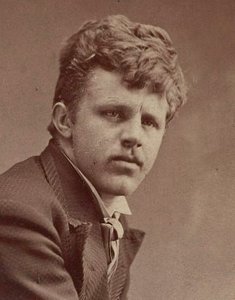
Франк Дувенек
1848 - 1919 , США
Основные сведения
- Artistic Movement Or Style: Реализм, импрессионизм
- Artists Or Movements Influenced By This Artist: ['Американский импрессионизм']
- Artists Who Influenced This Artist:
- Франс Гал
- Вильгельм фон Диез
- Date Of Birth: 9 октября 1848 г.
- Date Of Death: 3 января 1919 г.
- Full Name: Frank Duveneck
- Nationality: Американский
- Notable Artworks:
- «Леди с зонтиком»
- «Бросающий копье»
- Place Of Birth: Цovington, США
Похожие статьи

The Enduring Legacy of Oil on Canvas: Technique, History & Aesthetic Impact
Explore the rich history & techniques of oil painting – from Renaissance masters to Impressionism. Discover pigments, layering methods, and why this timeless medium endures. Expert insights for artists & art enthusiasts.

Oil on Canvas: A Historical & Technical Exploration of a Timeless Artistic Medium
Explore the rich history & enduring techniques of oil painting on canvas. Discover the science behind its longevity, conservation practices, and contemporary relevance. Expert insights for art enthusiasts.

The Enduring Power of Painting: A Historical & Contemporary Exploration of Form and Emotion
Explore the rich history & enduring techniques of oil painting with OriginalUniqueArt. Discover masterpieces, learn about art collecting, and find authentic handmade reproductions crafted by skilled artists.

Топ-10 шедевров XIX века: искусство, история и декор от OriginalUniqueArt.com
Погрузитесь в мир искусства XIX века! От реализма до импрессионизма – 10 величайших картин, истории художников и вдохновение для вашего интерьера. Репродукции высокого качества на OriginalUniqueArt.com. Откройте всю коллекцию онлайн!
The Timeless Charm of Oil on Board: Reimagining Texture and Light through the Impressionist Lens
Discover the profound intimacy of oil on panel. Explore how Impressionist masters used rigid supports to capture light, texture, and impasto depth through exquisite, handmade oil reproductions for discerning collectors.

