

 Примерить в интерьере
 Отправить
 Поделиться
 Подробнее
 Руководство

 Скачать
 Похожие объекты
 Рентгенография
 Слайд-шоу
 Статистика
Constanze Mozart


 Развернуть текст
Жикле / Арт-принты
Печать (жикле) или холст музейного качества с быстрыми сроками изготовления и широким выбором вариантов отделки. ( Заказать репродукцию ручной работы Перейти к цифровым изображениям)




P118B $10

P118H $10

P118W $10

P438Z $10

P508JH $12

P508YH $12

P805H $10

P805Z $10

P919BZ $10

P919G $10

P919XJ $10

P959ZH $10

P968JZ $12

W106C $8

W218G $10

W218JH $8

W218Y $10

W307PJ $10

W316G $10

W316PJ $8

W316Y $10

W398PJ $8

W4111J $10

W500HY $15

W500JH $15

W692G $12

W849H $8

W940BG $15

W953PJ $8




Выберите один из наших стандартных размеров, соответствующих оригинальным пропорциям произведения искусства.

Введите необходимую ширину и высоту, чтобы репродукция подошла к вашей раме или стене. При печати изображение можно только уменьшить, но нельзя увеличить больше оригинала, поэтому при выборе другого формата часть изображения может быть обрезана. Перед печатью мы отправим вам цифровой макет на утверждение. Изображение на этой странице не отображает реальную обрезку — ее можно увидеть только на макете.
Доставка по всему миру () за 2 недели вместо стандартных 4–5 недель. (27 Октябрь)

Бесплатная экспресс-доставка по всему миру

Высококачественный льняной холст

Полное страхование при транспортировке

Гарантия возврата таможенных пошлин

Гарантия точного цветового соответствия

100-дневный период возврата (только при обнаружении дефектов)

Гарантия возврата 100% средств

Скидка при заказе нескольких работ
 Вариант со стеклом доступен только для размеров менее 110 см

Constanze Mozart
Жикле / Арт-принты
Размер репродукции
-


Итоговая стоимость
$ 80
The Enigmatic Figure: An Exploration of Emil Nolde’s “Constanze Mozart”
Emil Nolde's "Constanze Mozart," painted in 1902, isn’t merely a portrait; it’s a carefully constructed distillation of memory, emotion, and the lingering echoes of a bygone era. Nolde, a pivotal figure within the Die Brücke movement, eschewed photographic realism in favor of an intensely subjective approach to representation – a strategy that profoundly shaped his distinctive visual language. This particular work, housed within the Mozart-Museums of Salzburg, immediately draws the viewer into a world steeped in quiet contemplation and a subtle undercurrent of sadness. The subject herself, Constanze Mozart, is rendered with a remarkable degree of intimacy, her gaze direct yet veiled, suggesting both vulnerability and an inner strength.
Nolde’s technique here is immediately arresting. He employs a bold, almost aggressively applied palette dominated by deep blues and browns – colors that evoke the twilight hours, the shadows of memory, and perhaps even the melancholy associated with Mozart's own life. The brushstrokes are thick and impastoed, creating a tactile surface that invites close inspection. Notice how he utilizes broken color—small, distinct patches of hue rather than smooth transitions—to build up form and texture. This technique isn’t about replicating reality; it’s about conveying feeling – the weight of experience, the fragility of beauty, and the enduring power of a single, poignant image.
Echoes of Salzburg: Historical Context and Artistic Influences
To fully appreciate “Constanze Mozart,” one must consider the artistic climate in which it was created. Nolde’s early career was deeply influenced by the radical Expressionist group Die Brücke, a collective dedicated to rejecting academic conventions and exploring the raw emotions of modern life. This movement sought to capture not just what *was* seen, but what *felt* – a philosophy perfectly embodied in Nolde's work. His use of intense color and distorted forms can be traced back to his encounters with artists like Vincent van Gogh and Paul Gauguin, both of whom championed the expressive potential of color as a vehicle for conveying emotion. Furthermore, Nolde’s fascination with primitive art – particularly masks and carvings from various cultures – is evident in the painting's simplified forms and symbolic weight.
The portrait itself is rooted in a specific historical context: Salzburg during the late 19th century, a city inextricably linked to the legacy of Mozart. Constanze’s presence within this setting adds another layer of complexity to the work. She represents not only a real woman but also an idealized image of feminine grace and resilience – qualities that resonated deeply with Nolde's artistic sensibilities.
Symbolism and Emotional Resonance: A Portrait Beyond Representation
Beyond its formal elements, “Constanze Mozart” is rich in symbolic meaning. The book she holds isn’t simply a prop; it represents knowledge, contemplation, and perhaps even a yearning for understanding. Her direct gaze invites the viewer to engage with her inner world – to share in her thoughts and emotions. The muted lighting and somber color palette contribute to a sense of melancholy, suggesting that this portrait is not merely a likeness but an exploration of memory and loss. It’s a quiet meditation on beauty, fragility, and the enduring power of the past.
Nolde masterfully avoids sentimentality, instead offering a nuanced portrayal of a woman caught between worlds – between the idealized image of Mozart's wife and the complexities of her own life. “Constanze Mozart” is a testament to Nolde’s ability to transform a simple portrait into a profound statement about human experience, leaving the viewer with a lingering sense of both beauty and sadness.
Вопросы и ответы
Как я могу получить цифровой файл «Constanze Mozart», Эмиль Нолде?
Чтобы получить цифровой файл работы «Constanze Mozart», Эмиль Нолде, закажите скачивание цифрового изображения в высоком разрешении на странице Цифровое изображение.
К какому периоду творчества Эмиль Нолде относится произведение «Constanze Mozart»?
В рамках творчества Эмиль Нолде работа «Constanze Mozart» относится к периоду Late Period. Этот этап позволяет сопоставить её с другими произведениями художника.
Существует ли справочный материал об «Constanze Mozart», Эмиль Нолде для студентов?
Для произведения «Constanze Mozart», Эмиль Нолде доступна страница Справка для студентов: печатный информационный лист о произведении искусства, предназначенный для студентов и использования в учебном процессе.
Биография художника
Early Life and Artistic Beginnings
Emil Nolde, a name synonymous with vibrant expressionism, was born Hans Emil Hansen on August 7th, 1867, in the small village of Nolde, nestled within the Schleswig-Holstein region of Germany. His origins were deeply rooted in rural life – his family’s livelihood intertwined with the rhythms of farming and a strong connection to their local community. Despite this grounding, young Hans harbored an intense yearning for something beyond the familiar, a desire that would ultimately lead him down the path of art. Initially, his parents, mindful of traditional expectations, envisioned a more practical future for him – perhaps as a woodcarver or furniture maker. However, from a remarkably early age, Hans demonstrated an undeniable passion for artistic creation, meticulously sketching and crafting small wooden figures in his spare time. This nascent talent, coupled with an unwavering determination, eventually compelled him to pursue formal art training, defying the expectations of his family and embarking on a journey that would transform his life and leave an indelible mark on the world of art.Artistic Development and Influences
Nolde’s artistic development wasn't a straightforward ascent; it was a dynamic process shaped by constant exploration and a willingness to absorb influences from diverse sources. He began his formal training at the Kunstgewerbeschule in Karlsruhe, where he honed his technical skills but quickly found himself yearning for something more—a way to express the raw emotions simmering within him. Paris became a pivotal destination during this period, exposing him to the revolutionary ideas of Vincent van Gogh and Paul Gauguin. Van Gogh’s intense color palettes and emotionally charged brushstrokes ignited a spark in Nolde, while Gauguin's exploration of primitive cultures and symbolic imagery offered a pathway towards a more personal and expressive style. Crucially, Nolde wasn’t merely imitating these masters; he was actively distilling their techniques into his own unique vocabulary, incorporating elements of folk art—particularly the powerful symbolism of masks and carvings—into his work. These early influences laid the foundation for his distinctive approach, characterized by bold colors, distorted forms, and a profound engagement with primal emotions.Die Brücke and Expressionist Breakthrough
In 1905, Nolde’s artistic trajectory took a dramatic turn when he co-founded *Die Brücke* (The Bridge), a groundbreaking group of German Expressionist artists based in Dresden. This collective represented a radical departure from the established academic traditions of the time, seeking to capture the anxieties and passions of modern life through intensely subjective and emotionally charged art. *Die Brücke* was not simply an artistic circle; it was a philosophical movement, driven by a desire to break free from convention and express inner realities. Nolde’s contribution to *Die Brücke* was particularly significant—his masterful use of color and his willingness to distort forms pushed the boundaries of representation, creating works that were both unsettling and profoundly moving. However, despite his integral role within the group, Nolde maintained a degree of independence, often diverging in subject matter and stylistic approach. He wasn’t seeking conformity; he was forging his own path, guided by his unique vision.Key Themes and Artistic Style
Nolde's artistic output is defined by recurring motifs that reflect his deeply held beliefs and emotional landscape. Religious scenes—often imbued with a sense of drama and psychological intensity—feature prominently in his oeuvre, alongside evocative landscapes and seascapes that capture the raw beauty and power of nature. Perhaps most compellingly, Nolde was fascinated by masks – both as physical objects and potent symbols representing primal emotions, hidden identities, and the duality of human experience. His paintings are not merely depictions; they are explorations of the subconscious, rendered in a vibrant palette of colors—bold reds, yellows, and blues—and characterized by thick, impasto brushstrokes that convey texture and movement. This distinctive style, combined with his profound emotional depth, cemented Nolde’s place as one of the most important figures in German Expressionism.Notable Works and Historical Significance
Throughout his prolific career, Nolde created a vast body of work—over 1,500 paintings, watercolors, prints, and drawings. Some of his most celebrated pieces include *Masks* (1906-1907), a series exploring the symbolism of masks and their connection to human identity; *The Mocking of Christ* (1909), a powerfully emotive depiction of religious suffering; *Autumn Sea* (1908), capturing the dramatic beauty of the North German coast; and *Flower Garden (Girl and Washing)* (1907), a vibrant tableau of rural life. Despite facing censorship and persecution during the rise of Nazism—his work was deemed “degenerate” and confiscated—Nolde continued to paint, producing a remarkable body of secret watercolors in the years leading up to World War II. His legacy endures as a testament to the power of art to express profound emotions and challenge conventional norms, solidifying his position as a pivotal figure in 20th-century art history.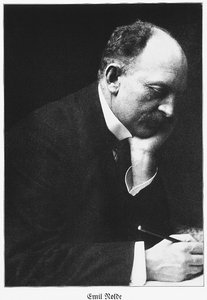
Эмиль Нолде
1867 - 1956 , Германия
Краткая справка
- Artistic Movement Or Style: Экспрессионизм, Брюкке
- Artists Or Movements Influenced By This Artist: ['Новая сецессия']
- Artists Who Influenced This Artist:
- Ван Гог
- Гаргол
- Date Of Birth: 7 августа 1867 г.
- Date Of Death: 15 апреля 1956 г.
- Full Name: Эмиль Нольде
- Nationality: Немецко-датский
- Notable Artworks:
- Насмешка над Христом
- Цветочный сад
- Осеннее море
- Place Of Birth: Н олде, Германия
Похожие статьи

Ephemeral Visions: Exploring the Artistic Legacy & Nuances of Watercolor Painting
Explore the captivating world of watercolor painting! Discover its rich history, essential techniques, influential artists & collecting tips from art experts. A comprehensive guide for enthusiasts.

Ephemeral Visions: Exploring the History & Emotional Resonance of Watercolor Painting
Explore the captivating history of watercolor painting, from ancient techniques to modern masters like Kandinsky & Blake. Discover essential artists, collecting tips & the emotional power of this luminous medium. Expert insights for art enthusiasts.

Ephemeral Visions: Exploring the Artistic Legacy & Contemporary Practice of Watercolor Painting
Explore the captivating world of watercolor painting! Discover its rich history, essential techniques, influential artists & collecting tips. A comprehensive guide for art enthusiasts from OriginalUniqueArt.

Топ-10 легендарных акварелей, изменивших искусство навсегда | OriginalUniqueArt
Погрузитесь в мир акварели! Откройте топ-10 легендарных картин Turner, Monet и других великих художников. История искусства, техники живописи и вдохновение для вашего интерьера. Репродукции музейного качества на OriginalUniqueArt.com.

Акварель: История, Техники и Современная Практика
Узнайте историю акварели от древности до современности, познакомьтесь с техниками и секретами мастеров. Пошаговое руководство для начинающих и вдохновение для опытных художников.

