Примерить в интерьере
 Отправить
 Поделиться
 Подробнее
 Руководство

 Скачать
 Похожие объекты
 Рентгенография
 Слайд-шоу
 Статистика
untitled (42)

 Развернуть текст
Масляная репродукция ручной работы
Картина маслом на холсте в выбранном вами размере и раме, написанная на заказ нашими художниками. ( Переключиться на печать Перейти к цифровым изображениям)




P118B $10

P118H $10

P118W $10

P438Z $10

P508JH $12

P508YH $12

P805H $10

P805Z $10

P919BZ $10

P919G $10

P919XJ $10

P959ZH $10

P968JZ $12

W106C $8

W218G $10

W218JH $8

W218Y $10

W307PJ $10

W316G $10

W316PJ $8

W316Y $10

W398PJ $8

W4111J $10

W500HY $15

W500JH $15

W692G $12

W849H $8

W940BG $15

W953PJ $8




Выберите один из наших стандартных размеров, соответствующих оригинальным пропорциям произведения искусства.

Введите необходимую ширину и высоту, чтобы репродукция подошла к вашей раме или стене. Поскольку работа выполняется вручную, при изменении пропорций художник может немного увеличить область вокруг картины или, наоборот, обрезать края — выбор за вами. Перед началом работы мы пришлем вам цифровой макет на утверждение. Изображение на этой странице не является точным результатом — увидеть реальный вид можно только на макете.
После оформления заказа команда OriginalUniqueArt.com свяжется с клиентом по электронной почте для уточнения деталей и предоставит предварительный макет
Доставка по всему миру () за 3–4 недели вместо стандартных 5 недель. (22 Октябрь). Без компромиссов в качестве.

Бесплатная экспресс-доставка по всему миру

Высококачественный льняной холст

Полное страхование при транспортировке

Гарантия возврата таможенных пошлин

Гарантия точного цветового соответствия

100-дневный период возврата (только при обнаружении дефектов)

Гарантия возврата 100% средств

Скидка при заказе нескольких работ
 Вариант со стеклом доступен только для размеров менее 110 см

untitled (42)
Материал репродукции
Размер репродукции
-


Итоговая стоимость
$ 300
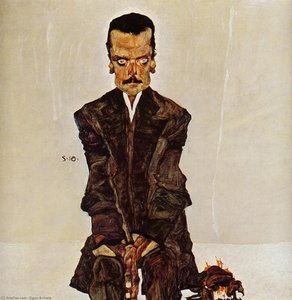
Egon Schiele’s Raw Intensity: An Exploration of “Untitled (42)”
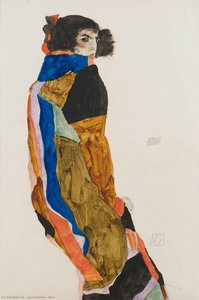
Egon Schiele's oeuvre is synonymous with unsettling beauty, psychological depth, and an unflinching gaze at the human condition. "Untitled (42)," a captivating work from around 1916-18, embodies these core tenets with remarkable force. This painting, depicting a nude male figure in a remarkably relaxed yet subtly vulnerable pose, offers a glimpse into Schiele’s intensely personal and often turbulent artistic world. It's not merely a portrait; it’s an exploration of physicality, mortality, and the delicate balance between exposure and concealment – themes that would become increasingly prominent throughout his tragically short life.
The composition is strikingly simple yet profoundly effective. The figure, positioned centrally within the frame, stretches out his arms horizontally, creating a sense of expansive openness while simultaneously suggesting a contained stillness. His posture invites observation, almost daring the viewer to breach an unspoken boundary. Notice the deliberate lack of detail in the background – a muted wash of color that serves primarily to emphasize the subject and draw attention to his form. This strategic use of negative space contributes significantly to the painting’s overall feeling of intimacy and vulnerability.
Expressionist Techniques and Schiele's Unique Style
Schiele was a pivotal figure in the development of Expressionism, an artistic movement characterized by its subjective emotional expression rather than objective representation. His distinctive style is immediately recognizable through his use of bold, gestural lines – thick, almost frantic strokes that convey energy and anxiety. These lines aren’t used to meticulously render form; instead, they are employed to capture the *feeling* of the subject, imbuing the painting with a palpable sense of movement and unease. The application of paint is deliberately rough and uneven, further amplifying this raw emotional quality.
Schiele's mastery of line lies in its ability to simultaneously depict and distort. He employs elongated limbs, exaggerated proportions, and subtly unsettling angles – techniques that contribute to the painting’s overall sense of disorientation and psychological intensity. The use of color is equally deliberate; muted earth tones dominate the palette, punctuated by occasional flashes of crimson or ochre, which serve as visual anchors and heighten the emotional impact.
Symbolism and the Shadow of Mortality
Schiele’s work is deeply intertwined with themes of death, anxiety, and the fragility of existence – subjects powerfully influenced by his own difficult childhood. The nude figure in “Untitled (42)” can be interpreted as a meditation on vulnerability and mortality. The exposed body, devoid of ornamentation or protective layers, becomes a symbol of raw honesty and an acknowledgment of our inherent physical limitations. The relaxed posture, however, suggests a quiet acceptance – perhaps even a defiant embrace – of this inevitable reality.
Furthermore, the painting’s creation during World War I adds another layer of complexity to its interpretation. Schiele's personal experiences with loss and illness, coupled with the pervasive atmosphere of fear and uncertainty surrounding the conflict, undoubtedly informed his artistic vision. The figure’s vulnerability can be seen as a reflection of humanity’s precarious position in the face of overwhelming forces.
A Timeless Portrait of Human Emotion
"Untitled (42)" is more than just a depiction of a nude male form; it's a profound exploration of human emotion, rendered with Schiele’s signature intensity and psychological acuity. The painting’s enduring power lies in its ability to evoke a visceral response – a sense of both vulnerability and resilience, of beauty and unease. OriginalUniqueArt offers meticulously crafted reproductions that faithfully capture the nuances of this remarkable work, allowing you to experience Schiele's artistic vision firsthand. Consider bringing this evocative piece into your home or office—a testament to the enduring power of art to confront and illuminate the complexities of the human spirit.
Вопросы и ответы
Насколько насыщенны цвета в работе "untitled (42)"?
Цвета произведения «untitled (42)», Шиле демонстрируют Clear Color Presence насыщенность при Vivid интенсивности.
Какое настроение и эмоции передает «untitled (42)», Шиле?
«untitled (42)», Шиле передает Melancholic чувство в рамках общей Dramatic атмосферы.
Какому этапу творчества Шиле соответствует работа «untitled (42)»?
«untitled (42)» представляет собой Late Period художника Шиле.
Биография художника
A Life Forged in Expression
Egon Schiele, born in Tulln an der Donau in 1890 – a town nestled amidst the rolling hills and vineyards of Austria – embarked on a life that was both intensely creative and profoundly marked by personal tragedy. His early years were shadowed by illness and loss; his father, Adolf Eugen Schiele, succumbed to syphilis when Egon was just fourteen, a devastating event that would indelibly shape the artist’s perspective and fuel an enduring preoccupation with mortality and the fragility of human existence. Raised initially by his mother and later under the somewhat controlling guardianship of his uncle Leopold Czihaczek, Schiele's childhood lacked the stability often associated with conventional upbringing, yet it fostered within him a remarkable independence of spirit – a characteristic that would become central to his artistic approach. Even as a young boy, he displayed an undeniable fascination with trains—a motif that subtly and repeatedly reappeared in his paintings, symbolizing both movement and perhaps, the relentless passage of time. Alongside this burgeoning interest in trains, Schiele cultivated a talent for drawing, though it was initially met with reservations from his father who viewed artistic pursuits as a distraction from more practical endeavors. The untimely death of his sister Elvira further deepened the emotional landscape of his youth, contributing to a sense of vulnerability and loss that would permeate much of his work. These formative experiences—a confluence of illness, grief, and familial constraints—instilled within Schiele a profound sensitivity and an emotional rawness that became defining features of his artistic expression, driving him to grapple with the fundamental questions of life, death, and the human condition.The Crucible of Vienna: Artistic Development
Schiele’s formal artistic training commenced at the Kunstgewerbeschule (School of Arts and Crafts) in Vienna, but he quickly found himself stifled by its conservative curriculum and adherence to traditional methods. Seeking a more liberating environment, he transferred to the Akademie der bildenden Künste (Academy of Fine Arts), only to discover that even this institution failed to satisfy his artistic aspirations. The rigid academic traditions and restrictive approach left him feeling disillusioned, leading him to abandon formal training altogether in favor of forging his own path—a bold decision that underscored his unwavering conviction in his artistic vision. Crucially, Schiele’s early years were profoundly influenced by the work of Gustav Klimt, a celebrated figure of Viennese Secessionism. He admired Klimt's distinctive decorative style and his exploration of symbolism, even receiving mentorship from the established artist. However, Schiele soon diverged significantly from Klimt’s aesthetic, developing a uniquely personal style characterized by its stark honesty, psychological intensity, and unflinching portrayal of human vulnerability. This divergence was further solidified through his involvement in the *Neues Wiener Kunstgruppe* (New Viennese Art Group), an avant-garde collective that challenged prevailing artistic norms and embraced innovative approaches to artmaking. The group, comprised of artists like Anton Faistauer and Hans Ehrlich, provided a space for Schiele to experiment with new techniques and explore unconventional themes, solidifying his position as a leading figure in the burgeoning modern art scene of Vienna.Raw Emotion and Unflinching Truth
Egon Schiele’s art is immediately recognizable for its raw honesty and psychological depth. He fearlessly confronted subjects often considered taboo – sexuality, death, anxiety, isolation – with an unflinching gaze. His distinctive style features elongated figures, contorted poses, and expressive lines that convey a sense of unease and emotional intensity. The human form, particularly the nude, became his primary subject, not as an object of idealized beauty but as a vehicle for exploring the complexities of human experience. Self-portraits constitute a significant portion of his oeuvre, offering intimate glimpses into his inner world—a world often marked by loneliness and self-doubt. He didn’t shy away from depicting himself in unflattering or vulnerable poses, revealing a profound level of self-awareness and introspection. Beyond self-portraiture, Schiele created numerous portraits of others, capturing their likenesses with an unsettling realism that seemed to penetrate beneath the surface. His landscapes, while less central to his work than his figurative paintings, demonstrate his mastery of form and color, often reflecting the same emotional intensity as his portraits. Recurring motifs like the *Physalis* plant – symbolizing death and transience with its delicate, papery husk – further underscore this preoccupation with mortality. The use of line is particularly striking in Schiele’s work; it's not merely a tool for defining shape but an expressive force that conveys emotion and psychological tension.A Legacy Cut Short: Achievements & Significance
Despite facing censorship and legal challenges—including a brief imprisonment for allegedly corrupting minors with his art—Schiele gained recognition within Vienna’s avant-garde circles. His work challenged the conventions of the time, provoking both admiration and outrage. By the time of his untimely death during the Spanish flu pandemic in 1918 at the age of twenty-eight, he had established himself as a leading figure in Austrian Expressionism. Significant works such as *Self-Portrait with Physalis*, *Couple Embracing*, and *Field Landscape (Kreuzberg near Krumau)* stand as testaments to his artistic genius. His influence on subsequent generations of artists is undeniable, particularly those interested in exploring psychological themes and challenging conventional artistic norms. Schiele’s bold approach to form and subject matter continues to resonate with audiences today, making him one of the most important and influential figures in early 20th-century art. His paintings are now held in major museum collections worldwide, including the Leopold Museum in Vienna and the Egon Schiele Art Centrum in Český Krumlov, ensuring his artistic legacy endures. He left behind a body of work that is not merely aesthetically compelling but profoundly human—a testament to the power of art to confront the complexities of existence with honesty, courage, and unwavering vision.- Key Themes: Mortality, sexuality, isolation, psychological turmoil.
- Influences: Gustav Klimt, Viennese Secession, personal trauma.
- Style Characteristics: Elongated figures, contorted poses, expressive lines, raw emotion.

Шиле
1890 - 1918 , Австрия
Краткая справка
- Artistic Movement Or Style: Экспрессионизм
- Artists Or Movements Influenced By This Artist: ['Экспрессионизм']
- Artists Who Influenced This Artist: ['Густав Климт']
- Date Of Birth: 1890
- Date Of Death: 1918
- Full Name: Egon Leo Adolf Ludwig Schiele
- Nationality: Австриец
- Notable Artworks:
- Автопортрет с физиалисом
- Пара обнимаются
- Полевая панорама (Крُمáу)
- Place Of Birth: Тюльн, Австрия
Похожие статьи
Эгон Шиле: 25 шедевров экспрессионизма для ценителей искусства и декора интерьера
Погрузитесь в мир Эгона Шиле! 25 шедевров экспрессионизма, раскрывающих психологическую глубину и новаторский стиль австрийского художника. Купите репродукции картин Шиле премиум-качества для вашего интерьера на OriginalUniqueArt.com.

Unlocking Emotion: A Beginner's Guide to the Raw Power of Symbolic Expressionism Art
Discover the raw emotion of Symbolic Expressionism. Our expert guide explores how masters like Munch use color and form to convey inner feelings, offering inspiration for collectors looking to bring powerful, soulful art into their modern homes.
Топ-10 шедевров экспрессионизма: картины, изменившие искусство | OriginalUniqueArt
Погрузитесь в мир экспрессионизма! Откройте 10 шедевров Мунка, Кирхнера и других гениев. Узнайте истории создания культовых картин и вдохновитесь для декора вашего дома. Репродукции музейного качества на OriginalUniqueArt.com
Egon Schiele: Expressionism, Anxiety & the Modern Condition – A Comprehensive Exploration
Explore the emotionally charged world of Egon Schiele (1890-1918). Discover his Expressionist masterpieces, psychological themes, and lasting impact on modern art. A comprehensive guide for collectors & enthusiasts.
Топ-10 шедевров экспрессионизма: искусство, изменившее мир | OriginalUniqueArt
Погрузитесь в мир экспрессионизма! Откройте топ-10 шедевров Мунка, Кирхнера и других гениев XX века. Узнайте истории создания культовых картин и вдохновитесь для оформления интерьера с OriginalUniqueArt.com – музейное качество репродукций.