Предпросмотр
 Поделиться
 Поделиться
 Детали произведения

 Скачать
 Похожие работы
 Рентгенография
 Слайд-шоу
 Статистика
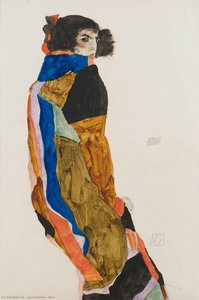
Girl with Black Hair


 Читать далее
Жикле / Арт-принт
Печать (жикле) или холст музейного качества с быстрыми сроками изготовления и широким выбором вариантов отделки. ( Купить картину ручной работы Перейти к цифровым изображениям)




P118B $10

P118H $10

P118W $10

P438Z $10

P508JH $12

P508YH $12

P805H $10

P805Z $10

P919BZ $10

P919G $10

P919XJ $10

P959ZH $10

P968JZ $12

W106C $8

W218G $10

W218JH $8

W218Y $10

W307PJ $10

W316G $10

W316PJ $8

W316Y $10

W398PJ $8

W4111J $10

W500HY $15

W500JH $15

W692G $12

W849H $8

W940BG $15

W953PJ $8




Выберите один из наших стандартных размеров, соответствующих оригинальным пропорциям произведения искусства.

Вы можете указать свои собственные размеры, чтобы репродукция идеально подошла под конкретную раму или пространство. Если выбранный вами размер не будет соответствовать пропорциям оригинала, мы либо обрежем произведение, либо дополним изображение зеркальным отражением краев или однотонной заливкой. Перед началом производства вам будет отправлен цифровой макет для утверждения.
Пожалуйста, обратите внимание, что предварительный просмотр на экране не отображает фактическую обрезку или расширение изображения. Только макет точно покажет финальную композицию.
Несмотря на возможность заказа индивидуальных размеров, мы рекомендуем выбирать размер из предопределенного списка, чтобы сохранить оригинальные пропорции.
Доставка по всему миру () за 2 недели вместо стандартных 4/5 недель. (11 Сентябрь)

Бесплатная экспресс-доставка по всему миру

Высококачественный льняной холст

Полное страхование доставки

Гарантия возмещения таможенных пошлин

Гарантия точного соответствия цветов

100-дневная политика возврата (только при обнаружении дефектов)

Гарантия возврата 100% средств

Предложение оптовых скидок
 Вариант со стеклом доступен только для размеров менее 110 см

Girl with Black Hair
Жикле / Арт-принт
Размер репродукции
-


Итоговая стоимость
$ 80
A Tangled Embrace: Exploring Egon Schiele’s ‘Girl with Black Hair’
This captivating watercolor painting by Austrian Expressionist master, Egon Schiele, plunges viewers into a world of raw emotion and intimate connection. Depicting two intertwined nude figures in a reclining pose, the artwork is a powerful exploration of human vulnerability, desire, and perhaps, underlying melancholy.Style & Technique: The Essence of Expressionism
‘Girl with Black Hair’ exemplifies Schiele's signature style – a bold departure from traditional representation. Heavily influenced by the Expressionist movement, the work prioritizes emotional intensity over realistic depiction. Distorted forms, elongated shapes, and gestural lines create a sense of unrestrained energy and spontaneity. The watercolor technique itself contributes to this effect; washes layered upon washes build texture and depth while maintaining a grainy quality that enhances the painting’s emotive power. Notice the deliberate lack of strong highlights or shadows – a choice that further amplifies the somber, introspective mood.Composition & Form: Verticality and Interconnection
The composition is strikingly vertical, with the figures stacked upon one another, emphasizing their physical closeness and psychological entanglement. This arrangement isn’t merely anatomical; it speaks to a deeper connection – a merging of identities. Perspective is intentionally flattened, drawing attention to the interplay of forms rather than creating an illusion of spatial depth. The simplification of shapes focuses our gaze on volume and contour, highlighting the figures' bodies as vessels of emotion.Historical Context: A Generation in Turmoil
Egon Schiele lived a tragically short life (1890-1918), bookended by societal upheaval and personal struggles. His art emerged during a period of profound change – the waning years of the Austro-Hungarian Empire, marked by anxieties about modernity, sexuality, and mortality. Schiele’s work challenged conventional norms, confronting taboo subjects with unflinching honesty. He was briefly imprisoned for “offending public morality” due to the explicit nature of his art, a testament to its radical departure from artistic tradition. His mentor, Gustav Klimt, also faced similar scrutiny, highlighting the rebellious spirit of Vienna's avant-garde scene.Symbolism & Emotional Impact: Vulnerability and Desire
While interpretations are subjective, ‘Girl with Black Hair’ is rich in symbolic potential. The intertwined figures suggest a profound connection – love, dependence, or perhaps even a shared sense of isolation. Their postures convey vulnerability and exposure, inviting viewers to contemplate the complexities of human relationships. The lack of distinct facial features encourages projection; we see our own emotions reflected in their ambiguous expressions. The overall effect is deeply moving, evoking feelings of intimacy, longing, and a quiet sense of sadness.Collecting & Interior Design: A Statement Piece
A reproduction of ‘Girl with Black Hair’ serves as a powerful statement piece for any art collection or interior space. Its muted color palette and expressive lines complement modern and contemporary décor schemes. The artwork's emotional depth adds an element of sophistication and intrigue, sparking conversation and inviting contemplation. Consider pairing it with minimalist furnishings to allow the painting’s intensity to take center stage, or alongside other Expressionist works to create a cohesive artistic narrative.Биография художника
A Life Forged in Expression
Egon Schiele, born in Tulln an der Donau in 1890 – a town nestled amidst the rolling hills and vineyards of Austria – embarked on a life that was both intensely creative and profoundly marked by personal tragedy. His early years were shadowed by illness and loss; his father, Adolf Eugen Schiele, succumbed to syphilis when Egon was just fourteen, a devastating event that would indelibly shape the artist’s perspective and fuel an enduring preoccupation with mortality and the fragility of human existence. Raised initially by his mother and later under the somewhat controlling guardianship of his uncle Leopold Czihaczek, Schiele's childhood lacked the stability often associated with conventional upbringing, yet it fostered within him a remarkable independence of spirit – a characteristic that would become central to his artistic approach. Even as a young boy, he displayed an undeniable fascination with trains—a motif that subtly and repeatedly reappeared in his paintings, symbolizing both movement and perhaps, the relentless passage of time. Alongside this burgeoning interest in trains, Schiele cultivated a talent for drawing, though it was initially met with reservations from his father who viewed artistic pursuits as a distraction from more practical endeavors. The untimely death of his sister Elvira further deepened the emotional landscape of his youth, contributing to a sense of vulnerability and loss that would permeate much of his work. These formative experiences—a confluence of illness, grief, and familial constraints—instilled within Schiele a profound sensitivity and an emotional rawness that became defining features of his artistic expression, driving him to grapple with the fundamental questions of life, death, and the human condition.The Crucible of Vienna: Artistic Development
Schiele’s formal artistic training commenced at the Kunstgewerbeschule (School of Arts and Crafts) in Vienna, but he quickly found himself stifled by its conservative curriculum and adherence to traditional methods. Seeking a more liberating environment, he transferred to the Akademie der bildenden Künste (Academy of Fine Arts), only to discover that even this institution failed to satisfy his artistic aspirations. The rigid academic traditions and restrictive approach left him feeling disillusioned, leading him to abandon formal training altogether in favor of forging his own path—a bold decision that underscored his unwavering conviction in his artistic vision. Crucially, Schiele’s early years were profoundly influenced by the work of Gustav Klimt, a celebrated figure of Viennese Secessionism. He admired Klimt's distinctive decorative style and his exploration of symbolism, even receiving mentorship from the established artist. However, Schiele soon diverged significantly from Klimt’s aesthetic, developing a uniquely personal style characterized by its stark honesty, psychological intensity, and unflinching portrayal of human vulnerability. This divergence was further solidified through his involvement in the *Neues Wiener Kunstgruppe* (New Viennese Art Group), an avant-garde collective that challenged prevailing artistic norms and embraced innovative approaches to artmaking. The group, comprised of artists like Anton Faistauer and Hans Ehrlich, provided a space for Schiele to experiment with new techniques and explore unconventional themes, solidifying his position as a leading figure in the burgeoning modern art scene of Vienna.Raw Emotion and Unflinching Truth
Egon Schiele’s art is immediately recognizable for its raw honesty and psychological depth. He fearlessly confronted subjects often considered taboo – sexuality, death, anxiety, isolation – with an unflinching gaze. His distinctive style features elongated figures, contorted poses, and expressive lines that convey a sense of unease and emotional intensity. The human form, particularly the nude, became his primary subject, not as an object of idealized beauty but as a vehicle for exploring the complexities of human experience. Self-portraits constitute a significant portion of his oeuvre, offering intimate glimpses into his inner world—a world often marked by loneliness and self-doubt. He didn’t shy away from depicting himself in unflattering or vulnerable poses, revealing a profound level of self-awareness and introspection. Beyond self-portraiture, Schiele created numerous portraits of others, capturing their likenesses with an unsettling realism that seemed to penetrate beneath the surface. His landscapes, while less central to his work than his figurative paintings, demonstrate his mastery of form and color, often reflecting the same emotional intensity as his portraits. Recurring motifs like the *Physalis* plant – symbolizing death and transience with its delicate, papery husk – further underscore this preoccupation with mortality. The use of line is particularly striking in Schiele’s work; it's not merely a tool for defining shape but an expressive force that conveys emotion and psychological tension.A Legacy Cut Short: Achievements & Significance
Despite facing censorship and legal challenges—including a brief imprisonment for allegedly corrupting minors with his art—Schiele gained recognition within Vienna’s avant-garde circles. His work challenged the conventions of the time, provoking both admiration and outrage. By the time of his untimely death during the Spanish flu pandemic in 1918 at the age of twenty-eight, he had established himself as a leading figure in Austrian Expressionism. Significant works such as *Self-Portrait with Physalis*, *Couple Embracing*, and *Field Landscape (Kreuzberg near Krumau)* stand as testaments to his artistic genius. His influence on subsequent generations of artists is undeniable, particularly those interested in exploring psychological themes and challenging conventional artistic norms. Schiele’s bold approach to form and subject matter continues to resonate with audiences today, making him one of the most important and influential figures in early 20th-century art. His paintings are now held in major museum collections worldwide, including the Leopold Museum in Vienna and the Egon Schiele Art Centrum in Český Krumlov, ensuring his artistic legacy endures. He left behind a body of work that is not merely aesthetically compelling but profoundly human—a testament to the power of art to confront the complexities of existence with honesty, courage, and unwavering vision.- Key Themes: Mortality, sexuality, isolation, psychological turmoil.
- Influences: Gustav Klimt, Viennese Secession, personal trauma.
- Style Characteristics: Elongated figures, contorted poses, expressive lines, raw emotion.

Шиле
1890 - 1918 , Австрия
Основные сведения
- Artistic Movement Or Style: Экспрессионизм
- Artists Or Movements Influenced By This Artist: ['Экспрессионизм']
- Artists Who Influenced This Artist: ['Густав Климт']
- Date Of Birth: 1890
- Date Of Death: 1918
- Full Name: Egon Leo Adolf Ludwig Schiele
- Nationality: Австриец
- Notable Artworks:
- Автопортрет с физиалисом
- Пара обнимаются
- Полевая панорама (Крُمáу)
- Place Of Birth: Тюльн, Австрия
Похожие статьи
Эгон Шиле: 25 шедевров экспрессионизма для ценителей искусства и декора интерьера
Погрузитесь в мир Эгона Шиле! 25 шедевров экспрессионизма, раскрывающих психологическую глубину и новаторский стиль австрийского художника. Купите репродукции картин Шиле премиум-качества для вашего интерьера на OriginalUniqueArt.com.

Ephemeral Visions: Exploring the Artistic Legacy & Contemporary Practice of Watercolor Painting
Explore the captivating world of watercolor painting! Discover its rich history, essential techniques, influential artists & collecting tips. A comprehensive guide for art enthusiasts from OriginalUniqueArt.

Ephemeral Visions: Exploring the History & Emotional Resonance of Watercolor Painting
Explore the captivating history of watercolor painting, from ancient techniques to modern masters like Kandinsky & Blake. Discover essential artists, collecting tips & the emotional power of this luminous medium. Expert insights for art enthusiasts.
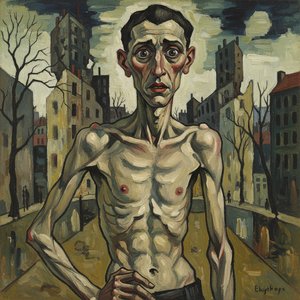
Egon Schiele: Expressionism, Anxiety & the Modern Condition – A Comprehensive Exploration
Explore the emotionally charged world of Egon Schiele (1890-1918). Discover his Expressionist masterpieces, psychological themes, and lasting impact on modern art. A comprehensive guide for collectors & enthusiasts.

Топ-10 легендарных акварелей, изменивших искусство навсегда | OriginalUniqueArt
Погрузитесь в мир акварели! Откройте топ-10 легендарных картин Turner, Monet и других великих художников. История искусства, техники живописи и вдохновение для вашего интерьера. Репродукции музейного качества на OriginalUniqueArt.com.