

 Примерить в интерьере
 Отправить
 Поделиться
 Подробнее
 Руководство

 Скачать
 Похожие объекты
 Рентгенография
 Слайд-шоу
 Статистика
Trinity
 Oil On Panel
- Mannerist
 1513
1513- Renaissance
 152.0 x 228.0 cm
 Национальная пинакотека
 Развернуть текст
Жикле / Арт-принты
Печать (жикле) или холст музейного качества с быстрыми сроками изготовления и широким выбором вариантов отделки. ( Заказать репродукцию ручной работы Перейти к цифровым изображениям)




P118B $10

P118H $10

P118W $10

P438Z $10

P508JH $12

P508YH $12

P805H $10

P805Z $10

P919BZ $10

P919G $10

P919XJ $10

P959ZH $10

P968JZ $12

W106C $8

W218G $10

W218JH $8

W218Y $10

W307PJ $10

W316G $10

W316PJ $8

W316Y $10

W398PJ $8

W4111J $10

W500HY $15

W500JH $15

W692G $12

W849H $8

W940BG $15

W953PJ $8




Выберите один из наших стандартных размеров, соответствующих оригинальным пропорциям произведения искусства.

Введите необходимую ширину и высоту, чтобы репродукция подошла к вашей раме или стене. При печати изображение можно только уменьшить, но нельзя увеличить больше оригинала, поэтому при выборе другого формата часть изображения может быть обрезана. Перед печатью мы отправим вам цифровой макет на утверждение. Изображение на этой странице не отображает реальную обрезку — ее можно увидеть только на макете.
Доставка по всему миру () за 2 недели вместо стандартных 4–5 недель. (23 Октябрь)

Бесплатная экспресс-доставка по всему миру

Высококачественный льняной холст

Полное страхование при транспортировке

Гарантия возврата таможенных пошлин

Гарантия точного цветового соответствия

100-дневный период возврата (только при обнаружении дефектов)

Гарантия возврата 100% средств

Скидка при заказе нескольких работ
 Вариант со стеклом доступен только для размеров менее 110 см

Trinity
Жикле / Арт-принты
Размер репродукции
-


Итоговая стоимость
$ 80
A Visionary Symphony of Faith and Light
In the heart of the Italian Renaissance, amidst the burgeoning humanism of the early sixteenth century, Domenico di Pace Beccafumi crafted a masterpiece that transcends the boundaries of mere religious iconography. His Trinity, completed in 1513, is not simply a depiction of divine figures but a profound exploration of the spiritual psyche. As a prominent figure of the Sienese school, Beccafumi moved away from the rigid, polished perfection found in Florentine works, opting instead for a more emotive and atmospheric approach. This monumental triptych serves as a window into a period where art began to grapple with the tension between classical harmony and the expressive, often distorted, beauty of the emerging Mannerist style.
The composition is a breathtaking tripartite journey, guiding the viewer through layers of celestial and earthly devotion. In the central panel, the Crucifixion takes center stage, anchored by the figure of Christ, flanked by the poignant presence of Mary Magdalene and John the Evangelist. The use of light here is nothing short of miraculous; Beccafumi employs a technique known as glazeware, applying thin, translucent layers of oil paint to create a luminous depth that seems to glow from within. This mastery of light and shadow—the dramatic chiaroscuro—imbues the figures with a weight and a soul, making their divine suffering and eternal grace feel tangibly present to the observer.
The Artistry of Sienese Mannerism
To behold this work is to witness the birth of a new aesthetic language. Beccafumi’s brushwork avoids the static nature of his predecessors, favoring elongated forms and a sense of rhythmic movement that anticipates the complexities of Mannerism. The left panel introduces us to an angelic presence, where soft, light-colored robes contrast against a deep, mysterious background, creating a sense of infinite space. Conversely, the right panel offers a more grounded, yet equally sacred, scene featuring the Virgin Mary and Joseph, wrapped in rich blues and warm earth tones that ground the divine narrative in human emotion.
For the discerning collector or interior designer, this piece offers an unparalleled opportunity to introduce a sense of historical grandeur and intellectual depth into a space. The intricate details—from the delicate folds of the drapery to the expressive, searching gazes of the saints—provide endless points of visual fascination. A high-quality reproduction of this triptych does more than decorate a wall; it anchors a room with a sense of timelessness and contemplative peace. It is an invitation to pause, to reflect, and to immerse oneself in the golden age of Siena, making it a profound centerpiece for any curated collection or sophisticated living environment.
Вопросы и ответы
Насколько выражен контраст в работе «Trinity», Domenico Di Pace Beccafumi?
Уровень контрастности произведения «Trinity», Domenico Di Pace Beccafumi составляет Statement.
Какое настроение передает «Trinity», Domenico Di Pace Beccafumi в рамках направления Mannerist?
Mysterious эмоциональность произведения «Trinity» дополняет его стиль Mannerist.
Есть ли работы, похожие на "Trinity"?
Работы, похожие на «Trinity», представлены на странице Похожие работы произведения.
Биография художника
Domenico Beccafumi (The J. Paul Getty Museum Collection)
Domenico di Pace Beccafumi, a name that resonates less immediately than those of his Florentine contemporaries, nonetheless occupies a pivotal position in the narrative of Italian Renaissance art. Born around 1486 in Montaperto, near Siena, Beccafumi’s artistic journey was one of remarkable development, culminating in a style that bridged the High Renaissance and the burgeoning complexities of Mannerism. His story isn't simply about technical skill; it is about a deeply individual vision—a sensibility steeped in the traditions of his Sienese heritage yet boldly reaching towards new expressive possibilities. His origins were humble: the son of Giacomo di Pace, a peasant who worked on the estate of Lorenzo Beccafumi. Seeing his talent for drawing, Lorenzo adopted him and commended him to learn painting from Mechero, a local Sienese artist. This early grounding in the Sienese school would prove foundational, even as he ventured beyond its established conventions. The Sienese tradition, already diverging from the classical ideals embraced elsewhere in Italy, fostered an environment where emotional intensity and decorative detail were valued, qualities that would become hallmarks of Beccafumi’s unique style.Rome and the Forging of a Unique Style
Around 1509, Beccafumi journeyed to Rome, a transformative moment exposing him to the artistic ferment of the papal city. He encountered the groundbreaking works of Raphael and Michelangelo, absorbing their innovations in composition, anatomy, and dramatic expression. However, unlike many artists who sought to directly emulate these masters, Beccafumi synthesized these influences through his own distinct lens. He didn’t simply *copy* the Roman style; he filtered it through a pre-existing Sienese aesthetic—one characterized by a certain provincialism, an emphasis on decorative detail, and a lingering medieval sensibility. Upon returning to Siena, this synthesis began to manifest in a style increasingly his own. It was a style marked by irrationality, emotional intensity, and a captivating visual experience achieved through discordant colors and hallucinatory settings. His paintings weren’t merely representations of reality; they were explorations of inner states, imbued with a sense of unease and psychological depth. This departure from the harmonious balance of High Renaissance ideals signaled his embrace of Mannerism, though he remained distinctly apart from its more widespread trends. He skillfully blended the decorative elements and emotional intensity of the Sienese school with the emerging stylistic features of Mannerism—a fusion that would define his artistic legacy.Masterworks and Artistic Innovations
Beccafumi’s output was diverse, encompassing painting, sculpture, mosaic design, and printmaking. Among his most celebrated achievements are the frescoes in the Oratory of St. Benedict in Siena, a testament to his narrative skill and expressive power. The Trinity Triptych, housed in the Pinacoteca Nazionale di Siena, showcases his mastery of oil painting and his ability to convey religious devotion with both grandeur and intimacy. The Annunciation, also at the Pinacoteca Nazionale, exemplifies his distinctive use of color and composition, creating a scene that is both serene and subtly unsettling. However, perhaps his most ambitious undertaking was his direction of the pavement for Siena Cathedral between 1517 and 1544. This monumental project involved intricate designs inlaid with marble and mosaics, depicting scenes from biblical stories—Ahab, Elijah, Melchisedec, Abraham, and Moses among them. Beccafumi not only designed these scenes but also innovated the technical processes used in their creation, demonstrating his remarkable versatility as an artist and craftsman. His skill extended to printmaking, where he excelled in both engraving and woodcut, furthering disseminating his style and ideas beyond Siena’s borders. These prints allowed for wider dissemination of his style and ideas, influencing artists across Italy.Critical Assessment and Legacy
Compared to the equilibrated compositions favored by Raphael and Michelangelo, Beccafumi's paintings stand apart—embracing instead a sense of emotional tension, instability, and expressive distortion. This willingness to challenge conventional norms foreshadowed later trends in art, influencing subsequent generations with its innovative techniques and psychological depth. He remains a compelling figure, a testament to the enduring power of individual vision within the broader currents of art history. His work is characterized by misty, non-linear quality—forms appearing to dissolve into a hazy atmosphere—jagged lines and primal coloration—bold, unconventional use of color that departed from the more balanced palettes of his contemporaries—and emotional tension—a pervasive sense of unease reflecting a departure from classical ideals. Domenico Beccafumi’s contribution to Italian Renaissance art is undeniable; he solidified Sienese artistic traditions while simultaneously pushing boundaries toward Mannerist innovation. He died in Siena in 1551, marking the symbolic end of his era and cementing his place as one of the last undiluted representatives of the Sienese school—a legacy that continues to inspire admiration and scholarly study today.- Key Characteristics of Beccafumi’s Style:
- Misty, Non-Linear Quality: His paintings often possess an ethereal quality, with forms appearing to dissolve into a hazy atmosphere.
- Jagged Lines and Primal Coloration: Beccafumi favored sharp, angular lines and a bold, unconventional use of color that departed from the more balanced palettes of his contemporaries.
- Emotional Tension and Instability: A pervasive sense of unease and psychological complexity characterizes his work, reflecting a departure from classical ideals of harmony and proportion.
- Sienese Tradition with Mannerist Influences: He skillfully blended the decorative elements and emotional intensity of the Sienese school with the emerging stylistic features of Mannerism.

Domenico Di Pace Beccafumi
1486 - 1551 , Италия
Краткая справка
- Artistic Movement Or Style: Мannerизм, Ренессанс
- Artists Who Influenced This Artist:
- Рафаэль
- Микеланджело
- Date Of Birth: c. 1486
- Date Of Death: May 18, 1551
- Full Name: Domenico di Pace Beccafumi
- Nationality: Итальянский
- Notable Artworks:
- Триптих Троицы
- Аннунциато
- Переход Девы Марии
- Place Of Birth: Montaperto, Italy
Похожие статьи

Mannerism: Bridging Renaissance Harmony & Baroque Drama – A Study of Style & Affectation
Explore the fascinating world of Mannerism! Discover its key characteristics, pioneering artists like Pontormo & Bronzino, and its pivotal role in bridging Renaissance harmony to Baroque drama. A comprehensive guide for art enthusiasts.
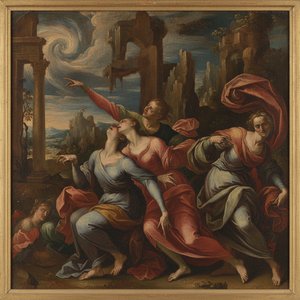
Drama & Distortion: A Journey Through the Captivating World of Baroque Mannerism
Explore the dramatic tension of Mannerism and the opulent grandeur of Baroque art. Discover how masters used light, shadow, and distortion to redefine European history through a captivating journey of emotional intensity and spiritual fervor.
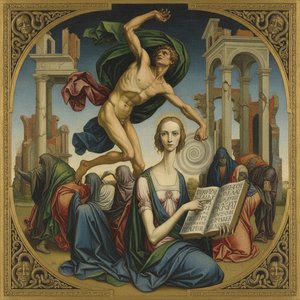
Beyond Perfection: The Dramatic Elegance and Intellectual Tension of Renaissance Mannerism
Explore the captivating world of Renaissance Mannerism. Discover how artists moved beyond High Renaissance harmony into a realm of elegant distortion, psychological tension, and dramatic beauty that bridged the gap to the Baroque era.

Northern Mannerism: The Dramatic Evolution of European Art through Elegant Distortion and Tension
Explore the dramatic evolution of Northern Mannerism. Discover how 16th-century artists moved from Renaissance harmony to elegant distortion, tension, and complex symbolism in European art history.
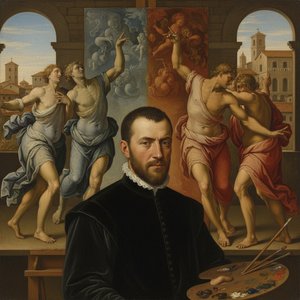
Domenico Beccafumi: A Sienese Master Between Mannerism & Baroque Anticipation
Explore the captivating world of Domenico Beccafumi, a pivotal figure bridging Mannerism & Baroque art. Discover his unique style, religious masterpieces, and lasting legacy with OriginalUniqueArt.

