

 Примерить в интерьере
 Отправить
 Поделиться
 Подробнее
 Руководство

 Скачать
 Похожие объекты
 Рентгенография
 Слайд-шоу
 Статистика
Raploch, Stirling


 Развернуть текст
Жикле / Арт-принты
Печать (жикле) или холст музейного качества с быстрыми сроками изготовления и широким выбором вариантов отделки. ( Заказать репродукцию ручной работы Перейти к цифровым изображениям)




P118B $10

P118H $10

P118W $10

P438Z $10

P508JH $12

P508YH $12

P805H $10

P805Z $10

P919BZ $10

P919G $10

P919XJ $10

P959ZH $10

P968JZ $12

W106C $8

W218G $10

W218JH $8

W218Y $10

W307PJ $10

W316G $10

W316PJ $8

W316Y $10

W398PJ $8

W4111J $10

W500HY $15

W500JH $15

W692G $12

W849H $8

W940BG $15

W953PJ $8




Выберите один из наших стандартных размеров, соответствующих оригинальным пропорциям произведения искусства.

Вы можете указать свои собственные размеры, чтобы репродукция идеально подошла под конкретную раму или пространство. Если выбранный вами размер не будет соответствовать пропорциям оригинала, мы либо обрежем произведение, либо дополним изображение зеркальным отражением краев или однотонной заливкой. Перед началом производства вам будет отправлен цифровой макет для утверждения.
Пожалуйста, обратите внимание, что предварительный просмотр на экране не отображает фактическую обрезку или расширение изображения. Только макет точно покажет финальную композицию.
Несмотря на возможность заказа индивидуальных размеров, мы рекомендуем выбирать размер из предопределенного списка, чтобы сохранить оригинальные пропорции.
Доставка по всему миру () за 2 недели вместо стандартных 4–5 недель. (6 Октябрь)

Бесплатная экспресс-доставка по всему миру

Высококачественный льняной холст

Полное страхование при транспортировке

Гарантия возврата таможенных пошлин

Гарантия точного цветового соответствия

100-дневный период возврата (только при обнаружении дефектов)

Гарантия возврата 100% средств

Скидка при заказе нескольких работ
 Вариант со стеклом доступен только для размеров менее 110 см

Raploch, Stirling
Жикле / Арт-принты
Размер репродукции
-


Итоговая стоимость
$ 80
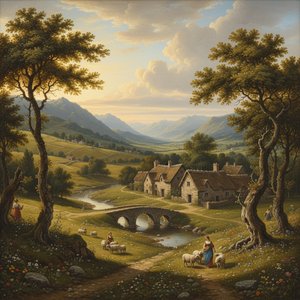
A Highland Harmony: David Gauld’s “Raploch, Stirling”
David Gauld's "Raploch, Stirling," painted in 1931, is more than just a depiction of a Scottish village; it’s a poignant meditation on rural life, the relationship between humanity and nature, and the enduring spirit of a community nestled within a dramatic landscape. This oil-on-canvas masterpiece, now meticulously reproduced for discerning collectors, transports the viewer to a tranquil corner of Perthshire, capturing not just the visual beauty but also a profound sense of place and time.
The scene unfolds with remarkable detail – a cluster of modest dwellings, rendered in earthy ochres and browns that seamlessly blend into the surrounding terrain. These humble homes, punctuated by glimpses of barns and workshops, speak to a life rooted in agriculture and craftsmanship. Beyond them stretches a rolling expanse of verdant fields, dotted with grazing livestock—cows, sheep, and horses—that contribute to the painting’s overall feeling of pastoral serenity. Dominating the background is the imposing silhouette of Stirling Castle, its ancient stones rising majestically against the backdrop of a rugged mountain range. The light, diffused and soft, suggests either early morning or late afternoon, casting long shadows that add depth and drama to the composition.
The Glasgow Boys and Pre-Raphaelite Echoes
David Gauld’s artistic journey is inextricably linked to the vibrant art scene of Glasgow during the late 19th century. As a member of the Glasgow Boys, a group of young artists who challenged the established academic style, Gauld embraced a more expressive and emotionally charged approach to painting. His early work was heavily influenced by Japanese prints – particularly their bold compositions, flattened perspectives, and emphasis on decorative elements – a trend he skillfully integrated into his own distinctive style. However, beneath this Eastern influence lies a strong resonance with the Pre-Raphaelite Brotherhood, evident in Gauld’s meticulous attention to detail, his romanticized portrayal of rural life, and his use of rich, saturated colors.
The Pre-Raphaelites, who rejected the conventions of academic art, sought inspiration from medieval and Renaissance sources, often depicting scenes from mythology, literature, and folklore. Gauld’s “Raploch” shares this fascination with storytelling and symbolism, inviting viewers to contemplate the lives and experiences of those who inhabit this remote corner of Scotland. The inclusion of animals, for instance, is not merely decorative; they represent a deep connection between humanity and the natural world – a theme central to both Japanese and Pre-Raphaelite art.
Technique and Composition: A Masterclass in Detail
Gauld’s technical skill is immediately apparent in the painting's remarkable level of detail. He employs a meticulous layering technique, building up the image through numerous thin glazes of oil paint, creating a luminous surface that captures the subtle nuances of light and shadow. The artist’s brushwork is both precise and expressive, conveying a sense of texture and movement – from the rough bark of the trees to the flowing robes of the figures. Notice particularly the way he renders the textures of the sheep's wool or the weathered stone of Stirling Castle.
The composition itself is carefully balanced, drawing the eye through a series of converging lines that lead the viewer’s gaze from the foreground dwellings towards the distant mountains. The strategic placement of elements – the castle, the livestock, and the village – creates a harmonious whole, reflecting the interconnectedness of human life and the natural environment. The use of atmospheric perspective—the subtle blurring of details in the distance—further enhances the sense of depth and scale.
Symbolism and Emotional Resonance
"Raploch, Stirling" is not simply a picturesque landscape; it’s imbued with symbolic meaning. The village represents resilience, community, and a connection to the land – values that have long been central to Scottish identity. The imposing presence of Stirling Castle serves as a reminder of Scotland's rich history and its enduring spirit. The painting evokes a sense of nostalgia for a simpler time, a longing for the tranquility of rural life, and a deep appreciation for the beauty of the natural world.
Reproduced with meticulous attention to detail, this artwork offers a captivating glimpse into a bygone era. It’s an ideal addition to any collection, bringing a touch of Highland charm and timeless elegance to your home or office. Whether you are an art enthusiast, a collector seeking investment pieces, or simply someone who appreciates the beauty of Scottish landscape painting, “Raploch, Stirling” is sure to captivate and inspire.
Вопросы и ответы
В каком возрасте Дэвид Голд создал(а) «Raploch, Stirling»?
Когда в 1931 году было создано произведение «Raploch, Stirling», художнику Дэвид Голд (родившемуся в 1865) было 66 лет.
Какой размер и ориентацию вы рекомендуете для печати работы "Raploch, Stirling"?
Для «Raploch, Stirling» рекомендуется использовать размер Medium и Landscape ориентацию.
Кто создал "Raploch, Stirling"?
Авторство работы «Raploch, Stirling» приписывается Дэвид Голд.
Насколько насыщенны цвета в работе "Raploch, Stirling"?
Цвета произведения «Raploch, Stirling», Дэвид Голд демонстрируют Subtle Color насыщенность при Balanced интенсивности.
В каком году было создано произведение «Raploch, Stirling», Дэвид Голд?
Произведение «Raploch, Stirling», Дэвид Голд было создано в 1931 году.
Доступна ли слайд-шоу для «Raploch, Stirling», Дэвид Голд?
Доступна презентация: страница Слайд-шоу работы «Raploch, Stirling», Дэвид Голд.
В каком году и к какому направлению относится произведение «Raploch, Stirling»?
«Raploch, Stirling» была создана в 1931 году и относится к направлению Glasgow Style. Дата и художественное направление позволяют определить место этого произведения в истории искусства.
Биография художника
Провидец Глазго: Жизнь и искусство Дэвида Голда
В ярком, изменчивом ландшафте Шотландии конца девятнадцатого века лишь немногие художники смогли столь грациозно запечатлеть пересечение традиций и современности, как Дэвид Голд. Родившись в Глазго в 1865 году, Голд проявил себя не просто как живописец, но как первопроходец, сумевший преодолеть разрыв между изысканной сложностью графического дизайна и монументальным величием витража. Его путь был процессом глубокой эстетической эволюции, уходящей корнями в художественное брожение движения «Глазго Бойз» — группы, стремившейся освободиться от жесткого академизма той эпохи в пользу более натуралистичных, эмоциональных и экспериментальных подходов.
Ранние творческие порывы Голда были сформированы тщательным вниманием к деталям — чертой, отточенной в годы его становления как литографа. Когда в 1882 году он поступил в Школу искусств Глазго, он принес с собой растущее увлечение эстетикой Востока. Этот период ознаменовался интенсивным изучением японской гравюры, чья плоскостная перспектива и смелые каллиграфические линии навсегда наложили отпечаток на его композиции. Первое широкое признание пришло к нему благодаря выразительным рисункам пером и тушью для издания The Glasgow Weekly Citizen; эти работы демонстрировали виртуозное владение линией и ритмичную, органическую чувственность, предвещавшую грядущую революцию ар-нуво.
Синтез света и линии
По мере развития карьеры Голда его художественная среда расширилась: от хрупкой поверхности бумаги к сияющей, полупрозрачной материи витража. Этот переход позволил ему исследовать игру света и цвета так, как мало кто из его современников мог себе это позволить. В период пребывания в Кирккудбрайте между 1891 и 1894 годами Голд выполнял значимые заказы для Гатри и Уэллса, создавая окна, которые были гораздо большим, чем просто архитектурным украшением. Эти произведения представляли собой световые гобелены, где органичные, текучие формы стиля ар-нуво встречались с душевной, символической глубиной прерафаэлитской традиции.
Его техника работы со стеклом отличалась глубоким пониманием того, как цвет взаимодействует с естественным освещением. Манипулируя текстурой и пигментом, он мог вызывать ощущение атмосферы, одновременно эфирной и осязаемой. Это мастерство владения материалом отражало его широкую художественную философию: веру в то, что искусство должно не только представлять мир, но и преображать пространство, в котором оно находится. Работая маслом, тушью или стеклом, Голд стремился уловить суть своих сюжетов — будь то тихое достоинство портрета или суровая красота шотландского пейзажа — сквозь призму стилизованной элегантности.
Наследие и историческое значение
Траектория жизни Дэвида Голда была отмечена как творческим сотрудничеством, так и уединенным совершенствованием мастерства. Его связи с другими светилами Глазгоской школы, такими как Уильям Стюарт Ширреффс и Харрингтон Манн, поместили его в самое сердце трансформационного периода в истории шотландского искусства. Даже когда его профессиональные отношения менялись, а сам он переезжал между Глазго, Кирккудбрайтом и Норт-Бериком, его приверженность инновациям оставалась непоколебимой. Он стал жизненно важным связующим звеном между увлечением натурализмом девятнадцатого века и принятием декоративного модернизма двадцатого столетия.
Сегодня Голда помнят как художника невероятной универсальности и прозорливости. Его способность синтезировать разнообразные влияния — от точности японской ксилографии до романтизма прерафаэлитов — позволила ему внести уникальный голос в глазгоский стиль. Его наследие живет в непреходящей красоте его витражей и тихом, мощном присутствии его живописи, которая продолжает резонировать с восхищением перед мастерством, светом и неувядающим духом шотландского новаторства.

Дэвид Голд
1865 - 1936 , Великобритания
Краткая справка
- Artistic Movement Or Style: Глазго-бои; Ар-нуво; Прерафаэлиты; японское влияние
- Artists Or Movements Influenced By This Artist: ['Японское искусство']
- Artists Who Influenced This Artist: ['Уильям Стюарт Макджордж']
- Date Of Birth: Глазго, Великобритания (1865)
- Date Of Death: 1936
- Full Name: Дэвид Голд
- Nationality: Шотландец
- Notable Artworks:
- Святая Агнесса
- Музыка
- Place Of Birth: Глазго
Похожие статьи
Evoking Arcadia: A Historical & Aesthetic Exploration of Rural Landscape Art
Explore the rich history of pastoral landscape art, from classical Arcadia to Impressionism & beyond. Discover key artists, movements, and how to collect serene rural scenes for your home. Expert insights at OriginalUniqueArt.

Cultivating Visions: A Historical Journey Through Rural Landscapes in Art
Explore the rich history of rural landscape painting with OriginalUniqueArt. Discover Impressionist masterpieces, key artists & movements. Find your perfect serene artwork and bring nature's beauty home.

David Cox the Elder: Landscape, Light & the Romantic Vision of Rural England
Explore the captivating landscapes of David Cox the Elder, a pivotal figure in British Romanticism. Discover his masterful watercolour techniques, enduring legacy & find timeless art for your home at OriginalUniqueArt.

Романтический пейзаж: 10 шедевров, изменивших искусство | OriginalUniqueArt.com
Погрузитесь в мир романтического пейзажа! 10 шедевров Фридриха, Тёрнера и других гениев. Узнайте историю создания культовых картин и вдохновитесь для декора интерьера. Репродукции высокого качества на OriginalUniqueArt.com.

Джон Констебль: 25 шедевров английского пейзажа для вашего интерьера
Погрузитесь в мир английского пейзажа с Джоном Констеблом! 25 шедевров романтизма, история создания картин и вдохновение для вашего интерьера. Репродукции высокого качества на OriginalUniqueArt.com – искусство для ценителей.
