

 Предпросмотр
 Поделиться
 Поделиться
 Детали произведения

 Скачать
 Похожие работы
 Рентгенография
 Слайд-шоу
Esther before Ahasuerus
 Oil On Canvas
- WallArt
- Baroque
 1624
1624- Early Modern
 80.0 x 119.0 cm
 Лувр
Лувр
 Читать далее
Масляная репродукция ручной работы
Картина маслом на холсте в выбранном вами размере и раме, написанная на заказ нашими художниками. ( Купить принт Купить изображение)




P118B $10

P118H $10

P118W $10

P438Z $10

P508JH $12

P508YH $12

P805H $10

P805Z $10

P919BZ $10

P919G $10

P919XJ $10

P959ZH $10

P968JZ $12

W106C $8

W218G $10

W218JH $8

W218Y $10

W307PJ $10

W316G $10

W316PJ $8

W316Y $10

W398PJ $8

W4111J $10

W500HY $15

W500JH $15

W692G $12

W849H $8

W940BG $15

W953PJ $8




Выберите один из наших стандартных размеров, соответствующих оригинальным пропорциям произведения искусства.

Вы можете указать собственные размеры, чтобы картина идеально вписалась в выбранную раму или пространство. Если выбранный вами размер не соответствует пропорциям оригинала, мы либо обрежем полотно, либо расширим его за счет дополнительных элементов, написанных вручную. Цифровой макет будет отправлен вам на утверждение перед началом производства.
Обратите внимание, что предварительный просмотр на экране не отражает фактическую обрезку или расширение. Только макет точно покажет окончательную композицию.
Хотя доступны индивидуальные размеры, мы рекомендуем выбирать вариант из предопределенного списка, чтобы сохранить исходные пропорции.
После оформления заказа команда OriginalUniqueArt.com свяжется с клиентом по электронной почте для уточнения деталей и предоставит предварительный макет
Доставка по всему миру () за 3–4 недели вместо стандартных 5 недель. (14 Август). Без компромиссов в качестве.

Бесплатная экспресс-доставка по всему миру

Высококачественный льняной холст

Полное страхование доставки

Гарантия возмещения таможенных пошлин

Гарантия точного соответствия цветов

Политика возврата в течение 60 дней (только при наличии дефектов)

Гарантия возврата 100% средств

Предложение оптовых скидок
 Вариант со стеклом доступен только для размеров менее 110 см

Esther before Ahasuerus
Техника репродукции
Размер репродукции
-


Итоговая стоимость
$ 300
Описание произведения
A Moment Suspended in Time: Esther Before Ahasuerus
To stand before Claude Vignon's "Esther before Ahasuerus" is to step directly into the opulent, dramatic heart of the Baroque era. This magnificent oil on canvas, painted in 1624 and now gracing the halls of the Musée du Louvre, is far more than a mere depiction of biblical narrative; it is a masterclass in emotional tension rendered through pigment and brushstroke. The scene immediately arrests the viewer with its palpable sense of intrigue. At the core stands Esther, her posture embodying a delicate balance between profound humility and unwavering resolve as she kneels before the imposing figure of King Ahasuerus. Vignon captures that breathless instant—the moment where fate hangs suspended by a single plea.
Mastery of Baroque Drama and Light
Vignon’s technical brilliance is immediately apparent, showcasing his deep immersion in the dramatic currents sweeping through 17th-century art. The painting pulses with the characteristic drama of the Baroque style. Observe how light does not merely illuminate; it sculpts. It falls across Esther's richly detailed robe, catching the folds and textures to suggest both immense wealth and spiritual vulnerability. This masterful use of chiaroscuro—the interplay of deep shadow and brilliant highlight—serves to heighten the emotional stakes, drawing the eye inexorably toward the central interaction between the queen and the king. The architectural backdrop, with its stately columns and arches, does more than simply frame the action; it lends a sense of monumental grandeur to this intensely personal moment.
Symbolism Woven into Fabric and Form
The symbolism within "Esther before Ahasuerus" is as rich as the textiles depicted. Esther’s attire, with its intricate patterns, speaks volumes about her elevated status, yet it is her bearing—the supplication in her posture—that conveys her true power: moral courage. The entire composition guides us to understand that this is a narrative of quiet strength confronting overwhelming royal authority. Every gesture, from the placement of the surrounding figures to the downward cast gaze of Esther, contributes to a complex tapestry of duty, destiny, and divine intervention. It invites contemplation on the nature of influence and the power found in eloquent petition.
A Legacy for the Modern Collector
For those who seek to bring the grandeur and emotional depth of Old Master painting into contemporary living spaces, this work remains an unparalleled choice. While the original is a treasure housed in the Louvre, owning a high-quality reproduction allows one to possess a tangible piece of art history. Skilled artisans creating these reproductions meticulously study Vignon’s technique—his vibrant color palette and his almost electric brushwork, particularly evident in rendering luxurious fabrics—to ensure that the emotional resonance remains intact. It is an opportunity to surround oneself with the drama, the splendor, and the enduring narrative power of a true Baroque masterpiece.
Биография художника
The Enigmatic Brilliance of Claude Vignon
In the grand, sweeping tapestry of the seventeenth century, few threads are as vibrant or as difficult to untangle as those woven by Claude Vignon. A master of contradictions, Vignon was a painter whose brush seemed to dance between the structured elegance of Mannerism and the raw, dramatic shadows of the Caravaggisti. Born in Tours, France, in 1593 into a family of significant wealth, his early life provided him with the stability to pursue an artistic journey that would eventually take him from the studios of Paris to the sun-drenched streets of Rome and even through the perilous landscapes of Spain. His career was not merely a progression of skill, but a restless exploration of style, making him one of the most prolific and enigmatic figures of the French Baroque era.
Vignon’s artistic soul was forged in the crucible of international influence. While his initial training under the Mannerist Jacob Bunel in Paris provided a foundation of formal grace, it was his transformative period in Italy that truly ignited his genius. Immersed in the Roman art scene, he breathed the same air as the followers of Caravaggio, absorbing the dramatic chiaroscuro and emotional intensity of artists like Guercino and Guido Reni. This exposure allowed him to develop a technique that was nothing short of electric. His mature works are characterized by an almost feverish brushwork, where light does not merely illuminate a subject but seems to vibrate against it. He possessed a singular ability to render the tactile splendor of the material world, capturing the shimmering luster of gold, the deep richness of precious stones, and the intricate, heavy folds of luxurious textiles with a precision that mesmerized his contemporaries.
A Life of Adventure and Artistic Triumph
The life of Claude Vignon was as dramatic as the canvases he produced. His travels were marked by both cultural enrichment and physical peril; most notably, during a journey through Spain, he survived a harrowing encounter in Barcelona where he was attacked by bandits, leaving him with a permanent scar upon his face. Yet, such hardships did not dampen his professional ascent. Upon returning to France, Vignon established himself as one of the most respected and successful artists in Paris. His talent earned him the patronage of the highest echelons of French society, including the formidable King Louis XIII and the powerful Cardinal Richelieu. This level of recognition placed him at the very heart of the nation's cultural and political life.
Beyond his individual mastery, Vignon’s significance lies in his role as a bridge between disparate artistic movements. His work serves as a fascinating intersection where several great traditions met:
- The Mannerist Legacy: Retaining the sophisticated elegance and complex compositions of his early training.
- The Caravaggesque Revolution: Embracing the dramatic lighting and psychological depth brought to Europe by the Italian masters. • International Synthesis: Integrating subtle influences from Venetian color, Dutch realism, and German precision into a uniquely French vernacular.
As he navigated his career, Vignon also became a vital figure in the art commerce of his time, working closely with print publishers and dealers to ensure his imagery reached a wider audience. Though his style remained difficult for historians to categorize—often shifting between the theatrical and the delicate—his impact was undeniable. He stood as a precursor to the great shifts in European art, embodying the restless, searching spirit of an age that was moving away from the rigidities of the past toward the profound emotional landscapes of the future.

claude vignon
1593 - 1670 , France
Основные сведения
- Artistic Movement Or Style: Baroque, Mannerism, Caravaggism
- Artists Who Influenced This Artist:
- Caravaggio
- Guercino
- Guido Reni
- Annibale Carracci
- Date Of Birth: 1593
- Date Of Death: 1670
- Full Name: Claude Vignon
- Nationality: French
- Place Of Birth: Tours, France
Похожие статьи
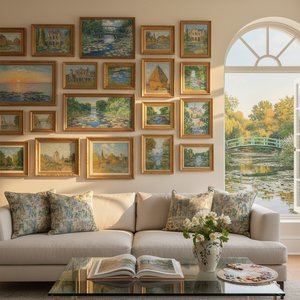
Топ-25 шедевров Клода Моне: Искусство света и импрессионизма для вашего интерьера
Погрузитесь в мир Клода Моне! 25 шедевров импрессионизма, от "Водных лилий" до знаменитых пейзажей. Узнайте историю создания картин и вдохновитесь для декора интерьера. Репродукции музейного качества на OriginalUniqueArt.com.

Барочная драма: Искусство величия в современном интерьере
Погрузитесь в мир роскоши и величия барокко! Узнайте об истории стиля, ключевых элементах интерьера и архитектуре. Вдохновляйтесь с и создайте свой неповторимый дизайн.

The Enduring Power of Painting: A Historical & Contemporary Exploration of Form and Emotion
Explore the rich history & enduring techniques of oil painting with OriginalUniqueArt. Discover masterpieces, learn about art collecting, and find authentic handmade reproductions crafted by skilled artists.

The Enduring Legacy of Oil on Canvas: Technique, History & Aesthetic Impact
Explore the rich history & techniques of oil painting – from Renaissance masters to Impressionism. Discover pigments, layering methods, and why this timeless medium endures. Expert insights for artists & art enthusiasts.

The Dramatic Flourish: Exploring the Baroque Movement's Enduring Legacy in Art History
Explore the dramatic world of Baroque art! Discover iconic artists like Caravaggio & Rubens, defining techniques, and its lasting impact on art history. Expert insights for collectors & enthusiasts at OriginalUniqueArt.

