
 Предпросмотр
 Поделиться
 Поделиться
 Детали произведения
 Руководство

 Скачать
 Похожие предметы
 Рентгенография
 Слайд-шоу
 Вопросы и ответы
 Статистика просмотров
The Two Coaches

- 127.0 x 160.0 cm


 Читать далее
Жикле и арт-принты
Печать (жикле) или холст музейного качества с быстрыми сроками изготовления и широким выбором вариантов отделки. ( Купить картину ручной работы Перейти к цифровым изображениям)




P118B $10

P118H $10

P118W $10

P438Z $10

P508JH $12

P508YH $12

P805H $10

P805Z $10

P919BZ $10

P919G $10

P919XJ $10

P959ZH $10

P968JZ $12

W106C $8

W218G $10

W218JH $8

W218Y $10

W307PJ $10

W316G $10

W316PJ $8

W316Y $10

W398PJ $8

W4111J $10

W500HY $15

W500JH $15

W692G $12

W849H $8

W940BG $15

W953PJ $8




Выберите один из наших стандартных размеров, соответствующих оригинальным пропорциям произведения искусства.

Введите необходимую ширину и высоту, чтобы репродукция подошла к вашей раме или стене. При печати изображение можно только уменьшить, но нельзя увеличить больше оригинала, поэтому при выборе другого формата часть изображения может быть обрезана. Перед печатью мы отправим вам цифровой макет на утверждение. Изображение на этой странице не отображает реальную обрезку — ее можно увидеть только на макете.
Доставка по всему миру () за 2 недели вместо стандартных 4–5 недель. (10 Ноябрь)

Бесплатная экспресс-доставка по всему миру

Высококачественный льняной холст

Полное страхование при доставке

Гарантия возмещения таможенных пошлин

Гарантия точного цветового соответствия

100-дневная гарантия возврата (только при обнаружении дефектов)

Гарантия возврата 100% средств

Скидка при оптовом заказе
 Вариант со стеклом доступен только для размеров менее 110 см

The Two Coaches
Жикле и арт-принты
Размер репродукции
-


Итоговая стоимость
$ 81
A Baroque Tableau of Urban Drama
In the heart of a bustling Parisian street, Claude Gillot’s “The Two Coaches” unfolds as a captivating window into the theatricality of early 18th-century life. This masterful work, dating from approximately 1707 to 1710, transcends mere genre painting to become a profound visual narrative of social tension and public spectacle. As the eye wanders through the crowded cobblestone scene, one is immediately struck by the palpable energy of the crowd—a collection of onlookers whose faces reflect the complex anxieties and curiosities of Louis XIV’s court. The composition is far from static; it breathes with the movement of horses, the heavy presence of ornate carts, and the rhythmic motion of figures navigating the urban landscape, creating an immersive experience that draws the viewer directly into the historical moment.
The painting serves as a poignant reflection of a turbulent political era. While the surface depicts a lively street scene, beneath the layers of movement lies a deeper, more somber historical weight. The work captures the atmosphere surrounding the controversial trial and impending demise of Jean-Baptiste Colbert, the influential minister of finance. Through this lens, Gillot transforms a public event into a psychological study, where the spectacle of the coaches and the crowd mirrors the internal turmoil of a society caught between the grandeur of the monarchy and the gritty reality of political upheaval. For the collector, this piece offers more than just aesthetic beauty; it provides a profound connection to the dramatic shifts of French history.
Mastery of Light and Pastel Technique
Technically, “The Two Coaches” is a triumph of the late Baroque style, showcasing Gillot’s unique ability to blend chiaroscuro with a delicate, almost ethereal touch. Influenced by his legendary apprenticeship under Jean Watteau, Gillot employs a sophisticated use of light and shadow to sculpt the figures within the frame. The dramatic interplay of illumination does not merely decorate the scene; it directs the viewer's gaze, highlighting the tension in a driver’s grip on a whip or the solemn expressions of those caught in the shadows. This mastery of light lends a three-dimensional quality to the canvas, making the textures of the costumes and the ruggedness of the street feel remarkably tactile.
Gillot’s signature approach—a precursor to the fête champêtre style—eschews the overly idealized landscapes of his contemporaries in favor of a more grounded, psychological realism. By utilizing a technique that bridges the gap between the precision of printmaking and the softness of pastel-like transitions, he achieves an emotional intensity that is rare in works of this period. The result is a visually arresting image where every brushstroke contributes to a sense of immediacy. For interior designers and art enthusiasts, this painting offers a sophisticated balance of movement and stillness, making it a commanding centerpiece that brings both historical depth and a dynamic, atmospheric energy to any curated space.
Вопросы и ответы
К какому художественному направлению относится «The Two Coaches», Claude Gillot?
«The Two Coaches» — это произведение в стиле Baroque. Данное направление указывает на художественную традицию, к которой относится эта работа.
Каковы реальные размеры произведения «The Two Coaches», Claude Gillot?
Размеры оригинала «The Two Coaches», Claude Gillot составляют 127 x 160 cm. Вы можете заказать репродукции в других размерах с сохранением тех же пропорций.
Можно ли заказать масляную репродукцию картины «The Two Coaches»?
Вы можете заказать написанную вручную репродукцию работы «The Two Coaches», Claude Gillot прямо на её странице Репродукция маслом ручной работы: масляная репродукция ручной работы на льняном холсте, изготовленную по индивидуальному заказу.
Биография художника
The Architect of Baroque Splendor
Claude Gillot (1673–1722) remains a luminous figure in the tapestry of late Baroque France, an artist whose versatile hand touched nearly every facet of the visual culture of his era. Born in the historic town of Langres, north of Dijon, Gillot’s early creative impulses were nurtured by his father before he ventured to Paris to refine his craft. His artistic journey was far from linear; he was a true polymath of the arts, moving with ease between the delicate precision of printmaking, the structural demands of metalworking, and the grand-scale imagination required for theatrical design. This multidisciplinary foundation allowed him to approach the canvas not merely as a surface for pigment, and but as a stage where light, movement, and drama could converge.
The trajectory of Gillot’s career was profoundly shaped by his apprenticeship under the legendary Jean Watteau around 1703. From Watteau, he absorbed the ethereal qualities of the emerging fête champêtre style—a genre characterized by pastoral elegance and aristocratic leisure. Yet, while he inherited this delicate sensibility, Gillot infused it with a unique vigor derived from his work in the Parisian theater. His extensive collaborations with playwrights and composers to design elaborate sets and costumes for operas and comedies instilled in him a mastery of visual storytelling. He understood how to direct the viewer's eye through composition, using the theatricality of costume and scenery to breathe life into mythological and contemporary narratives alike.
A Mastery of Myth and Motion
Gillot’s ascent within the prestigious Académie Royale de peinture et de sculpture in 1715 marked a definitive moment in his professional life, signaling his recognition as a master of monumental composition. His breakthrough was anchored by works that celebrated the grandeur of classical antiquity through a contemporary lens. In masterpieces such as “Feast of Pan” and “Feast of Bacchus,” Gillot demonstrated an extraordinary ability to blend the divine with the terrestrial. These canvases were not merely depictions of myth; they were sensory experiences, where the lushness of the landscape met the exuberant energy of mythological revelry.
His technique was characterized by a sophisticated use of color and form that could shift from the soft, dreamlike textures reminiscent of his mentor to a more robust, dramatic Baroque intensity. This versatility allowed him to capture the very essence of the commedia dell’arte, bringing the wit and character of masked performers to life with a sense of spontaneous motion. Through his engravings and paintings, he documented the social graces and theatrical whimsies of the French court, creating a visual record that was as much about the spirit of the age as it was about the subjects themselves.
Legacy of the Rococo Prelude
As the art world began to transition from the heavy grandeur of the Baroque toward the lighter, more intimate aesthetics of the Rococo, Gillot’s influence remained foundational. He served as a vital bridge between generations, influencing later masters such as Lancret by refining the vocabulary of pastoral scenes and theatrical character studies. His ability to marry the structural discipline of classical painting with the whimsical charm of the stage helped define the aesthetic sensibilities of the early 18th century.
Today, the significance of Claude Gillot lies in his role as a creator of atmosphere. Whether through the intricate lines of a print or the sweeping vistas of a mythological feast, his work continues to evoke the vibrant, theatrical pulse of pre-revolutionary France. He remains an artist whose legacy is found not just in individual masterpieces, but in the very way we perceive the intersection of art, theater, and the beautiful artifice of life.

Claude Gillot
1673 - 1722 , France
Об авторе
- Artistic Movement Or Style: Baroque
- Artists Who Influenced This Artist:
- Jean Watteau
- Nicolas Lancret
- Date Of Birth: 1673
- Date Of Death: 1722
- Full Name: Claude Gillot
- Nationality: French
- Notable Artworks:
- The Two Coaches
- Garment time of night
- Italian Comedians
- Place Of Birth: Langres, France
Похожие статьи

Барочная драма: Искусство величия в современном интерьере
Погрузитесь в мир роскоши и величия барокко! Узнайте об истории стиля, ключевых элементах интерьера и архитектуре. Вдохновляйтесь с и создайте свой неповторимый дизайн.

Simon Vouet: A Baroque Master's Journey from Italian Influence to French Classicism
Explore the life & art of Simon Vouet, a pivotal French Baroque painter who introduced Italian styles to France. Discover his masterpieces and lasting influence on 17th-century art.

Топ-25 шедевров Клода Моне: Искусство света и импрессионизма для вашего интерьера
Погрузитесь в мир Клода Моне! 25 шедевров импрессионизма, от "Водных лилий" до знаменитых пейзажей. Узнайте историю создания картин и вдохновитесь для декора интерьера. Репродукции музейного качества на OriginalUniqueArt.com.

10 Шедевров Барокко: Искусство, изменившее мир | OriginalUniqueArt.com
Погрузитесь в мир барокко! 10 шедевров Караваджо, Рембрандта и других великих художников. Узнайте историю создания культовых картин и найдите идеальную репродукцию для вашего интерьера на OriginalUniqueArt.com
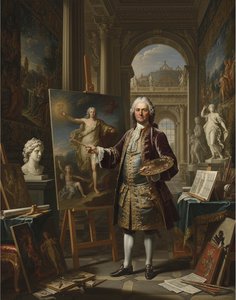
Charles Le Brun: Master of French Baroque Classicism & His Enduring Legacy
Explore the life & art of Charles Le Brun, master of French Baroque Classicism. Discover his royal commissions, influence on Versailles, and enduring legacy through detailed analysis & stunning artworks.
