

 Примерить в интерьере
 Отправить
 Поделиться
 Подробнее
 Руководство

 Скачать
 Похожие объекты
 Рентгенография
 Слайд-шоу
 Статистика
Spring Maiden


 Развернуть текст
Масляная репродукция ручной работы
Картина маслом на холсте в выбранном вами размере и раме, написанная на заказ нашими художниками. ( Переключиться на печать Перейти к цифровым изображениям)




P118B $10

P118H $10

P118W $10

P438Z $10

P508JH $12

P508YH $12

P805H $10

P805Z $10

P919BZ $10

P919G $10

P919XJ $10

P959ZH $10

P968JZ $12

W106C $8

W218G $10

W218JH $8

W218Y $10

W307PJ $10

W316G $10

W316PJ $8

W316Y $10

W398PJ $8

W4111J $10

W500HY $15

W500JH $15

W692G $12

W849H $8

W940BG $15

W953PJ $8




Выберите один из наших стандартных размеров, соответствующих оригинальным пропорциям произведения искусства.

Введите необходимую ширину и высоту, чтобы репродукция подошла к вашей раме или стене. Поскольку работа выполняется вручную, при изменении пропорций художник может немного увеличить область вокруг картины или, наоборот, обрезать края — выбор за вами. Перед началом работы мы пришлем вам цифровой макет на утверждение. Изображение на этой странице не является точным результатом — увидеть реальный вид можно только на макете.
После оформления заказа команда OriginalUniqueArt.com свяжется с клиентом по электронной почте для уточнения деталей и предоставит предварительный макет
Доставка по всему миру () за 3–4 недели вместо стандартных 5 недель. (28 Октябрь). Без компромиссов в качестве.

Бесплатная экспресс-доставка по всему миру

Высококачественный льняной холст

Полное страхование при транспортировке

Гарантия возврата таможенных пошлин

Гарантия точного цветового соответствия

100-дневный период возврата (только при обнаружении дефектов)

Гарантия возврата 100% средств

Скидка при заказе нескольких работ
 Вариант со стеклом доступен только для размеров менее 110 см

Spring Maiden
Материал репродукции
Размер репродукции
-


Итоговая стоимость
$ 300
Spring Maiden: A Portrait of Transient Beauty
Charles Webster Hawthorne’s “Spring Maiden,” painted in 1925, isn't merely a depiction of a young woman; it’s a carefully constructed meditation on the fleeting nature of youth and the poignant beauty found within moments of quiet contemplation. This oil-on-canvas work, currently residing at the High Museum of Art in Atlanta, exemplifies Hawthorne’s signature Luminist style – a deliberate rejection of dramatic lighting and bold brushstrokes in favor of subtle tonal gradations and an emphasis on capturing the ephemeral quality of light and atmosphere. The painting immediately draws the viewer in with its muted palette dominated by earthy browns, soft greens, and delicate creams, creating a sense of serene stillness that belies the emotional depth at its core.
Hawthorne’s technique is remarkably restrained, yet profoundly effective. He employs a layering approach, building up color slowly to achieve a velvety texture and an almost photographic realism. Notice how he renders the fabric of her dress – not with sharp outlines but with delicate washes of color that suggest both its weight and its fluidity. The loose brushwork in the background, particularly around the suggestion of trees and foliage, contributes to the painting’s overall sense of atmospheric depth, pulling the viewer into a dreamlike state. Hawthorne's training under William Merritt Chase is evident in his masterful use of light and shadow, creating an illusion of three-dimensionality that elevates the portrait beyond a simple likeness.
The Luminist Influence and New England Roots
To fully appreciate “Spring Maiden,” it’s crucial to understand Hawthorne's artistic lineage. He was deeply influenced by the Luminist movement, which originated in post-Civil War America and sought to capture the quiet beauty of everyday life – particularly landscapes bathed in soft light. This movement rejected the grand narratives and dramatic scenes favored by earlier generations of American painters, instead focusing on capturing the subtle nuances of nature and human experience. Hawthorne’s upbringing in Maine, steeped in the traditions of shipbuilding and ice farming—his father a captain—provided him with an intimate connection to the rugged coastline and its ever-changing light, themes that would permeate his work throughout his career.
Born in Lodi, Illinois, in 1872, Hawthorne’s early years were far removed from the coastal landscapes he would later immortalize. However, a return to Maine as a child profoundly shaped his artistic vision. This connection to the sea—its power, its beauty, and its inherent melancholy—became a recurring motif in his paintings, informing both subject matter and aesthetic sensibility. His work is often described as embodying the spirit of New England, capturing not just the physical landscape but also the emotional resonance of its history and culture.
Symbolism and the Portrait’s Essence
The young woman depicted in “Spring Maiden” possesses an enigmatic quality that invites interpretation. Her slightly downturned gaze suggests a pensive mood—a moment of introspection amidst the beauty of springtime. The white flower she holds, likely a lily or similar bloom, symbolizes purity, innocence, and new beginnings – fitting themes for a portrait celebrating youth and renewal. Hawthorne’s careful attention to detail extends beyond mere representation; he imbues the painting with a sense of quiet dignity and understated grace.
The composition itself is carefully balanced, drawing the eye to the woman's face while simultaneously creating a sense of spaciousness around her. The muted colors and soft lighting contribute to this feeling of tranquility, suggesting a moment suspended in time—a fleeting glimpse of beauty that will inevitably fade with the passage of seasons. It’s a portrait not just of a young woman, but of an entire mood, a captured essence of springtime itself.
A Legacy of Light and Observation
Charles Webster Hawthorne's “Spring Maiden” stands as a testament to his skill as a painter and his deep understanding of the Luminist aesthetic. His dedication to capturing light and atmosphere, combined with his masterful technique and evocative symbolism, has secured its place as a significant work in American art history. The painting’s enduring appeal lies not only in its technical brilliance but also in its ability to evoke a sense of quiet contemplation and appreciation for the beauty of the natural world – qualities that continue to resonate with viewers today. Reproductions of this piece offer a wonderful opportunity to bring Hawthorne's evocative style into any space, capturing the spirit of New England’s coastal landscapes and the poignant beauty of fleeting moments.
Вопросы и ответы
Насколько насыщенны цвета в работе "Spring Maiden"?
Цвета произведения «Spring Maiden», Чарльз Вебер Хавроне демонстрируют Subtle Color насыщенность при Monochromatic интенсивности.
Какие сюжеты представлены в «Spring Maiden», Чарльз Вебер Хавроне?
Темы, представленные в «Spring Maiden», Чарльз Вебер Хавроне, включают new england, coastline, landscape, figure, painting, hawthorne, 1925. Вместе они раскрывают основной сюжет произведения.
К какому периоду творчества Чарльз Вебер Хавроне относится «Spring Maiden», если учитывать дату создания?
Дата создания 1925 позволяет отнести «Spring Maiden» к Mature Period творчества Чарльз Вебер Хавроне.
Биография художника
Charles Webster Hawthorne: A Luminist of the New England Coast
Charles Webster Hawthorne, born in Lodi, Illinois, on January 8, 1872, represents a pivotal moment in American art—a bridge between the formal training of the late nineteenth century and the burgeoning spirit of artistic independence that would define the early twentieth. Though his formative years unfolded amidst the rolling fields of the Midwest, it was the rugged, windswept coastline of Maine—to which his parents relocated shortly after his birth—that irrevocably shaped his artistic vision, imbuing his work with a profound connection to the sea and its inherent drama. This intimate relationship with the ocean, nurtured through childhood experiences witnessing his father’s life as a ship captain and ice farmer, became a recurring motif throughout his career, informing not only the subject matter of his paintings but also the very essence of his artistic sensibility—a luminous quality that would come to characterize his distinctive style. Hawthorne's journey toward becoming a celebrated portraitist and genre painter was one of dedicated study, unwavering commitment to capturing the fleeting effects of light and form, and an innovative approach to art education that left an enduring legacy on American painting. Initially pursuing formal training in New York City, balancing the demands of work as an office boy with evening classes at the Art Students League under George de Forest Brush and H. Siddons Mowbray, followed by studies at the National Academy of Design, Hawthorne’s artistic development was profoundly influenced by his exposure to William Merritt Chase—first as a student and then as an assistant at Shinnecock Hills. This mentorship proved transformative, instilling in him a deep appreciation for plein air painting and the expressive potential of brushwork, shaping his approach to capturing the vibrant energy of the New England coast.The Cape Cod School and a Philosophy of Painting
Recognizing a critical need for a dedicated space where artists could immerse themselves in direct observation of nature—a sanctuary free from the constraints of rigid academic tradition—Hawthorne founded the Cape Cod School of Art in Provincetown, Massachusetts, in 1899. This ambitious undertaking quickly evolved into more than just an art school; it became a vibrant artistic community, attracting a diverse group of painters, sculptors, and writers drawn to the picturesque beauty of the region and Hawthorne’s unconventional approach to teaching. The school's location in Provincetown—a small fishing village still recovering from the devastation of the 1898 Portland Gale—provided an ideal setting for fostering creativity and experimentation. Hawthorne’s pedagogical philosophy was rooted in a profound respect for direct observation, emphasizing the importance of capturing the immediacy of experience through careful study of light, color, and form. He eschewed rigid techniques and prescribed methods, instead encouraging his students to develop their own individual voices—to “go out like a savage,” as he famously urged them, embracing a fresh, uninhibited approach to painting that prioritized intuition and personal expression. This emphasis on direct observation and the rejection of traditional academic constraints profoundly influenced the development of American Impressionism in the early 20th century. The Cape Cod School of Art flourished under Hawthorne’s guidance for over three decades, leaving an indelible mark on the artistic landscape of New England and shaping a generation of artists who valued spontaneity, emotional resonance, and a deep connection to the natural world.Capturing Light and Life: Themes and Techniques
Hawthorne's paintings are immediately recognizable for their luminous color palettes and masterful handling of light—a hallmark of Luminism, a style that sought to capture the subtle nuances of atmospheric effects. He frequently depicted scenes from the seaside around Provincetown, portraying fishermen hauling in their nets, families enjoying picnics on the beach, and the rugged beauty of the coastline with remarkable sensitivity and detail. His portraits, particularly those depicting local residents—fishermen, shopkeepers, and ordinary people—stand out for their psychological depth and expressive brushwork. Hawthorne wasn’t interested in merely replicating appearances; he sought to capture the essence of his subjects—their personalities, their stories, and their connection to the world around them. He achieved this through meticulous observation of light and shadow, using tonal variations to model form and create a sense of volume and atmosphere. His technique often involved applying paint with broad, confident strokes, allowing the texture of the canvas to contribute to the overall effect—a deliberate departure from the smooth, polished surfaces favored by academic painters. Influenced by both William Merritt Chase’s Munich School training and the techniques of Dutch masters like Frans Hals, Hawthorne blended these diverse influences into a uniquely American style characterized by its vibrant colors, dynamic brushwork, and emotional intensity. His paintings are not simply representations of reality; they are imbued with a sense of life—a palpable energy that captures the spirit of New England coastal life.Notable Works and Historical Significance
Throughout his career, Hawthorne produced a remarkable body of work encompassing portraits, landscapes, and genre scenes. Among his most celebrated paintings are *His First Voyage* (1903), a poignant depiction of a young boy embarking on his first fishing trip—a symbol of youthful potential and the promise of the future; *The Red Dress* (1906), a striking portrait capturing the vibrant energy of a local woman in a scarlet dress; and *Early Moonrise* (1928), a luminous landscape that embodies the ethereal beauty of the Maine coast. These works, along with many others, are now held in prestigious collections across the United States—including the Art Institute of Chicago, the Metropolitan Museum of Art in New York, and the Smithsonian American Art Museum in Washington D.C.—testifying to Hawthorne’s enduring artistic legacy. Beyond his individual achievements, Hawthorne played a crucial role in shaping the development of American art education, establishing the Cape Cod School of Art as a model for alternative artistic training—a space where artists could pursue their own creative visions without being constrained by traditional academic dogma. His influence extended far beyond Provincetown, inspiring countless artists to embrace direct observation, emotional expression, and a deep connection to the natural world. Charles Webster Hawthorne died in Baltimore, Maryland, on November 29, 1930, leaving behind a rich artistic legacy that continues to inspire and captivate audiences today.- Born: January 8, 1872, Lodi, Illinois
- Founded Cape Cod School of Art: 1899
- Died: November 29, 1930, Baltimore, Maryland

Чарльз Вебер Хавроне
1872 - 1930 , США
Краткая справка
- Artistic Movement Or Style: Импрессионизм, лунимизм
- Artists Or Movements Influenced By This Artist: ['Норман Рокифелль']
- Artists Who Influenced This Artist: ['Уильям Мёррит Чейз']
- Date Of Birth: 8 января 1872 г.
- Date Of Death: 29 ноября 1930 г.
- Full Name: Charles Webster Hawthorne
- Nationality: Американский
- Notable Artworks:
- Первое путешествие
- Красное платье
- Place Of Birth: Лодо, США
Похожие статьи

Alfred Thompson Bricher: Luminism & the American Landscape Tradition
Explore the luminous landscapes of Alfred Thompson Bricher (1837-1908), a key figure in American Luminism and the Hudson River School. Discover his masterful maritime paintings & legacy.

Grahame Sydney: Evoking Otago's Soul Through Light & Landscape
Explore the captivating landscapes of Sir Grahame Sydney, a leading New Zealand artist renowned for his magic realism & evocative depictions of Otago's beauty. Discover key works and delve into his artistic legacy.
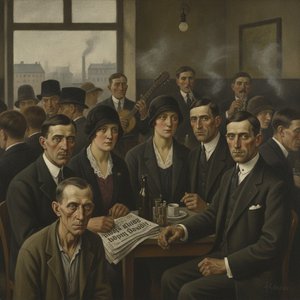
Neue Sachlichkeit: The Unflinching Realism and Social Critique of German New Objectivity
Explore the raw realism of Neue Sachlichkeit. Discover how German New Objectivity artists like Otto Dix and George Grosz captured the turbulent Weimar Republic through unflinching social critique and precise detail. A definitive guide for art historians and collectors.

Willard Leroy Metcalf: Capturing the Intimacy of American Rural Life
Explore the serene landscapes of Willard Leroy Metcalf, a key figure in American Impressionism. Discover his tranquil New England scenes & vibrant art reproductions at OriginalUniqueArt.

The Ashcan School: Capturing the Raw Spirit and Urban Realism of New York City Life
Explore the raw, evocative beauty of the Ashcan School. Discover how masters like Bellows and Glackens captured New York's urban soul through American Realism, and learn to bring this gritty, historical elegance into your modern art collection.
