

 Примерить в интерьере
 Отправить
 Поделиться
 Подробнее
 Руководство

 Скачать
 Похожие объекты
 Рентгенография
 Слайд-шоу
 Статистика
Landscape with trees in the wind


 Развернуть текст
Масляная репродукция ручной работы
Картина маслом на холсте в выбранном вами размере и раме, написанная на заказ нашими художниками. ( Переключиться на печать Перейти к цифровым изображениям)




P118B $10

P118H $10

P118W $10

P438Z $10

P508JH $12

P508YH $12

P805H $10

P805Z $10

P919BZ $10

P919G $10

P919XJ $10

P959ZH $10

P968JZ $12

W106C $8

W218G $10

W218JH $8

W218Y $10

W307PJ $10

W316G $10

W316PJ $8

W316Y $10

W398PJ $8

W4111J $10

W500HY $15

W500JH $15

W692G $12

W849H $8

W940BG $15

W953PJ $8




Выберите один из наших стандартных размеров, соответствующих оригинальным пропорциям произведения искусства.

Введите необходимую ширину и высоту, чтобы репродукция подошла к вашей раме или стене. Поскольку работа выполняется вручную, при изменении пропорций художник может немного увеличить область вокруг картины или, наоборот, обрезать края — выбор за вами. Перед началом работы мы пришлем вам цифровой макет на утверждение. Изображение на этой странице не является точным результатом — увидеть реальный вид можно только на макете.
После оформления заказа команда OriginalUniqueArt.com свяжется с клиентом по электронной почте для уточнения деталей и предоставит предварительный макет
Доставка по всему миру () за 3–4 недели вместо стандартных 5 недель. (22 Октябрь). Без компромиссов в качестве.

Бесплатная экспресс-доставка по всему миру

Высококачественный льняной холст

Полное страхование при транспортировке

Гарантия возврата таможенных пошлин

Гарантия точного цветового соответствия

100-дневный период возврата (только при обнаружении дефектов)

Гарантия возврата 100% средств

Скидка при заказе нескольких работ
 Вариант со стеклом доступен только для размеров менее 110 см

Landscape with trees in the wind
Материал репродукции
Размер репродукции
-


Итоговая стоимость
$ 300
Chaim Soutine’s Evocative Response to Nature's Fury
This arresting landscape, titled “Landscape with trees in the wind,” offers a profound glimpse into the artistic world of Chaim Soutine (1894-1943), a painter whose intensely personal and emotionally charged works continue to resonate deeply with viewers. Executed in 1919, during a period of significant upheaval and artistic experimentation, the painting captures a raw, almost violent encounter between nature and the human spirit. The scene unfolds as a densely wooded hillside under a brooding, cloudy sky – a composition dominated by the earthy tones of green and brown, punctuated by flashes of red and pink that hint at distant, obscured elements. Soutine’s brushwork is anything but delicate; it's assertive, almost frantic, conveying a sense of movement and turbulence as if the trees themselves are battling against an unseen wind.
- Impressionistic Roots with Expressionist Intensity: While rooted in Impressionism’s focus on capturing fleeting moments of light and color, Soutine transcends this style through his deeply expressive application of paint. The visible brushstrokes aren't merely a stylistic choice but an integral part of the work’s emotional core.
- A Flattened Perspective: Rejecting traditional perspective, Soutine prioritizes the immediate impact of the scene, creating a flattened space that intensifies the feeling of being enveloped by the landscape.
Technique and Materiality – A Layered Approach
The painting’s power resides not only in its subject matter but also in Soutine's masterful technique. He employs a layered approach, building up texture and color intensity through multiple applications of oil paint. Thick impasto strokes create a palpable sense of physicality, inviting the viewer to almost feel the roughness of the bark and the sway of the branches. The diffused lighting contributes to a somber mood, further emphasizing the painting’s emotional weight. The use of color is particularly striking – the reds and pinks aren't merely decorative; they suggest an underlying tension, perhaps reflecting Soutine’s own turbulent personal life.
Symbolic Resonance: Trees as Vessels of Emotion
Beyond a simple depiction of a landscape, “Landscape with trees in the wind” is laden with symbolic meaning. The dense forest, rendered with such raw energy, can be interpreted as representing mystery, resilience, or even the subconscious – themes frequently explored by Soutine. The trees themselves become almost archetypal figures, embodying strength and endurance against an unseen force. The painting’s emotional impact suggests solitude or contemplation, inviting viewers to confront their own inner landscapes.
Historical Context and Artistic Influence
Created in 1919, this work reflects the broader artistic currents of the early 20th century. Soutine's style was influenced by Post-Impressionism and Expressionism, yet he forged a unique path, characterized by his intensely personal vision and his unflinching exploration of emotional truth. His work anticipated many of the developments in abstract art that would emerge later in the century. Soutine’s brief but impactful career cemented his place as one of the most important figures of modern art.
Вопросы и ответы
Что общего у работы «Landscape with trees in the wind» с остальным творчеством Хайм Сoutine?
В творчестве Хайм Сoutine работа «Landscape with trees in the wind» выполнена в стиле Expressionism и перекликается с темами european expressionism, russian landscape tradition", post-war anxiety, spiritual isolation, fragmented reality, bridge to abstraction, emotional intensity, key late works.
Какому периоду творчества Хайм Сoutine соответствует дата создания «Landscape with trees in the wind» (1919 г.)?
«Landscape with trees in the wind», созданное в 1919 году, относится к Mature Period творчества Хайм Сoutine.
Где я могу купить принт работы «Landscape with trees in the wind», Хайм Сoutine?
Принт работы «Landscape with trees in the wind», Хайм Сoutine можно заказать прямо на её странице Художественная печать: художественная печать на хлопковом холсте или архивной холст-бумаге.
Биография художника
A Life Forged in Turmoil: The World of Chaim Soutine
Chaim Soutine, a name synonymous with raw emotion and turbulent landscapes, was born into a world of profound hardship that indelibly shaped his artistic vision. Born Chaïm-Iche Solomonovich Sutin on January 13, 1893, in Smilavichi (now part of Belarus), within a large, impoverished Jewish family, his early life was steeped in the realities of poverty and the constraints imposed by Orthodox religious observance. This formative experience—a childhood marked by scarcity and tradition—became the bedrock upon which he built his intensely personal and often unsettling artistic style. Despite the discouragement of figurative representation within his upbringing, a remarkable talent for drawing emerged, hinting at the passionate intensity that would later define his work. He received formal training at an art academy in Vilna (now Vilnius) from 1910 to 1913, but it was his emigration to Paris in 1913 that proved to be the catalyst for his artistic transformation. Enrolling at the École des Beaux-Arts under Fernand Cormon, Soutine found himself immersed in a vibrant and dynamic artistic community, yet he remained largely outside of prevailing trends, forging a unique path driven by an inner urgency. The initial years in Paris were characterized by extreme poverty—a struggle that mirrored the emotional turbulence simmering beneath the surface of his canvases.An Expressionist Apart: Style and Influences
While often categorized as an Expressionist, to reduce Soutine solely to this label is a significant oversimplification. His style was profoundly individual, a complex synthesis of traditional European painting—particularly the works of Rembrandt and Chardin, masters known for their meticulous observation and profound psychological insight – and the Realism of Courbet, who captured the gritty realities of everyday life with unflinching honesty. Soutine didn’t merely imitate these masters; he absorbed their techniques and compositional strategies, then violently reinterpreted them to convey his own intensely personal world. His paintings are immediately recognizable for their bold colors—often applied with thick impasto, a textured application of paint that gives his surfaces a palpable physicality – and agitated brushwork, creating a sense of movement and unrest. He wasn’t interested in precise representation; instead, he sought to capture the *essence* of his subjects, imbuing them with a sense of unease, vulnerability, or even outright torment. Landscapes became arenas for this exploration, rendered not as serene vistas but as swirling masses of color and form, reflecting both what he saw and how he *felt*. Portraits, too, were imbued with psychological depth, challenging conventional notions of beauty and revealing the hidden complexities of his subjects. The influence of figures like Amedeo Modigliani, who explored the interplay between form and emotion, further shaped Soutine’s artistic trajectory.Development and Defining Works
Soutine's artistic development unfolded through distinct periods, each marked by a shift in style and subject matter. The early Parisian years (1913-1917) were characterized by experimentation and struggle, as he navigated the challenges of poverty and sought to establish his own voice within the bustling art scene. It was during this time that he began to develop his signature technique—the layering of paint, the use of contrasting colors, and the creation of a sense of depth and movement through brushwork. A pivotal period arrived with his sojourn in Céret (1919-1922), a small town in southern France renowned for its dramatic landscapes. Surrounded by the rugged beauty of the Pyrenees Mountains, Soutine produced some of his most celebrated works—paintings that capture the raw energy and emotional intensity of the region. These paintings are characterized by vibrant colors, distorted forms, and a sense of almost violent movement, reflecting not just the physical landscape but also the artist’s own inner turmoil. The series of still lifes featuring food – particularly carcasses of beef and hung poultry – became another defining element of his oeuvre, imbued with a strange beauty and unsettling energy. These works were not merely depictions of objects; they were explorations of life, death, and the human condition.Recognition, Legacy, and Lasting Impact
Despite facing initial skepticism from critics, Soutine gradually gained recognition for his unique artistic vision. The art dealer Leopold Zborowski played a crucial role in promoting his work, recognizing its power and securing him financial stability. While he remained somewhat elusive during his lifetime, his paintings eventually found their way into the collections of prestigious museums worldwide, including the Art Institute of Chicago, the Hermitage Museum in St. Petersburg, and the Tate Gallery in London. Soutine’s influence extended far beyond the Expressionist movement, inspiring later artists such as Willem de Kooning and Francis Bacon, who recognized in his work a kindred spirit—an artist willing to challenge conventions and explore the depths of human emotion through unconventional means. Today, Chaim Soutine is rightfully considered one of the most important figures in 20th-century art, a testament to the power of individual vision and the enduring legacy of his emotionally charged paintings. His innovative style paved the way for future generations of artists seeking to express themselves authentically and powerfully on canvas.
Хайм Сoutine
1894 - 1943 , Россия
Краткая справка
- Artistic Movement Or Style: Экспрессионизм
- Artists Or Movements Influenced By This Artist:
- Виндемнт
- Бэкон
- Абстрактный экспрессионизм
- Artists Who Influenced This Artist:
- Рембрандт
- Шарден
- Корбюзье
- Date Of Birth: 13 января 1893
- Date Of Death: 9 августа 1943
- Full Name: Хаим-Ицке Соломонович Сутин
- Nationality: Француз
- Notable Artworks:
- Партизанские пейзажи
- Портрет мужчины
- Натюрморт
- Place Of Birth: Смиливичи, Россия
Похожие статьи

Романтический пейзаж: 10 шедевров, изменивших искусство | OriginalUniqueArt.com
Погрузитесь в мир романтического пейзажа! 10 шедевров Фридриха, Тёрнера и других гениев. Узнайте историю создания культовых картин и вдохновитесь для декора интерьера. Репродукции высокого качества на OriginalUniqueArt.com.

Arboreal Echoes: A Historical & Artistic Exploration of Trees in Painting
Explore the rich history of trees in painting! Discover symbolism, Romantic masterpieces by Caspar David Friedrich & beyond. A curated journey for art enthusiasts.

Джон Констебль: 25 шедевров английского пейзажа для вашего интерьера
Погрузитесь в мир английского пейзажа с Джоном Констеблом! 25 шедевров романтизма, история создания картин и вдохновение для вашего интерьера. Репродукции высокого качества на OriginalUniqueArt.com – искусство для ценителей.
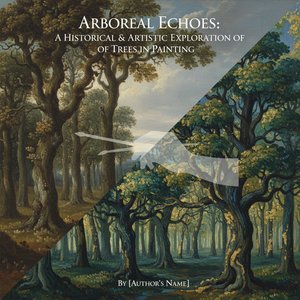
Arboreal Echoes: A Historical & Artistic Exploration of Trees in Painting
Explore the rich history of trees in painting! Discover symbolism, Romantic masterpieces by Caspar David Friedrich & beyond. A curated journey for art enthusiasts.

Evocations of Place: A Historical Journey Through Landscape Art
Explore the rich history of landscape art with OriginalUniqueArt. Discover renowned artists, movements like Impressionism & Romanticism, and expert guidance for collecting timeless pieces. Find your perfect serene escape today!
