

 Примерить в интерьере
 Отправить
 Поделиться
 Подробнее
 Руководство

 Скачать
 Похожие объекты
 Рентгенография
 Слайд-шоу
 Статистика
The Bath
 Oil On Canvas
- WallArt
- Impressionism
 1886
1886- 19th Century
 72.0 x 91.0 cm
 Развернуть текст
Жикле / Арт-принты
Печать (жикле) или холст музейного качества с быстрыми сроками изготовления и широким выбором вариантов отделки. ( Заказать репродукцию ручной работы Перейти к цифровым изображениям)




P118B $10

P118H $10

P118W $10

P438Z $10

P508JH $12

P508YH $12

P805H $10

P805Z $10

P919BZ $10

P919G $10

P919XJ $10

P959ZH $10

P968JZ $12

W106C $8

W218G $10

W218JH $8

W218Y $10

W307PJ $10

W316G $10

W316PJ $8

W316Y $10

W398PJ $8

W4111J $10

W500HY $15

W500JH $15

W692G $12

W849H $8

W940BG $15

W953PJ $8




Выберите один из наших стандартных размеров, соответствующих оригинальным пропорциям произведения искусства.

Введите необходимую ширину и высоту, чтобы репродукция подошла к вашей раме или стене. При печати изображение можно только уменьшить, но нельзя увеличить больше оригинала, поэтому при выборе другого формата часть изображения может быть обрезана. Перед печатью мы отправим вам цифровой макет на утверждение. Изображение на этой странице не отображает реальную обрезку — ее можно увидеть только на макете.
Доставка по всему миру () за 2 недели вместо стандартных 4–5 недель. (25 Октябрь)

Бесплатная экспресс-доставка по всему миру

Высококачественный льняной холст

Полное страхование при транспортировке

Гарантия возврата таможенных пошлин

Гарантия точного цветового соответствия

100-дневный период возврата (только при обнаружении дефектов)

Гарантия возврата 100% средств

Скидка при заказе нескольких работ
 Вариант со стеклом доступен только для размеров менее 110 см

The Bath
Жикле / Арт-принты
Размер репродукции
-


Итоговая стоимость
$ 80
A Whisper of Domestic Intimacy: Exploring Berthe Morisot's "The Bath"
To stand before Berthe Morisot’s The Bath is to step into a moment suspended in time—a breath held within the soft glow of an afternoon indoors. This painting, executed in 1886, transcends a mere depiction of daily routine; it captures the very essence of private contemplation. The scene unfolds with remarkable delicacy: a woman seated amidst the quiet rituals of self-care, brushing her hair. Morisot does not merely record what she sees; she filters it through the luminous lens of Impressionism, inviting us into an atmosphere thick with unspoken tenderness and domestic tranquility.
The Artistry of Light and Brushwork
Technically, The Bath is a masterclass in handling light. Morisot’s signature touch—those characteristic, visible brushstrokes—are everywhere, giving the canvas a vibrant, almost palpable texture. These strokes do not strive for photographic realism; rather, they are joyful records of how light interacts with color at a specific instant. Observe the interplay between the creamy whites of her dress and the subtle washes of blue and pink adorning the surrounding objects. The artist employs diffused, natural light that seems to emanate from an unseen source, gently illuminating the subject while allowing soft shadows to deepen the sense of space. This masterful handling of paint on canvas transforms simple materials into a symphony of ephemeral color.
Impressionism and the Modern Moment
Historically, this work anchors itself firmly within the revolutionary spirit of Impressionism. While contemporaries like Monet captured grand landscapes or bustling boulevards, Morisot turned her gaze inward, finding profound subject matter in the quotidian life of bourgeois womanhood. The movement sought to capture the fleeting impression—the momentary shimmer, the passing glance. In The Bath, that focus is intensely personal. It speaks to a time when modern life found its beauty not in grand public spectacles, but in these intimate, unscripted moments of repose. Owning a reproduction allows one to connect with this pivotal shift in art history, bringing the spirit of late nineteenth-century Parisian life into a contemporary setting.
Symbolism and Emotional Resonance
Beyond its technical brilliance, the painting resonates with deep emotional currents. The act of grooming oneself, captured here, becomes symbolic of renewal, reflection, and quiet self-possession. There is an undeniable sense of grace emanating from the composition—the gentle curves of the figure contrasting beautifully with the more structured rectangles of the furniture. For the collector or designer, this piece offers more than decoration; it offers a mood. It suggests a sanctuary, a space where one can pause the clamor of the outside world and embrace a moment of serene beauty. The soft palette and intimate subject matter make it an unparalleled accent for any room seeking to evoke calm sophistication.
Bringing History Home
To own a reproduction of The Bath is to curate a piece of art history that feels deeply personal. Our skilled artisans meticulously recreate the texture, the luminosity, and the delicate touch of Morisot’s original oil on canvas. It is an opportunity to possess not just an image, but a tangible echo of artistic genius—a whisper of light from 1886, ready to infuse your space with enduring elegance.
Вопросы и ответы
Известен ли Берта Моризо, автор произведения "The Bath", под другими именами?
Другие имена, зафиксированные для Берта Моризо, автора произведения «The Bath», включают Берта Мари Полин Моризо, Мария-Жозефина Томас.
Какой размер репродукции рекомендуется для «The Bath», Берта Моризо?
Для работы «The Bath», Берта Моризо рекомендуется репродукция размером Medium. Размер можно изменить, сохраняя пропорции.
Для каких целей и в каком интерьере рекомендуется использовать «The Bath»?
Для «The Bath», Берта Моризо указаны две рекомендации по использованию (Relaxation) и размещению в пространстве (Bedroom).
Биография художника
A Life Immersed in Light and Intimacy
Berthe Morisot, born in Bourges, France, in 1841, stands as a remarkably significant figure within the Impressionist movement – yet her story transcends simply being labeled a “female Impressionist.” To reduce her artistic vision to gender alone diminishes the profound originality of her approach and her unwavering dedication to capturing the fleeting moments of modern life. Her lineage traces back to a distinguished artistic family; she was related to the celebrated Rococo painter Jean-Honoré Fragonard, providing her with an early connection to the world of art. She received an education uncommon for women of her era – one that nurtured her innate talent and fostered a lifelong commitment to painting. Initial lessons with Geoffroy-Alphonse Chocarne and Joseph Guichard provided foundational skills, but it was exposure to the masterpieces housed within the Louvre, meticulously copying works by Old Masters, that truly ignited her artistic sensibility. This period of rigorous training laid the groundwork for her later explorations of light, color, and form – a deep understanding of technique combined with an appreciation for established styles. Crucially, she encountered the influence of Jean-Baptiste-Camille Corot, whose emphasis on *plein air* painting – working directly from nature outdoors – became a cornerstone of Morisot’s artistic practice. This approach allowed her to capture the ephemeral qualities of light and atmosphere with extraordinary sensitivity, becoming a defining characteristic of her work.Navigating the Impressionist Circle
Morisot's artistic journey was inextricably linked to that of Édouard Manet, whom she met in 1864. Their relationship blossomed into one of mutual respect and intellectual exchange; Manet served as both a mentor and a close friend, frequently painting her portrait and incorporating her presence within his evolving style. However, Morisot’s role extended far beyond being merely a subject; she actively participated in the burgeoning Impressionist movement, becoming a founding member alongside Monet, Degas, Renoir, and Pissarro. In 1874, she boldly exhibited with this group of “rejected” artists at the first Impressionist exhibition, defying the conservative standards upheld by the official Salon. This pivotal event marked a significant challenge to established artistic norms, demonstrating a willingness to embrace new approaches and paving the way for future generations of avant-garde painters. Morisot’s participation signaled a shift in the art world, moving away from academic traditions towards a more subjective and immediate representation of reality. Her commitment to this movement was unwavering; she continued to exhibit with the Impressionists throughout the 1870s and 1880s, consistently showcasing her unique perspective and solidifying her position within the group.A Distinctive Artistic Voice
What truly distinguishes Berthe Morisot’s work is not simply *what* she depicted but *how* she painted it – her distinctive technique and approach to capturing light and emotion. Her brushwork is characterized by a remarkable delicacy and fluidity, conveying an impression of spontaneity and immediacy. Unlike many of her contemporaries who focused on grand landscapes or bustling cityscapes, Morisot often chose intimate interior scenes and portraits, exploring the nuances of human relationships and the quiet beauty of everyday life. Her palette is typically soft and harmonious, favoring pastel shades and subtle gradations of color – a deliberate choice that contributes to the overall atmosphere of her paintings. A key element of her style was the use of *broken color* – applying small strokes of pure pigment side-by-side rather than blending them together, creating a shimmering effect of light and atmosphere. This technique, combined with her loose brushwork, gives her paintings a sense of vibrancy and movement. Furthermore, Morisot’s compositions are often asymmetrical and unconventional, reflecting the fleeting nature of modern life and challenging traditional notions of balance and harmony.Themes and Subject Matter
Morisot's artistic focus frequently centered on domestic scenes – women reading, mothers with children, leisurely moments spent in gardens or at social gatherings. These intimate portrayals offered a distinctly feminine perspective, exploring themes of motherhood, family, and female companionship. Her paintings are not merely representations of these subjects; they capture the subtle emotions, fleeting expressions, and quiet interactions that define human relationships. She skillfully depicted the play of light on fabrics, the delicate details of clothing, and the intimate gestures of her subjects – all rendered with remarkable sensitivity and precision. While she occasionally painted landscapes, it was her ability to convey emotion and atmosphere through portraits and domestic scenes that truly defined her artistic legacy. Her work offers a glimpse into the private lives of women in 19th-century France, revealing their roles as mothers, wives, and members of society.Legacy and Historical Significance
Berthe Morisot’s life was tragically cut short in 1895, but her artistic legacy endures. Married to Eugène Manet, brother of Édouard, she navigated a world that often underestimated female artists, yet she persevered with unwavering determination. She exhibited under her full maiden name – a subtle act of independence and self-assertion – and consistently challenged conventional expectations. Her work continues to captivate audiences today, celebrated for its delicate beauty, emotional honesty, and innovative technique. Morisot’s influence extends beyond the realm of Impressionism; she paved the way for future generations of female artists, demonstrating that women could achieve artistic excellence and contribute meaningfully to the evolution of art history. Her paintings are held in prestigious collections around the world, serving as a testament to her enduring talent and her pivotal role in shaping modern art – a quiet revolution captured on canvas.
Берта Моризо
1841 - 1895 , Франция
Краткая справка
- Artistic Movement Or Style: Импрессионизм
- Artists Or Movements Influenced By This Artist: ['Манэ']
- Artists Who Influenced This Artist:
- Коро
- Манэ
- Date Of Birth: 14 января 1841
- Date Of Death: 2 марта 1895
- Full Name: Берта Моризо
- Nationality: Французская
- Notable Artworks:
- Женщина в зеленом платье
- Колыбель
- Летний день
- Place Of Birth: Бурж, Франция
Похожие статьи
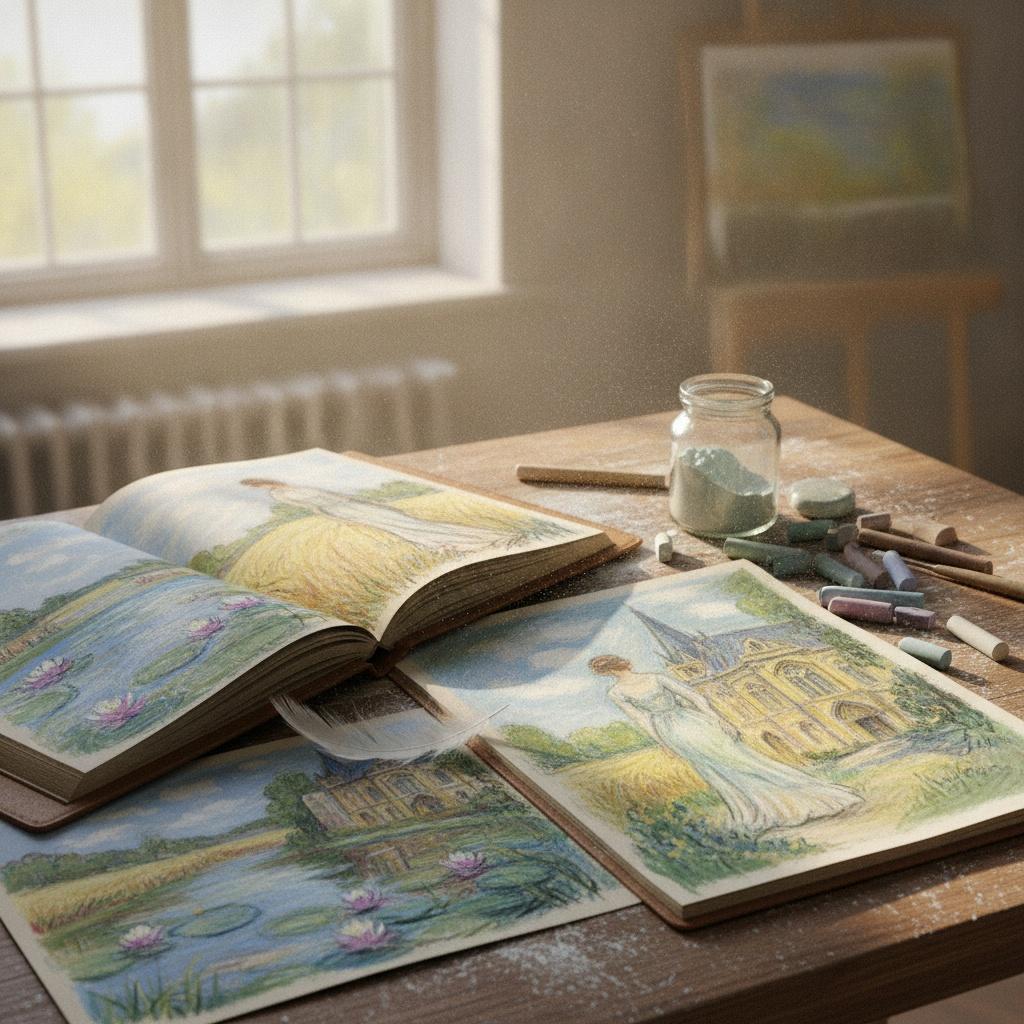
The Soft Magic of Chalk: Capturing Light, Texture, and the Ethereal Soul of Impressionist Masterpieces
Discover the ethereal beauty of pastel and chalk art. Explore how Impressionist masters like Van Gogh and Degas captured light and texture to create timeless, soulful masterpieces for the discerning collector.
Топ-25 шедевров Ренуара: искусство, история и вдохновение для интерьера
Погрузитесь в мир Ренуара! 🎨 Откройте топ-25 шедевров импрессионизма, историю создания картин и вдохновляющую красоту. Купите репродукции высокого качества для вашего интерьера на OriginalUniqueArt.com – музейное искусство онлайн!

The Magic of Pastel Art: A Guide to Soft Colors and Velvately Textures in Impressionist Masterpieces
Explore the ethereal beauty of pastel art. Discover how Impressionist masters used soft hues and velvety textures to capture light. A professional guide for art enthusiasts seeking to understand, collect, and appreciate the delicate magic of this timeless medium.

Топ-10 шедевров импрессионизма: пейзажи, изменившие искусство | OriginalUniqueArt
Погрузитесь в мир импрессионизма! Откройте 10 шедевров Моне, Ренуара и других великих художников. Узнайте историю создания культовых пейзажей и вдохновитесь для декора вашего дома. Репродукции картин высокого качества на OriginalUniqueArt.com.

Impressionistic Realism's Finest: 10 Masterpieces for Your Home | OriginalUniqueArt
Journey through Impressionistic Realism with 10 iconic masterpieces by Monet, Renoir & Van Gogh. Explore art history, techniques & find museum-quality reproductions for your home at OriginalUniqueArt.com. Discover all masterpieces online!


