Forest Path (Берталан Пор)
Берталан Пор (1880–1964) создал(а) Forest Path.

 Предпросмотр

 Картина маслом ручной работы
 Поделиться
 Поделиться
 Справка об объекте


 Скачать
 Похожие предметы
 Рентгенография
 Слайд-шоу
 Вопросы и ответы

 Статистика просмотров
Forest Path вкратце
- Название
- Forest Path
- Автор
- Берталан Пор (1880–1964)
- Дата рождения художника
- Бабина (район Зволен), Словакия
- Сюжет
- forests, roads
Изображения в высоком разрешении: Forest Path
Объект защищен авторским правом: данные файлы предназначены для личного ознакомления и не являются лицензией на переиздание.
Берталан Пор, Forest Path.
Берталан Пор (1880–1964), Forest Path. Изображение: OriginalUniqueArt.com.
Ответы на вопросы о Forest Path
Что изображено на картине «Forest Path»?
Сюжеты произведения «Forest Path» — это forests, roads.
Является ли произведение «Forest Path», Берталан Пор общественным достоянием?
Произведение «Forest Path», Берталан Пор находится в находится под защитой авторского права. Этот статус определяет правила воспроизведения изображения данного произведения.
Кто создал "Forest Path"?
«Forest Path» был создан Берталан Пор. Информация на этой странице описывает оригинальную работу Берталан Пор.
Почему произведение «Forest Path» имеет именно такой статус авторского права?
«Forest Path», Берталан Пор находится в находится под защитой авторского права. Срок действия авторского права исчисляется со смерти художника, наступившей в 1964.
Об авторе, Берталан Пор

1880–1964, Словакия
Берталан Пор
A Pioneer of Hungarian Modernism: The Life and Art of Bertalan Pór Bertalan Pór, born in Budapest on November 4th, 1880, stands as a cornerstone figure in the genesis of Hungarian modernist art. His life’s trajectory—from formative artistic training amidst the vibrant intellectual currents of fin-de-siècle Hungary to his eventual immersion in Parisian avant-garde circles and subsequent return to champion Hungarian cultural revival—represents an unwavering dedication to experimentation and a profound responsiveness to the evolving aesthetic landscape of his era. Already demonstrating exceptional talent for drawing from a young age, Pór embarked upon a path meticulously shaped by academic rigor and propelled by an ambition to transcend local artistic boundaries. He commenced his formal education at the School of Industrial Design in Budapest under László Gyulay, recognizing that mastering foundational techniques demanded exposure beyond Hungary’s borders.
Другие работы Берталан Пор
 Selt-portrait
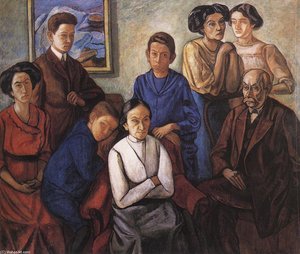 The Family
 trait of Mátyás Rákosi
 Trait Of My Mother
Эссе к произведению Forest Path
 Tracing the Way: A Study of Winding Paths and Scenic Roads in Landscape ArtExplore the history of winding paths in art from the Renaissance to Expressionism. Discover the soul of the landscape through every bend.
 Masterpieces of Nature: The Top 25 Artworks by Théodore RousseauIn 1830, Landscape Study (La Source) marked a pivotal shift toward the unvarnished reality of the natural world, moving away from idealized…
 Master of the Forest: The Top 25 Ivan Shishkin ArtworksBorn in 1832 in Yelabuga, Shishkin traded the polished artifice of the studio for the raw, unyielding truth of the Russian wilderness.