

 Примерить в интерьере
 Отправить
 Поделиться
 Подробнее
 Руководство

 Скачать
 Похожие объекты
 Рентгенография
 Слайд-шоу
 Статистика
Promenade
 Oil On Canvas
- WallArt
- Expressionism
 1913
1913- Modern
 51.0 x 57.0 cm
 Развернуть текст
Масляная репродукция ручной работы
Картина маслом на холсте в выбранном вами размере и раме, написанная на заказ нашими художниками. ( Переключиться на печать Перейти к цифровым изображениям)




P118B $10

P118H $10

P118W $10

P438Z $10

P508JH $12

P508YH $12

P805H $10

P805Z $10

P919BZ $10

P919G $10

P919XJ $10

P959ZH $10

P968JZ $12

W106C $8

W218G $10

W218JH $8

W218Y $10

W307PJ $10

W316G $10

W316PJ $8

W316Y $10

W398PJ $8

W4111J $10

W500HY $15

W500JH $15

W692G $12

W849H $8

W940BG $15

W953PJ $8




Выберите один из наших стандартных размеров, соответствующих оригинальным пропорциям произведения искусства.

Введите необходимую ширину и высоту, чтобы репродукция подошла к вашей раме или стене. Поскольку работа выполняется вручную, при изменении пропорций художник может немного увеличить область вокруг картины или, наоборот, обрезать края — выбор за вами. Перед началом работы мы пришлем вам цифровой макет на утверждение. Изображение на этой странице не является точным результатом — увидеть реальный вид можно только на макете.
После оформления заказа команда OriginalUniqueArt.com свяжется с клиентом по электронной почте для уточнения деталей и предоставит предварительный макет
Доставка по всему миру () за 3–4 недели вместо стандартных 5 недель. (22 Октябрь). Без компромиссов в качестве.

Бесплатная экспресс-доставка по всему миру

Высококачественный льняной холст

Полное страхование при транспортировке

Гарантия возврата таможенных пошлин

Гарантия точного цветового соответствия

100-дневный период возврата (только при обнаружении дефектов)

Гарантия возврата 100% средств

Скидка при заказе нескольких работ
 Вариант со стеклом доступен только для размеров менее 110 см

Promenade
Материал репродукции
Размер репродукции
-


Итоговая стоимость
$ 400
August Macke’s “Promenade”: A Moment of Expressionist Serenity
Captured in 1913, August Macke's "Promenade" offers a poignant glimpse into the burgeoning world of German Expressionism – a movement defined by its raw emotional intensity and rejection of traditional representational art. This intimate scene, measuring 51 x 57 cm, depicts a group of figures leisurely strolling along a shaded path beneath a canopy of trees, an idyllic tableau rendered with a distinctive boldness that speaks to the anxieties and aspirations of the early 20th century. The painting’s power resides not in photographic realism but in its ability to evoke a profound sense of mood and atmosphere – a feeling of quiet contemplation and fleeting joy within a rapidly changing world.
A Style Forged in Emotion
Macke's artistic trajectory was marked by a relentless pursuit of new forms, initially influenced by Impressionism and Post-Impressionism. However, “Promenade” firmly establishes him as a key figure within the Expressionist movement. The simplified forms, flattened perspective, and deliberate distortion of figures are hallmarks of this style. Notice how the rectangular shapes of the clothing contrast sharply with the organic curves of the trees, creating a visual tension that mirrors the emotional undercurrents of the scene. The use of color is particularly striking – vibrant greens and blues dominate, not to accurately depict nature but to amplify the painting’s emotive impact. Thick, impasto brushstrokes contribute significantly to this effect, adding a tactile quality and emphasizing the artist's deliberate manipulation of texture.
Technique and Materiality
Executed in oil on canvas, “Promenade” reveals Macke’s masterful control of his medium. The visible brushwork is not merely a stylistic choice; it actively contributes to the painting’s expressive power. The layering of colors, particularly in the foliage and shadows, creates a sense of depth and volume while simultaneously conveying a feeling of movement and energy. The diffused lighting, ambiguous yet evocative, further enhances this effect, bathing the figures in a soft glow that suggests both serenity and an underlying melancholy. Macke’s technique demonstrates a commitment to capturing not just what he saw but how he *felt* about what he saw – a core tenet of Expressionist art.
Symbolism and Historical Context
Created in 1913, at the cusp of World War I, “Promenade” carries a subtle yet significant symbolic weight. The figures strolling along the path represent a momentary escape from the pressures and uncertainties of modern life – a brief respite within nature’s embrace. This theme resonates with the broader anxieties of the era, reflecting a desire for stability and tranquility amidst widespread social and political upheaval. Macke's work, like that of many Expressionist artists, can be interpreted as a response to the rapid industrialization, urbanization, and technological advancements transforming Europe at the time. The painting’s inherent beauty serves as a poignant reminder of the fragility of peace and the importance of cherishing simple pleasures.
Вопросы и ответы
Какова техника исполнения и дата создания «Promenade», Август Макке?
«Promenade» была создана в 1913 г., техника: Oil On Canvas.
Из чего создано произведение «Promenade»?
Техника исполнения работы «Promenade», Август Макке — Oil On Canvas. Репродукции стремятся максимально точно передать особенности этой техники.
Можно ли использовать дополненную реальность, чтобы увидеть «Promenade», Август Макке в своей комнате?
Страница Предпросмотр в AR для работы «Promenade», Август Макке использует дополненную реальность, чтобы показать произведение в вашем интерьере на совместимом устройстве.
Биография художника
A Life Cut Short: The Vibrant World of August Macke
August Robert Ludwig Macke, a name forever intertwined with the brief but intensely brilliant flowering of German Expressionism, lived a life tragically curtailed by the horrors of the First World War. Born in 1887 in Meschede, a small town nestled within the Westphalian countryside, his artistic journey was one of rapid evolution and profound exploration – a relentless pursuit to capture not just what he *saw*, but how he *felt* about it. Macke’s early years were marked by a quiet determination, a yearning for creative expression that propelled him from his hometown to Bonn, where he began to hone his nascent talent under the guidance of local educators. Though formally trained at the Düsseldorf Art Academy between 1904 and 1906, under the tutelage of Adolf Maennchen, it was through independent study, travel, and a deep immersion in the artistic currents of the time that his unique voice truly began to emerge. These formative years were characterized by an absorption of Impressionist and Post-Impressionist techniques – a careful study of light, color, and brushwork – laying a foundation for the bolder, more emotionally charged expressions he would later develop. He supplemented his income with stage design work, a demanding profession that sharpened his compositional skills and cultivated a keen eye for visual harmony.Influences and Artistic Development: A Synthesis of Styles
Macke’s artistic trajectory was profoundly shaped by encounters with key figures and movements of the early 20th century – a confluence of influences that ultimately forged his distinctive style. A pivotal moment arrived in Paris in 1912, where he met Robert Delaunay, a leading proponent of Orphism – a branch of Cubism focused on pure abstraction and vibrant color harmonies. This encounter proved transformative, introducing Macke to the concept of simultaneous contrast and influencing his work towards a more dynamic and non-representational approach. He began experimenting with broken planes of color and abstracted forms, seeking to convey not just what he saw, but how he *felt* about what he saw – a core tenet of Expressionism. Simultaneously, his close friendship with Franz Marc, a fellow artist and member of the influential group Der Blaue Reiter (The Blue Rider), drew him into the orbit of Wassily Kandinsky and other avant-garde thinkers. While Macke’s style remained distinct from Kandinsky's more purely abstract explorations, he embraced the group’s spirit of artistic freedom and spiritual inquiry. His paintings began to reflect a growing interest in depicting the emotional resonance of landscapes and everyday life, imbued with a sense of joy and optimism. The influence of Matisse was also significant; Macke adopted the Fauves’ bold use of color and expressive brushstrokes, injecting energy and vitality into his compositions. He wasn't simply copying these styles; he was synthesizing them, creating something entirely new – a visual language uniquely his own.The Blue Rider and Beyond: A Unique Expressionist Vision
As an integral member of Der Blaue Reiter, Macke contributed significantly to the group’s exhibitions and publications, helping to disseminate its radical ideas about art and spirituality. However, he wasn't simply a follower; he forged his own unique path within the movement. Unlike some of his colleagues who leaned towards darker, more angst-ridden themes – often reflecting the anxieties of the time – Macke consistently sought to portray beauty and harmony in the world around him. His paintings, such as Bathing Girls with Town in the Background, exemplify this approach – vibrant colors, simplified forms, and a sense of idyllic tranquility characterize his work. He masterfully blended elements of Fauvism, Cubism, and Futurism into a distinctly personal style, creating compositions that are both visually striking and emotionally resonant. Woman in a Green Jacket, painted in 1913, is another prime example – a portrait radiating warmth and vitality through its bold color palette and confident brushwork. His later works, like Türkisches Café, demonstrate his luminist approach, capturing the play of light and shadow with remarkable sensitivity. The artist’s job, he wrote, was to explore and express the human soul - our inner life - via representation of form and use of (non-naturalistic) color.Major Achievements: A Legacy of Color and Emotion
August Macke's artistic achievements are characterized by a remarkable ability to capture the essence of modern experience through vibrant color, dynamic composition, and an underlying sense of optimism. His paintings – landscapes, portraits, still lifes, and scenes of everyday life – are imbued with a palpable energy that reflects both the beauty and the anxieties of his time. He was particularly adept at depicting the natural world, transforming ordinary landscapes into evocative expressions of emotion. Bathing Girls with Town in the Background is perhaps his most famous work, a testament to his ability to capture the fleeting moments of joy and connection within the urban landscape. His portraits, such as Woman in a Green Jacket, are equally compelling, radiating warmth and vitality through their bold color palettes and confident brushwork. Macke’s influence extended beyond Germany, inspiring artists across Europe who were seeking new ways to express themselves in the wake of World War I. His work continues to be exhibited and studied today, serving as a reminder of the power of art to illuminate the human condition.A Tragic End and Lasting Legacy
The outbreak of World War I brought a sudden and devastating end to Macke’s promising career. Driven by patriotic fervor, he volunteered for military service in 1914. Tragically, he was killed in action just weeks later, on September 26th, at the front near Champagne, France, at the young age of 27. His final painting, Farewell, poignantly captures the somber mood that descended upon Europe as war engulfed the continent. Despite his untimely death, August Macke’s legacy endures. He remains a significant figure in the history of Expressionism, celebrated for his vibrant colors, dynamic compositions, and optimistic vision. His paintings offer a glimpse into a world on the cusp of change, imbued with a sense of beauty and hope amidst growing uncertainty. Exploring his works today reveals an artist who not only captured the spirit of his time but also created timeless images that continue to resonate with viewers across generations.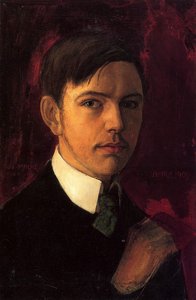
Август Макке
1887 - 1914 , Германия
Краткая справка
- Artistic Movement Or Style: Экспрессионизм
- Artists Or Movements Influenced By This Artist: ['Синий рыцарь']
- Artists Who Influenced This Artist:
- Роберт Делаunay
- Франц Марк
- Date Of Birth: 3 января 1887 г.
- Date Of Death: 26 сентября 1914 г.
- Full Name: August Robert Ludwig Macke
- Nationality: Немецкий
- Notable Artworks:
- Женщина в зеленом пальто
- Батающие девушки на фоне города
- Турецкий кафе
- Place Of Birth: Ме́схеде, Германия
Похожие статьи

Arboreal Echoes: A Historical & Artistic Exploration of Trees in Painting
Explore the rich history of trees in painting! Discover symbolism, Romantic masterpieces by Caspar David Friedrich & beyond. A curated journey for art enthusiasts.
Arboreal Echoes: A Historical & Artistic Exploration of Trees in Painting
Explore the rich history of trees in painting! Discover symbolism, Romantic masterpieces by Caspar David Friedrich & beyond. A curated journey for art enthusiasts.

10 Шедевров Немецкого Экспрессионизма: Искусство Эмоций и Вдохновения | OriginalUniqueArt
Погрузитесь в мир немецкого экспрессионизма! Узнайте истории создания шедевров Мунка, Кирхнера, Кандинского и других великих художников. Репродукции картин высокого качества для вашего интерьера на OriginalUniqueArt.com. Откройте всю коллекцию онлайн!
August Macke: Expressionist Visions of Harmony & Modern Life
Explore the vibrant Expressionist paintings of August Macke (1887-1914). Discover his key role in Der Blaue Reiter, Fauvist influences, and captivating depictions of modern life. A comprehensive guide for art enthusiasts & collectors.
Топ-25 шедевров Ренуара: искусство, история и вдохновение для интерьера
Погрузитесь в мир Ренуара! 🎨 Откройте топ-25 шедевров импрессионизма, историю создания картин и вдохновляющую красоту. Купите репродукции высокого качества для вашего интерьера на OriginalUniqueArt.com – музейное искусство онлайн!


