Symbolist Painting · 1879
Spring Evening (Арнольд Бёклин, 1879)
Арнольд Бёклин (1827–1901) создал(а) Spring Evening. Создано в 1879. Относится к направлению Symbolist Painting. Выполнено в технике Oil On Panel. Хранится в Музей изящных искусств Будапешта в Будапешт, Венгрия. Размер: 67 × 129 cm
- 1879
- Oil On Panel
- 67 × 129 cm
- Музей изящных искусств Будапешта

 Предпросмотр

 Картина маслом ручной работы
 Поделиться
 Поделиться
 Информационный лист


 Скачать
 Похожие предметы
 Рентгенография
 Слайд-шоу
 Вопросы и ответы

 Статистика просмотров
Spring Evening вкратце
- Название
- Spring Evening
- Автор
- Арнольд Бёклин (1827–1901)
- Дата рождения художника
- Базель, Швейцария
- Дата
- 1879
- Техника
- Oil On Panel
- Размеры
- 67 × 129 cm
- Где посмотреть
- Музей изящных искусств Будапешта, Будапешт, Венгрия
- Движение
- Symbolist Painting
- Сюжет
- mythology, nymphs, pan, forest, evening, landscape
Что изображено на Spring Evening?
The Ethereal Embrace of Spring Evening
Arnold Böcklin’s “Spring Evening,” painted in 1879, isn't merely a depiction of a woodland scene; it’s an immersion into a realm of melancholic beauty and profound symbolism. Created during his time in Florence – a city that profoundly shaped his artistic vision – the painting captures a fleeting moment of enchantment, steeped in the atmosphere of late Romanticism and foreshadowing the rise of Symbolism. The canvas breathes with a quiet intensity, dominated by muted greens, blues, and browns, creating an almost dreamlike quality that immediately draws the viewer into its hushed world.
At the heart of the composition stands a woman, her posture suggesting both contemplation and vulnerability. Her hand gently resting on her head is a gesture simultaneously of yielding and quiet strength – she’s not passively observing but actively engaged with the scene unfolding before her. Beside her sits a man, seemingly lost in thought as he peruses a book, his presence offering a grounding element to the ethereal atmosphere. A bear, rendered with surprising tenderness, interacts playfully with both figures, blurring the lines between human and animal, nature and civilization. This carefully orchestrated tableau speaks of harmony, connection, and the delicate balance of the natural world.
A Symphony of Symbolism
Böcklin’s work is deeply rooted in mythology and folklore, drawing heavily on ancient Greek and Roman traditions. The central figure, often interpreted as Pan – the god of nature, shepherds, and wild music – plays his pipes, summoning a chorus of unseen nymphs from the surrounding forest. These dryads, with their flowing hair and graceful movements, represent the spirit of the woods, embodying both beauty and danger. The bear itself is a potent symbol, frequently associated with strength, wisdom, and primal instincts—a reminder of humanity’s connection to the earth.
The painting's muted palette contributes significantly to its symbolic weight. The cool blues and greens evoke a sense of melancholy and introspection, while the browns ground the scene in the tangible reality of the forest floor. The lighting is soft and diffused, creating an atmosphere of twilight—a liminal space between day and night, representing transition, mystery, and perhaps even mortality. Böcklin masterfully uses color not to simply depict a landscape but to convey complex emotions and ideas.
Technique and Artistic Influences
“Spring Evening” exemplifies Böcklin’s distinctive artistic style, characterized by meticulous detail, rich textures, and an almost obsessive attention to the natural world. He employed a technique of layering thin glazes of oil paint, building up color gradually to achieve remarkable depth and luminosity. The brushwork is subtle yet expressive, conveying both the smoothness of the forest floor and the intricate details of the foliage.
Böcklin’s artistic journey was profoundly influenced by his time in Düsseldorf, where he studied under Schirmer and became associated with the Düsseldorf School of Painting. However, it was in Florence that he truly developed his unique Symbolist vision, drawing inspiration from the city's rich cultural heritage and its connection to antiquity. The painting also reflects the influence of Romanticism, particularly the emphasis on emotion, imagination, and the sublime beauty of nature—themes central to the movement.
A Timeless Resonance
“Spring Evening” continues to resonate with viewers today because it taps into universal themes of longing, connection, and the search for meaning. Its evocative atmosphere and symbolic richness invite contemplation and offer a glimpse into the artist’s deeply personal vision. The painting's enduring appeal lies in its ability to transport us to another time and place—a world where myth and reality intertwine, and where the beauty of nature is inextricably linked to the mysteries of the human soul.
В каком музее находится Spring Evening?
Музей изящных искусств Будапешта
Будапешт, Венгрия
Истоки и история Музея изящных искусств Будапешта Основание Музея изящных искусств Будапешта было официально закреплено Миллениальным законом 1896 года. Это законодательное решение было продиктовано стремлением создать в Будапеште специализированное учреждение для высокого искусства. Местом для этого великого начинания было выбрано пространство, где ранее располагал павильон «Ротонда» — сооружение, возведенное специально для демонстрации знаменитого Фэштисти-кёркэп.


Изображения в высоком разрешении: Spring Evening

Общественное достояние: художник умер в 1901.
Другие размеры, фрагменты и цитирование →Арнольд Бёклин, Spring Evening (1879), Музей изящных искусств Будапешта. Общественное достояние
Ответы на вопросы о Spring Evening
Где можно увидеть оригинал «Spring Evening», Арнольд Бёклин?
Оригинал произведения «Spring Evening», Арнольд Бёклин хранится в Музей изящных искусств Будапешта, Будапешт, Венгрия. Репродукция позволяет украсить этим шедевром ваш дом.
В каком году было создано произведение «Spring Evening», Арнольд Бёклин?
«Spring Evening» датируется 1879 годом. Эта дата позволяет определить место произведения в творчестве Арнольд Бёклин и в контексте его эпохи.
В какой технике выполнено произведение «Spring Evening»?
«Spring Evening» выполнено в технике Oil On Panel.
Каковы размеры оригинала «Spring Evening»?
Размер оригинала «Spring Evening», Арнольд Бёклин составляет 67 x 129 cm.
Что изображено на картине «Spring Evening», Арнольд Бёклин?
Сюжеты произведения «Spring Evening» — это mythology, nymphs, pan, forest, evening, landscape, symbolism, böcklin.
Находится ли изображение «Spring Evening», Арнольд Бёклин в общественном достоянии?
Статус авторского права для «Spring Evening», Арнольд Бёклин: произведение находится в общественное достояние — срок действия авторского права истёк. Это определяет, допускается ли свободное воспроизведение изображения.
Какому художнику приписывают работу «Spring Evening»?
Авторство работы «Spring Evening» приписывается Арнольд Бёклин.
К какому художественному направлению относится «Spring Evening», Арнольд Бёклин?
Художественное направление, к которому относится «Spring Evening», Арнольд Бёклин, — это Symbolist Painting. Такая классификация позволяет соотнести данную работу с другими произведениями и мастерами того же периода.
К какому периоду творчества Арнольд Бёклин относится произведение «Spring Evening»?
В творческом наследии Арнольд Бёклин работа «Spring Evening» относится к периоду Late Period. Этот этап позволяет сопоставить её с другими произведениями художника.
Об авторе, Арнольд Бёклин
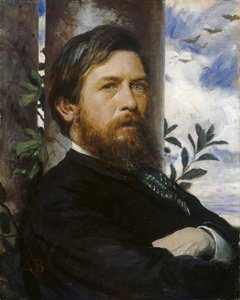
1827–1901, Швейцария
Арнольд Бёклин
Тень острова Базель, Швейцария, стал отправной точкой для жизни, пронизанной напряжением между осязаемым и призрачным. Родившись 16 октября 1827 года в семье Кристиана Фредерика Бёклина и Урсулы Липпе, этот человек со временем оставил семейное дело — торговлю шелком — и перешел к строгим залам Дюссельдорфской академии. Под руководством Шиммера он начал постигать язык пейзажа — навык, который позже поможет ему наносить на холст географию человеческой души. Он не просто писал декорации; он создавал миры, где сталкиваются классика и макабрическое.
Другие работы Арнольд Бёклин
 Остров мертвых (Первая версия)1880
 Автопортрет со смертью, играющей на скрипке
 Война1896
 The Isle of the Dead (Version 2)1880

Эссе к произведению Spring Evening
 French artworks of the 1880sFrench Impressionist masterpieces by Claude Monet, Pierre-Auguste Renoir, and Georges Seurat. Find museum-quality reproductions on Original…
 Symphony of Sunlight: The Luminous Legacy of Pine Tree Landscapes in Art HistoryExplore the luminous history of pine landscapes through Sorolla and Shishkin. Discover the magic of forest art today.
 En Plein Air Serenity: Exploring the Luminous Beauty of Impressionist Garden ArtExplore the luminous history of Impressionist garden art through Monet and Van Gogh. Discover the magic of plein air painting today.