

 Предпросмотр
 Поделиться
 Поделиться
 Детали произведения

 Скачать
 Похожие работы
 Рентгенография
 Слайд-шоу
Girl in Folk Costume


 Читать далее
Жикле / Арт-принт
Печать (жикле) или холст музейного качества с быстрыми сроками изготовления и широким выбором вариантов отделки. ( Купить картину ручной работы Купить изображение)




































Выберите один из наших стандартных размеров, соответствующих оригинальным пропорциям произведения искусства.

Вы можете указать свои собственные размеры, чтобы репродукция идеально подошла под конкретную раму или пространство. Если выбранный вами размер не будет соответствовать пропорциям оригинала, мы либо обрежем произведение, либо дополним изображение зеркальным отражением краев или однотонной заливкой. Перед началом производства вам будет отправлен цифровой макет для утверждения.
Пожалуйста, обратите внимание, что предварительный просмотр на экране не отображает фактическую обрезку или расширение изображения. Только макет точно покажет финальную композицию.
Несмотря на возможность заказа индивидуальных размеров, мы рекомендуем выбирать размер из предопределенного списка, чтобы сохранить оригинальные пропорции.
Доставка по всему миру () за 2 недели вместо стандартных 4/5 недель. (22 Август)

Бесплатная экспресс-доставка по всему миру

Высококачественный льняной холст

Полное страхование доставки

Гарантия возмещения таможенных пошлин

Гарантия точного соответствия цветов

Политика возврата в течение 60 дней (только при наличии дефектов)

Гарантия возврата 100% средств

Предложение оптовых скидок
 Вариант со стеклом доступен только для размеров менее 110 см

Girl in Folk Costume
Жикле / Арт-принт
Размер репродукции
-


Итоговая стоимость
$ 80
Описание предмета коллекционирования
A Glimpse into 19th-Century Russian Heritage: "Girl in Folk Costume"
This captivating oil on canvas portrait, dating back to 1879, offers a poignant glimpse into the cultural landscape of 19th-century Russia. Painted by Anton Ebert, the artwork depicts a young woman adorned in traditional folk attire, presented within an elegant oval frame that enhances its classical feel. The subject's serene expression and dignified posture evoke a sense of quiet strength and timeless beauty. Ebert’s meticulous attention to detail brings the richness of her costume—the vibrant red headscarf and delicate necklace—to life, while the muted grey background allows the figure to command full visual attention. This piece is more than just a portrait; it's a window into a specific time and place, preserving a tangible connection to Russian heritage.Style & Technique: Neoclassical Echoes with Romantic Undertones
Ebert’s style demonstrates a fascinating blend of influences. While the realistic depiction and balanced composition align with Neoclassicism, the focus on conveying emotion—particularly the subtle melancholy suggested in the subject's gaze—points towards Romanticism. The artist masterfully employs oil paints to achieve remarkable depth and texture. Notice how smooth brushstrokes render the skin, contrasting beautifully with the more textured application used for the fabric of her dress and headscarf. The shallow perspective, a common characteristic of portraiture during this period, draws the viewer into an intimate connection with the subject. Ebert’s technique showcases his skill in capturing not just likeness but also the essence of character through subtle shading and nuanced detail.Historical Context & Cultural Significance
The late 19th century was a period of significant cultural revival in Russia, marked by renewed interest in national identity and folklore. Artists like Anton Ebert played a crucial role in documenting traditional costumes and customs, preserving them for posterity. This portrait likely reflects that movement, serving as both an artistic representation and a valuable historical record. Ebert’s focus on depicting Russian life and costume, as highlighted in our artist database, suggests a broader commitment to portraying the everyday experiences of his time. The painting provides insight into the importance of regional identity within the vast Russian Empire.Symbolism & Emotional Resonance
Beyond its historical significance, "Girl in Folk Costume" resonates with viewers on an emotional level. The red headscarf, a common element in traditional Russian attire, can symbolize passion and vitality. The necklace may represent family heritage or social standing. However, it is the subject’s gaze that truly captivates – a quiet contemplation that invites introspection. The overall impression is one of dignified resilience, hinting at both strength and perhaps a touch of melancholy—a complex emotional landscape characteristic of Romantic art. The oval frame itself contributes to this sense of intimacy, creating a contained world within which the subject’s story unfolds.Bring History Home: A Timeless Addition
A reproduction of "Girl in Folk Costume" is an exquisite addition to any home or collection. Whether you are an art enthusiast, a history buff, or simply seeking a piece that evokes beauty and emotion, this painting offers a unique opportunity to own a tangible connection to 19th-century Russian culture. Its classic style and timeless appeal ensure it will remain a cherished centerpiece for generations to come.- Perfect for traditional or eclectic interiors.
- A conversation starter that reflects your appreciation for art and history.
- Available in various sizes to suit any space.
Биография художника
Anton Ebert: A Painter of Russian Life and Soul
Anton Ebert (1845-1896) stands as a pivotal figure in the development of Russian realist painting, a master whose meticulous observation and profound empathy captured the essence of everyday life in 19th-century Russia. Born in Berlin to Polish heritage, Ebert’s journey led him from the bustling streets of Europe to the heartland of Russia, where he spent much of his career documenting the lives of peasants, merchants, and members of the aristocracy with a remarkable sensitivity and technical skill. His work offers a poignant window into a rapidly changing nation, reflecting both its enduring traditions and the encroaching forces of modernity.
Ebert’s early artistic training was rooted in the academic tradition, receiving instruction at the Berlin Academy of Fine Arts. However, it was his exposure to the burgeoning realist movement, spearheaded by artists like Gustave Courbet and Jean-François Millet, that profoundly shaped his approach. He rejected idealized representations of beauty and instead sought to portray subjects with unflinching honesty, focusing on the lives of ordinary people – a commitment that would define his artistic legacy. His early works often featured landscapes and portraits, but it was his move to Russia in 1870 that truly ignited his creative fire. Initially employed as a portraitist for the Imperial family, Ebert quickly developed a deep fascination with the rural population, recognizing within them a wealth of character and narrative potential.
Ebert’s artistic style is characterized by its remarkable detail and meticulous realism. He possessed an extraordinary ability to capture subtle nuances of expression, clothing textures, and atmospheric conditions. His paintings are not merely depictions of subjects; they are immersive experiences, transporting the viewer into the world he observed. A key element of his work is his use of light – often diffused and melancholic – which imbues his scenes with a sense of quiet dignity and understated emotion. He frequently employed a muted color palette, favoring earthy tones and subtle gradations to create a realistic and atmospheric effect. His compositions are typically balanced and carefully arranged, reflecting a deep understanding of perspective and spatial relationships.
Among Ebert’s most celebrated works is “The Mellon Seller” (1879), a captivating portrait of a young woman offering watermelons in the marketplace. This painting exemplifies his ability to capture the essence of a single moment in time, revealing not just the subject's physical appearance but also her personality and social status. “An Elegant Lady” (circa 1880) showcases his skill in portraying aristocratic beauty with a subtle air of melancholy, while “Grandmother’s Recovery” (1886) demonstrates his capacity for conveying profound emotional depth through the depiction of familial bonds. These works, along with numerous other portraits and scenes of rural life, collectively form a rich tapestry of Russian society during the late 19th century.
Ebert's influence extends beyond his individual paintings. He played a significant role in establishing the realist tradition within the Russian art world, inspiring subsequent generations of artists to embrace social realism and explore the lives of ordinary people. His meticulous observation, emotional sensitivity, and technical skill served as a model for many who followed him. Furthermore, his work contributed to a broader understanding of Russian culture and society, offering valuable insights into the complexities of rural life and the challenges faced by its inhabitants. Despite facing periods of financial hardship and critical skepticism during his lifetime, Anton Ebert’s legacy endures as one of Russia's most important realist painters – a testament to his artistic vision and unwavering commitment to portraying the truth of human experience.

anton ebert
1835 - 1896
Основные сведения
- Artistic Movement Or Style: Realism, Historical Painting
- Artists Or Movements Influenced By This Artist: ['Victorian Art']
- Artists Who Influenced This Artist: ['Max Reinhardt']
- Date Of Birth: June 29, 1845
- Date Of Death: June 16, 1896
- Full Name: Anton Ebert
- Nationality: German
- Notable Artworks:
- The Mellon Seller
- An Elegant Lady
- Grandmother's Recovery
- Place Of Birth: Berlin, Germany
Похожие статьи

Ivan Bilibin: A Synthesis of Folklore, Modernism & National Identity in Russian Illustration
Explore the enchanting world of Ivan Bilibin, a master Russian illustrator who synthesized folklore, Art Nouveau & national identity. Discover his iconic fairy tale illustrations and legacy with OriginalUniqueArt.

Vladimir Makovsky: Realism, Social Commentary & Russian Life in Late 19th-Century Painting
Explore the captivating world of Vladimir Makovsky, a leading Russian realist painter. Discover his insightful depictions of 19th-century life, social commentary & legacy with OriginalUniqueArt.

Victor Vasnetsov: Myth, Nationalism & the Revival of Russian Fairy Tale Painting
Explore the captivating world of Victor Vasnetsov, a co-founder of Russian folklorist painting. Discover his iconic works, influence on national identity, and lasting legacy in this expert guide.

Albert Kretschmer: Capturing 19th-Century Costume & the Seeds of Expressionism
Explore the exquisite costume studies of Albert Kretschmer (1825-1891). Discover his detailed illustrations, influence on art history & connection to early Expressionism. Learn about collecting this remarkable artist's work.
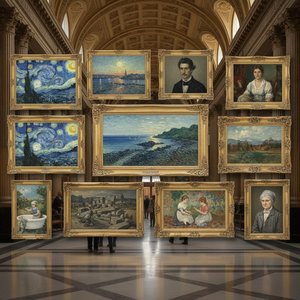
Топ-10 шедевров XIX века: искусство, история и декор от OriginalUniqueArt.com
Погрузитесь в мир искусства XIX века! От реализма до импрессионизма – 10 величайших картин, истории художников и вдохновение для вашего интерьера. Репродукции высокого качества на OriginalUniqueArt.com. Откройте всю коллекцию онлайн!

