Размер текста

() ·

Картина, созданная вручную специально для вас

until1470 - San Zeno Polyptych (central panel)

Масляная репродукция ручной работы

Картина маслом на холсте в выбранном вами размере и раме, написанная на заказ нашими художниками. ( Перейти к печатным копиям Перейти к цифровым изображениям)

Описание предмета коллекционирования

Mantegna’s masterful San Zeno Polyptych captures a serene religious tableau bathed in dramatic perspective—a testament to his unwavering dedication to Roman antiquities and the High Renaissance style. Explore this iconic artwork and bring its timeless beauty into your home.

Биография художника

Андреа Мантegna (1431-1506): гений Ренессанса, мастер перспективы и скульптурной детализации. Его работы – Триумфы Цезаря и другие шедевры! Изучите искусство эпохи Возрождения!

от ·

Глава 1

Какой размер выбрать?

Передвигайте ползунок, чтобы изменить размер; на изображении слева показана реальная ширина рамы. Пропорции оригинала сохраняются.

Стандартный размер
на заказ
CM
INCH

Выберите один из наших стандартных размеров, соответствующих оригинальным пропорциям произведения искусства.

ширина
высота

Введите необходимую ширину и высоту, чтобы репродукция подошла к вашей раме или стене. Поскольку работа выполняется вручную, при изменении пропорций художник может немного увеличить область вокруг картины или, наоборот, обрезать края — выбор за вами. Перед началом работы мы пришлем вам цифровой макет на утверждение. Изображение на этой странице не является точным результатом — увидеть реальный вид можно только на макете.

Глава 2

В каком виде вы хотите получить заказ?

Выберите тип обработки краев холста

Выберите свою раму

Corner sample of the WhiteWrap canvas edge finish, stretched on массив дерева bars
Белый торцевой край $1
Corner sample of the BlurSideWrap canvas edge finish, stretched on массив дерева bars
Размытый край $1
Corner sample of the ExtendedWrap canvas edge finish, stretched on массив дерева bars
С продолжением изображения $1
Corner sample of the P118B picture frame: формованный полистирол, 5 cm wide and 3 cm thick
P118B $10
Corner sample of the P118H picture frame: формованный полистирол, 5 cm wide and 3 cm thick
P118H $10
Corner sample of the P118W picture frame: формованный полистирол, 5 cm wide and 3 cm thick
P118W $10
Corner sample of the P438Z picture frame: формованный полистирол, 5.5 cm wide and 3.5 cm thick
P438Z $10
Corner sample of the P508JH picture frame: формованный полистирол, 7 cm wide and 3.5 cm thick
P508JH $12
Corner sample of the P508YH picture frame: формованный полистирол, 7 cm wide and 3.5 cm thick
P508YH $12
Corner sample of the P805H picture frame: формованный полистирол, 5 cm wide and 3.5 cm thick
P805H $10
Corner sample of the P805Z picture frame: формованный полистирол, 5 cm wide and 3.5 cm thick
P805Z $10
Corner sample of the P919BZ picture frame: формованный полистирол, 7 cm wide and 3.5 cm thick
P919BZ $10
Corner sample of the P919G picture frame: формованный полистирол, 7 cm wide and 3.5 cm thick
P919G $10
Corner sample of the P919XJ picture frame: формованный полистирол, 7 cm wide and 3.5 cm thick
P919XJ $10
Corner sample of the P959ZH picture frame: формованный полистирол, 5 cm wide and 3 cm thick
P959ZH $10
Corner sample of the P968JZ picture frame: формованный полистирол, 6 cm wide and 4 cm thick
P968JZ $12
Corner sample of the W106C picture frame: массив дерева, 5 cm wide and 3 cm thick
W106C $8
Corner sample of the W218G picture frame: массив дерева, 5 cm wide and 3 cm thick
W218G $10
Corner sample of the W218JH picture frame: массив дерева, 5 cm wide and 3 cm thick
W218JH $8
Corner sample of the W218Y picture frame: массив дерева, 5 cm wide and 3 cm thick
W218Y $10
Corner sample of the W307PJ picture frame: массив дерева, 6 cm wide and 3 cm thick
W307PJ $10
Corner sample of the W316G picture frame: массив дерева, 6 cm wide and 3 cm thick
W316G $10
Corner sample of the W316PJ picture frame: массив дерева, 6 cm wide and 3 cm thick
W316PJ $8
Corner sample of the W316Y picture frame: массив дерева, 6 cm wide and 3 cm thick
W316Y $10
Corner sample of the W398PJ picture frame: массив дерева, 5 cm wide and 3 cm thick
W398PJ $8
Corner sample of the W4111J picture frame: массив дерева, 6.5 cm wide and 3.5 cm thick
W4111J $10
Corner sample of the W500HY picture frame: массив дерева, 7 cm wide and 5 cm thick
W500HY $15
Corner sample of the W500JH picture frame: массив дерева, 7 cm wide and 5 cm thick
W500JH $15
Corner sample of the W692G picture frame: массив дерева, 8 cm wide and 4 cm thick
W692G $12
Corner sample of the W849H picture frame: массив дерева, 5 cm wide and 3 cm thick
W849H $8
Corner sample of the W940BG picture frame: массив дерева, 7.5 cm wide and 4.5 cm thick
W940BG $15
Corner sample of the W953PJ picture frame: массив дерева, 6 cm wide and 3.5 cm thick
W953PJ $8
Corner sample of the H24-GOLD picture frame: резное дерево с левкасом, 10 cm wide and 6 cm thick
H24-GOLD $30
Corner sample of the H24-SILVER picture frame: резное дерево с левкасом, 10 cm wide and 6 cm thick
H24-SILVER $30
Corner sample of the H36-GOLD picture frame: резное дерево с левкасом, 15 cm wide and 6.5 cm thick
H36-GOLD $45
Corner sample of the H36-SILVER picture frame: резное дерево с левкасом, 15 cm wide and 6.5 cm thick
H36-SILVER $45

Багет: . Общий размер в раме: .

Глава 3

Кто является автором и стоит ли что-то изменить?

Примеры того, что можно изменить: заменить лицо фотографией клиента; добавить питомца (например, заменить кошку на собаку); добавить скрытое послание на задний план; изменить пейзаж или элементы фона.
После оформления заказа команда OriginalUniqueArt.com свяжется с клиентом по электронной почте для получения инструкций и предоставит предварительный макет

Доставка по всему миру () за 3–4 недели вместо стандартных 5 недель. (4 Ноябрь). Без компромиссов в качестве.

Глава 4

Последние штрихи

Табличка, как в музее?

Детали гравировки на бронзовой плакетке

This elegant plaque features the artist's name and the title of the artwork, finely engraved for a timeless presentation.

It is made from bronze with a refined, elegant finish. The text is precisely laser-engraved for a sharp and permanent result. Measuring 9x2 cm, the plaque is compact yet easy to read. It's built to be durable and scratch-resistant, offering a professional, museum-quality look. Mounting is simple thanks to the included adhesive backing.

Детали прозрачной акриловой таблички

The plaque includes essential engraved details such as the artist's name, the title of the artwork, the date it was created, the type of media used-like oil on canvas or watercolor-a brief description of the piece, and a QR code that links to the complete artwork information.

It is crafted from clear acrylic, offering a sleek, modern appearance. The text is UV-engraved in black to ensure strong visual contrast. With a size of 10x15 cm, it ensures optimal readability. It comes equipped with two metal hooks for secure wall mounting. The plaque is designed to be weather-resistant, making it suitable for various environments, and it includes interactive features that work seamlessly with smartphone scanning.

Информация о чёрной акриловой табличке

This elegant plaque includes engraved information such as the artist's name, the title of the artwork, the date it was created, the type of media used (like oil on canvas or watercolor), a short description of the artwork, and a QR code for quick access to more information.

The plaque itself is made from refined black acrylic with a premium finish. The text is laser-engraved in white for high contrast and readability. Its size is 10x15 cm, designed to be easy to read. It comes with two metal hooks for professional mounting. The design is sleek and fits any interior style. It is also weather-resistant and durable, with built-in digital integration for mobile compatibility.

Защитный лак?

Когда вам нужна доставка?

Глава 5

Ваша картина в соответствии с вашим заказом

until1470 - San Zeno Polyptych (central panel)

Техника репродукции

Размер репродукции

-

Выдающийся мастер высокого класса

Более высокая детализация, изысканность и дополнительное время на создание работы

-

Оформление репродукции

-

-

Для произведений искусства или репродукций, размер которых превышает 105 см (приблизительно 41 дюйм) по любой из сторон, рама будет доставлена в разобранном виде (в виде комплекта). Этот метод обеспечивает безопасную доставку и предотвращает повреждения при транспортировке.

Требуется профессиональная сборка — это не продукт для самостоятельной сборки (DIY).
Комплект должен быть собран, а холст натянут опытным мастером по багетным рамам с использованием клеевого ПВА (не входит в комплект), струбцин для натяжки холста и зажимов, чтобы удерживать подрамник ровным до полного высыхания клея. Неправильная сборка или неравномерное натяжение холста могут привести к необратимому повреждению произведения искусства и не являются гарантийным случаем.

  • В комплект входят все бруски из массива дерева, точно вырезанные по размеру.

  • Собирается с помощью предоставляемых винтов, а также столярного клея для угловых соединений, который не входит в комплект и должен быть приобретен вашим мастером.

  • Требуются профессиональные инструменты, не входящие в комплект: щипцы для натяжки холста (натяжитель) и зажимы, чтобы удерживать рейки ровно во время высыхания клея.

Важно:
Для соединения углов требуется клей для дерева, перекладины необходимо зафиксировать струбцинами до полного высыхания клея, а для натяжки холста на собранную раму требуются щипцы для натяжки холста. Ни один из этих инструментов не входит в комплект. Пожалуйста, убедитесь в наличии опытного мастера по багетным работам перед заказом рамы такого размера.

Этикетка

-

-

Защитный лак

Глянцевый лак (насыщает цвета, защищает от воздействия света и влаги)

-

Персонализация картины

Примеры возможных изменений: замена лица на фото клиента; добавление домашнего питомца (например, замена кошки на собаку); добавление скрытого сообщения на фоне; изменение пейзажа или элементов фона.

-

Экспресс-доставка

Доставка по всему миру () за 3–4 недели вместо стандартных 5 недель. (4 Ноябрь). Без компромиссов в качестве.

-

Экспресс-доставка

Доставка по всему миру () в течение 5 недель. (11 Ноябрь).

Включено в стоимость

Итоговая стоимость

$ 300

Итоговая стоимость $ 300

Вариант со стеклом доступен только для размеров менее 110 см

Включено в каждый заказ

  • Бесплатная экспресс-доставка по всему миру
  • Высококачественный льняной холст
  • Полное страхование при доставке
  • Гарантия возмещения таможенных пошлин
  • Гарантия точного цветового соответствия
  • 100-дневная гарантия возврата (только при обнаружении дефектов)
  • Гарантия возврата 100% средств
  • Скидка при оптовом заказе

A Window into the Renaissance Soul

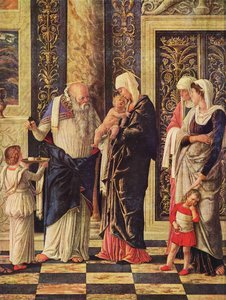
In the heart of the Basilica di Sant’Anas lies a masterpiece that does more than merely depict a sacred moment; it invites the viewer into a meticulously reconstructed world of classical grandeur and spiritual depth. Andrea Mantegna’s San Zeno Polyptych, specifically its breathtaking central panel, serves as a profound testament to the dawn of the Renaissance. Created around 1470, this work is not just a religious icon but an intellectual triumph. Through his unparalleled mastery of linear perspective, Mantegna dissolves the barrier between the painted surface and the physical world, creating an illusion of depth so convincing that it feels as though one could step directly into the sacred space inhabited by the Virgin Mary and the Christ Child.

The composition is a symphony of sculptural precision and tender devotion. As Mary cradles the infant Jesus, the viewer is met with a scene that feels both timeless and tangibly real. Mantegna’s obsession with Roman antiquity—honed during his formative years studying classical ruins—is evident in every architectural detail and the heavy, dignified folds of the drapery. The figures possess a weight and presence reminiscent of ancient marble sculptures, yet they are imbued with a soft, human warmth that prevents the scene from feeling cold or distant. For the collector or designer, this piece offers a sense of structural permanence and historical gravity, making it an anchor for any sophisticated interior.

Symbolism and the Language of Light

Beyond its visual splendor, the San Zeno Polyptych is a complex tapestry of humanist thought and Christian allegory. Mantegna weaves subtle symbols into the fabric of the scene to provoke meditation on the nature of existence. A clock, a relatively novel marvel of the fifteenth century, rests within the composition, serving as a poignant memento mori—a reminder of the relentless passage of time and the fleeting nature of mortal life. In stark contrast to this temporal ticking, the presence of a bowl symbolizes divine grace and the spiritual nourishment that sustains the soul through eternity.

The artist’s technique further elevates these symbolic layers. By applying incredibly thin, translucent glazes of pigment, Mantegna achieved a luminous quality that allows light to seem as though it is emanating from within the painting itself. This painstaking process creates a surface of remarkable tonal subtlety, where shadows are not merely dark patches but rich, atmospheric depths. The interplay of light on the skin of the Christ Child and the intricate textures of the surrounding elements—from the soft fruit to the celestial figures—creates an emotional resonance that is both awe-inspiring and deeply intimate.

An Eternal Legacy for the Discerning Eye

To possess a reproduction of this magnitude is to bring a piece of history’s most transformative era into one's personal sanctuary. The San Zeno Polyptych is more than an object of beauty; it is a dialogue between the ancient past and the burgeoning modern spirit. For interior designers seeking to evoke a sense of intellectual prestige and classical elegance, or for art lovers yearning for a connection to the profound humanism of the Quattrocento, this work provides an unparalleled focal point. It stands as a reminder that true art does not merely decorate a room—it enriches the very atmosphere of the soul, offering a window into a world where divinity and humanity are exquisitely entwined.

Вопросы и ответы

В какой технике выполнено произведение «until1470 - San Zeno Polyptych (central panel)», Андреа Мантенья?

Техника исполнения работы «until1470 - San Zeno Polyptych (central panel)», Андреа Мантенья — Tempera On Panel. Репродукции стремятся максимально точно передать особенности этой техники.

Что изображено на полотне «until1470 - San Zeno Polyptych (central panel)», Андреа Мантенья и какое настроение оно передает?

На полотне «until1470 - San Zeno Polyptych (central panel)», Андреа Мантенья запечатлены religious scene, madonna and child, roman antiquity, linear perspective, renaissance art, symbolism, drapery, polyptych, передающие Classic настроение. Сочетание сюжета и атмосферы полностью раскрывает суть произведения.

В какой технике и в каком стиле выполнено произведение «until1470 - San Zeno Polyptych (central panel)», Андреа Мантенья?

«until1470 - San Zeno Polyptych (central panel)» выполнено в технике Tempera On Panel в стиле Renaissance.

Подробнее об этой картине

Предпросмотр Предпросмотр в AR Перейти к печатным копиям Перейти к цифровым изображениям Поделиться
Детали произведения Руководство Добавить в избранное Скачать Похожие предметы Рентгенография Слайд-шоу Вопросы и ответы Статистика просмотров

В цифрах

  • 29доступные варианты рам
  • стандартные размеры, в их собственных пропорциях
  • 5недель на написание и доставку
Андреа Мантенья

Андреа Мантенья

1431 - 1506, Италия

Краткая информация об авторе: Андреа Мантенья

  • Artistic Movement Or Style: Раннее Возрождение
  • Artists Or Movements Influenced By This Artist:
    • Рафаэль
    • Микеланджело
  • Artists Who Influenced This Artist:
    • Донателло
    • Якопо Беллуни
  • Date Of Birth: 1431
  • Date Of Death: 1506
  • Full Name: Андреа Мантegna
  • Nationality: Итальянский
  • Notable Artworks:
    • Камера знатных степеней
    • Триумфы Цезаря
  • Place Of Birth: Падуя, Италия

Биография художника

A Renaissance Forged in Antiquity: The Life and Art of Andrea Mantegna

Andrea Mantegna, born near Padua around 1431, stands as a pivotal figure bridging the Early and High Renaissances. His artistic journey wasn’t merely about adopting classical forms; it was an immersive excavation of antiquity, a passionate attempt to resurrect the spirit of Rome within the burgeoning Italian Renaissance. Unlike many contemporaries who drew inspiration from classical models, Mantegna possessed a unique fervor for archaeological accuracy. This obsession stemmed from his formative years under Francesco Squarcione, a painter and collector whose workshop functioned less as a traditional studio and more as an academy dedicated to the study of Roman ruins, sculptures, and inscriptions. It was within these walls, surrounded by fragments of a lost empire, that Mantegna’s artistic vision began to take shape—a vision characterized by sculptural forms, dramatic perspective, and an almost obsessive attention to detail. His early life remains somewhat shrouded in mystery; accounts suggest he was discovered as a promising apprentice, his innate talent recognized and nurtured by Squarcione despite humble origins. This unconventional beginning perhaps fueled Mantegna’s relentless pursuit of artistic mastery and his determination to forge a style distinctly his own.

The Gonzaga Court and the Illusion of Reality

Mantegna's career truly blossomed when he entered the service of the Gonzaga family in Mantua, becoming court painter in 1488. This patronage provided him with an unprecedented level of artistic freedom and a platform to realize his most ambitious projects. The Gonzaga’s were not simply patrons; they were collaborators, commissioning works that pushed the boundaries of artistic innovation. It was during this period that Mantegna created what is arguably his masterpiece: the *Camera degli Sposi* (Bridal Chamber) frescoes in the Palazzo Ducale. This groundbreaking work transcends mere decoration; it's a complete illusionistic environment, seamlessly integrating architecture and painting to create an extended sense of space. The frescoes depict scenes from the life of the Gonzaga family—intimate portraits of the ruling dynasty alongside allegorical representations of their power and lineage—and a breathtaking *di sotto in sù* (seen from below) ceiling panel that creates the illusion of an open sky, filled with mythological figures and celestial bodies. This masterful manipulation of perspective wasn’t simply about technical skill; it was about creating a world within a room, blurring the lines between reality and representation. The *Camera degli Sposi* is more than just a painting; it's a meticulously crafted stage for the Gonzaga family’s self-image, reflecting their ambition and their connection to the legacy of Rome. Beyond the *Camera degli Sposi*, Mantegna continued to produce works of exceptional quality for the Gonzaga court, including the monumental series *Triumphs of Caesar*. These paintings, inspired by Roman triumphal processions, are not merely historical depictions; they are elaborate allegories celebrating the power and prestige of the Gonzaga family, presented with a grandeur that rivals the imperial ambitions of ancient Rome.

A Master of Perspective and Anatomical Precision

Mantegna’s artistic innovations extended far beyond illusionistic environments. He was a pioneer in the use of perspective, often employing techniques that went against conventional methods to achieve dramatic effects. Frequently, he adjusted the horizon line, creating a sense of monumentality and imposing scale. This technique, coupled with his meticulous attention to anatomical detail, gave his figures an unparalleled sense of weight and presence. He wasn’t content with simply representing the human form; he dissected it, studied its musculature, and rendered it with a precision that was revolutionary for his time. His mastery of *trompe-l'oeil* – creating illusions so convincing they deceive the eye – further enhanced this effect, blurring the boundaries between painting and reality. This dedication to anatomical accuracy wasn’t merely an exercise in technical skill; it reflected Mantegna’s deep engagement with classical sculpture and his desire to emulate the idealized forms of antiquity. He sought not just to depict the human body but to capture its inherent dignity and power. His influence on subsequent generations of artists, including Raphael and Michelangelo, is undeniable, as they built upon his foundations in perspective, anatomy, and composition.

Influences and Legacy

Mantegna’s artistic vision was profoundly shaped by several key influences. His early training under Francesco Squarcione instilled in him a deep appreciation for Roman antiquity, fostering a fascination with archaeological discoveries and the study of classical art. The Bellini family—his father-in-law and uncle—also played a significant role, introducing him to Venetian artistic traditions and techniques. However, Mantegna’s style was uniquely his own, blending these influences into a distinctive synthesis that combined the rigor of classical antiquity with the emotional intensity of the Renaissance. His work served as a bridge between the Early and High Renaissances, demonstrating both the meticulous detail of the former and the dynamic energy of the latter. Mantegna's legacy extends far beyond his individual works; he helped to establish a new standard for artistic realism and illusionism, influencing generations of artists who followed. His exploration of classical themes helped revive interest in ancient art and culture, paving the way for the artistic achievements of the High Renaissance. He died in Mantua in 1506, leaving behind a body of work that continues to captivate and inspire viewers today. His paintings are housed in major museums around the world, serving as enduring testaments to his genius and his pivotal role in the history of art.

Основные сведения

  • Title: San Zeno Polyptych (central panel)
  • Artistic style: Early/High Renaissance
  • Movement: Renaissance
  • Location: Basilica di Sant’Anas
  • Subject or theme: Madonna and Child with saints

Тест на знание искусства

В каждом вопросе только один правильный ответ.

Вопрос 1:
What major artistic period is Andrea Mantegna most closely associated with?
Вопрос 2:
A key influence on Mantegna's work, as seen in the San Zeno Polyptych, was:
Вопрос 3:
What artistic technique did Mantegna masterfully employ in the central panel to create an illusion of depth?
Вопрос 4:
According to the description, what object in the painting symbolizes mortality and the fleeting nature of life?
Вопрос 5:
Mantegna's technique is noted for its meticulous detail and luminosity, achieved through: