

 Примерить в интерьере
 Отправить
 Поделиться
 Подробнее
 Руководство

 Скачать
 Похожие объекты
 Рентгенография
 Слайд-шоу
 Статистика
Nemo


 Развернуть текст
Произведение искусства, представленное на этой странице, защищено законом об авторском праве, что исключает возможность законного создания или продажи его точной репродукции. Данная защита обеспечивается международными соглашениями, такими как Бернская конвенция и национальным законодательством, включая положения, изложенные в Закон США об авторском праве — Раздел 17.
Этот метод полностью соответствует нормам авторского права, так как он не предполагает копирования или дублирования защищенного произведения. Напротив, это творческая реинтерпретация — создание новой картины, которая вдохновлена оригиналом, но не является его точной копией.
Жикле / Арт-принты
Печать (жикле) или холст музейного качества с быстрыми сроками изготовления и широким выбором вариантов отделки. ( Заказать репродукцию ручной работы Перейти к цифровым изображениям)




P118B $10

P118H $10

P118W $10

P438Z $10

P508JH $12

P508YH $12

P805H $10

P805Z $10

P919BZ $10

P919G $10

P919XJ $10

P959ZH $10

P968JZ $12

W106C $8

W218G $10

W218JH $8

W218Y $10

W307PJ $10

W316G $10

W316PJ $8

W316Y $10

W398PJ $8

W4111J $10

W500HY $15

W500JH $15

W692G $12

W849H $8

W940BG $15

W953PJ $8




Выберите один из наших стандартных размеров, соответствующих оригинальным пропорциям произведения искусства.

Введите необходимую ширину и высоту, чтобы репродукция подошла к вашей раме или стене. При печати изображение можно только уменьшить, но нельзя увеличить больше оригинала, поэтому при выборе другого формата часть изображения может быть обрезана. Перед печатью мы отправим вам цифровой макет на утверждение. Изображение на этой странице не отображает реальную обрезку — ее можно увидеть только на макете.
Доставка по всему миру () за 2 недели вместо стандартных 4–5 недель. (22 Октябрь)

Бесплатная экспресс-доставка по всему миру

Высококачественный льняной холст

Полное страхование при транспортировке

Гарантия возврата таможенных пошлин

Гарантия точного цветового соответствия

100-дневный период возврата (только при обнаружении дефектов)

Гарантия возврата 100% средств

Скидка при заказе нескольких работ
 Вариант со стеклом доступен только для размеров менее 110 см

Nemo
Жикле / Арт-принты
Размер репродукции
-


Итоговая стоимость
$ 80
Nemo – A Symphony of Geometric Form and Chance
Alexander Milne Calder’s “Nemo” stands as a testament to the enduring fascination with abstraction—a captivating exploration of color, shape, and movement that transcends mere visual representation. Created in 1947, this striking piece embodies Calder's signature approach: eschewing realism for a deliberate embrace of spontaneity and serendipity, mirroring the very essence of his celebrated mobiles.
The Visual Language of Equilibrium
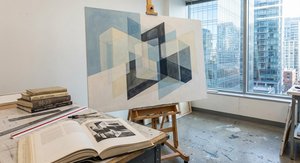
Dominating the canvas is an intricate composition featuring overlapping circles and squares—a bold declaration of geometric principles. The palette bursts with vibrant hues—primarily reds, yellows, and blues—that harmonize to create a dynamic visual experience. Calder meticulously crafted these shapes using a flat painting technique, prioritizing form over texture; there’s no visible brushwork, reflecting his unwavering commitment to precision and control despite the illusion of movement.
A Reflection of Constructivism's Legacy
“Nemo” firmly roots itself within the influential Constructivist movement of the early 20th century. Like its contemporaries—artists who sought to liberate art from traditional conventions—Calder aimed to convey emotion and ideas through simplified geometric forms, rejecting decorative embellishments in favor of intellectual rigor. This stylistic choice underscores Calder’s belief that art should communicate directly with the viewer's intellect as well as their senses.
Symbolism Embedded in Motionless Form
Despite its apparent stillness, “Nemo” pulsates with an underlying sense of dynamism—a subtle suggestion of movement achieved through the careful arrangement of shapes and colors. Calder’s genius lies in transforming static form into a conduit for conveying emotion; the overlapping circles and squares evoke feelings of balance, harmony, and perhaps even controlled chaos. The artist deliberately avoided explicit symbolism, allowing viewers to interpret the artwork's impact on their own emotional landscape.
A Monumental Contribution to Modern Art
Alexander Milne Calder’s “Nemo” represents more than just a beautiful painting—it embodies a pivotal moment in artistic history. His pioneering exploration of kinetic sculpture and his unwavering dedication to geometric abstraction paved the way for subsequent generations of artists, establishing him as one of the most influential sculptors of the 20th century. This artwork continues to inspire admiration for its elegance, innovation, and profound engagement with fundamental principles of visual art.
Вопросы и ответы
К какому направлению и к какой эпохе относится «Nemo», Александр Мине Кадер?
В работе «Nemo», Александр Мине Кадер направление Modernism встречается с эпохой — Модернизм.
Насколько выражен контраст в «Nemo», Александр Мине Кадер?
Уровень контрастности произведения «Nemo», Александр Мине Кадер составляет Statement.
В каком музее хранится оригинал «Nemo»?
Вы можете увидеть оригинал произведения «Nemo» в Biennale Internazionale dell'Antiquariato di Firenze, Флоренция, Италия.
Биография художника
Introduction to Alexander Milne Calder
Alexander Milne Calder (MILL-nee) was a Scottish-American sculptor born in Aberdeen, Scotland, on August 23, 1846. He is best known for his architectural sculpture of Philadelphia City Hall and both his son, Alexander Stirling Calder, and grandson, Alexander ‘sandy’ Calder, became significant sculptors in the 20th century. His artistic journey began with a formative influence from his father, John Rhind, a sculptor who instilled in him an early appreciation for stone carving during his childhood years. Calder attended the Royal Academy in Edinburgh where he honed his skills and studied alongside fellow artists, shaping his understanding of classical sculpture traditions. He subsequently moved to London and collaborated on monumental projects like the Albert Memorial, demonstrating his versatility and ambition as a craftsman.- Early Life and Education: Calder’s upbringing in Aberdeen instilled in him a passion for art from a young age, nurtured by his father's expertise in stone carving.
- Royal Academy Training: His studies at the Royal Academy provided him with foundational knowledge of sculpture techniques and artistic principles.
- London Collaborations: Calder’s involvement in projects like the Albert Memorial showcased his ability to execute large-scale architectural sculptures.
Notable Works
Calder's legacy rests upon a remarkable collection of sculptural achievements, most notably Philadelphia City Hall. This ambitious undertaking demanded meticulous planning and execution by over 250 artisans, spanning two decades—a testament to Calder’s dedication and vision. The centerpiece of the hall is William Penn, a colossal bronze statue that embodies grandeur and commemorates Pennsylvania's founding figure. Beyond monumental sculptures, Calder explored kinetic art with his mobiles – suspended sculptures propelled by air currents—introducing an element of chance and movement into artistic expression. His exploration of this medium was greatly influenced by Marcel Duchamp, who coined the term "mobile" to describe these captivating artworks.- Philadelphia City Hall: Calder’s monumental sculpture transformed Philadelphia's skyline, representing a pinnacle of architectural artistry.
- William Penn Statue: This imposing bronze statue honored Pennsylvania’s heritage and showcased Calder’s mastery of sculptural technique.
- Kinetic Art – Mobiles: Calder pioneered kinetic sculpture with his mobiles, incorporating movement and chance into artistic creation—a groundbreaking contribution to the art world.
Legacy and Influence
Alexander Stirling Calder and Alexander ‘sandy’ Calder followed in their father's footsteps as accomplished sculptors, perpetuating a family tradition of artistic innovation. Calder’s influence extended beyond his own creations, inspiring subsequent generations of artists and shaping the trajectory of modern sculpture. His works are displayed prominently in museums worldwide—including the Smithsonian American Art Museum and the Galleria Civica di Arte Moderna e Contemporanea Torino—celebrating his enduring contribution to art history. Calder's unwavering belief that “theories may be all very well for the artist himself, but they shouldn’t be broadcast to other people” underscores his commitment to artistic integrity and spontaneity.- Family Artistic Tradition: Calder’s son and grandson continued his father’s legacy as sculptors, ensuring the continuation of a distinguished artistic lineage.
- Museum Exhibitions: Calder's sculptures are showcased in renowned museums globally, commemorating his lasting impact on art history.
- Philosophical Approach to Art: Calder championed spontaneity and intuition in artistic creation, rejecting rigid theoretical frameworks.
- Father's Influence: Calder’s father imparted invaluable knowledge of stone carving, shaping his artistic sensibilities from a young age.
- Royal Academy Studies: His training at the Royal Academy provided him with foundational understanding of sculptural principles and techniques.
- International Exposure: Calder’s journeys to Paris and London broadened his artistic perspective and fostered engagement with diverse cultural traditions.
- Philadelphia City Hall: The project’s scale and complexity demanded exceptional skill and perseverance from Calder and his team, resulting in a masterpiece of architectural sculpture.
- William Penn Statue: This monumental bronze statue honored Pennsylvania’s heritage and showcased Calder's mastery of sculptural technique—a symbol of civic identity.
- Kinetic Art – Mobiles: Calder revolutionized sculpture with his mobiles, embracing movement and spontaneity as artistic principles—a transformative innovation that captivated audiences worldwide.
- Family Artistic Lineage: Calder’s son and grandson continued his father's legacy as sculptors, upholding a distinguished tradition of artistic excellence.
- Global Museum Exhibitions: Calder’s sculptures are showcased in internationally recognized museums—demonstrating their universal appeal and enduring significance within art history.
- Philosophical Commitment to Art: Calder championed spontaneity and intuition as guiding principles for artistic creation—rejecting rigid theoretical frameworks in favor of authentic expression.

Александр Мине Кадер
1898 - 1976 , Великобритания
Краткая справка
- Artistic Movement Or Style: Architectural sculpture
- Artists Who Influenced This Artist: ['John Rhind']
- Date Of Birth: August 23, 1846
- Date Of Death: June 14, 1923
- Full Name: Alexander Milne Calder
- Nationality: Scottish-American
- Notable Artworks:
- Philadelphia City Hall
- William Penn statue
- Place Of Birth: Aberdeen, Scotland
Похожие статьи

Beyond Form & Color: Geometric Abstraction's Evolution in 20th/21st Century Art
Explore the evolution of geometric abstraction from Cubism to contemporary art. Discover key artists like Malevich & Mondrian, investment insights, and expert collecting advice at OriginalUniqueArt.

Neo-Abstract Art: The High-Impact Evolution of Modern Visual Energy and Geometric Sophistication
Discover the power of Neo-Abstract art. Explore how bold geometric forms and high-impact visual energy are redefining modern design. Learn to curate sophisticated, high-energy spaces with the latest trends in contemporary abstraction and structural color.
Beyond Form & Color: Geometric Abstraction's Enduring Legacy in Art History
Explore the captivating world of geometric abstraction! Discover its origins, key artists like Malevich & Mondrian, and why this movement remains highly valued by art collectors today. Expert insights at OriginalUniqueArt.

Топ-25 шедевров Василия Кандинского: Абстрактное искусство для вашего интерьера
Погрузитесь в мир абстрактного искусства с Василием Кандинским! 25 шедевров экспрессионизма, баухауса и русского авангарда. Репродукции картин Кандинского для вдохновения и декора вашего интерьера. Откройте всю коллекцию на OriginalUniqueArt.com

Геометрическая абстракция: 10 шедевров, изменивших искусство | OriginalUniqueArt.com
Погрузитесь в мир геометрической абстракции! От Кандинского до Малевича – 10 шедевров, изменивших искусство. Узнайте историю создания и значение культовых картин. Репродукции музейного качества на OriginalUniqueArt.com. Вдохновение для вашего интерьера!
