Меню

() ·

A painting made for you, by hand

mein Agnes

Масляная репродукция ручной работы

Картина маслом на холсте в выбранном вами размере и раме, написанная на заказ нашими художниками. ( Переключиться на печать Перейти к цифровым изображениям)

Описание предмета

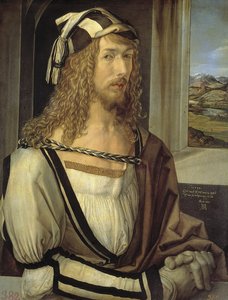
Explore Albrecht Dürer’s ‘mein Agnes,’ a stunning 1494 black & white sketch showcasing his masterful realism & emotional depth. A key Renaissance artwork.

Биография художника

Альбрехт Дюрер – гений Ренессанса! Его знаменитые гравюры, портреты и самопортреты – символ немецкого искусства. Откройте для себя мир мастерства и глубоких смыслов!

from ·

Chapter 1

How large should it be?

Slide to change the size; the picture on the left shows the frame at its real width. The proportions of the original are kept.

Стандартный размер
индивидуальный заказ
CM
INCH

Выберите один из наших стандартных размеров, соответствующих оригинальным пропорциям произведения искусства.

ширина
высота

Введите необходимую ширину и высоту, чтобы репродукция подошла к вашей раме или стене. Поскольку работа выполняется вручную, при изменении пропорций художник может немного увеличить область вокруг картины или, наоборот, обрезать края — выбор за вами. Перед началом работы мы пришлем вам цифровой макет на утверждение. Изображение на этой странице не является точным результатом — увидеть реальный вид можно только на макете.

Chapter 2

How should it arrive?

Choose the edges of the stretched canvas

Choose your frame

Corner sample of the WhiteWrap canvas edge finish, stretched on массив дерева bars
White $1
Corner sample of the BlurSideWrap canvas edge finish, stretched on массив дерева bars
Blurside $1
Corner sample of the ExtendedWrap canvas edge finish, stretched on массив дерева bars
Extended $1
Corner sample of the P118B picture frame: формованный полистирол, 5 cm wide and 3 cm thick
P118B $10
Corner sample of the P118H picture frame: формованный полистирол, 5 cm wide and 3 cm thick
P118H $10
Corner sample of the P118W picture frame: формованный полистирол, 5 cm wide and 3 cm thick
P118W $10
Corner sample of the P438Z picture frame: формованный полистирол, 5.5 cm wide and 3.5 cm thick
P438Z $10
Corner sample of the P508JH picture frame: формованный полистирол, 7 cm wide and 3.5 cm thick
P508JH $12
Corner sample of the P508YH picture frame: формованный полистирол, 7 cm wide and 3.5 cm thick
P508YH $12
Corner sample of the P805H picture frame: формованный полистирол, 5 cm wide and 3.5 cm thick
P805H $10
Corner sample of the P805Z picture frame: формованный полистирол, 5 cm wide and 3.5 cm thick
P805Z $10
Corner sample of the P919BZ picture frame: формованный полистирол, 7 cm wide and 3.5 cm thick
P919BZ $10
Corner sample of the P919G picture frame: формованный полистирол, 7 cm wide and 3.5 cm thick
P919G $10
Corner sample of the P919XJ picture frame: формованный полистирол, 7 cm wide and 3.5 cm thick
P919XJ $10
Corner sample of the P959ZH picture frame: формованный полистирол, 5 cm wide and 3 cm thick
P959ZH $10
Corner sample of the P968JZ picture frame: формованный полистирол, 6 cm wide and 4 cm thick
P968JZ $12
Corner sample of the W106C picture frame: массив дерева, 5 cm wide and 3 cm thick
W106C $8
Corner sample of the W218G picture frame: массив дерева, 5 cm wide and 3 cm thick
W218G $10
Corner sample of the W218JH picture frame: массив дерева, 5 cm wide and 3 cm thick
W218JH $8
Corner sample of the W218Y picture frame: массив дерева, 5 cm wide and 3 cm thick
W218Y $10
Corner sample of the W307PJ picture frame: массив дерева, 6 cm wide and 3 cm thick
W307PJ $10
Corner sample of the W316G picture frame: массив дерева, 6 cm wide and 3 cm thick
W316G $10
Corner sample of the W316PJ picture frame: массив дерева, 6 cm wide and 3 cm thick
W316PJ $8
Corner sample of the W316Y picture frame: массив дерева, 6 cm wide and 3 cm thick
W316Y $10
Corner sample of the W398PJ picture frame: массив дерева, 5 cm wide and 3 cm thick
W398PJ $8
Corner sample of the W4111J picture frame: массив дерева, 6.5 cm wide and 3.5 cm thick
W4111J $10
Corner sample of the W500HY picture frame: массив дерева, 7 cm wide and 5 cm thick
W500HY $15
Corner sample of the W500JH picture frame: массив дерева, 7 cm wide and 5 cm thick
W500JH $15
Corner sample of the W692G picture frame: массив дерева, 8 cm wide and 4 cm thick
W692G $12
Corner sample of the W849H picture frame: массив дерева, 5 cm wide and 3 cm thick
W849H $8
Corner sample of the W940BG picture frame: массив дерева, 7.5 cm wide and 4.5 cm thick
W940BG $15
Corner sample of the W953PJ picture frame: массив дерева, 6 cm wide and 3.5 cm thick
W953PJ $8
Corner sample of the H24-GOLD picture frame: резное дерево с левкасом, 10 cm wide and 6 cm thick
H24-GOLD $30
Corner sample of the H24-SILVER picture frame: резное дерево с левкасом, 10 cm wide and 6 cm thick
H24-SILVER $30
Corner sample of the H36-GOLD picture frame: резное дерево с левкасом, 15 cm wide and 6.5 cm thick
H36-GOLD $45
Corner sample of the H36-SILVER picture frame: резное дерево с левкасом, 15 cm wide and 6.5 cm thick
H36-SILVER $45
Предпросмотр в раме
В раме

Moulding: . Overall size with the frame: .

Chapter 3

Who paints it, and should anything change?

Examples of what can be changed: Replace face with customer photo; Add pet (e.g., replace cat with dog); Include hidden message in background; Change background landscape or elements.
After order, OriginalUniqueArt.com team will email client for instructions and provide a mockup preview

Доставка по всему миру () за 3–4 недели вместо стандартных 5 недель. (29 Октябрь). Без компромиссов в качестве.

Chapter 4

The finishing touches

A nameplate, as in a museum?

Детали гравировки на бронзовой плакетке

This elegant plaque features the artist's name and the title of the artwork, finely engraved for a timeless presentation.

It is made from bronze with a refined, elegant finish. The text is precisely laser-engraved for a sharp and permanent result. Measuring 9x2 cm, the plaque is compact yet easy to read. It's built to be durable and scratch-resistant, offering a professional, museum-quality look. Mounting is simple thanks to the included adhesive backing.

Информация об акриловой табличке

The plaque includes essential engraved details such as the artist's name, the title of the artwork, the date it was created, the type of media used-like oil on canvas or watercolor-a brief description of the piece, and a QR code that links to the complete artwork information.

It is crafted from clear acrylic, offering a sleek, modern appearance. The text is UV-engraved in black to ensure strong visual contrast. With a size of 10x15 cm, it ensures optimal readability. It comes equipped with two metal hooks for secure wall mounting. The plaque is designed to be weather-resistant, making it suitable for various environments, and it includes interactive features that work seamlessly with smartphone scanning.

Информация о чёрной акриловой табличке

This elegant plaque includes engraved information such as the artist's name, the title of the artwork, the date it was created, the type of media used (like oil on canvas or watercolor), a short description of the artwork, and a QR code for quick access to more information.

The plaque itself is made from refined black acrylic with a premium finish. The text is laser-engraved in white for high contrast and readability. Its size is 10x15 cm, designed to be easy to read. It comes with two metal hooks for professional mounting. The design is sleek and fits any interior style. It is also weather-resistant and durable, with built-in digital integration for mobile compatibility.

A protective varnish?

When do you need it?

Chapter 5

Your painting, as you ordered it

mein Agnes

Материал репродукции

Размер репродукции

-

Ведущий мастер элитного уровня

Более высокая детализация, изысканность и дополнительное время на создание работы

-

Рама для репродукции

-

-

Для произведений искусства или репродукций, размер которых превышает 105 см (приблизительно 41 дюйм) по любой из сторон, рама будет доставлена в разобранном виде (в виде комплекта). Этот метод обеспечивает безопасную доставку и предотвращает повреждения при транспортировке.

Требуется профессиональная сборка — это не продукт для самостоятельной сборки (DIY).
Комплект должен быть собран, а холст натянут опытным мастером по багетным рамам с использованием клеевого ПВА (не входит в комплект), струбцин для натяжки холста и зажимов, чтобы удерживать подрамник ровным до полного высыхания клея. Неправильная сборка или неравномерное натяжение холста могут привести к необратимому повреждению произведения искусства и не являются гарантийным случаем.

  • В комплект входят все бруски из массива дерева, точно вырезанные по размеру.

  • Собирается с помощью предоставляемых винтов, а также столярного клея для угловых соединений, который не входит в комплект и должен быть приобретен вашим мастером.

  • Требуются профессиональные инструменты, не входящие в комплект: щипцы для натяжки холста (натяжитель) и зажимы, чтобы удерживать рейки ровно во время высыхания клея.

Важно:
Для соединения углов требуется клей для дерева, перекладины необходимо зафиксировать струбцинами до полного высыхания клея, а для натяжки холста на собранную раму требуются щипцы для натяжки холста. Ни один из этих инструментов не входит в комплект. Пожалуйста, убедитесь в наличии опытного мастера по багетным работам перед заказом рамы такого размера.

Экспликация

-

-

Защитный лак

Глянцевый лак (насыщает цвета, защищает от воздействия света и влаги)

-

Настроить мою картину

Примеры возможных изменений: замена лица на фото клиента; добавление домашнего питомца (например, замена кошки на собаку); добавление скрытого сообщения на фоне; изменение пейзажа или элементов фона.

-

Срочно

Доставка по всему миру () за 3–4 недели вместо стандартных 5 недель. (29 Октябрь). Без компромиссов в качестве.

-

Экспресс-доставка

Доставка по всему миру () в течение 5 недель. (5 Ноябрь).

Включено

Итоговая стоимость

$ 300

Итоговая стоимость $ 300

Вариант со стеклом доступен только для размеров менее 110 см

Included with every order

  • Бесплатная экспресс-доставка по всему миру
  • Высококачественный льняной холст
  • Полное страхование при транспортировке
  • Гарантия возврата таможенных пошлин
  • Гарантия точного цветового соответствия
  • 100-дневный период возврата (только при обнаружении дефектов)
  • Гарантия возврата 100% средств
  • Скидка при заказе нескольких работ

Mein Agnes: A Portrait of Quiet Contemplation

Albrecht Dürer’s “Mein Agnes,” created in 1494, isn't merely a portrait; it’s a profound distillation of human emotion captured with an astonishingly delicate hand. This black and white sketch, now residing within the Albertina Museum in Vienna, offers a rare glimpse into the life of Agnes Dürer, the wife of one of the Renaissance’s most celebrated artists. More than just a depiction of a woman, it's a study in introspection, a moment frozen in time that speaks volumes about the complexities of marriage and the quiet beauty of everyday existence.

The drawing itself is remarkably intimate – a young Agnes, likely around eighteen years old, sits at a table, her head resting pensively on her right hand. Her gaze is averted, suggesting a private thought or perhaps a moment of melancholy. Dürer’s masterful use of hatching and cross-hatching creates an incredible sense of texture, mimicking the drape of her clothing and the softness of her hair. The lines aren't bold declarations; instead, they are subtle whispers that build volume and depth, drawing the viewer into the scene with a gentle invitation.

The Renaissance Context: Marriage and Artistic Patronage

To fully appreciate “Mein Agnes,” it’s crucial to understand the context of its creation. Dürer returned to Nuremberg in 1494 after an extended journey through Italy, a period that profoundly shaped his artistic vision. He had married Agnes Frey just weeks before, a union arranged by their families and reflecting the prevailing social norms of the time. Marriage was often viewed as a strategic alliance, but for Dürer, it also provided him with a model – a muse, in essence – to capture on paper. The arrangement highlights the role of women within Renaissance society, not just as wives and mothers, but as subjects worthy of artistic representation.

Furthermore, Dürer’s return coincided with the rise of wealthy patrons like Emperor Maximilian I, who commissioned elaborate artworks for his court. This patronage fueled a flourishing art market and encouraged artists to experiment with new techniques and styles. Dürer's ability to blend traditional Northern European realism with Italian Renaissance influences – evident in his meticulous observation of anatomy and perspective – made him one of the most sought-after artists of his era.

Technique and Symbolism: A Masterclass in Line

The technical brilliance of “Mein Agnes” lies primarily in Dürer’s command of line. He employs a technique known as *hatching*, layering parallel lines to create tonal variations, and *cross-hatching*, intersecting lines to build darker areas. This method allows him to render the subtle nuances of light and shadow with remarkable precision, giving the figure a tangible presence. The simplicity of the materials – paper and ink – belies the complexity of his execution; it’s a testament to Dürer's extraordinary skill.

Beyond its technical merits, “Mein Agnes” is rich in symbolism. The posture itself—head resting on hand—suggests contemplation, perhaps even sadness or vulnerability. It’s a quiet moment of introspection, offering a poignant contrast to the grand narratives often depicted in Renaissance art. The sketch's intimacy and directness are particularly striking, representing a departure from the more formal portraiture conventions of the period.

Emotional Resonance: A Window into the Human Heart

“Mein Agnes” is not simply a beautiful drawing; it’s an emotionally resonant work that invites viewers to connect with the subject on a deeply personal level. Dürer's ability to capture a fleeting moment of human emotion—a hint of melancholy, a suggestion of inner thought—is truly remarkable. The sketch possesses a timeless quality, reminding us of the universal experiences of love, loss, and introspection.

Reproductions of “Mein Agnes” offer an accessible way to experience this masterpiece firsthand. Whether displayed in a private residence or a public gallery, this intimate portrait continues to captivate audiences with its quiet beauty and profound emotional depth—a testament to the enduring legacy of Albrecht Dürer’s artistic genius.

Вопросы и ответы

Где лучше всего повесить репродукцию «mein Agnes», Альбрехт Дюрер?

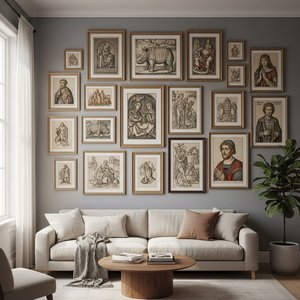
Формат Tall для работы «mein Agnes», Альбрехт Дюрер рекомендуется размещать в Living Room. Формат и пространство вместе помогают определить идеальное место для репродукции.

Как стиль произведения «mein Agnes» соотносится с эпохой его создателя?

В работе «mein Agnes», Альбрехт Дюрер направление Renaissance встречается с эпохой — Эпоха Возрождения.

Каковы размеры оригинала «mein Agnes», Альбрехт Дюрер?

Размер оригинала произведения «mein Agnes» составляет 156 x 98 cm. Оригинальные размеры могут служить полезным ориентиром при выборе размера репродукции.

More about this painting

Примерить в интерьере Примерить в AR Переключиться на печать Перейти к цифровым изображениям Отправить
Подробнее Руководство Добавить в избранное Скачать Похожие объекты Рентгенография Слайд-шоу Q&A Статистика

In numbers

  • 1494the year it was painted
  • 29frames to choose from
  • standard sizes, in its own proportions
  • 5weeks to paint and deliver it
Альбрехт Дюрер

Альбрехт Дюрер

1471 - 1528, Германия

Quick facts about Альбрехт Дюрер

  • Artistic Movement Or Style: Немецкий Ренессанс
  • Artists Or Movements Influenced By This Artist:
    • Северный Ренессанс
    • Венская школа
  • Artists Who Influenced This Artist:
    • Леонардо да Винчи
    • Рафаэль
    • Джотто
  • Date Of Birth: 21 мая 1471 г.
  • Date Of Death: 6 апреля 1528 г.
  • Full Name: Альбрехт Дюрер
  • Nationality: Немецкий
  • Notable Artworks:
    • Апокалипсис
    • Меланхолия I
    • Святой Иосиф в его кабинете
  • Place Of Birth: Нюрнберг, Германия

Биография художника

A Life Forged in Nuremberg: The Early Years and Apprenticeship

Albrecht Dürer, a name synonymous with the German Renaissance, emerged from the bustling artisan city of Nuremberg in 1471. His father, Albrecht Dürer the Elder, was a successful goldsmith who had immigrated from Hungary, bringing with him a lineage steeped in craftsmanship. It was within this environment—the scent of metal and the meticulous precision of handiwork—that young Albrecht’s artistic inclinations first took root. Though his father envisioned a similar path for him, apprenticing him initially in the family trade, it soon became undeniable that Albrecht possessed an exceptional gift for drawing. At thirteen, he transitioned to the workshop of Michael Wolgemut, Nuremberg's leading artist at the time. This was no mere technical training; it was immersion into a world of illuminated manuscripts, painted panels, and—crucially—the burgeoning art of woodcut illustration. The sheer volume of work produced by Wolgemut’s workshop, including the extensive illustrations for the *Nuremberg Chronicle*, provided Dürer with an unparalleled foundation in design, composition, and the mechanics of image-making. A remarkable silverpoint self-portrait from 1484, created when he was barely a teenager, stands as astonishing evidence of his precocious talent—a testament to a burgeoning artistic identity already taking shape. This early work demonstrated not only technical skill but also a nascent desire to capture the essence of human form and emotion, foreshadowing the profound impact he would later have on European art.

The Italian Influence and Artistic Maturation

Dürer’s ambition extended far beyond the confines of Nuremberg. Driven by an insatiable curiosity and a desire to master the art of painting, he embarked on his first journey to Italy in 1494. This was not simply a sightseeing trip; it was a pilgrimage to the heart of the Renaissance. He encountered the works of masters like Raphael, Giovanni Bellini, and Leonardo da Vinci—artists who were redefining the possibilities of form, perspective, and human expression. The impact of this exposure was profound. Dürer absorbed the classical motifs, harmonious compositions, and subtle sfumato techniques that characterized Italian art, yet he never abandoned his Northern European sensibility for meticulous detail and symbolic depth. He studied the grandeur of Rome’s ancient ruins, marveling at the remnants of a civilization that had mastered proportion and harmony. This journey ignited within him a desire to synthesize the best elements of both Northern and Southern artistic traditions, creating a style uniquely his own. A second sojourn to Italy between 1505 and 1507 further solidified these influences, allowing him to refine his understanding of anatomy and proportion through direct observation and study. This synthesis of Northern precision and Italian grace became the hallmark of Dürer’s unique artistic style—a testament to his intellectual curiosity and artistic ambition.

Mastering the Mediums: Painting, Engraving, and Woodcut

Dürer was a master of multiple mediums, each offering him distinct avenues for creative expression. His paintings, though fewer in number than his prints, demonstrate a remarkable command of oil paint and an ability to capture both physical likeness and psychological depth. Works like the *Feast of the Rose Garlands* (1507) reveal a vibrant palette influenced by Venetian colorism—bold hues and shimmering effects that evoke a sense of festive celebration. However, it was in the realm of printmaking—particularly engraving and woodcut—that Dürer truly revolutionized artistic practice. He elevated these techniques from mere reproductive methods to independent art forms, capable of conveying complex narratives and profound emotions. The *Apocalypse* series (1498), a collection of fourteen woodcuts illustrating the Book of Revelation, showcased his mastery of this medium despite its inherent limitations—the intricate detail and dramatic compositions demanded extraordinary skill and patience. Later engravings like *Melencolia I* (1514) and *Saint Jerome in His Study* (1514) are testaments to his unparalleled skill—intricate compositions filled with symbolic meaning and executed with breathtaking precision. He didn’t just depict reality; he imbued it with layers of intellectual and spiritual significance, transforming the printed image into a powerful vehicle for communication and contemplation.

A Theorist and Innovator: The Legacy of Albrecht Dürer

Dürer was not merely an artist; he was a scholar, a theorist, and an innovator who sought to understand the underlying principles governing artistic creation. He believed in the mathematical foundations of art and dedicated himself to establishing a scientific approach to representation. His treatises on geometry, proportion, and human anatomy—most notably *Four Books of Human Proportion* (1528)—were groundbreaking for their time, demonstrating his commitment to rigorous observation and rational analysis. These writings were not simply academic exercises; they were intended to elevate the status of artists from mere craftsmen to intellectual practitioners. Dürer’s meticulous studies of human anatomy, combined with his understanding of perspective and proportion, allowed him to create images that were both visually stunning and intellectually stimulating. His work influenced generations of artists, shaping the course of European art for centuries to come. He demonstrated that art could be both technically masterful and intellectually rigorous—a legacy that continues to inspire artists and scholars alike. He remains, to this day, one of the most important figures in the history of Western art.

Influences and Enduring Impact

  • Michael Wolgemut: Dürer’s initial mentor, providing foundational skills in drawing, painting, and woodcut techniques.
  • Leonardo da Vinci: Inspired Dürer’s exploration of anatomy, perspective, and sfumato—the subtle blending of tones.
  • Raphael: Influenced Dürer’s compositional harmony and idealized forms.
  • Giovanni Bellini: Contributed to Dürer's understanding of color and Venetian painting traditions.
Dürer’s influence reverberates through centuries of art history. His meticulous realism, his innovative use of printmaking, and his theoretical writings continue to inspire artists and scholars alike. He bridged the gap between Northern European traditions and Italian Renaissance ideals, introducing classical motifs into Northern art while maintaining its distinctive character. His theoretical contributions helped establish a new framework for artistic practice, inspiring generations of artists with his technical skill, innovative spirit, and profound vision. His work stands as a testament to the power of observation, the pursuit of knowledge, and the enduring human desire to create beauty and meaning.

Краткая справка

  • Medium: Pen & ink on paper
  • Influences: Renaissance
  • Artistic style: Realism, expressive
  • Notable elements: Detailed hatching
  • Title: mein Agnes
  • Movement: Northern Renaissance

Викторина по искусству

В каждом вопросе только один правильный ответ.

Вопрос 1:
What is the primary subject depicted in Albrecht Dürer’s ‘Mein Agnes’?
Вопрос 2:
The drawing 'Mein Agnes' is primarily executed using which technique?
Вопрос 3:
In what year was ‘Mein Agnes’ created?
Вопрос 4:
According to the description, what is suggested by the young girl’s posture and expression?
Вопрос 5:
What is a key characteristic of Albrecht Dürer’s artistic style as evidenced in ‘Mein Agnes’?
Откройте для себя произведения искусства, распределенные по темам, стилям и характеристикам.