

 Примерить в интерьере
 Отправить
 Поделиться
 Подробнее
 Руководство

 Скачать
 Похожие объекты
 Рентгенография
 Слайд-шоу
 Статистика
Louis Pasteur
 Acrylic On Canvas
- WallArt
- Realist Painting
 1885
1885- 19th Century
 154.0 x 126.0 cm
 Музей Орсе
 Развернуть текст
Жикле / Арт-принты
Печать (жикле) или холст музейного качества с быстрыми сроками изготовления и широким выбором вариантов отделки. ( Заказать репродукцию ручной работы Перейти к цифровым изображениям)




P118B $10

P118H $10

P118W $10

P438Z $10

P508JH $12

P508YH $12

P805H $10

P805Z $10

P919BZ $10

P919G $10

P919XJ $10

P959ZH $10

P968JZ $12

W106C $8

W218G $10

W218JH $8

W218Y $10

W307PJ $10

W316G $10

W316PJ $8

W316Y $10

W398PJ $8

W4111J $10

W500HY $15

W500JH $15

W692G $12

W849H $8

W940BG $15

W953PJ $8




Выберите один из наших стандартных размеров, соответствующих оригинальным пропорциям произведения искусства.

Введите необходимую ширину и высоту, чтобы репродукция подошла к вашей раме или стене. При печати изображение можно только уменьшить, но нельзя увеличить больше оригинала, поэтому при выборе другого формата часть изображения может быть обрезана. Перед печатью мы отправим вам цифровой макет на утверждение. Изображение на этой странице не отображает реальную обрезку — ее можно увидеть только на макете.
Доставка по всему миру () за 2 недели вместо стандартных 4–5 недель. (21 Октябрь)

Бесплатная экспресс-доставка по всему миру

Высококачественный льняной холст

Полное страхование при транспортировке

Гарантия возврата таможенных пошлин

Гарантия точного цветового соответствия

100-дневный период возврата (только при обнаружении дефектов)

Гарантия возврата 100% средств

Скидка при заказе нескольких работ
 Вариант со стеклом доступен только для размеров менее 110 см

Louis Pasteur
Жикле / Арт-принты
Размер репродукции
-


Итоговая стоимость
$ 80
The Genesis of a Masterpiece
Albert Edelfelt’s “Louis Pasteur,” painted in 1885, isn't merely a portrait; it’s a meticulously crafted distillation of an era – the burgeoning age of scientific discovery and the quiet revolution taking place within the laboratories of France. Commissioned during a period of intense intellectual ferment, this oil-on-canvas work transcends simple representation to embody Pasteur’s unwavering commitment to unraveling the mysteries of life and disease. Edelfelt, a Finnish artist deeply influenced by Northern European realism, chose to capture Pasteur not as a celebrated figure in public acclaim, but as a man profoundly engaged in his craft – a scientist immersed in the focused intensity of his laboratory.
The painting’s genesis lies within the context of Pasteur's groundbreaking work. His pioneering research into germ theory, vaccination against rabies and anthrax, and pasteurization were fundamentally reshaping medicine and public health. Edelfelt, keenly aware of this transformative impact, sought to immortalize not just Pasteur’s physical presence but also the spirit of relentless inquiry that defined his legacy. The choice of setting – a meticulously rendered laboratory filled with scientific instruments – immediately establishes this intellectual atmosphere, suggesting a space dedicated to observation, experimentation, and the pursuit of knowledge.
A Symphony of Detail: Technique and Style
Edelfelt’s masterful technique is evident in every brushstroke. He employs a rich, layered impasto—a thick application of paint—that lends texture and depth to the scene. The careful rendering of light and shadow creates a palpable sense of realism, drawing the viewer into Pasteur's world. Notice particularly the subtle gradations of color applied to the various glass bottles and scientific equipment; each element is rendered with painstaking detail, reflecting Edelfelt’s dedication to accuracy. The composition itself is carefully balanced, guiding the eye through the scene – from Pasteur himself, deeply absorbed in his work, to the surrounding apparatus that speaks volumes about his research.
- Color Palette: A muted palette of browns, greens, and blues dominates, reflecting the laboratory’s atmosphere.
- Brushwork: Edelfelt's brushstrokes are visible and deliberate, contributing to the painting's textured surface.
- Lighting: The use of chiaroscuro (strong contrasts between light and dark) emphasizes Pasteur’s figure and highlights the details of his workspace.
Symbolism and the Portrait of a Mind
Beyond its technical brilliance, “Louis Pasteur” is laden with symbolic meaning. The bottles scattered around the laboratory represent the countless experiments and observations that constitute Pasteur's scientific journey. The focused gaze of Pasteur himself embodies his intellectual rigor and unwavering dedication to his work. He’s not a triumphant hero; he’s a man consumed by curiosity, driven by an insatiable desire to understand the natural world. The inclusion of specific instruments—beakers, flasks, and retorts—are not merely decorative elements but rather visual cues that underscore Pasteur's scientific pursuits.
The painting subtly suggests the transformative power of science – a quiet revolution unfolding within the confines of the laboratory, with profound implications for humanity’s future.A Legacy Preserved: Emotional Resonance and Artistic Significance
“Louis Pasteur” is more than just a portrait; it's a testament to the enduring legacy of scientific innovation. It captures not only the likeness of a brilliant mind but also the spirit of inquiry that defines the modern era. The painting’s emotional resonance lies in its portrayal of focused concentration and unwavering dedication—qualities that continue to inspire scientists, artists, and thinkers today. It serves as a poignant reminder of the transformative power of knowledge and the profound impact one individual can have on the world. Reproductions of this iconic work offer a beautiful way to bring this powerful image into your home or office, celebrating both artistic mastery and scientific achievement.
Вопросы и ответы
Какой размер печати Louis Pasteur лучше всего подойдет для моей комнаты?
Для комнаты типа Living Room рекомендуемый размер печати работы «Louis Pasteur», Альберт ЭдELFель составляет Medium.
Когда было создано произведение «Louis Pasteur» и к какому направлению оно относится?
Работа «Louis Pasteur», Альберт ЭдELFель датирована 1885 годом и относится к направлению Realist Painting.
Где я могу найти статистику по поводу «Louis Pasteur», Альберт ЭдELFель?
Для произведения «Louis Pasteur» доступна страница Статистика. На ней представлен график ежемесячных просмотров данного произведения и других работ автора с разбивкой по странам и языкам.
Биография художника
Early Life and Education
Albert Gustaf Aristides Edelfelt, a luminary of Finnish art history, was born on July 21, 1854, in Porvoo, Finland—a city steeped in Swedish heritage. His parents, Carl Albert Edelfelt, a respected civil servant, and Alexandra Edelfelt (née Brandt), were prominent figures within their community, fostering an environment that nurtured his artistic inclinations from a young age. From the outset, Edelfelt possessed an innate fascination for visual arts, propelling him to pursue formal studies at the Drawing School of the Finnish Art Society in Helsinki as early as 1869. This formative experience laid the groundwork for his future endeavors and cemented his dedication to mastering the craft of painting.Artistic Journey
Edelfelt’s artistic trajectory unfolded across several distinguished institutions, each contributing significantly to his evolving skillset and broadening his artistic horizons. He commenced his studies at Antwerp Academy of Art in Belgium during 1873-74, immersing himself in the traditions of history painting—a genre favored by luminaries like Jean-Léon Gérôme—and honing his technique under masterful guidance. Subsequently, he embarked on a transformative period at École nationale des beaux-arts in Paris (1874-78), where he continued to refine his artistic vision and absorb the influences of Impressionism. Notably, he benefited from the mentorship of Gérôme once more, solidifying his position within the Parisian art scene. A brief excursion to Saint Petersburg in 1881-82 exposed him to the vibrant cultural landscape of Russia, enriching his understanding of diverse artistic styles and perspectives.Rise to Prominence and Notable Works
Edelfelt’s ascent to artistic acclaim arrived with a resounding success at the Paris Universal Exposition of 1889—a pivotal moment that catapulted him into international recognition. His captivating portrait of Louis Pasteur, executed in 1886, garnered considerable praise and secured him the prestigious Legion of Honor—a testament to his exceptional talent and unwavering dedication. Furthermore, Edelfelt’s evocative depiction of “Young Woman in Her Boudoir” captured the delicate beauty and intimacy of feminine life with remarkable precision. Perhaps his most enduring masterpiece is “Under the Birches,” a poignant landscape painting that embodies the spirit of Finnish wilderness—a scene imbued with symbolic resonance and executed with masterful brushstrokes.Legacy and Impact
As one of Finland’s foremost artists of the era, Albert Edelfelt indelibly shaped the course of realist art in his homeland. His influence extended far beyond his own lifetime, inspiring younger generations of Finnish painters—including Akseli Gallen-Kallela and Gunnar Berndtson—who achieved considerable success in Paris under his guidance. Edelfelt’s unwavering commitment to portraying life with honesty and sensitivity established him as a cornerstone of Finnish artistic identity.Museum Collections and Commemoration
Edelfelt's artworks are proudly displayed in esteemed museums across Finland, most notably the Ateneum Museum in Helsinki—where visitors can immerse themselves in the splendor of his oeuvre. To honor his enduring legacy, a commemorative €100 Albert Edelfelt coin was minted in 2004—celebrating the centenary of his birth and reaffirming his place within Finnish cultural heritage.
Альберт ЭдELFель
1854 - 1905 , Финляндия
Краткая справка
- Artistic Movement Or Style: Реализм
- Artists Or Movements Influenced By This Artist: ['Аксели Галлен-Каллела']
- Artists Who Influenced This Artist:
- Жан-Леон Жерьом
- Эрик Эдельфельт сын
- Date Of Birth: Июль 21, 1854
- Date Of Death: 1905
- Full Name: Albert Gustaf Aristides Edelfelt
- Nationality: Финский
- Notable Artworks:
- Портрет Луи Пастера
- Молодая женщина в будоире
- Под березами
- Place Of Birth: Порвоо, Финляндия
Похожие статьи

Anne-Louis Girodet: Bridging Neoclassicism & Romanticism with Emotional Truth
Explore the captivating world of Anne-Louis Girodet, a pivotal figure bridging Neoclassicism & Romanticism. Discover his masterpieces and unique artistic vision with OriginalUniqueArt.

Morris Louis: Pioneering Color Field Painting & Abstract Expressionism's Legacy
Explore the groundbreaking abstract expressionism of Morris Louis, a pioneer of Color Field painting. Discover his innovative techniques, influential series & lasting legacy in post-war American art. Learn more at OriginalUniqueArt.

Albert Charles Lebourg: A Study in Atmospheric Impressionism & Rural France
Explore the serene landscapes of Albert Charles Lebourg, a master of the Rouen School Impressionists. Discover his atmospheric paintings of the Seine and enduring legacy in 19th-century French art.
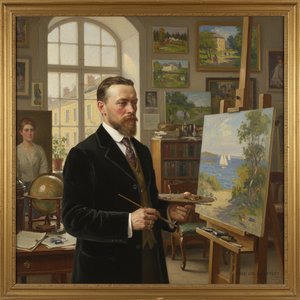
Albert Edelfelt: A Pioneer of Finnish Realism & International Impressionist Circles
Explore the life & work of Albert Edelfelt, a pioneering Finnish Realist painter who bridged Impressionism & national identity. Discover his masterpieces and lasting influence on art history.
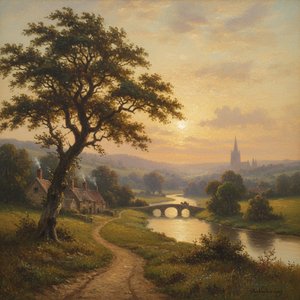
Albert Goodwin: Capturing Victorian Light & Atmosphere – A Study in Landscape Painting
Explore the captivating landscapes of Albert Goodwin (1845-1932), a celebrated Victorian watercolourist influenced by Turner & Ruskin. Discover his techniques, prolific collection, and lasting legacy in British art history.
