O tapiserie venețiană de putere și artă
Înălțându-se cu măreție de pe marginea Pieței San Marco, Palazzo Ducale , sau Palatul Dogilor, este mult mai mult decât un simplu monument din piatră și marmură istriana; este o cronică imersivă a unui imperiu dispărut. A păși prin porțile sale înseamnă a intra într-o mărturie vie a moștenirii durabile a republicanismului venețian, unde fiecare arc înalt și fiecare sculptură intricate șoptesc povești despre intrigă politică, dominație maritimă și un geniu artistic fără egal. Palatul servește ca o ecou tangibil al trecutului extraordinar al Veneției, un loc în care umbrele justiției se împletesc cu nuanțele vibrante și însorite ale capoperelor de la Renaștere. Însăși fundațiile sale spun o poveste a transformării, evoluând dintr-o fortăreață fortificată din secolul al IX-lea — construită pentru a respinge raidurile slave — într-a sediul opulent și întins al Dogilor, reflectând călătoria orașului de la un avanpost vulnerabil la o superputere maritimă globală.
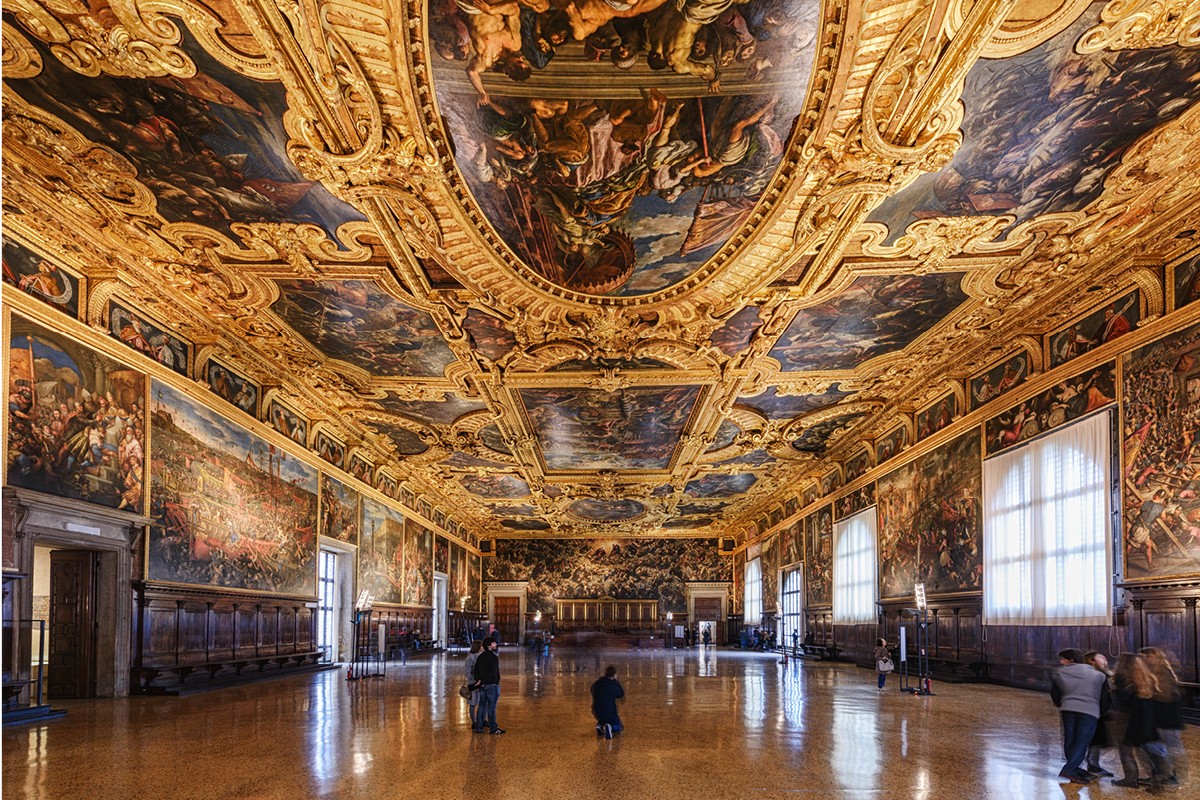
Arhitectura palatului este un dialog uluitor între stiluri, întruchipând o fuziune unică ce oglindește poziția Veneției la răscrucea dintre Est și Vest. Fațada exterioară, cu interacțiunea sa ritmică de trăsură gotică delicată și zidărie masivă și solidă, își trage o inspirație profundă din precedentele bizantine, cel mai notabil fiind Basilica di San Marco din apropiere. Această inovație arhitecturală reprezintă o îndepărtare conștientă de structurile tradiționale de tip fortăreață, optând în schimb pentru o estetică a ușurinței și dinamismului. În interior, măreția se intensifică în spații precum Sala del Maggior Consiglio . Aici, dimensiunea pură a Sălii Marelui Consiliu copleșește simțurile, fiind dominată de monumentalul Paradise (Paradisul) al lui Tintoretto. Această pânză uluitoare, care se întinde pe o lungime de peste 36 de metri, servește ca un manifest vizual puternic al angajamentului Veneției față de virtuțile civice și favorele divine, aruncând o strălucire cerească asupra inimii însăși guvernării venețiene.
O comoară a splendoarei decorative
Pentru colecționarul exigent și iubitorul detaliilor fine, palatul oferă o truly de bijuterii a splendoarei decorative care transcende simpla ornamentare. Sălile sunt împodobite cu Triumful Veneției de Veronese, o sărbătoare a culorii și a detaliilor opulente care celebrează măiestria maritimă a Republicii. Dincolo de aceste pânze la scară largă, se poate regăsi sufletul delicat al meșteșugului venețian în tapiserii intricate ce reprezintă narațiuni biblice și în lucrări de sticlă exquisite care odinioară au definit pulsul economic al orașului. Palatul invită, de asemenea, la explorarea celor mai enigmatice colțuri prin tururi specializate, precum Itinerariul Secret , care dezvăluie camere și pasaje ascunse ce găzduiau odinioară cele mai păzite secrete ale statului.
Fie că admirați lumina magistrală a unei opere de Titian sau urmăriți precizia cartografică a Școlii Lafreri, vizitatorii se vor trezi înveliți într-o atmosferă în care arta și autoritatea sunt indisolubil împletite. Astăzi, Palazzo Ducale rămâne un epicentru cultural vibrant, evoluând continuu prin expoziții care reduc distanța dintre tradiția străveche și perspectiva modernă. Prezentările recente au explorat măiestria delicată a creației de sticlă venețiană și influența profundă a mozaicurilor bizantine, asigurându-se că narațiunea palatului rămâne la fel de dinamică precum marea care odinioară îl proteja. Pentru designerii de interior și entuziaștii artei care caută inspirație, palatul se impune ca referința supremă pentru lux, scară și integrarea armonioasă a arhitecturii cu artele frumoase.