Portretul lui William Holman Hunt

Cele 100 cele mai faimoase picturi ale lui William Holman Hunt, o selecție de galerie

Actualizat Noiembrie 2026 · clasat în funcție de scorul nostru de popularitate (căutări, vizite și comenzi pentru fiecare operă) · 126 lucrări ale lui William Holman Hunt în catalogul nostru

Pe scurt

Dintre toate originalele lăsate de William Holman Hunt, cea mai faimoasă este W H Lumina Lumii. Imediat după acestea urmează Înălțarea Conștiinței și Capra de ispășire (1854). Catalogul nostru cuprinde 126 lucrări ale lui William Holman Hunt; galeria a păstrat cele 100 pe care lumea le admiră cel mai mult, fiecare fiind prezentată împreună cu data, muzeul și povestea sa.

1827 – 1910, Londra Pre-rafaeliți Cele mai multe lucrări: Birmingham Museum and Art Gallery

Cele mai importante 10 picturi ale lui William Holman Hunt: selecția galeriei

1
W H Lumina Lumii de William Holman Hunt

W H Lumina Lumii

Ulei pe pânză

W H Lumina Lumii este o capodoperă a lui William Holman Hunt, finalizată în anul 1851. Compoziția se concentrează pe figura lui Isus, care ține în mână o lanternă aprinsă pentru a lumina întunericul ce îl înconjoară. Această scenă religioasă își trage fundamentul tematic din pasajele biblice din Evanghelia după Ioan 8:12 și Apocalipsa 3:20.

2
Înălțarea Conștiinței de William Holman Hunt

Înălțarea Conștiinței

Ulei pe pânză

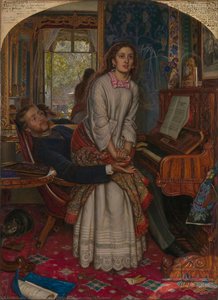
Tabloul The Awakening Conscience (Înălțarea Conștiinței) din 1853, realizat de William Holman Hunt, este mult mai mult decât o simplă reprezentare a vieții domestice; este o narațiune puternic evocativă, înghețată în timp. Pictura dezvăluie un moment crucial – începutul conștientizării unei femei prinse între așteptările societății și transgresiunea personală, pe măsură ce experimentează o trezire morală.

3
Capra de ispășire (1854) de William Holman Hunt

Capra de ispășire

1854 · Ulei pe pânză · Lady Lever Art Gallery, Liverpool

În această lucrare, intitulată Capra de ispășire, artistul William Holman Hunt își îndreaptă atenția către o profundă naratiune biblică. Creată între anii 1854 și 1856, pictura își extrage subiectul din Cartea Leviticului. Aceasta prezintă un moment singular și greu de izolare, concentrându-se pe animalul care poartă povara păcatelor comunității în pustiu.

4
Umbra Morții de William Holman Hunt

Umbra Morții

Pictură în ulei · Muzeul de Artă Manchester, Manchester

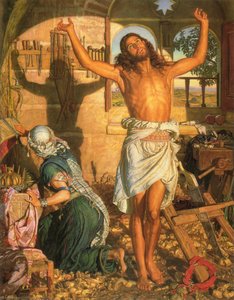
În pictura Umbra Morții, William Holman Hunt prezintă o reprezentare profundă a sacrificiului lui Hristos. Pânza surprinde pe Isus pe cruce, cu brațele întinse într-un gest de suferință extremă. El atârnă de lemn, corpul său transmițând realitatea fizică a unei dureri imense. Acest moment este redat cu o directitate care subliniază greutatea evenimentului.

5
Pastorul Angajat (1851) de William Holman Hunt

Pastorul Angajat

1851 · Ulei pe pânză · Muzeul de Artă Manchester, Manchester

Lăsați-vă purtați de magia lumii fascinante din „Pastorul Angajat” de William Holman Hunt, o operă captivantă ce întruchipează devotamentul Frăției Prerafaelite față de naturalism și profunzimea simbolică. Această capodoperă din 1851 îi invită pe spectatori într-o scenă pastorală plină de detalii intricate, culori vibrante și straturi narative profunde.

6
Lumina Lumii (1851) de William Holman Hunt

Lumina Lumii

1851 · Ulei pe pânză · Keble College, Oxford

Piesa „Lumina Lumii” a lui William Holman Hunt, finalizată în 1851, este mai mult decât o simplă pictură; este o meditație imersivă asupra credinței și a redemțiunii. Cu dimensiunile de 59 x 125 cm, această capodoperă realizată în tecnică ulei pe pânză, care se află în prezent la Keble College din Oxford, atrage imediat privitorul într-o scenă de o liniște profundă și de o semnificație spirituală remarcabilă. Hunt, un artist…

7
Fanny Waugh Hunt (1868) de William Holman Hunt

Fanny Waugh Hunt

1868 · Acrylic On Canvas · Toledo Museum of Art, Toledo

The Lady of Shalott: A Vision of Faith and Fate William Holman Hunt’s “The Lady of Shalott,” completed in 1905, stands as arguably the Pre-Raphaelite Brotherhood's most ambitious undertaking—a monumental canvas that transcends mere depiction to embody a profound meditation on faith, duty, and the inescapable pull of time. More than just a visual representation of Tennyson’s iconic poem, it is an immersive experience designed to transport the viewer into…

8
The Shadow of Death de William Holman Hunt

The Shadow of Death

Oil On Canvas · Muzeul de Artă Manchester, Manchester

William Holman Hunt’s “The Shadow of Death,” completed in 1873 during his second pilgrimage to the Holy Land, is not merely a depiction of Christ's crucifixion; it’s a profound meditation on mortality, faith, and the human condition. This monumental oil painting, measuring an impressive 214.2 cm x 168.2 cm, resides within the hallowed halls of the Manchester Art Gallery, inviting viewers into a scene brimming with symbolic weight and emotional…

9
The Lady of Shalott (1889) de William Holman Hunt

The Lady of Shalott

1889 · Oil On Canvas · Muzeul de Artă Manchester, Manchester

To gaze upon William Holman Hunt’s “The Lady of Shalott” is to step across the threshold into a realm suspended between myth and melancholy. This evocative oil on canvas, a cornerstone of the Pre-Raphaelite movement, transcends mere visual representation to become an embodiment of artistic fate. The painting captures the profound tension between a sheltered, solitary existence and the inevitable, often tragic, confrontation with the outside world. Through his meticulous…

10
The Risen Christ with the Two Marys in the Garden of Joseph of Arimathea (1897) de William Holman Hunt

The Risen Christ with the Two Marys in the Garden of Joseph of Arimathea

1897 · Oil On Canvas · Art Gallery of South Australia, Adelaide

William Holman Hunt’s “The Risen Christ with the Two Marys in the Garden of Joseph of Arimathea,” completed in 1897, is more than a painting; it's a meticulously crafted meditation on faith, grief, and the profound mystery of resurrection. This monumental oil-on-canvas work, currently residing at the Art Gallery of South Australia in Adelaide, stands as a cornerstone of the Pre-Raphaelite Brotherhood’s artistic vision – a movement dedicated to rejecting…

Selecția pentru William Holman Hunt continuă, de la 11 la 100

11The Awakening Conscience (1853) de William Holman HuntThe Awakening Conscience1853 · Tate Britain 12The Light of the World (1853) de William Holman HuntThe Light of the World1853 · Keble College 13Design for a Monk Succoured by a Christian (2000) de William Holman HuntDesign for a Monk Succoured by a Christian2000 14The flight of Madeline and Porphyro during the drunkenness attending the revelry (The Eve of St. Agnes) (1857) de William Holman HuntThe flight of Madeline and Porphyro during the drunkenness attending the revelry (The Eve of St. Agnes)1857 · Walker Art Gallery 15The Scapegoat (1854) de William Holman HuntThe Scapegoat1854 · Lady Lever Art Gallery 16Isabella and the Pot of Basil (1868) de William Holman HuntIsabella and the Pot of Basil1868 · Laing Art Gallery 17Mary Walker Waugh (1868) de William Holman HuntMary Walker Waugh1868 · Cleveland Museum of Art 18Past And Present (1868) de William Holman HuntPast And Present1868 19The Ship (1875) de William Holman HuntThe Ship1875 20My Son Cyril (1877) de William Holman HuntMy Son Cyril1877 21The Triumph of the Innocents (1886) de William Holman HuntThe Triumph of the Innocents1886 · Harvard Art Museums 22The Eve of St. Agnes: The Flight of Madeleine and Porphyro during the Drunkenness attending the Revelry (1848) de William Holman HuntThe Eve of St. Agnes: The Flight of Madeleine and Porphyro during the Drunkenness attending the Revelry1848 23The Dead Sea from Siloam (1855) de William Holman HuntThe Dead Sea from Siloam1855 24The Triumph of the Innocents (1887) de William Holman HuntThe Triumph of the Innocents1887 · Walker Art Gallery 25Study of a bloodhound (1848) de William Holman HuntStudy of a bloodhound1848 · Art Gallery of New South Wales 26Portrait of William Pink (1842) de William Holman HuntPortrait of William Pink1842 27Cornfield at Ewell (1849) de William Holman HuntCornfield at Ewell1849 28The Scapegoat (1854) de William Holman HuntThe Scapegoat1854 · Muzeul de Artă Manchester 29Portrait of Dante Gabriel Rossetti (1853) de William Holman HuntPortrait of Dante Gabriel Rossetti1853 · Birmingham Museum and Art Gallery 30The Sphinx at Gizeh (1854) de William Holman HuntThe Sphinx at Gizeh1854 31Valentine Rescuing Silvia from Proteus (1851) de William Holman HuntValentine Rescuing Silvia from Proteus1851 32Our English Coasts (1852) de William Holman HuntOur English Coasts1852 33The Dead Sea from Siloam (1857) de William Holman HuntThe Dead Sea from Siloam1857 · Birmingham Museum and Art Gallery 34The Schoolgirl's Hymn (1859) de William Holman HuntThe Schoolgirl's Hymn1859 35Portrait of Fanny Holman Hunt (1868) de William Holman HuntPortrait of Fanny Holman Hunt1868 · Toledo Museum of Art 36The Birthday (A Portrait Of The Artist's Wife, Edith) (1868) de William Holman HuntThe Birthday (A Portrait Of The Artist's Wife, Edith)1868 37The Ponte Vecchio, Florence (1867) de William Holman HuntThe Ponte Vecchio, Florence1867 38Lady Fairbairn with her Children (1864) de William Holman HuntLady Fairbairn with her Children1864 39Self-Portrait (1875) de William Holman HuntSelf-Portrait1875 40The Festival of St. Swithin or The Dovecote (1875) de William Holman HuntThe Festival of St. Swithin or The Dovecote1875 41The Apple Harvest, Valley of The Rhine, Ragaz (1885) de William Holman HuntThe Apple Harvest, Valley of The Rhine, Ragaz1885 · Birmingham Museum and Art Gallery 42Cornfield at Ewell (1849) de William Holman HuntCornfield at Ewell1849 43May Morning on Magdalen College Tower, Oxford (1891) de William Holman HuntMay Morning on Magdalen College Tower, Oxford1891 44The Importunate Neighbour (1895) de William Holman HuntThe Importunate Neighbour1895 · National Gallery of Victoria 45Claudio and Isabella (1850) de William Holman HuntClaudio and Isabella1850 · Tate Gallery 46John Key de William Holman HuntJohn Key 47John Hunt de William Holman HuntJohn Hunt 48The Beloved de William Holman HuntThe BelovedColecția Regală 49The Ballad of Oriana de William Holman HuntThe Ballad of Oriana 50The Lady of Shalott (study) de William Holman HuntThe Lady of Shalott (study) 51The Artist de William Holman HuntThe ArtistBirmingham Museum of Art 52Stephen lushington de William Holman HuntStephen lushingtonNational Portrait Gallery 53Quakers Meeting de William Holman HuntQuakers Meeting 54The Woman Taken in Adultery de William Holman HuntThe Woman Taken in Adultery 55Cyril benoni holman hunt de William Holman HuntCyril benoni holman huntFitzwilliam Museum 56May Morning on Magdalen Tower (1888) de William Holman HuntMay Morning on Magdalen Tower1888 · Lady Lever Art Gallery 57A Study for Oriana (2000) de William Holman HuntA Study for Oriana2000 58The Ballad of Oriana (2000) de William Holman HuntThe Ballad of Oriana2000 59Sunset in the Val d’Arno (2000) de William Holman HuntSunset in the Val d’Arno2000 60Portrait of Henry Wentworth Monk (1858) de William Holman HuntPortrait of Henry Wentworth Monk1858 61Self Portrait (1845) de William Holman HuntSelf Portrait1845 · Birmingham Museum and Art Gallery 62The Lost Child de William Holman HuntThe Lost Child 63The Ponte Vecchio de William Holman HuntThe Ponte Vecchio 64Risen Lord appearing to Mary Magdalene de William Holman HuntRisen Lord appearing to Mary Magdalene 65Robert Braithwaite Martineau de William Holman HuntRobert Braithwaite Martineau 66The Ship de William Holman HuntThe Ship 67John david jenkins de William Holman HuntJohn david jenkins 68The Abundance of Egypt de William Holman HuntThe Abundance of Egypt 69F. g. stephens de William Holman HuntF. g. stephens 70The Eve of Saint Agnes de William Holman HuntThe Eve of Saint Agnes 71On English Coasts de William Holman HuntOn English Coasts 72Afterglow in Egypt de William Holman HuntAfterglow in Egypt 73The Afterglow in Egypt de William Holman HuntThe Afterglow in Egypt 74Study for 'The Eve of Saint Agnes' de William Holman HuntStudy for 'The Eve of Saint Agnes' 75The Children's Holiday de William Holman HuntThe Children's Holiday 76The Scapegoat de William Holman HuntThe Scapegoat 77The Thames at Chelsea, Evening de William Holman HuntThe Thames at Chelsea, EveningFitzwilliam Museum 78British artist William Holman Hunt de William Holman HuntBritish artist William Holman Hunt 79A Summer Landscape de William Holman HuntA Summer Landscape 80Plain of Esdraelon from the Heights above Nazareth de William Holman HuntPlain of Esdraelon from the Heights above Nazareth 81John Ruskin's dead chick de William Holman HuntJohn Ruskin's dead chick 82Little Nell and Her Grandfather de William Holman HuntLittle Nell and Her Grandfather 83Sir richard owen de William Holman HuntSir richard owen 84Morning de William Holman HuntMorning 85The haunted manor de William Holman HuntThe haunted manor 86Nazareth de William Holman HuntNazareth 87Harold rathbone de William Holman HuntHarold rathbone 88Self-portrait at the Age of - (14) de William Holman HuntSelf-portrait at the Age of - (14) 89The Festival of St Swithin (The Dovecot) de William Holman HuntThe Festival of St Swithin (The Dovecot) 90London Bridge on the Night of the Marriage of the Prince and Princess of Wales de William Holman HuntLondon Bridge on the Night of the Marriage of the Prince and Princess of Wales 91A Bloodhound de William Holman HuntA Bloodhound 92May Morning on Magdalen College Tower, Oxford, Ancient Annual Ceremony de William Holman HuntMay Morning on Magdalen College Tower, Oxford, Ancient Annual CeremonyBirmingham Museum and Art Gallery 93Study of a Head de William Holman HuntStudy of a Head 94Study of Firelight de William Holman HuntStudy of Firelight 95Henry Clark's Mother-in-Law, Mrs Davies, and Four of His Children in the Drawing Room of His Home de William Holman HuntHenry Clark's Mother-in-Law, Mrs Davies, and Four of His Children in the Drawing Room of His Home 96Amaryllis de William Holman HuntAmaryllis 97London Bridge on the Night of the Wedding of the Prince and Princess of Wales de William Holman HuntLondon Bridge on the Night of the Wedding of the Prince and Princess of Wales 98The Lady of Shalott de William Holman HuntThe Lady of Shalott 99The Sphinx de William Holman HuntThe Sphinx 100A Converted British Family Sheltering a Christian Missionary de William Holman HuntA Converted British Family Sheltering a Christian Missionary

Piesele celebre ale lui William Holman Hunt, perioadă cu perioadă

Subiectele care i-au captivat privirea lui William Holman Hunt

Cele patru teme care revin cel mai des în aceste opere originale, fiecare având cel mai sublim exemplu.

Muzeele care păstrează originalele lui William Holman Hunt

Cele 8 muzee care dețin cele mai multe dintre picturile de pe această pagină.

Muzee Oraș Lucrări lui William Holman Hunt Picturi din această listă
Birmingham Museum and Art Gallery, BirminghamBirmingham Museum and Art Gallery Birmingham 7 Portrait of Dante Gabriel Rossetti, The Dead Sea from Siloam, The Apple Harvest, Valley of The Rhine, Ragaz
Muzeul de Artă Manchester, ManchesterMuzeul de Artă Manchester Manchester 6 Umbra Morții, Pastorul Angajat, The Shadow of Death
Lady Lever Art Gallery, LiverpoolLady Lever Art Gallery Liverpool 2 Capra de ispășire, May Morning on Magdalen Tower
Keble College, OxfordKeble College Oxford 2 Lumina Lumii, The Light of the World
Toledo Museum of Art, ToledoToledo Museum of Art Toledo 2 Fanny Waugh Hunt, Portrait of Fanny Holman Hunt
Walker Art Gallery, LiverpoolWalker Art Gallery Liverpool 2 The flight of Madeline and Porphyro during the drunkenness attending the revelry (The Eve of St. Agnes), The Triumph of the Innocents
Fitzwilliam MuseumFitzwilliam Museum 2 Cyril benoni holman hunt, The Thames at Chelsea, Evening
Tate Britain, LondraTate Britain Londra 3 The Awakening Conscience

William Holman Hunt deceniu cu deceniu: originalul care definește fiecare

Lucrări pe deceniu

Alege o deceniu pentru a descoperi opera originală care îl definește.

Întrebări ale colecționarilor despre picturile lui William Holman Hunt

Pentru ce operă este cel mai cunoscut William Holman Hunt?Află răspunsul

W H Lumina Lumii. Urmează Înălțarea Conștiinței și Capra de ispășire (1854).

Care sunt cele mai celebre zece picturi ale lui William Holman Hunt?Află răspunsul

W H Lumina Lumii, Înălțarea Conștiinței, Capra de ispășire, Umbra Morții, Pastorul Angajat, Lumina Lumii, Fanny Waugh Hunt, The Shadow of Death, The Lady of Shalott și The Risen Christ with the Two Marys in the Garden of Joseph of Arimathea. Clasamentul de mai sus indică anul și muzeul pentru fiecare piesă.

Câte picturi a lăsat William Holman Hunt?Află răspunsul

Catalogul nostru cuprinde 126 lucrări ale lui William Holman Hunt, datate între 1842 și 1897.

În ce muzee sunt expuse capodoperele lui William Holman Hunt?Află răspunsul

În principal în Birmingham Museum and Art Gallery (Birmingham), Muzeul de Artă Manchester (Manchester) și Lady Lever Art Gallery (Liverpool). Tabelul cu muzee de mai sus le enumeră pe toate.

În ce ani a pictat William Holman Hunt cele mai cunoscute opere?Află răspunsul

În 1850s: 17 dintre cele 100 lucrări de pe această pagină au fost realizate atunci, fiind Capra de ispășire dintre acestea.

Care sunt prima și ultima pictură originală celebră a lui William Holman Hunt?Află răspunsul

Pe această pagină, cea mai veche lucrare datează din Portrait of William Pink (1842), iar cea mai recentă este din The Risen Christ with the Two Marys in the Garden of Joseph of Arimathea (1897).

Ce subiecte a ales cel mai des William Holman Hunt?Află răspunsul

Portraits (8), Women (8) și Victorian era (6), din cele 100 lucrări de pe această pagină.

Ce tehnică a folosit cel mai des William Holman Hunt?Află răspunsul

Oil On Canvas, pentru 16 dintre cele 100 lucrări de pe această pagină.

Din ce mișcare artistică face parte William Holman Hunt?Află răspunsul

Pre-rafaeliți, judecând după originalele de pe această pagină.

Ce lucrări ale lui William Holman Hunt sunt expuse la Birmingham Museum and Art Gallery?Află răspunsul

Portrait of Dante Gabriel Rossetti, The Dead Sea from Siloam și The Apple Harvest, Valley of The Rhine, Ragaz: Birmingham Museum and Art Gallery, Birmingham deține 5 dintre lucrările de pe această pagină.

William Holman Hunt: viață și operă

A Life Dedicated to Vision

William Holman Hunt, born in Cheapside, London on April 2, 1827, wasn’t merely a painter; he was a profound seeker—a philosopher and spiritual explorer who translated his deepest convictions into the vibrant language of canvas. His early life, nestled within the bustling commercial heart of his father's warehouse business, held an unexpected artistic spark, one that would ultimately defy expectations and forge a path radically different from the predetermined course laid out for him. Initially destined for a career mirroring his father’s mercantile pursuits, Hunt discovered solace and purpose in art, beginning with clandestine sketching sessions and, after considerable struggle, formal training at the prestigious Royal Academy Schools. This initial apprenticeship proved restrictive, however; he yearned for an artistic expression that transcended the rigid conventions of academic painting—a desire that would soon propel him toward a revolutionary movement. He felt stifled by what he perceived as the artificiality and detachment prevalent in contemporary art, seeking instead a return to the sincerity, meticulous detail, and profound symbolism found in pre-Renaissance masters – a sentiment that became central to the formation of the Pre-Raphaelite Brotherhood. Hunt’s journey wasn't simply about aesthetics; it was a relentless quest for truth, morality, and spiritual resonance within the realm of visual representation—a deeply personal and profoundly influential ambition.

The Genesis of a Revolutionary Brotherhood

In 1848, amidst a climate of artistic dissatisfaction, William Holman Hunt, alongside Dante Gabriel Rossetti and John Everett Millais, established the Pre-Raphaelite Brotherhood (PRB). This collective wasn’t merely an artistic movement; it was a deliberate rebellion against what they viewed as the decline of art since Raphael. The PRB championed a return to meticulous detail, vibrant colors, and sincere subject matter—drawing inspiration from the perceived purity and emotional depth of early Italian painting – specifically works created before the supposed artificiality and intellectualism of the High Renaissance took hold. Hunt’s commitment to this philosophy remained unwavering throughout his career; he consistently sought to maximize the popular appeal and public visibility of his work, while remaining steadfast in his adherence to the Brotherhood's core principles. Early masterpieces like *The Hireling Shepherd*, painted in 1851, exemplify this dedication with breathtaking realism – from the individual strands of wool on the sheep’s fleece to each meticulously rendered blade of grass. This wasn’t simply a depiction of rural life; it was an ambitious attempt to convey complex moral and symbolic meanings through precise observation of nature, reflecting Hunt's belief that art could be a powerful tool for social commentary and spiritual enlightenment. The Brotherhood’s manifesto challenged the established norms of artistic production, rejecting what they considered formulaic academic painting in favor of a more direct, honest engagement with the world around them—a bold declaration that resonated deeply within the artistic community.

A Pilgrimage of Faith and Symbolic Depth

Hunt's artistic journey took an extraordinary turn during his extensive travels to the Holy Land between 1853 and 1856. Driven by a profound desire for historical accuracy and a deep-seated spiritual quest, he embarked on a pilgrimage to Palestine and Syria, meticulously documenting landscapes, costumes, customs, and architectural details with unparalleled precision. This immersive experience profoundly influenced his later works, imbuing them with an unprecedented sense of realism and spiritual resonance—a testament to the transformative power of direct observation and personal engagement. *The Shadow of Death*, painted during this period, stands as a particularly compelling example of this synthesis – depicting the scene of Christ’s sacrifice in a way that was both visually arresting and deeply symbolic, reflecting Hunt's profound religious convictions. The meticulous detail of the landscape, the expressions on the faces of the onlookers, and the overall composition all contribute to a powerful meditation on mortality, redemption, and the enduring presence of faith. Hunt wasn’t merely recording historical events; he was attempting to capture the essence of spiritual truth through the lens of visual representation—a testament to his belief in art as a vehicle for moral guidance and profound understanding.

Iconic Works and Lasting Influence

Perhaps Hunt's most enduring legacy rests upon *The Light of the World* (1852-1853), an iconic painting that captured the imagination of Victorian England and beyond. This powerful depiction of Christ extending his hand to offer salvation resonated deeply with a society grappling with questions of morality, faith, and social justice. The image—a solitary figure standing before a door radiating divine light—became instantly recognizable and profoundly influential, inspiring countless artists, writers, and thinkers. The painting’s popularity was further amplified through the publication of engraved reproductions, which disseminated its message to a wider audience. Hunt's commitment extended beyond mere representation; he sought to imbue his works with layers of symbolic meaning, drawing upon biblical texts, medieval allegory, and contemporary social commentary—reflecting his belief that art had a moral purpose – to uplift, inspire, and guide viewers toward spiritual enlightenment. His meticulous attention to detail, combined with his profound understanding of symbolism and religious themes, cemented his place as one of the most important artists of the Victorian era.

A Life of Artistic Pursuit

William Holman Hunt (born April 2, 1827 in Cheapside, London; died September 7, 1910 in London) remained a dedicated artist throughout his life, navigating personal challenges and artistic criticisms with unwavering resolve. He married twice: first to Fanny Waugh, who tragically died in childbirth, and later to her sister Edith. Despite facing significant personal loss and the physical limitations imposed by failing eyesight, Hunt continued to create art until his death, relying on the assistance of his loyal assistant, Edward Robert Hughes. His dedication was recognized with appointment to the Order of Merit by King Edward VII in 1905—a testament to his enduring contribution to British art and culture. William Holman Hunt’s legacy extends far beyond the beauty of his paintings; he revolutionized Victorian art by championing realism, symbolism, and spiritual depth, leaving an indelible mark on generations of artists and viewers alike. His works continue to inspire awe and contemplation, reminding us of the power of art to illuminate the human condition and explore the mysteries of faith.