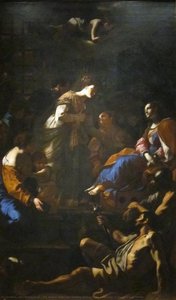
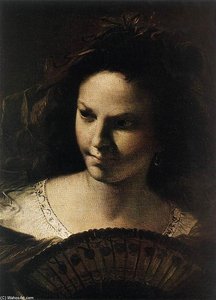
Portretul lui Mattia Preti

Cele 98 cele mai faimoase picturi ale lui Mattia Preti, fiecare unică în felul ei

Actualizat Noiembrie 2026 · clasat în funcție de scorul nostru de popularitate (căutări, vizite și comenzi pentru fiecare operă) · 99 lucrări ale lui Mattia Preti în catalogul nostru

Pe scurt

The Marriage at Cana (1655) este pictura lui Mattia Preti care atrage cele mai multe priviri; originalul aparține National Gallery, Londra. După aceasta, privirea se îndreaptă către Tribute Money (1640) și St. John the Baptist Preaching. Dintre cele 99 opere ale lui Mattia Preti din catalogul nostru, acestea 98 sunt cele mai celebre, fiecare fiind o piesă unică, prezentată împreună cu anul creării, muzeul deținător și motivul pentru care aceasta rămâne memorabilă.

1613 – 1699, Taverna Baroque dramatic style Cele mai multe lucrări: Colecțiile Statale de Pictură din Bavaria

Cele mai importante 10 picturi ale lui Mattia Preti, prin ochii galeriei

1
The Marriage at Cana (1655) de Mattia Preti

The Marriage at Cana

1655 · Oil On Canvas · National Gallery, Londra

The air in the room feels heavy, thick with the scent of spilled wine and the heat of a crowded celebration. At the center of this bustling gathering, a miracle unfolds in silence. A long banquet table, draped in a stark white cloth, cuts through the darkness, acting as a stage for a divine transformation. Figures press against one another, their bodies overlapping in a dense, rhythmic movement that pulls…

2
Tribute Money (1640) de Mattia Preti

Tribute Money

1640 · Oil On Canvas · Pinacoteca di Brera, Milano

To stand before Mattia Preti's Tribute Money is to step directly into the charged atmosphere of 17th-century Italian devotion. This magnificent oil on canvas, executed in 1640, pulses with the dramatic energy characteristic of the Baroque period. It is not merely a depiction of an event; it is an immersive experience, masterfully orchestrated by Preti’s hand. The scene gathers a group of men around a central table, their gestures and…

3
St. John the Baptist Preaching de Mattia Preti

St. John the Baptist Preaching

Oil On Canvas · Legion of Honor, San Francisco

To stand before this depiction of St. John the Baptist is to be enveloped by the very breath of divine revelation. The scene pulses with an almost palpable energy, capturing that electrifying moment when sacred truth breaks through the mundane. At the heart of the composition stands St. John, a figure radiating both ascetic power and profound spiritual authority. He commands attention not merely through his central placement, but through…

4
Christ in Glory (1660) de Mattia Preti

Christ in Glory

1660 · Oil On Canvas · Muzeul Prado, Madrid

A Triumph of Baroque Faith: Exploring Mattia Preti’s ‘Christ in Glory’ Mattia Preti, a Calabrian Knight of the Baroque, stands as an emblem of artistic dynamism and fervent devotion during his era. Born in Taverna, Calabria, on February 24, 1613, his journey was marked by absorbing diverse influences—primarily from Caravaggio—resulting in a uniquely expressive style characterized by dramatic chiaroscuro and meticulous realism that would define his oeuvre. Before 1630, he…

5
Clorinda Rescuing Sofronia and Olindo (1660) de Mattia Preti

Clorinda Rescuing Sofronia and Olindo

1660 · Oil On Canvas · J. Paul Getty Museum, Los Angeles

The air in the painting feels heavy, thick with the scent of iron and dust. A single, theatrical light cuts through the murky atmosphere, striking the pale skin of a woman seated on the right. She is the center of a storm, a figure of vulnerability amidst a crowded, muscular arrangement of limbs and steel. Around her, the composition erupts in a series of sweeping diagonals. Weapons and reaching arms…

6
Ecce Homo (1661) de Mattia Preti

Ecce Homo

1661 · Oil On Canvas · Musée Condé, Chantilly

In this treatment of Ecce Homo, Mattia Preti employs a highly theatrical arrangement to command the viewer's attention. The composition is built upon a balcony placed transversely, a clever spatial device that pushes the figure of Christ into the immediate foreground. This positioning creates an intimate, almost confrontational proximity between the subject and the observer. The artist’s style here is both dramatic and heroic, moving beyond simple naturalism to imbue…

7
Saint Paul the Hermit (1650) de Mattia Preti

Saint Paul the Hermit

1650 · Oil On Canvas · Museu Nacional d'Art de Catalunya, Barcelona

The shadows press in from every corner, leaving only a sliver of light to illuminate the weathered face of Saint Paul the Hermit. He sits in a profound, heavy silence, his body a map of ascetic devotion. Every line etched into his skin tells a story of years spent in the desert, away from the clamor of the world. His eyes are turned upward, searching the darkness for a light…

8
Wedding at Cana (1655) de Mattia Preti

Wedding at Cana

1655 · Oil On Canvas · National Gallery, Londra

Mattia Preti’s Wedding at Cana captures the first miracle of Christ during a wedding feast in Galilee. The scene brings together Christ, his mother, and the disciples within a crowded, festive setting. A long banquet table, draped in a white cloth, serves as the central stage for the unfolding event. Amidst the gathering, Mary directs the servants, while the steward observes the transformation of the liquid with astonishment.

9
Doubting Thomas (1660) de Mattia Preti

Doubting Thomas

1660 · Oil On Canvas · Muzeul Kunsthistorisches din Viena, Viena

In this oil on canvas, we find ourselves pulled into an intimate, almost uncomfortable proximity to a profound biblical encounter. The scene captures the precise second when the apostle Thomas seeks physical verification of the resurrection, reaching out to touch the wound in Christ's side. There is a heavy, palpable tension in the way the figures are arranged along a diagonal axis, guiding our gaze directly toward that central point…

10
The crucifixion of St Andrew (1651) de Mattia Preti

The crucifixion of St Andrew

1651 · Oil On Canvas · Art Gallery of South Australia, Adelaide

The crucifixion of St Andrew is an oil on canvas work by Mattia Preti. Created about 1651, this piece belongs to the Baroque movement of seventeenth-century Italy. The scene captures a moment of profound religious significance, focusing on the martyrdom of the saint. It is a heavy, physical depiction of faith under the weight of wood and shadow.

Păiți celebrele picturi ale lui Mattia Preti, de la numărul 11 la 98

11St John the Baptist before Herod (1665) de Mattia PretiSt John the Baptist before Herod1665 12Saint Veronica with the Veil (1657) de Mattia PretiSaint Veronica with the Veil1657 · Los Angeles County Museum of Art 13Portrait of a Grand Master of the Knights of Malta, Martin de Redin (1660) de Mattia PretiPortrait of a Grand Master of the Knights of Malta, Martin de Redin1660 · Art Institute of Chicago 14Belisarius Receiving Alms (1660) de Mattia PretiBelisarius Receiving Alms1660 · Museum Boijmans Van Beuningen 15The Game of Draughts (1630) de Mattia PretiThe Game of Draughts1630 · Ashmolean Museum 16Ecce homo de Mattia PretiEcce homo 17Dice Players (1635) de Mattia PretiDice Players1635 · Muzeul Național din Cracovia 18The Beheading of Saint John the Baptist (1640) de Mattia PretiThe Beheading of Saint John the Baptist1640 · National Gallery of Ireland 19The Pardon of St. John Chrysostom (1640) de Mattia PretiThe Pardon of St. John Chrysostom1640 · Cincinnati Art Museum 20Clorinda rescues Olindo and Sophronia (1646) de Mattia PretiClorinda rescues Olindo and Sophronia1646 · Musei di Strada Nuova 21Vocation of the Apostle Matthew (1637) de Mattia PretiVocation of the Apostle Matthew1637 · Muzeul Kunsthistorisches din Viena 22The Adoration of the Shepherds (1645) de Mattia PretiThe Adoration of the Shepherds1645 · Muzeul Național din Varșovia 23the head of St. John presented to the king (1638) de Mattia Pretithe head of St. John presented to the king1638 24Bearded Old Man's Head (1656) de Mattia PretiBearded Old Man's Head1656 · Colecțiile Statale de Pictură din Bavaria 25Return of the Prodigal Son (1656) de Mattia PretiReturn of the Prodigal Son1656 · Colecțiile Statale de Pictură din Bavaria 26Mary Magdalene (1656) de Mattia PretiMary Magdalene1656 · Colecțiile Statale de Pictură din Bavaria 27Tobias and the Angel (1656) de Mattia PretiTobias and the Angel1656 · Colecțiile Statale de Pictură din Bavaria 28Saint Andrew (1656) de Mattia PretiSaint Andrew1656 · Colecțiile Statale de Pictură din Bavaria 29The Feast of Absalom (1658) de Mattia PretiThe Feast of Absalom1658 · National Gallery of Canada 30Salomé with the Head of St. John before Herod (1658) de Mattia PretiSalomé with the Head of St. John before Herod1658 · Gemäldegalerie Alte Meister im Schloss Wilhelmshöhe 31An Angel shows Hagar the Way (1656) de Mattia PretiAn Angel shows Hagar the Way1656 · Colecțiile Statale de Pictură din Bavaria 32Paul of Thebes (1675) de Mattia PretiPaul of Thebes1675 · Muzeul Național de Artă Veche 33Self-portrait (1695) de Mattia PretiSelf-portrait1695 34The Vision of Saint Paul (1700) de Mattia PretiThe Vision of Saint Paul1700 35The Martyrdom of Saint Catherine (1700) de Mattia PretiThe Martyrdom of Saint Catherine1700 · MUŻA 36The Denial of Saint Peter (1700) de Mattia PretiThe Denial of Saint Peter1700 · Musée des Beaux-Arts 37The Raising of Lazarus (1650) de Mattia PretiThe Raising of Lazarus1650 · Galleria Nazionale d'Arte Antica 38The Concert (1630) de Mattia PretiThe Concert1630 · Muzeul Thyssen-Bornemisza 39A Man Cutting Tobacco (1660) de Mattia PretiA Man Cutting Tobacco1660 40Sfântul Ioan Botezător (1661) de Mattia PretiSfântul Ioan Botezător1661 · Toledo Museum of Art 41Apelle painting Campaspe (1600) de Mattia PretiApelle painting Campaspe1600 · Pinacoteca Stuard 42The Baptism of Christ (1661) de Mattia PretiThe Baptism of Christ1661 · Biserica Conventuală Sfântul Ioan 43The Roman Empress Faustina Visiting Saint Catherine of Alexandria in Prison (1643) de Mattia PretiThe Roman Empress Faustina Visiting Saint Catherine of Alexandria in Prison1643 · The Dayton Art Institute 44Queen Tomyris Receiving the Head of Cyrus, King of Persia (1670) de Mattia PretiQueen Tomyris Receiving the Head of Cyrus, King of Persia1670 45St. George Victorious over the Dragon (1678) de Mattia PretiSt. George Victorious over the Dragon1678 · Collegiate Basilica of St. George 46St John Reproaching Herod (1662) de Mattia PretiSt John Reproaching Herod1662 · Museo de Bellas Artes de Sevilla 47Christ and the Money Changers (1600) de Mattia PretiChrist and the Money Changers1600 · Museo di Capodimonte 48Concert (detail) (1630) de Mattia PretiConcert (detail)1630 · Muzeul Ermitaj 49Anjelul Zburător (1630) de Mattia PretiAnjelul Zburător1630 · Kunstpalast 50The Adoration of the Shepherds (1699) de Mattia PretiThe Adoration of the Shepherds1699 · Walker Art Gallery 51Christ and the Woman Taken in Adultery de Mattia PretiChrist and the Woman Taken in AdulterySaint Louis Art Museum 52The Martyrdom of Saint Paul de Mattia PretiThe Martyrdom of Saint PaulMuseum of Fine Arts 53Tobias Healing His Father's Blindness de Mattia PretiTobias Healing His Father's BlindnessMuseum of Fine Arts 54Martyrdom of Saint Erasmus de Mattia PretiMartyrdom of Saint ErasmusColecțiile Statale de Pictură din Bavaria 55Martyrdom of Saint Andrew de Mattia PretiMartyrdom of Saint Andrew 56St. Paul the Hermit de Mattia PretiSt. Paul the HermitCleveland Museum of Art 57Concert in the family de Mattia PretiConcert in the family 58Zachary on his knees, and studies of his head de Mattia PretiZachary on his knees, and studies of his head 59Old man sitting, holding a book, speaking to a young man de Mattia PretiOld man sitting, holding a book, speaking to a young man 60Musical angels, studies for a ceiling compartment de Mattia PretiMusical angels, studies for a ceiling compartment 61A Group of Saints and Angels de Mattia PretiA Group of Saints and Angels 62God the Father surrounded by angels de Mattia PretiGod the Father surrounded by angels 63The Release of St Peter from Prison de Mattia PretiThe Release of St Peter from PrisonAcademy of Fine Arts Vienna 64Vizitarea (1649) de Mattia PretiVizitarea1649 · Virginia Museum of Fine Arts 65Pilate Washing his Hands (1663) de Mattia PretiPilate Washing his Hands1663 · Metropolitan Museum of Art 66The Martyrdom of Saint Gennaro (1685) de Mattia PretiThe Martyrdom of Saint Gennaro1685 · National Gallery of Art 67The Martyrdom of St. Bartholomew de Mattia PretiThe Martyrdom of St. BartholomewPokrajinski muzej Ptuj- Ormož 68Saint John the Baptist Preaching (1650) de Mattia PretiSaint John the Baptist Preaching1650 · Metropolitan Museum of Art 69St John Cast into Prison (1661) de Mattia PretiSt John Cast into Prison1661 · Biserica Conventuală Sfântul Ioan 70Seated Bishop with Arms Extended and Three Attendant Figures de Mattia PretiSeated Bishop with Arms Extended and Three Attendant Figures 71Salome cu capul Sfântul Ioan Botezătorului de Mattia PretiSalome cu capul Sfântul Ioan BotezătoruluiRingling Museum of Art 72Design for the Decoration of a Cupola with a Prophet, King David and Two Putti de Mattia PretiDesign for the Decoration of a Cupola with a Prophet, King David and Two Putti 73A Mother Entrusting Her Sons to Christ de Mattia PretiA Mother Entrusting Her Sons to ChristPinacoteca di Brera 74Beheading of St. Catherine de Mattia PretiBeheading of St. CatherineNational Museum of Fine Arts 75Holy martyr (Saint Stephan?) de Mattia PretiHoly martyr (Saint Stephan?)Muzeele Civice din Reggio Emilia 76Flying Angel (1699) de Mattia PretiFlying Angel1699 · Kunstpalast 77St Sebastian (1660) de Mattia PretiSt Sebastian1660 · Museo di Capodimonte 78Sophonisba Receiving the Goblet (1670) de Mattia PretiSophonisba Receiving the Goblet1670 · Musée des Beaux-Arts de Lyon 79St. Nicholas of Bari (1653) de Mattia PretiSt. Nicholas of Bari1653 · Museo di Capodimonte 80Aeneas, Anchises and Ascanius Fleeing Troy (1630) de Mattia PretiAeneas, Anchises and Ascanius Fleeing Troy1630 · Galleria Nazionale d'Arte Antica 81Saint John the Baptist de Mattia PretiSaint John the BaptistMuseo di Capodimonte 82Judith and Holofernes de Mattia PretiJudith and HolofernesMuseo di Capodimonte 83The Return of the Prodigal Son de Mattia PretiThe Return of the Prodigal Son 84The Martyrdom of Saint Peter (1630) de Mattia PretiThe Martyrdom of Saint Peter1630 · Musée de Grenoble 85Saint Anthony Abbot (1628) de Mattia PretiSaint Anthony Abbot1628 86Vanitas (1650) de Mattia PretiVanitas1650 87The Return of the Prodigal Son (1658) de Mattia PretiThe Return of the Prodigal Son1658 · Royal Palace of Naples 88The Four Evangelists (1650) de Mattia PretiThe Four Evangelists1650 · Galleria Regionale di Palazzo Abatellis 89Concert (1630) de Mattia PretiConcert1630 · Muzeul Ermitaj 90The Banquet Of Baldassare de Mattia PretiThe Banquet Of Baldassare 91Absalom's Feast (1653) de Mattia PretiAbsalom's Feast1653 · Museo di Capodimonte 92The Madonna of Costantinople (1656) de Mattia PretiThe Madonna of Costantinople1656 · Museo di Capodimonte 93Christ and the Woman Taken in Adultery de Mattia PretiChrist and the Woman Taken in AdulteryGalleria Regionale di Palazzo Abatellis 94St. George on Horseback (1658) de Mattia PretiSt. George on Horseback1658 · Biserica Conventuală Sfântul Ioan 95Saint John the Baptist Wearing the Red Tabard of the Order of Saint John (1671) de Mattia PretiSaint John the Baptist Wearing the Red Tabard of the Order of Saint John1671 · MUŻA 96The Banquet of the Rich Glutton (1685) de Mattia PretiThe Banquet of the Rich Glutton1685 · Galleria Nazionale d'Arte Antica 97Tomyris Plunges the Head of the Dead Cyrus Into a Vessel of Blood (1685) de Mattia PretiTomyris Plunges the Head of the Dead Cyrus Into a Vessel of Blood1685 98Plato and Diogenes (1690) de Mattia PretiPlato and Diogenes1690 · Capitoline Museums

Piesele celebre ale lui Mattia Preti, perioadă cu perioadă

Subiectele care i-au captivat privirea lui Mattia Preti

Cele patru teme care revin cel mai des în aceste opere originale, fiecare având cel mai sublim exemplu.

Muzeele care păstrează originalele lui Mattia Preti

Cele 8 muzee care dețin cele mai multe dintre picturile de pe această pagină.

Muzee Oraș Lucrări lui Mattia Preti Picturi din această listă
Colecțiile Statale de Pictură din Bavaria, MunchenColecțiile Statale de Pictură din Bavaria Munchen 7 Bearded Old Man's Head, Return of the Prodigal Son, Mary Magdalene
Museo di Capodimonte, NapoliMuseo di Capodimonte Napoli 7 Christ and the Money Changers, St Sebastian, St. Nicholas of Bari
Biserica Conventuală Sfântul Ioan, VallettaBiserica Conventuală Sfântul Ioan Valletta 3 The Baptism of Christ, St John Cast into Prison, St. George on Horseback
National Gallery, LondraNational Gallery Londra 2 The Marriage at Cana, Wedding at Cana
Pinacoteca di Brera, MilanoPinacoteca di Brera Milano 2 Tribute Money, A Mother Entrusting Her Sons to Christ
Muzeul Kunsthistorisches din Viena, VienaMuzeul Kunsthistorisches din Viena Viena 2 Doubting Thomas, Vocation of the Apostle Matthew
MUŻA, VallettaMUŻA Valletta 2 The Martyrdom of Saint Catherine, Saint John the Baptist Wearing the Red Tabard of the Order of Saint John
Galleria Nazionale d'Arte Antica, RomaGalleria Nazionale d'Arte Antica Roma 2 The Raising of Lazarus, Aeneas, Anchises and Ascanius Fleeing Troy

Mattia Preti de-a lungul deceniilor: o piesă unică pentru fiecare

Lucrări pe deceniu

Alege o deceniu pentru a descoperi opera originală care îl definește.

Picturile lui Mattia Preti: întrebări pentru galerie

Care este cea mai celebră operă a lui Mattia Preti?Află răspunsul

The Marriage at Cana (1655), National Gallery, Londra. Urmează Tribute Money (1640) și St. John the Baptist Preaching.

La ce vârstă a creat Mattia Preti The Marriage at Cana?Află răspunsul

42 ani: The Marriage at Cana datează din 1655, iar Mattia Preti s-a născut în 1613.

Care sunt cele mai celebre zece picturi ale lui Mattia Preti?Află răspunsul

The Marriage at Cana, Tribute Money, St. John the Baptist Preaching, Christ in Glory, Clorinda Rescuing Sofronia and Olindo, Ecce Homo, Saint Paul the Hermit, Wedding at Cana, Doubting Thomas și The crucifixion of St Andrew. Clasamentul de mai sus indică anul și muzeul pentru fiecare piesă.

Câte lucrări ale lui Mattia Preti sunt cunoscute?Află răspunsul

Catalogul nostru cuprinde 99 lucrări ale lui Mattia Preti, datate între 1628 și 1699.

Unde pot fi vizualizate originalele celor mai faimoși Mattia Preti?Află răspunsul

În principal în Colecțiile Statale de Pictură din Bavaria (Munchen), Museo di Capodimonte (Napoli) și Biserica Conventuală Sfântul Ioan (Valletta). Tabelul cu muzee de mai sus le enumeră pe toate.

În ce perioadă a creat Mattia Preti cele mai cunoscute picturi?Află răspunsul

În 1650s: 22 dintre cele 98 lucrări de pe această pagină au fost realizate atunci, fiind The Marriage at Cana dintre acestea.

Care este cea mai veche și care este cea mai recentă pictură a lui Mattia Preti?Află răspunsul

Pe această pagină, cea mai veche lucrare datează din Saint Anthony Abbot (1628), iar cea mai recentă este din The Adoration of the Shepherds (1699).

Ce teme prefera Mattia Preti?Află răspunsul

Man (31), Woman (15) și Drapery (14), din cele 98 lucrări de pe această pagină.

Cu ce materiale a pictat cel mai des Mattia Preti?Află răspunsul

Oil On Canvas, pentru 53 dintre cele 98 lucrări de pe această pagină.

Din ce curent artistic face parte opera lui Mattia Preti?Află răspunsul

Baroque dramatic style, judecând după originalele de pe această pagină.

Ce originale de Mattia Preti pot vedea la Colecțiile Statale de Pictură din Bavaria?Află răspunsul

Bearded Old Man's Head, Return of the Prodigal Son și Mary Magdalene: Colecțiile Statale de Pictură din Bavaria, Munchen deține 7 dintre lucrările de pe această pagină.

Mattia Preti: un portret al artistului

A Calabrian Knight of the Baroque

Mattia Preti, known as *Il Cavalier Calabrese* – the Calabrian Knight – stands as a pivotal figure in 17th-century Italian Baroque painting. Born in Taverna, Calabria, on February 24, 1613, his artistic journey was one of dynamic evolution, absorbing diverse influences and culminating in a uniquely expressive style that left an indelible mark on the art world, particularly in Malta where he would spend much of his later life. Preti’s early training began under Giovanni Battista Caracciolo, a painter deeply rooted in the Caravaggist movement. This foundational exposure instilled within him a profound understanding of dramatic chiaroscuro – the intense interplay of light and shadow – and a commitment to realistic depiction that would remain hallmarks of his work throughout his career. Before 1630, he joined his brother Gregorio in Rome, immersing himself in the artistic ferment of the city and studying the masters who defined the era: Caravaggio, Guercino, Rubens, Guido Reni, and Giovanni Lanfranco. This period was crucial, shaping not only his technical skills but also his aesthetic sensibilities.

Forging a Dynamic Style

Preti’s artistic development wasn't merely imitation; it was a synthesis of influences, skillfully woven into a style distinctly his own. While initially steeped in Caravaggism, he gradually moved beyond its strict confines, embracing the dynamism and emotional intensity that characterized the High Baroque. His time in Naples further refined this evolution, exposing him to the vibrant work of Luca Giordano. This period saw Preti’s canvases swell with energetic movement, complex compositions, and a heightened sense of drama. He masterfully employed dramatic contrasts of light and shadow, inherited from Caravaggio, not simply as a technical device but as a means of intensifying emotional impact and guiding the viewer's eye. His figures are imbued with palpable emotion, conveyed through expressive faces and dynamic body language. This ability to evoke powerful feelings – piety, anguish, ecstasy – became a defining characteristic of his oeuvre. He wasn’t content merely to depict scenes; he sought to *animate* them, breathing life into biblical narratives and religious iconography. His work often featured dramatic diagonals and swirling compositions, creating a sense of movement and urgency that was characteristic of the Baroque period.

Commissions and Masterpieces Across Italy

Mattia Preti's talent quickly garnered recognition, leading to a series of significant commissions throughout Italy. Early in his career, he created impressive fresco cycles for Roman churches like Sant’Andrea della Valle and San Carlo ai Catinari, demonstrating an aptitude for large-scale decorative painting. His work at the church of San Biagio in Modena showcased his ability to adapt his style to different architectural settings. However, some of his most ambitious – though sadly lost – works were the frescoes he painted on seven city gates in Naples depicting the Virgin or saints delivering people from the plague. Though only sketches remain today, they testify to the scale and impact of these monumental creations. These commissions weren’t simply about fulfilling a patron's request; they were opportunities for Preti to engage with the religious and cultural life of the communities he served, imbuing his art with meaning and purpose. He also worked on altarpieces and devotional panels, often incorporating elements of Neapolitan folk culture into his compositions.

The Maltese Zenith: St. John’s Co-Cathedral

It was in Malta, however, that Mattia Preti reached the pinnacle of his artistic achievement. Appointed a Knight of the Order of Saint John in 1660, he embarked on a transformative project: the complete redecoration of the interior of St. John’s Co-Cathedral in Valletta. This undertaking – arguably his most significant legacy – involved an astonishing series of paintings depicting the life and martyrdom of Saint John the Baptist. The sheer scale of the project is breathtaking; Preti essentially created a visual narrative that enveloped the viewer, immersing them in the story of the saint. The opulent Baroque setting provided the perfect canvas for his dramatic style, and the resulting artwork cemented his reputation as one of Europe’s leading painters. His work at St. John's wasn’t merely decorative; it was an act of devotion, a testament to his faith, and a powerful expression of the Order’s religious identity. The ceiling frescoes are particularly renowned for their dynamism and emotional intensity, capturing the drama of biblical scenes with remarkable skill.

A Lasting Legacy

Mattia Preti continued to receive commissions from across Europe following his success in Malta, solidifying his position as a leading figure in Italian Baroque art. He died in 1699, leaving behind a rich artistic legacy that continues to inspire and captivate audiences today. His masterful use of light and shadow, dynamic compositions, and ability to convey intense emotion remain hallmarks of his style. His contributions are preserved in museums such as the Capodimonte Museum in Naples, and through reproductions made available by platforms like OriginalUniqueArt.com, ensuring that his art continues to reach new generations. The enduring impact of Preti’s work is perhaps most vividly felt within the walls of St. John's Co-Cathedral, a breathtaking testament to his artistic genius and unwavering dedication to the Baroque aesthetic. *Il Cavalier Calabrese* truly earned his title, not only as a knight but as a master painter who illuminated the world with his vision.