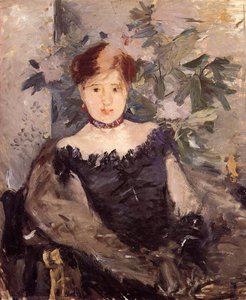
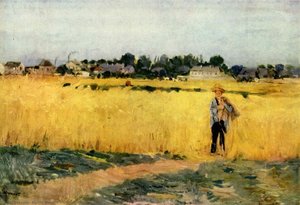
Portretul lui Berthe Morisot

The 100 Most Famous Berthe Morisot Paintings, a Gallery Selection

Actualizat Octombrie 2026 · clasat în funcție de scorul nostru de popularitate (căutări, vizite și comenzi pentru fiecare operă) · 361 lucrări ale lui Berthe Morisot în catalogul nostru

In short

Of all the originals Berthe Morisot left, the most famous is "The Cradle" -> "Pântea" (1872), in the collection of the Musée d'Orsay, Paris. Close behind it come A Corner of the Rose Garden (1885) and Thatched Cottage in Normandy (1865). Our catalog holds 361 works by Berthe Morisot; the gallery has kept the 100 the world admires most, each shown with its date, its museum and its story.

1841 – 1895, Bourges Impressionist style Cele mai multe lucrări: Musée Marmottan Monet

Berthe Morisot's top 10 paintings: the gallery's choice

1
"The Cradle" -> "Pântea" (1872) de Berthe Morisot

"The Cradle" -> "Pântea"

1872 · Ulei pe pânză · Musée d'Orsay, Paris

În inima muzeului d’Orsay, ascunsă într-un colț liniștit, se află o pictură care transcende timpul și emoțiile – “The Cradle” (Le Berceau) de Berthe Morisot. Nu este doar o reprezentare a unei scene familiare: o mamă și un copil dormind; ci o invitație la introspecție, o fereastră spre intimitatea sufletului feminin și o mărturie a delicateței vieții. Morisot, o figură discretă în istoria artei impresioniste, reușește să creeze o atmosferă…

2
A Corner of the Rose Garden (1885) de Berthe Morisot

A Corner of the Rose Garden

1885 · Ulei pe pânză

O privire asupra serenității impresioniste „Un colț din grădina trandafirilor” de Berthe Morisot îi invită pe spectatori într-o scenă grădiniț de liniște, scăldată în nuanțele moi și calde ale apusului. Această operă captivantă este o mărturie a măiestriei lui Morisot în stilul impresionist, reușind să surprindă frumusețea efemeră a naturii prin trăsături de pensulă libere și o paletă cromatică vibrantă. Esența naturii surprinsă Tabloul înfățișează o grădină luxuriantă, plină de…

3
Thatched Cottage in Normandy (1865) de Berthe Morisot

Thatched Cottage in Normandy

1865 · Oil On Canvas

To stand before Berthe Morisot’s depiction of a Thatched Cottage in Normandy is to step through a veil and into the gentle embrace of a bygone French afternoon. This painting, executed in 1865, is far more than a mere record of rural architecture; it is an immersion into the very spirit of life lived at the rhythm of the seasons. Morisot captures that quintessential joie de vivre found in the…

4
Study, The Water's Edge (1864) de Berthe Morisot

Study, The Water's Edge

1864 · Oil On Canvas

Berthe Morisot’s “Study, The Water’s Edge,” painted in 1864, is more than just a depiction of a serene lakeside scene; it’s an intimate glimpse into the heart of Impressionism. This small canvas – measuring 60 x 73 cm – vibrates with a delicate energy, capturing not just what Morisot saw but also the fleeting emotions and sensations of that particular moment. The painting immediately draws the viewer in with its…

5
In the Garden at Maurecourt (1884) de Berthe Morisot

In the Garden at Maurecourt

1884 · Oil On Canvas · Muzeul de Artă din Toledo, Toledo

In the soft, dappled sunlight of a French afternoon, Berthe Morisot’s “In the Garden at Maurecourt” invites the viewer into a sanctuary of profound stillness. Completed in 1884, this masterpiece serves as a window into the Belle Époque, capturing a moment that feels both fleeting and eternal. The scene unfolds within a lush, verdant garden—likely the Morisot estate near Maurecourt—where two young figures, including the artist’s daughter Julie, are nestled…

6
Portrait of Edma (1870) de Berthe Morisot

Portrait of Edma

1870 · Oil On Canvas · Courtauld Gallery, Londra

In the soft, flickering light of a Parisian afternoon, Berthe Morisot captures more than just a likeness in her 1871 masterpiece, Portrait of Edma. This painting serves as a profound window into the intimate domesticity that defined much of the Impressionist movement’s early explorations. The subject, Edma Pontillon—Morisot’s own sister-in-law—is not presented with the stiff, formal grandeur typical of academic portraiture. Instead, she is nestled within a private, quiet moment,…

7
The Bath (1886) de Berthe Morisot

The Bath

1886 · Oil On Canvas

To stand before Berthe Morisot’s The Bath is to step into a moment suspended in time—a breath held within the soft glow of an afternoon indoors. This painting, executed in 1886, transcends a mere depiction of daily routine; it captures the very essence of private contemplation. The scene unfolds with remarkable delicacy: a woman seated amidst the quiet rituals of self-care, brushing her hair. Morisot does not merely record what…

8
The Quay at Bougival (1883) de Berthe Morisot

The Quay at Bougival

1883 · Oil On Canvas · Nasjonalgalleriet, Oslo

To gaze upon Berthe Morisot’s “The Quay at Bougival” is to step through a portal into the heart of French Impressionism, where the boundaries between reality and perception begin to dissolve. Completed in 1883, this exquisite oil on canvas serves as much more than a mere landscape; it is a rhythmic, breathing snapshot of life along the Seine. The scene captures the bustling waterfront of Bougival, a serene suburb of…

9
Daffodils (1885) de Berthe Morisot

Daffodils

1885 · Oil On Canvas

To stand before Berthe Morisot’s Daffodils is not merely to observe a still life; it is to step directly into a sun-drenched, breathlessly beautiful moment captured by the brush. Painted in 1885, this work radiates the delicate spirit of Impressionism, inviting the viewer into an intimate contemplation of nature’s cyclical promise. The composition centers on a simple arrangement: vibrant yellow daffodils gathered within a vase accented with cool blue hues,…

10
Young Woman Picking Oranges (1889) de Berthe Morisot

Young Woman Picking Oranges

1889 · Oil On Canvas

To stand before Berthe Morisot's Young Woman Picking Oranges is to step directly into a sun-dappled moment suspended in time. This exquisite oil on canvas, dating from 1889, is not merely a depiction of an afternoon chore; it is a lyrical meditation on leisure, femininity, and the very nature of light itself. Morisot, a central figure whose genius blossomed within the vibrant currents of Impressionism, captures life with an almost…

The Berthe Morisot selection continues, 11 to 100

11The Garden at Bougival (1884) de Berthe MorisotThe Garden at Bougival1884 · Musée Marmottan Monet 12Woman in Black (1878) de Berthe MorisotWoman in Black1878 · National Gallery of Ireland 13Woman Wearing Gloves (also known as The Parisian) (1885) de Berthe MorisotWoman Wearing Gloves (also known as The Parisian)1885 14Little Dancer (1885) de Berthe MorisotLittle Dancer1885 15Roses (1894) de Berthe MorisotRoses1894 16Two Sisters on a Couch (also known as The Sisters) (1869) de Berthe MorisotTwo Sisters on a Couch (also known as The Sisters)1869 · National Gallery of Art 17Mother and Sister of the Artist (1869) de Berthe MorisotMother and Sister of the Artist1869 · National Gallery of Art 18Young Girl with Basket (1892) de Berthe MorisotYoung Girl with Basket1892 · Philadelphia Museum of Art 19Portrait of a Child (1894) de Berthe MorisotPortrait of a Child1894 · Philadelphia Museum of Art 20Portrait of Madame Edma Pontillon (1871) de Berthe MorisotPortrait of Madame Edma Pontillon1871 21The Beach at Petit Dalles (aka On the Beach) (1873) de Berthe MorisotThe Beach at Petit Dalles (aka On the Beach)1873 · Virginia Museum of Fine Arts 22View of Paris from the Trocadero Heights (1872) de Berthe MorisotView of Paris from the Trocadero Heights1872 · Santa Barbara Museum of Art 23Young Girl with Hat (1891) de Berthe MorisotYoung Girl with Hat1891 · Art Institute of Chicago 24By the Water (1879) de Berthe MorisotBy the Water1879 25Child in Bed (1884) de Berthe MorisotChild in Bed1884 26Girl with Shuttlecock (also known as Jeanne Bonnet) (1888) de Berthe MorisotGirl with Shuttlecock (also known as Jeanne Bonnet)1888 27Little Girl with a Doll (1886) de Berthe MorisotLittle Girl with a Doll1886 28Interior of a Cottage de Berthe MorisotInterior of a Cottage 29Figure of a Woman (Before the Theater) de Berthe MorisotFigure of a Woman (Before the Theater) 30Red haired girl sitting on a veranda (1884) de Berthe MorisotRed haired girl sitting on a veranda1884 31In a Villa at the Seaside (1874) de Berthe MorisotIn a Villa at the Seaside1874 32The Goose (1885) de Berthe MorisotThe Goose1885 33The Port of Nice (1882) de Berthe MorisotThe Port of Nice1882 34Port of Gorey (1886) de Berthe MorisotPort of Gorey1886 35Bolul cu lapte (1890) de Berthe MorisotBolul cu lapte1890 36Young Woman (1871) de Berthe MorisotYoung Woman1871 · Museum of Fine Arts 37Portrait of Madame Hubbard (1874) de Berthe MorisotPortrait of Madame Hubbard1874 · Ordrupgaard 38Daydreaming (1877) de Berthe MorisotDaydreaming1877 · Muzeul Nelson-Atkins de Artă 39Girl and Child on the Grass (1875) de Berthe MorisotGirl and Child on the Grass1875 40Woman with a Fan (also known as Head of a Girl) (1876) de Berthe MorisotWoman with a Fan (also known as Head of a Girl)1876 41Woman Sewing (1879) de Berthe MorisotWoman Sewing1879 · Buffalo AKG Art Museum 42Child among the Hollyhocks (1881) de Berthe MorisotChild among the Hollyhocks1881 · Muzeul Wallraf-Richartz 43On the edge of the lake (1883) de Berthe MorisotOn the edge of the lake1883 · Musée Marmottan Monet 44Portrait of Marcel (1880) de Berthe MorisotPortrait of Marcel1880 45Tete de chien griffon, Follette (1882) de Berthe MorisotTete de chien griffon, Follette1882 46Little Girl Sitting on the Grass (1882) de Berthe MorisotLittle Girl Sitting on the Grass1882 47Young Woman in Grey Reclining (1879) de Berthe MorisotYoung Woman in Grey Reclining1879 48Venus at the Forge of Vulcan (after Boucher) (1884) de Berthe MorisotVenus at the Forge of Vulcan (after Boucher)1884 49Julie at the Table (1891) de Berthe MorisotJulie at the Table1891 50Lucie Léon at the Piano (1892) de Berthe MorisotLucie Léon at the Piano1892 · Art Museum 51Paule Gobillard in prom dress (1887) de Berthe MorisotPaule Gobillard in prom dress1887 52In the apple tree (1890) de Berthe MorisotIn the apple tree1890 · Musée Marmottan Monet 53Young Woman in a Blue Blouse (1889) de Berthe MorisotYoung Woman in a Blue Blouse1889 54Bather (1891) de Berthe MorisotBather1891 55Young Woman in White (1891) de Berthe MorisotYoung Woman in White1891 56Little Girls at the Window (Jeanne and Edma Bodeau) (1892) de Berthe MorisotLittle Girls at the Window (Jeanne and Edma Bodeau)1892 57Cache-cache (Hide-and-Seek) de Berthe MorisotCache-cache (Hide-and-Seek) 58A Woman and Child in a Garden (1884) de Berthe MorisotA Woman and Child in a Garden1884 · Scottish National Gallery 59Young Woman on a Sofa (1893) de Berthe MorisotYoung Woman on a Sofa1893 · Mougins Museum of Classic Art 60Young Woman and Child (1894) de Berthe MorisotYoung Woman and Child1894 · Yale University Art Gallery 61Two Girls (1894) de Berthe MorisotTwo Girls1894 · The Phillips Collection 62Girl with Greyhound (1893) de Berthe MorisotGirl with Greyhound1893 63Jeanne Pontillon Wearing a Hat (1893) de Berthe MorisotJeanne Pontillon Wearing a Hat1893 64Hanging the Laundry out to Dry (1875) de Berthe MorisotHanging the Laundry out to Dry1875 · National Gallery of Art 65Girl with a Dog (1887) de Berthe MorisotGirl with a Dog1887 66On the Balcony of Eugene Manet's Room at Bougival (1881) de Berthe MorisotOn the Balcony of Eugene Manet's Room at Bougival1881 67On a Bench in the Bois de Boulogne (1894) de Berthe MorisotOn a Bench in the Bois de Boulogne1894 · Musée d'Orsay 68Hide and Seek (1873) de Berthe MorisotHide and Seek1873 69Cottage Interior (also known as Interior at Jersey) (1886) de Berthe MorisotCottage Interior (also known as Interior at Jersey)1886 · Musée d'Ixelles 70Young Woman Putting on Her Skates (1888) de Berthe MorisotYoung Woman Putting on Her Skates1888 71Little Girl Reading de Berthe MorisotLittle Girl ReadingMuseum of Fine Arts, St. Petersburg, Florida, USA 72Young Woman Sewing in a Garden de Berthe MorisotYoung Woman Sewing in a Garden 73The Bois de Boulogne de Berthe MorisotThe Bois de Boulogne 74The cradle Sun de Berthe MorisotThe cradle Sun 75Julie with Her Nurse (1880) de Berthe MorisotJulie with Her Nurse1880 · Ny Carlsberg Glyptotek 76Beneath the Lilac at Maurecourt (1874) de Berthe MorisotBeneath the Lilac at Maurecourt1874 77Woman Getting Dressed (also known as Young Woman Fastening Her Stockings) (1880) de Berthe MorisotWoman Getting Dressed (also known as Young Woman Fastening Her Stockings)1880 78The Mandolin (1889) de Berthe MorisotThe Mandolin1889 79Haying at Mezy (1891) de Berthe MorisotHaying at Mezy1891 80Julie and Eugene Manet (1883) de Berthe MorisotJulie and Eugene Manet1883 81Rosbras (Finistere) (1866) de Berthe MorisotRosbras (Finistere)1866 82Image Le berceau (The Cradle) de Berthe MorisotImage Le berceau (The Cradle) 83Julie Rêveuse de Berthe MorisotJulie Rêveuse 84Lucie Leon at the Piano (1892) de Berthe MorisotLucie Leon at the Piano1892 85In the Wheatfield at Gennevilliers (1875) de Berthe MorisotIn the Wheatfield at Gennevilliers1875 · Musée d'Orsay 86Child in the Rose Garden (1881) de Berthe MorisotChild in the Rose Garden1881 · Muzeul Wallraf-Richartz 87The Basket Chair (1882) de Berthe MorisotThe Basket Chair1882 · Museum of Fine Arts 88Peasant Girl among Tulips (1890) de Berthe MorisotPeasant Girl among Tulips1890 89Portrait of Jeanne Pontillon (1894) de Berthe MorisotPortrait of Jeanne Pontillon1894 · Musée d'Art et d'Histoire de Genève 90Memory of the Banks of l'Oise (1863) de Berthe MorisotMemory of the Banks of l'Oise1863 91Old Path at Auvers (1863) de Berthe MorisotOld Path at Auvers1863 92The Harbor at Cherbourg (1871) de Berthe MorisotThe Harbor at Cherbourg1871 · Yale University Art Gallery 93Peonies (1869) de Berthe MorisotPeonies1869 · National Gallery of Art 94The Seine below the Pont d'Lena (1866) de Berthe MorisotThe Seine below the Pont d'Lena1866 95The Artist's Sister at a Window (1869) de Berthe MorisotThe Artist's Sister at a Window1869 96Portrait of a Woman in a pink dress (1870) de Berthe MorisotPortrait of a Woman in a pink dress1870 · Metropolitan Museum of Art 97Woman and Child Seated in a Meadow (1871) de Berthe MorisotWoman and Child Seated in a Meadow1871 98Harbour scene, Isle of Wight (1875) de Berthe MorisotHarbour scene, Isle of Wight1875 · The Newark Museum of Art 99Sliced ​​apple and pitcher (1876) de Berthe MorisotSliced ​​apple and pitcher1876 · Musée Marmottan Monet 100Landscape near Valenciennes (1875) de Berthe MorisotLandscape near Valenciennes1875

Berthe Morisot's famous paintings, period by period

Impressionist period

1865 – 1889 · 3 lucrări în această listă

The subjects that held Berthe Morisot's eye

The four subjects that come back most often in these originals, each with its finest example.

The museums that keep Berthe Morisot's originals

Cele 8 muzee care dețin cele mai multe dintre picturile de pe această pagină.

Muzeu Oraș Lucrări lui Berthe Morisot Picturi din această listă
Musée Marmottan Monet, ParisMusée Marmottan Monet Paris 15 The Garden at Bougival, On the edge of the lake, In the apple tree
National Gallery of Art, WashingtonNational Gallery of Art Washington 13 Two Sisters on a Couch (also known as The Sisters), Mother and Sister of the Artist, Hanging the Laundry out to Dry
Musée d'Orsay, ParisMusée d'Orsay Paris 10 "The Cradle" -> "Pântea", On a Bench in the Bois de Boulogne, In the Wheatfield at Gennevilliers
Muzeul Wallraf-Richartz, KölnMuzeul Wallraf-Richartz Köln 3 Child among the Hollyhocks, Child in the Rose Garden
Philadelphia Museum of Art, PhiladelphiaPhiladelphia Museum of Art Philadelphia 2 Young Girl with Basket, Portrait of a Child
Museum of Fine Arts, HoustonMuseum of Fine Arts Houston 2 Young Woman, The Basket Chair
Yale University Art Gallery, New HavenYale University Art Gallery New Haven 2 Young Woman and Child, The Harbor at Cherbourg
Art Institute of Chicago, ChicagoArt Institute of Chicago Chicago 4 Young Girl with Hat

Berthe Morisot decade by decade: the original that defines each

Lucrări pe deceniu

Pick a decade to see the original that defines it.

Collectors' questions about Berthe Morisot's paintings

Which work is Berthe Morisot most famous for?Reveal the answer

"The Cradle" -> "Pântea" (1872), Musée d'Orsay, Paris. A Corner of the Rose Garden (1885) and Thatched Cottage in Normandy (1865) come next.

What age was Berthe Morisot when "The Cradle" -> "Pântea" was made?Reveal the answer

31 years old: "The Cradle" -> "Pântea" dates from 1872, and Berthe Morisot was born in 1841.

What are the ten most famous Berthe Morisot paintings?Reveal the answer

"The Cradle" -> "Pântea", A Corner of the Rose Garden, Thatched Cottage in Normandy, Study, The Water's Edge, In the Garden at Maurecourt, Portrait of Edma, The Bath, The Quay at Bougival, Daffodils și Young Woman Picking Oranges. The ranking above gives each one's year and museum.

How many paintings did Berthe Morisot leave?Reveal the answer

Our catalog holds 361 works by Berthe Morisot, dated from 1863 to 1894.

In which museums do Berthe Morisot's masterpieces hang?Reveal the answer

Mostly in Musée Marmottan Monet (Paris), National Gallery of Art (Washington) și Musée d'Orsay (Paris). The museum table above lists them all.

In which years did Berthe Morisot paint the most famous works?Reveal the answer

In 1880s: 35 of the 100 works on this page were made then, A Corner of the Rose Garden among them.

What are the first and the last famous originals of Berthe Morisot?Reveal the answer

On this page, the earliest is Memory of the Banks of l'Oise (1863) and the latest Roses (1894).

Which subjects did Berthe Morisot choose most often?Reveal the answer

Portrait (15), Women (12) și Domestic scene (10), across the 100 works on this page.

Which technique did Berthe Morisot use most?Reveal the answer

Oil On Canvas, for 39 of the 100 works on this page.

To which art movement does Berthe Morisot belong?Reveal the answer

Impressionist style, judging by the originals on this page.

Which Berthe Morisot works hang at the Musée Marmottan Monet?Reveal the answer

The Garden at Bougival, On the edge of the lake și In the apple tree: the Musée Marmottan Monet, Paris holds 4 of the works on this page.

Can I commission a reproduction of a Berthe Morisot painting?Reveal the answer

Yes, as a reproduction: the original stays in its museum, but any painting on this page can be painted by hand for you, made to order one at a time, from the painting's own page.

Berthe Morisot: life and work

Tinerețea, Familia și Educația Artistică

Berthe Morisot s-a născut pe 14 ianuarie 1841 în Bourges, Franța, crescând într-o familie burgheză afluentă, unde granițele dintre viața domestică și artă erau adesea difuze. Tatăl ei, Edmé Tiburce Morisot, deținea funcția de prefect al departamentului Cher, în timp ce mama sa, Marie-Joseph-Cornélie Thomas, îi aducea o legătură profundă cu tradiția Rococo, fiind verișoara strulată a lui Jean-Honoré Fragonard. Această ascendență i-a oferit un cadru de familiaritate artistică încă de la primii ani de viață.

Călătoria sa artistică a început prin lecții private susținute de Geoffroy-Alphonse Chocarne și Joseph Guichard. Până în 1858, ea își petrecea timpul în cadrul Luvrului, învând mecanica picturii prin copierea capodoperelor Maștrilor Vechi. Această perioadă de studiu a fost completată de îndrumarea lui Jean-Baptiste-Camille Corot și Achille-Francois Oudinot. În timpul iernii 1863–64, Morisot și-a îndreptat, de asemenea, atenția către forma fizică prin studiul sculpturii sub îndrumarea lui Aimé Millet.

Mișcarea Impresionistă și Expozițiile

În anul 1864, Morisot și-a prezentat lucrările pentru prima dată la Salonul de la Paris, un pas de o importanță crucială, având în vedere că Salonul era gardianul oficial al lumii de artă. Totuși, ea nu s-a limitat deloc la aceste spații tradiționale. Din contră, a devenit un element esențial în cercul de pictori din Paris care, în timp, avea să fie cunoscut sub numele de Impresioniști. Prezența sa în acest grup a fost constantă, marcând o implicare profundă în transformarea estetică a epocii. Între anii 1874 și 1886, ea a participat la aproape toate cele opt expoziții impresioniste organizate în acea perioadă, singura pe care a omis-o fiind doar una singură.

Prima dintre aceste întâlniri revoluționare a avut loc în atelierul fotografului Nadar, deschizându-se pe data de 15 aprilie și continuând până pe 15 mai 1874. Această expoziție a reprezentat o ruptură radicală față de normele stabilite ale timpului, o provocare la adresa convențiilor academice. Morisot a fost prezentă alături de ceilalți pionieri, contribuind activ la definirea unei noi moduri de a vedea și de a percepe realitatea. Ea a continuat să își expună viziunea împreună cu grupul, aducând perspectiva sa unică și sensibilitatea sa aparte în diversele evenimente artistice desfășurate pe parcursul deceniului următor.

Viața Personală și Legătura cu Manet

Granițele dintre viața privată a lui Berthe Morisot și universul ei artistic erau adesea difuze, împletindu-se într-un dans subtil de influențe. Aceasta a crescut într-un cămin plin de afecțiune, alături de cele două surori mai mari, Yves și Edma, și fratele ei mai mic, Tiburce. În anul 1868, destinul ei s-a intersectat cu cel al lui Édouard Manet, o cunoștință care s-a transformat într-o legătură profundă, bazată pe o influență reciprocă remarcabilă. El a imortalizat-o pe pictoriță de numeroase ori, capturând-o în diverse stări de spirit și în diverse ținute, în timp ce ea își căuta propriul drum prin luminile schimbătoare ale Parisului. Relația lor a fost una de un ex đổi intelectual constant și de o viziune artistică împărtășită.

În 1874, Morisot s-a căsătorit cu Eugène Manet, fratele lui Édouard, o unire care i-a consolidat poziția în centrul cercului de artiști care redefineau pictura modernă. În 1878, în Paris, a născut o fiică, pe Julie Manet. Julie a crescut într-un cămin unde barierele dintre viața domestică și dezbaterile radicale ale avangardei erau extrem de subțiri, devenind adesea o prezență tăcută în însăși încăperile în care arta era creată și discutată cu pasiune.

Tehnică și Stil Artistic

Abordarea lui Berthe Morisot față de pânză se bazează pe o delicatețe a gestului, o ușurință a mătăsii care pare să plutească pe suprafața lucrării. Pictorii ei preferau adesea să lucreze în aer liber, utilizând metoda plein air pentru a capta calitățile schimbătoare ale luminii și ale atmosferei direct din natura brută. Această obișnuință de a lucra în mijlocul elementelor i-a permis să traducă nuanțele efemere ale culorii prin brushwork-uri libere și pline de încredere. Păturile de vopsea sunt fluide, mișcându-se peste suprafață cu un sentiment de imediatitate care evită straturile grele sau laborioase. Ea nu s-a bazat exclusiv pe ulei; practica sa artistică includea și utilizarea acuarelei și a pastelului, explorând astfel o multitudine de texturi și efecte luminoase.

Există o modalitate specifică prin care ea tratează contururile subiectelor sale. În loc de linii dure și definite, Morisot folosește culoarea fragmentată și mici stropi de pigment pentru a construi forma. Această tehnică creează un efect de strălucire, făcând ca aerul dintre obiecte să pară la fel de tangibil ca obiectele însuși. În reprezentările sale ale vieții domestice, această metodă surprinde lumina blândă care cade pe piele sau modul în care lumina se filtrează printre frunzele unei grădini. Rezultatul este o senzație de spontaneitate pură, ca și cum scena ar fi fost înregistrată într-un singur moment de observație, liniștit și neîntrerupt.

Lucrări Cheie și Picturi Iconice

În anul 1872, Morisot a pictat The Cradle, o lucrare în ulei pe pânză care surprinde momentul în care sora ei, Edma, veghează asupra fiicei sale în vârstă, Blanche, în timp ce aceasta doarme. Compoziția utilizează o linie diagonală, formată de privirea mamei și de drapajele pătuțului, pentru a ghida privirea spectatorului direct către bebeluș. Această operă marchează prima dată când artista explorează tema maternității, folosind o paletă cromatică redusă și o pensulă fluidă pentru a crea o atmosferă de iubire liniștită și protectoare.

Prezența sa apare frecvent în creațiile altor maeștri, fiind cel mai notabil moment cel din 1872, când Édouard Manet a pictat Berthe Morisot with a Bouquet of Violets. În acest portret, ea este îmbrăcată în haine negre de lutoare, având un bouquet of violets abia sesizabil la nivelul decoltului. Lumina o lovește lateral, lăsând cealaltă jumătate a feței într-o umbră profundă, o studiu al tonurilor negre care accentuează contrastul dintre vestimentația întunecată și fundalul mai luminos.

Printre celelalte piese semnificative se numără:

În perioada de maturitate a carierei sale, ea a realizat The Hydrangea în 1894. Capacitatea sa de a traduce nuanțele luminii și ale culorii prin gesturi libere și pline de încredere a rămas o constantă de-a lungul întregii sale perioade de activitate pictorală.

Unde îi puteți descoperi astăzi operele

Pentru a admira cu propriul ochi finețea picturii sale, o călătorie ideală ar putea începe în inima Parisului. Musée d'Orsay găzduiește șase dintre picturile sale, printre care se numără și magistrala The Cradle. Această lucrare, realizată în 1872, o surprinde pe sora ei, Edma, veghind cu grijă un copil adormit. Tot în Paris, colecția Musée Marmottan Monet păstrează alte cinci opere care emană aceeași sensibilitate profundă.

Dincolo de granițele Franței, prezența artistică a lui Berthe Morisot se simte puternic și în Washington, D.C. National Gallery of Art deține șase dintre picturile sale, oferind vizitatorilor posibilitatea de a contempla Mother and Sister of the Artist, o creație din anul 1869. În această colecție americană se mai regăsesc și alte piese remarcabile, precum In the Dining Room și Hanging the Laundry out to Dry, ambele datând din 1875.

Unele dintre celelalte capodopere ale sale se află în locații diverse, oferind o perspectivă globală asupra geniului său, cum ar fi în cadrul Thyssen-Bornemisza Museum din Madrid sau la Nationalmuseum din Stockholm. Aceste piese permit o contemplare liniștită a modului în care ea a magistral transformat lumina și scenele domestice în poezie vizuală, indiferent de decorul în care acestea au fost capturate.

Toate cele 361 de lucrări ale lui Berthe Morisot →