Stefano di Giovanni d'Arbosio di Francia: A Master of International Gothic
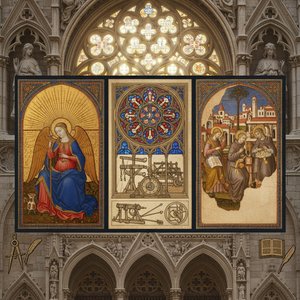
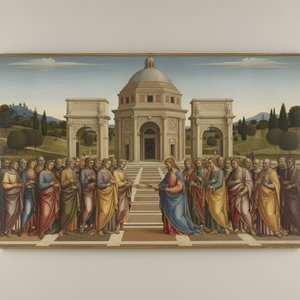
Stefano da Verona, also known as Stefano di Giovanni d’Arbosio di Francia, stands as a beacon of artistic innovation within the burgeoning Renaissance landscape of Northern Italy—specifically Verona—during the early fifteenth century. Born around 1379, his lineage traced back to Jean d'Arbois, a French painter who had skillfully navigated the complexities of Visconti court patronage after establishing himself in Burgundy under Philip II. This formative connection instilled in Stefano an unwavering appreciation for Burgundian artistic traditions and illuminated manuscript craftsmanship—influences that would indelibly shape his distinctive stylistic vision. His initial artistic education unfolded under the watchful eye of Michelino da Besozzo, whose profound understanding of Byzantine aesthetics and Northern European realism served as a crucial springboard for Stefano’s own creative explorations. Pavia swiftly became Stefano’s workshop city, where he immersed himself in collaborative endeavors alongside fellow illuminators—absorbing invaluable techniques and stylistic sensibilities that defined the era's artistic discourse. This environment fostered experimentation and cemented his position at the forefront of artistic advancement. The International Gothic style – a movement characterized by its harmonious fusion of Byzantine grandeur with Northern European precision – served as Stefano’s primary aesthetic compass. Artists like Jean Fouquet and Simone Martini exerted considerable influence on his compositions, prioritizing opulent decoration alongside meticulous detail—a testament to the era's fascination with beauty and craftsmanship. Stefano’s artistic output encompassed a breathtaking spectrum of subjects: religious iconography imbued with spiritual depth, portraits capturing nuanced expressions of human emotion, and lavish decorative panels reflecting the aristocratic tastes of his patrons. Among Stefano’s most celebrated achievements are “Scolapasta 3 in metallo smaltao bianco” – an extraordinary demonstration of gilded enamel artistry—where intricate floral motifs dance across shimmering surfaces bathed in radiant hues. Similarly impressive is "Rabbit Chair Gold," a sumptuous depiction of aristocratic furnishing that embodies the opulent grandeur of Visconti’s court. And “Magic Bunny,” exemplifies Stefano's masterful ability to convey narrative emotion through symbolic imagery, resonating with viewers centuries later. His works continue to captivate audiences and inspire admiration for their artistic merit—a legacy firmly rooted in Verona’s rich artistic heritage. Stefano da Verona’s contribution to the Renaissance is undeniable; he represents a pivotal link between Gothic elegance and emerging humanist ideals. He stands as an exemplar of artistic excellence, whose enduring beauty testifies to the transformative power of creativity and innovation. His influence extends beyond his individual creations—he helped propel Verona into the spotlight of European art history.Întrebări și răspunsuri
Există o listă completă a operelor lui Stefano Da Verona?
Toate lucrările lui Stefano Da Verona de pe acest site web pot fi explorate în pagina Toate operele de artă a artistului.
Cum pot găsi lucrările lui Stefano Da Verona pe o temă specifică?
Operele lui Stefano Da Verona pot fi explorate pe baza cuvintelor cheie, în pagina de După cuvinte cheie a artistului. Fiecare cuvânt cheie grupează operele aferente.
Din ce epocă face parte Stefano Da Verona?
Stefano Da Verona a activat în perioada Renașterea. Această perioadă situează activitatea artistului în context istoric.