Portretul lui Rogier Van Der Weyden

Cele 100 cele mai faimoase picturi ale lui Rogier Van Der Weyden, fiecare unică în felul ei

Actualizat Noiembrie 2026 · clasat în funcție de scorul nostru de popularitate (căutări, vizite și comenzi pentru fiecare operă) · 314 lucrări ale lui Rogier Van Der Weyden în catalogul nostru

Pe scurt

Depunerea (1435) este pictura lui Rogier Van Der Weyden care atrage cele mai multe priviri; originalul aparține Muzeul Prado, Madrid. După aceasta, privirea se îndreaptă către Portret de damă (1455) și Judecata de Apoi. Dintre cele 314 opere ale lui Rogier Van Der Weyden din catalogul nostru, acestea 100 sunt cele mai celebre, fiecare fiind o piesă unică, prezentată împreună cu anul creării, muzeul deținător și motivul pentru care aceasta rămâne memorabilă.

1400 – 1464, Tournai Primitivii flamanzi Cele mai multe lucrări: Muzeele Statale din Berlin

Cele mai importante 10 picturi ale lui Rogier Van Der Weyden, prin ochii galeriei

1
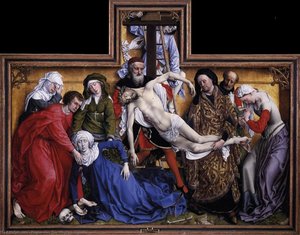
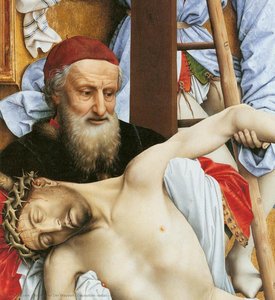
Depunerea (1435) de Rogier Van Der Weyden

Depunerea

1435 · Ulei pe panou rigid · Muzeul Prado, Madrid

O Simfonie a Doliului și Spiritualității Rogier van der Weyden nu ne oferă doar o reprezentare a unui eveniment biblic, ci mai degrabă un tablou extraordinar, o compoziție profundă de durere și semnificație spirituală. “Depunerea” (sau “Descențiunea din Cruce”, cum este adesea cunoscută), pictată în 1435 și acum păstrată cu mândrie în Muzeul Prado din Madrid, transcende contextul său istoric pentru a vorbi direct cu emoțiile noastre. Van der Weyden,…

2
Portret de damă (1455) de Rogier Van Der Weyden

Portret de damă

1455 · Ulei pe panou rigid · National Gallery of Art, Washington

A sta în fața acestei opere înseamnă a întâlni un sentiment profund de liniștea absolută. Creată în jurul anului 1455, această pictură în ulei pe panou prezintă o femeie a cărei identitate a alunecat printre crăpăturile istoriei, lăsându-ne doar impresia caracterului său. Ea este surprinsă într-un moment de intensă concentrare mentală, cu privirea coborâtă și ușor spre stânga. Există o anumită tensiune ce se simte în degetele ei strâns împrecate…

3
Judecata de Apoi de Rogier Van Der Weyden

Judecata de Apoi

Ulei pe panou rigid

„Judecata de Apoi” a lui Rogier van der Weyden, pictată în jurul anului 1430-1435, nu este doar o simplă reprezentare a narativului biblic; este o explorare viscerală a mortalității umane și a greutății agonizante a judecății divine. Această operă monumentală, probabil destinată unei capele private sau unei comisioane civice de o importanță majoră, transcende simpla ilustrație religioasă pentru a deveni o meditație profund mișcătoare asupra păcatului, a redemțiunii și a…

4
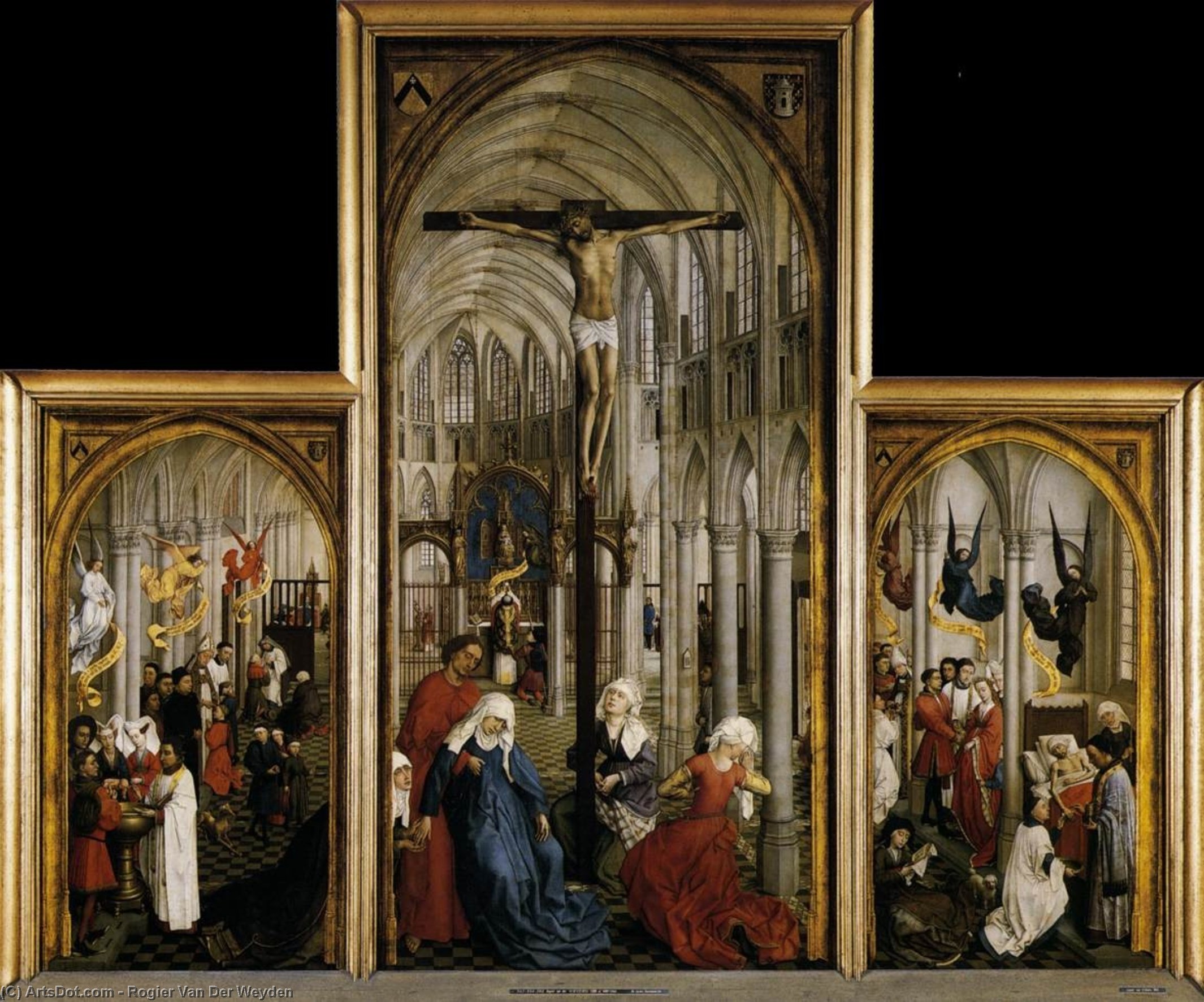
Polipticul celor Șapte Sakramente (1445) de Rogier Van Der Weyden

Polipticul celor Șapte Sakramente

1445 · Ulei pe panou rigid · Koninklijk Museum voor Schone Kunsten, Antwerpen

O fereastră către credința medievală: Retablul celor Șapte Sakramente al lui Rogier van der Weyden Retablul celor Șapte Sakramente al lui Rogier van der Weyden, finalizat în anul 1445, reprezintă o operă de referință a perioadei renascentului nordic. Găzduit de Koninklijk Museum voor Schone Kunsten din Antwerpen, Belgia, acest tablou monumental realizat în ulei pe panou (200 x 97 cm) nu este doar o simplă pictură; este un tratat teologic…

5
Tripticul Sfânta Columba (1455) de Rogier Van Der Weyden

Tripticul Sfânta Columba

1455 · Ulei pe panou rigid · Alte Pinakothek, Munchen

În coridoarele liniștite ale Alte Pinakothek din München, există o capodoperă care transcende limitele simple ale vopsea și lemn, invitând privitorul într-o realitate sacră, vie. Tripticul Sfânta Columba, finalizat în jurul anului 1455 de virtuozul flamand Rogier van der Weyden, nu este doar un obiect de devotament, ci un peisaj psihologic profund. În esența sa, opera surprinde intersecția dintre terestru și divin, prezentând scene din viața lui Hristos—inclusiv Anunțul, Adorația…

6
wga.hu
tags: ['WEYDEN (1435) de Rogier Van Der Weyden

wga.hu tags: ['WEYDEN

1435 · Ulei pe panou rigid · Muzeul Prado, Madrid

În inima Renașterii Nordice, unde realismul se împletea cu o devoțiune profundă, Rogier van der Weyden a creat o capodoperă care continuă să emoționeze și să fascineze: "Depunerea". Această lucrare din jurul anului 1435 nu este doar o reprezentare artistică a unui moment biblic crucial, ci o explorare viscerală a durerii, pierderii și credinței. Privind această pictură, te afli imediat transportat într-o lume de suferință intensă, dar și de o…

7
Coborârea de la Cruce (1449) de Rogier Van Der Weyden

Coborârea de la Cruce

1449 · Ulei pe panou rigid · Detroit Institute of Arts, Detroit

The air feels heavy, thick with the scent of damp wood and the weight of an unbearable loss. Within this shallow, compressed space, the limp, pale body of Christ begins its slow descent from the cross. Every muscle in his torso reflects a profound exhaustion, a physical surrender to death that pulls at the hearts of those gathered around him. The light catches the sickly, translucent flesh of his skin,…

8
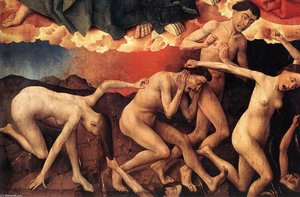
Rogier van der Weyden, Ultima Judecată (detaliu) (1446) de Rogier Van Der Weyden

Rogier van der Weyden, Ultima Judecată (detaliu)

1446 · Ulei pe panou rigid · Musée de l'Hôtel Dieu, Bourg-en-Bresse

Scena surprinsă nu este una de liniște sau de fericire cerească, ci reprezintă, dimpotrivă, o viziune turbulentă și tulburătoare a judecății de ultimă instanță. Deși este doar un detaliu, acesta concentrează întreaga dramă a poliptihului – separarea celor salvați de cei condamnați. Figurile sunt prinse în momente de suferință emoțională extremă: chin, disperare și rugăciuni frenetice. Această secțiune particulară se concentrează pe cei care se confruntă cu privirea divină, cu…

9
Pietà (1450) de Rogier Van Der Weyden

Pietà

1450 · Ulei pe panou rigid · Muzeul Prado, Madrid

În liniștea profundă a mijlocului secolului al XV-lea, o transformare profundă a avut loc în peisajul artei europene de nord, îndepărtându-se de iconografia stilizată către o realitate viscerală, vie. În centrul acestui movement se află Pietà lui Rogier van der Weyden, o capodoperă care nu doar că depinde un eveniment biblic, dar invită privitorul într-un spațiu sacru de doliu comun. Finalizată în jurul anului 1450, această lucrare pictată cu ulei…

10
Doamnă purtând un acoperământ din tul (1445) de Rogier Van Der Weyden

Doamnă purtând un acoperământ din tul

1445 · Ulei pe panou rigid · Muzeele Statale din Berlin, Berlin

În coridoarele liniștite ale Gemäldegalerie Berlin, există o fereastră către mijlocul secolului al XV-lea care transcende simpla trecere a timpului. Tabloul lui Rogier van der Weyden, „Doamnă purtând o acoperiș de tul,” pictat în jurul anului 1445, este mult mai mult decât un portret static; este o întâlnire profundă cu un spirit viu. Subiectul, o femeie de o prezență nobilă, este surprinsă într-un moment de liniște profundă, introspectivă. Privirea ei,…

Păiți celebrele picturi ale lui Rogier Van Der Weyden, de la numărul 11 la 100

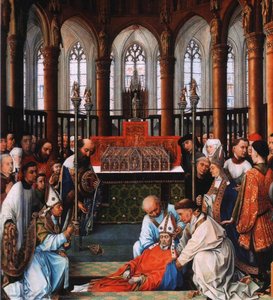
11Exhumarea Sfântului Hubert (1437) de Rogier Van Der WeydenExhumarea Sfântului Hubert1437 · National Gallery 12St Luke Drawing a Portrait of the Madonna (1435) de Rogier Van Der WeydenSt Luke Drawing a Portrait of the Madonna1435 · Muzeul de Artă Plastică din Boston 13Magdala citind (detaliu) (1445) de Rogier Van Der WeydenMagdala citind (detaliu)1445 · National Gallery 14Tripticul Bladelin (1445) de Rogier Van Der WeydenTripticul Bladelin1445 · Muzeele Statale din Berlin 15Retabloul Sfânta Columba (panoul drept) (1455) de Rogier Van Der WeydenRetabloul Sfânta Columba (panoul drept)1455 · Alte Pinakothek 16Triptichul Bladelin (aparatul drept) (1445) de Rogier Van Der WeydenTriptichul Bladelin (aparatul drept)1445 · Muzeele Statale din Berlin 17The Holy Trinity (1430) de Rogier Van Der WeydenThe Holy Trinity1430 18Triptichul Bladelin (panoul stâng) (1445) de Rogier Van Der WeydenTriptichul Bladelin (panoul stâng)1445 · Muzeele Statale din Berlin 19Tripticul Pierre Bladelin (detaliu) (1445) de Rogier Van Der WeydenTripticul Pierre Bladelin (detaliu)1445 · Muzeele Statale din Berlin 20Diptichul Crucificării (panoul drept) (1460) de Rogier Van Der WeydenDiptichul Crucificării (panoul drept)1460 · Philadelphia Museum of Art 21The Last Judgment (detail) (21) (1446) de Rogier Van Der WeydenThe Last Judgment (detail) (21)1446 · Musée de l'Hôtel Dieu 22Depunerea din Cruce (detaliu) (1435) de Rogier Van Der WeydenDepunerea din Cruce (detaliu)1435 · Muzeul Prado 23Anunțarea (detaliu) (1440) de Rogier Van Der WeydenAnunțarea (detaliu)1440 · Muzeul Luvru 24St John Altarpiece (detail) (1455) de Rogier Van Der WeydenSt John Altarpiece (detail)1455 · Muzeele Statale din Berlin 25Fecioara și Pruncul (Madonna Durán) (1440) de Rogier Van Der WeydenFecioara și Pruncul (Madonna Durán)1440 · Muzeul Prado 26Sfântul Iosif (1445) de Rogier Van Der WeydenSfântul Iosif1445 · Fundação Calouste Gulbenkian 27Deposition (detail) (1435) de Rogier Van Der WeydenDeposition (detail)1435 · Muzeul Prado 28Triptichul Pierre Bladelin (detaliu) (1445) de Rogier Van Der WeydenTriptichul Pierre Bladelin (detaliu)1445 · Muzeele Statale din Berlin 29Coborârea de la Cruce (1435) de Rogier Van Der WeydenCoborârea de la Cruce1435 · Muzeul Prado 30The Last Judgment (detail) (1446) de Rogier Van Der WeydenThe Last Judgment (detail)1446 · Musée de l'Hôtel Dieu 31Sfântul Luca pictând portretul Madonei de Rogier Van Der WeydenSfântul Luca pictând portretul MadoneiGroeninge Museum 32Saint Luke Portraying the Virgin (1431) de Rogier Van Der WeydenSaint Luke Portraying the Virgin1431 · National Gallery of Ireland 33Madonna and Child in a Landscape (1460) de Rogier Van Der WeydenMadonna and Child in a Landscape1460 34Triptichul Crucificării (panoul stâng) (1445) de Rogier Van Der WeydenTriptichul Crucificării (panoul stâng)1445 · Muzeul Kunsthistorisches din Viena 35Crucifixion Triptych (right wing) (1445) de Rogier Van Der WeydenCrucifixion Triptych (right wing)1445 · Muzeul Kunsthistorisches din Viena 36Depunerea din Cruce (detaliu) (1435) de Rogier Van Der WeydenDepunerea din Cruce (detaliu)1435 · Muzeul Prado 37Coborârea de la Cruce (detaliu) (9) (1435) de Rogier Van Der WeydenCoborârea de la Cruce (detaliu) (9)1435 · Muzeul Prado 38Retablu Miraflores (panoul central) (1440) de Rogier Van Der WeydenRetablu Miraflores (panoul central)1440 · Muzeele Statale din Berlin 39Visul Papei Sergius (1437) de Rogier Van Der WeydenVisul Papei Sergius1437 · J. Paul Getty Museum 40Portretul unui Bărbat (Guillaume Fillastre.) (1440) de Rogier Van Der WeydenPortretul unui Bărbat (Guillaume Fillastre.)1440 · Courtauld Gallery 41Портрет човека (1450) de Rogier Van Der WeydenПортрет човека1450 · Koninklijk Museum voor Schone Kunsten 42Deposition (detail) (1435) de Rogier Van Der WeydenDeposition (detail)1435 · Muzeul Prado 43Sfântul Luca pictând portretul Madonei (1450) de Rogier Van Der WeydenSfântul Luca pictând portretul Madonei1450 · Alte Pinakothek 44Diptych (1440) de Rogier Van Der WeydenDiptych1440 · Muzeul Kunsthistorisches din Viena 45Anunțarea (detaliu) (8) (1440) de Rogier Van Der WeydenAnunțarea (detaliu) (8)1440 · Muzeul Luvru 46Sfântul Luca desenând un portret al Madonei de Rogier Van Der WeydenSfântul Luca desenând un portret al MadoneiMuzeul Ermitaj 47Braque Family Triptych (1450) de Rogier Van Der WeydenBraque Family Triptych1450 · Muzeul Luvru 48Retabloul Sfântului Ioan (detaliu) (1455) de Rogier Van Der WeydenRetabloul Sfântului Ioan (detaliu)1455 · Muzeele Statale din Berlin 49The Last Judgment (detail) (13) (1446) de Rogier Van Der WeydenThe Last Judgment (detail) (13)1446 · Musée de l'Hôtel Dieu 50În Lectură Sfântă (1445) de Rogier Van Der WeydenÎn Lectură Sfântă1445 · National Gallery 51Portrait of Jean le Belliqueux (1451) de Rogier Van Der WeydenPortrait of Jean le Belliqueux1451 52Retabloul Sfântului Ioan (panoul central) (1455) de Rogier Van Der WeydenRetabloul Sfântului Ioan (panoul central)1455 · Muzeele Statale din Berlin 53Anunțarea de Rogier Van Der WeydenAnunțareaAlte Pinakothek 54The Middelburg Altar (1450) de Rogier Van Der WeydenThe Middelburg Altar1450 · Gemäldegalerie 55Bladelin Triptych (exterior) (1480) de Rogier Van Der WeydenBladelin Triptych (exterior)1480 · Muzeele Statale din Berlin 56Depunerea (detaliu) (8) (1435) de Rogier Van Der WeydenDepunerea (detaliu) (8)1435 · Muzeul Prado 57Depunerea de pe cruce (detaliu) (1435) de Rogier Van Der WeydenDepunerea de pe cruce (detaliu)1435 · Muzeul Prado 58Crucifixion Triptych (central panel) (1445) de Rogier Van Der WeydenCrucifixion Triptych (central panel)1445 · Muzeul Kunsthistorisches din Viena 59Mary Altarpiece (1445) de Rogier Van Der WeydenMary Altarpiece1445 · Gemäldegalerie 60Braque Family Triptych (1450) de Rogier Van Der WeydenBraque Family Triptych1450 61St John Altarpiece (1455) de Rogier Van Der WeydenSt John Altarpiece1455 · Muzeele Statale din Berlin 62*Seven Sacraments Altarpiece* (detail) (10) (1445) de Rogier Van Der Weyden*Seven Sacraments Altarpiece* (detail) (10)1445 · Koninklijk Museum voor Schone Kunsten 63Familia Braque (wing dreapta) (1450) de Rogier Van Der WeydenFamilia Braque (wing dreapta)1450 · Muzeul Luvru 64Polipticul Miraflores (detaliu) (1440) de Rogier Van Der WeydenPolipticul Miraflores (detaliu)1440 · Muzeele Statale din Berlin 65Exhumation of Saint Hubert (1440) de Rogier Van Der WeydenExhumation of Saint Hubert1440 · National Gallery 66Madona și Fiu de Rogier Van Der WeydenMadona și Fiu 67Detalii din Altarul Sfântul Columban (1455) de Rogier Van Der WeydenDetalii din Altarul Sfântul Columban1455 · Alte Pinakothek 68Anunțarea (1440) de Rogier Van Der WeydenAnunțarea1440 · Muzeul Luvru 69たRetabelul Sfânta Columba (detaliu) (1455) de Rogier Van Der WeydenたRetabelul Sfânta Columba (detaliu)1455 · Alte Pinakothek 70Apariția lui Cristos Mariei (1430) de Rogier Van Der WeydenApariția lui Cristos Mariei1430 71Three Kings Altar (Columba Altar) (1455) de Rogier Van Der WeydenThree Kings Altar (Columba Altar)1455 72The Last Judgment (detail) (38) (1446) de Rogier Van Der WeydenThe Last Judgment (detail) (38)1446 · Musée de l'Hôtel Dieu 73Portret al lui Antoni de Burgundia (1461) de Rogier Van Der WeydenPortret al lui Antoni de Burgundia1461 · Musées Royaux des Beaux-Arts 74The Last Judgment (detail) (8) (1446) de Rogier Van Der WeydenThe Last Judgment (detail) (8)1446 · Musée de l'Hôtel Dieu 75Triptihul Sforzii (exterior) (1460) de Rogier Van Der WeydenTriptihul Sforzii (exterior)1460 · Musées Royaux des Beaux-Arts 76Seven Sacraments (central panel) (1445) de Rogier Van Der WeydenSeven Sacraments (central panel)1445 · Koninklijk Museum voor Schone Kunsten 77Miraflores Altarpiece (right panel) (1440) de Rogier Van Der WeydenMiraflores Altarpiece (right panel)1440 · Muzeele Statale din Berlin 78Sforza Triptych (1460) de Rogier Van Der WeydenSforza Triptych1460 · Musées Royaux des Beaux-Arts 79Crucifixion Diptych (detail of the left panel) (1460) de Rogier Van Der WeydenCrucifixion Diptych (detail of the left panel)1460 · Philadelphia Museum of Art 80Virgin with the Blessing Child (1450) de Rogier Van Der WeydenVirgin with the Blessing Child1450 · Museum Boijmans Van Beuningen 81Diptichul portret al lui Laurent Froimont (panou stâng) (1460) de Rogier Van Der WeydenDiptichul portret al lui Laurent Froimont (panou stâng)1460 · Musée des Beaux-Arts 82Diplomă de Portret a lui Philippe de Croy (wing-ul stâng) (1460) de Rogier Van Der WeydenDiplomă de Portret a lui Philippe de Croy (wing-ul stâng)1460 · Henry E. Huntington Library 83The Last Judgment (detail) (18) (1446) de Rogier Van Der WeydenThe Last Judgment (detail) (18)1446 · Musée de l'Hôtel Dieu 84Tripticul Sfântului Columba (detaliu) (1455) de Rogier Van Der WeydenTripticul Sfântului Columba (detaliu)1455 · Alte Pinakothek 85Virgin and Child de Rogier Van Der WeydenVirgin and ChildMuseum of Fine Arts 86The Last Judgment (detail) (23) (1446) de Rogier Van Der WeydenThe Last Judgment (detail) (23)1446 · Musée de l'Hôtel Dieu 87St John Altarpiece (right panel) (1455) de Rogier Van Der WeydenSt John Altarpiece (right panel)1455 · Muzeele Statale din Berlin 88Mary Altarpiece (Miraflores Altarpiece) (1440) de Rogier Van Der WeydenMary Altarpiece (Miraflores Altarpiece)1440 · Muzeele Statale din Berlin 89Crucifixion (1445) de Rogier Van Der WeydenCrucifixion1445 90The Altar of St. John (1455) de Rogier Van Der WeydenThe Altar of St. John1455 · Slovak National Gallery 91Crucifixion Diptych (1460) de Rogier Van Der WeydenCrucifixion Diptych1460 92Depunerea din cruce (detaliu) (1435) de Rogier Van Der WeydenDepunerea din cruce (detaliu)1435 · Muzeul Prado 93The Altar of Our Lady (Miraflores Altar) (1440) de Rogier Van Der WeydenThe Altar of Our Lady (Miraflores Altar)1440 94Sfântul Ivo (1450) de Rogier Van Der WeydenSfântul Ivo1450 · National Gallery 95The Last Judgment (detail) (9) (1446) de Rogier Van Der WeydenThe Last Judgment (detail) (9)1446 · Musée de l'Hôtel Dieu 96Seven Sacraments Altarpiece (detail) (8) (1445) de Rogier Van Der WeydenSeven Sacraments Altarpiece (detail) (8)1445 · Koninklijk Museum voor Schone Kunsten 97The Last Judgment (detail) (1446) de Rogier Van Der WeydenThe Last Judgment (detail)1446 · Musée de l'Hôtel Dieu 98Diptichul Crucificării (1460) de Rogier Van Der WeydenDiptichul Crucificării1460 · Philadelphia Museum of Art 99The Last Judgment (detail) (17) (1446) de Rogier Van Der WeydenThe Last Judgment (detail) (17)1446 · Musée de l'Hôtel Dieu 100Seven Sacraments (left wing) (1445) de Rogier Van Der WeydenSeven Sacraments (left wing)1445 · Koninklijk Museum voor Schone Kunsten

Piesele celebre ale lui Rogier Van Der Weyden, perioadă cu perioadă

Subiectele care i-au captivat privirea lui Rogier Van Der Weyden

Cele patru teme care revin cel mai des în aceste opere originale, fiecare având cel mai sublim exemplu.

Muzeele care păstrează originalele lui Rogier Van Der Weyden

Cele 8 muzee care dețin cele mai multe dintre picturile de pe această pagină.

Muzee Oraș Lucrări lui Rogier Van Der Weyden Picturi din această listă
Muzeele Statale din Berlin, BerlinMuzeele Statale din Berlin Berlin 21 Doamnă purtând un acoperământ din tul, Tripticul Bladelin, Triptichul Bladelin (aparatul drept)
Muzeul Prado, MadridMuzeul Prado Madrid 15 Depunerea, wga.hu tags: ['WEYDEN, Pietà
Musée de l'Hôtel Dieu, Bourg-en-BresseMusée de l'Hôtel Dieu Bourg-en-Bresse 24 Rogier van der Weyden, Ultima Judecată (detaliu), The Last Judgment (detail) (21), The Last Judgment (detail)
Alte Pinakothek, MunchenAlte Pinakothek Munchen 12 Tripticul Sfânta Columba, Retabloul Sfânta Columba (panoul drept), Sfântul Luca pictând portretul Madonei
Koninklijk Museum voor Schone Kunsten, AntwerpenKoninklijk Museum voor Schone Kunsten Antwerpen 12 Polipticul celor Șapte Sakramente, Портрет човека, *Seven Sacraments Altarpiece* (detail) (10)
Muzeul Luvru, ParisMuzeul Luvru Paris 9 Anunțarea (detaliu), Anunțarea (detaliu) (8), Braque Family Triptych
National Gallery, LondraNational Gallery Londra 8 Exhumarea Sfântului Hubert, Magdala citind (detaliu), În Lectură Sfântă
Muzeul Kunsthistorisches din Viena, VienaMuzeul Kunsthistorisches din Viena Viena 8 Triptichul Crucificării (panoul stâng), Crucifixion Triptych (right wing), Diptych

Rogier Van Der Weyden de-a lungul deceniilor: o piesă unică pentru fiecare

Lucrări pe deceniu

Alege o deceniu pentru a descoperi opera originală care îl definește.

Picturile lui Rogier Van Der Weyden: întrebări pentru galerie

Care este cea mai celebră operă a lui Rogier Van Der Weyden?Află răspunsul

Depunerea (1435), Muzeul Prado, Madrid. Urmează Portret de damă (1455) și Judecata de Apoi.

La ce vârstă a creat Rogier Van Der Weyden Depunerea?Află răspunsul

35 ani: Depunerea datează din 1435, iar Rogier Van Der Weyden s-a născut în 1400.

Care sunt cele mai celebre zece picturi ale lui Rogier Van Der Weyden?Află răspunsul

Depunerea, Portret de damă, Judecata de Apoi, Polipticul celor Șapte Sakramente, Tripticul Sfânta Columba, wga.hu tags: ['WEYDEN, Coborârea de la Cruce, Rogier van der Weyden, Ultima Judecată (detaliu), Pietà și Doamnă purtând un acoperământ din tul. Clasamentul de mai sus indică anul și muzeul pentru fiecare piesă.

Câte lucrări ale lui Rogier Van Der Weyden sunt cunoscute?Află răspunsul

Catalogul nostru cuprinde 314 lucrări ale lui Rogier Van Der Weyden, datate între 1430 și 1461.

Unde pot fi vizualizate originalele celor mai faimoși Rogier Van Der Weyden?Află răspunsul

În principal în Muzeele Statale din Berlin (Berlin), Muzeul Prado (Madrid) și Musée de l'Hôtel Dieu (Bourg-en-Bresse). Tabelul cu muzee de mai sus le enumeră pe toate.

În ce perioadă a creat Rogier Van Der Weyden cele mai cunoscute picturi?Află răspunsul

În 1440s: 43 dintre cele 100 lucrări de pe această pagină au fost realizate atunci, fiind Polipticul celor Șapte Sakramente dintre acestea.

Care este cea mai veche și care este cea mai recentă pictură a lui Rogier Van Der Weyden?Află răspunsul

Pe această pagină, cea mai veche lucrare datează din The Holy Trinity (1430), iar cea mai recentă este din Portret al lui Antoni de Burgundia (1461).

Ce teme prefera Rogier Van Der Weyden?Află răspunsul

Artă medievală (28), Medieval art (26) și Memento mori (15), din cele 100 lucrări de pe această pagină.

Cu ce materiale a pictat cel mai des Rogier Van Der Weyden?Află răspunsul

Ulei pe panou rigid, pentru 48 dintre cele 100 lucrări de pe această pagină.

Din ce curent artistic face parte opera lui Rogier Van Der Weyden?Află răspunsul

Primitivii flamanzi, judecând după originalele de pe această pagină.

Ce originale de Rogier Van Der Weyden pot vedea la Muzeele Statale din Berlin?Află răspunsul

Doamnă purtând un acoperământ din tul, Tripticul Bladelin și Triptichul Bladelin (aparatul drept): Muzeele Statale din Berlin, Berlin deține 16 dintre lucrările de pe această pagină.

Rogier Van Der Weyden: un portret al artistului

The Life and Identity of Rogier van der Weyden

The name Rogier van der Weyden emerges from the shifting linguistic landscapes of the fifteenth century. Born in Tournai, a Bishopric that is now part of Belgium, around 1399 or 1400, he moved through a world of evolving identities. He was known as Roger de la Pasture and Rogelet de le Pasture before his name was translated to Dutch as Rogier van der Weyden. This transition reflects the complex social and regional textures of the Burgundian Netherlands during his lifetime.

His existence was defined by the transition from a craftsman to a central figure of Early Netherlandish painting. He navigated the high-stakes circles of the Burgundian court, moving between the urban centers of Tournai and Brussels. His life reached its conclusion on 18 June 1464. He left behind a body of work that redefined the capacity for human emotion in Northern Renaissance art, moving away from rigid iconography toward a more visceral, breathing reality.

Early Life, Family and Training

The foundations of Rogier van der Weyden’s precision lie in the workshop of a cutler. His father, Henri de le Pasture, was a prosperous man who died around 1425-26. Alongside his mother, Agnes de Wattrélos—sometimes called demoiselle Agnès de Waterlos—he was raised in a household defined by craftsmanship. Before the brush became his primary tool, Rogier likely honed his technical sensibilities as a goldsmith. This early immersion in the manipulation of precious metals instilled a discipline for minute detail and a refined sense of texture that would later define his approach to oil painting.

A shift in his professional trajectory occurs in the late 1420s. On 5 March 1427, Rogier entered the workshop of Robert Campin as an apprentice. This period marks his transition from the metalworker's bench to the painter's easel. During these formative years, his personal life also took root. He married Elisabeth Goffaert between 1426 and 1427. The couple would go on to have four children: Cornelius, Margaretha, Pieter, and Jan.

Professional Life in Tournai and Brussels

The professional ascent begins in Tournai. By 1427, he has already ascended to the rank of master within the Guild of Saint Luke. This status provides the legal and social standing necessary to operate a formal workshop. He secures the official title of a Master painter on 1 August 1432. His presence in the city marks him as a significant figure in the local guild structure.

The focus shifts toward Brussels. On 2 March 1436, he holds the prestigious title of painter to the town of Brussels. This appointment anchors his career in the political and administrative heart of the region. He maintains active workshops in both Tournai and Brussels, managing the production of art across two major urban centers. Around 1443, his operations expand within the city; he occupies two adjoining houses in the Golden Street, situated near the Coudenberg Palace and the Town Hall.

Patrons, Workshop and Commissions

Success arrives in 1435. Rogier van der Weyden enters the service of Philip the Good, Duke of Burgundy. This appointment secures his status within the most influential court in Europe. His reputation spreads far beyond the borders of the Low Countries. Foreign aristocrats seek his hand, sending commissions across vast distances to secure his specific style. He is a highly successful artist in his lifetime, commanding a presence that reaches into Italy and Spain.

His workshop functions as a center of technical excellence and instruction. Having been a student of Robert Campin, he carries forward a lineage of precision. He does not merely produce works; he shapes the next generation of painters. Hans Memling enters his orbit, learning the methods that will define the next era of Northern art. The workshop operates with a high degree of professional organization, managing the demands of both civic leaders and private patrons.

Technique and Artistic Style

The brush moves with the precision of a goldsmith. Working from life models, Rogier van der Weyden captures the physical world with a meticulous, detailed realism. He does not merely replicate a face; he sculpts it. While his observations are acute, he often idealises certain facial features, refining the sitter into a version of themselves that possesses a certain Gothic elegance. This tension between the real and the ideal defines his approach to the human form.

Light and shadow act as tools of psychological depth. In his portraiture, he employs dark planes to isolate the subject, forcing the viewer's gaze onto the face and hands. This technique strips away distractions. He builds his images through the careful application of oil paint, layering translucent glazes to achieve luminous effects and a sense of profound depth. His palette is expansive, utilizing an unusually broad range of colours and varied tones to ensure that no two areas of a canvas are identical in hue. This variety creates a sense of living, breathing space.

Emotion is not an afterthought; it is built into the very anatomy of his compositions. He achieves a sense of expressive pathos through subtle gestures and the heavy, sculptural quality of drapery. In scenes of intense sorrow, the grief is palpable in the tilt of a head or the tension in a hand. The technical mastery of his medium allows this emotion to feel visceral rather than merely symbolic.

Key Works and Masterpieces

The emotional weight of his oeuvre often centers on the profound grief of the Passion. In the Lamentation, held at the Musée des Beaux-Arts Tournai, Belgium, sorrow is palpable. This intensity finds a parallel in the Deposition, a panel painting from about 1435. Nearby, the Descent from the Cross in the Museo del Prado, Madrid, captures a similar dramatic tension. These works do not merely depict religious events; they translate human suffering into a visual language of heavy drapery and expressive gestures.

His technical precision extends to the most intimate and the most complex commissions. The Annunciation displays a refined style, while the Bladelin Triptych presents an intricate and detailed composition. In 1445, he completed the Seven Sacraments Altarpiece, a large-scale work that articulates complex theological truths through visual narrative. Even in smaller, more contemplative scenes, the detail remains sharp. The Magdalene Reading, also from 1445, focuses on the quietude of spiritual reflection, while the Virgin and Child in the Museum of Fine Arts, Houston, captures a tender, human moment between mother and child.

Legacy and Influence on Art

Rogier van der Weyden occupies a central position in the history of Northern Renaissance art. He is recognized alongside Jan van Eyck and Robert Campin as one of the three great Early Flemish masters. His reach extends far beyond the borders of the Low Countries; his panels travel across Europe, finding high demand in Italy and Spain. This international presence ensures his stylistic innovations ripple through diverse artistic traditions.

The impact of his work is visible in the evolution of European painting. His technical advancements and specific approach to human emotion influence a lineage of significant artists, including Antonello da Messina, Albrecht Durer, and Martin Schongauer. By moving away from rigid iconography toward a more visceral naturalism, he provides a new visual language for the depiction of the human condition. His methods regarding the use of oil paint and the rendering of psychological depth pave the way for subsequent generations of painters.

Where to See His Works Today

His presence in modern collections spans the major cultural centers of Europe and the Americas. In Madrid, the Museo del Prado holds significant pieces, including the 1435 Deposition. The National Gallery in London preserves his paintings, such as the 1445 The Magdalene Reading. Across the channel, the Musée du Louvre in Paris contains his art, while the Metropolitan Museum of Art in New York maintains a selection of his works. In Brussels, the Royal Museums of Fine Arts houses his paintings, preserving the visual language he helped establish in the Low Countries.

The reach of his influence extends into the great state museums of Germany and Austria. The Staatliche Museen in Berlin holds several works, including details from the 1445 Miraflores Altarpiece. In Vienna, the Kunsthistorisches Museum maintains his paintings, ensuring his technical precision remains accessible to scholars and viewers alike. These institutions act as the primary repositories for his surviving output, where the specific textures of oil glazes and the sculptural quality of his figures remain visible to the modern eye.