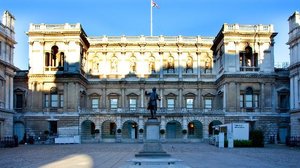
Portretul lui Norman Ackroyd

Picturi Norman Ackroyd: Cele 7 de cele mai faimoase, prin ochii unei galerii

Actualizat Octombrie 2026 · clasat în funcție de scorul nostru de popularitate (căutări, vizite și comenzi pentru fiecare operă) · 7 lucrări ale lui Norman Ackroyd în catalogul nostru

Pe scurt

În ochii galeriei, cea mai celebră pictură a lui Norman Ackroyd este Gentle Rainstorm (1974), a cărei originală este expusă la Tate Britain, Londra. The Avenue at Avington (1982) și St Kilda - Stac Lee and Stac an Armin (1990) completează trioul pe care orice ochi îl recunoaște. Dintre cele 7 opere ale lui Norman Ackroyd din catalogul nostru, galeria prezintă mai jos cele 7 cele mai faimoase, fiecare fiind originală, cu anul creării, muzeul de păstrare și elementul care o face unică.

născut în 1938, Leeds Contemporary realism Cele mai multe lucrări: Tate Britain

Cele mai apreciate 10 picturi ale lui Norman Ackroyd din galerie

1
Gentle Rainstorm (1974) de Norman Ackroyd

Gentle Rainstorm

1974 · Intaglio · Tate Britain, Londra

We are looking at Gentle Rainstorm, an intaglio print on paper created by Norman Ackroyd in 1974. This work belongs to a period in the artist's career where he was deeply engaged with the atmospheric qualities of the natural landscape. It is a piece that prioritizes the feeling of a specific moment over a literal depiction of a scene.

2
The Avenue at Avington (1982) de Norman Ackroyd

The Avenue at Avington

1982 · Aquatint · Tate Britain, Londra

The Avenue at Avington is an aquatint on paper created by Norman Ackroyd. This work, dating to 1982, captures a specific sense of place through the meticulous application of printmaking techniques. It remains a significant example of the artist's ability to translate the natural landscape into a series of tonal gradations.

3
St Kilda - Stac Lee and Stac an Armin (1990) de Norman Ackroyd

St Kilda - Stac Lee and Stac an Armin

1990 · Royal Academy of Arts, Londra

Sea stacks are pillar-like masses of rock in the sea, detached from the coast by wave erosion. Stac Lee and Stac an Armin off the north-west coast of Scotland stand at 165 and 191 metres high respectively, making them the tallest sea stacks in Britain. They form part of the archipelago of St Kilda, which was inhabited for thousands of years, its isolated position eventually led to the last few…

Muzeele care păstrează originalele lui Norman Ackroyd

Cele 2 muzee care dețin cele mai multe dintre picturile de pe această pagină.

Muzee Oraș Lucrări lui Norman Ackroyd Picturi din această listă
Tate Britain, LondraTate Britain Londra 5 Gentle Rainstorm, The Avenue at Avington, 1st Millbank Print
Royal Academy of Arts, LondraRoyal Academy of Arts Londra 1 St Kilda - Stac Lee and Stac an Armin

Norman Ackroyd, o pictură emblematică pe deceniu

Lucrări pe deceniu

Alege o deceniu pentru a descoperi opera originală care îl definește.

Picturile lui Norman Ackroyd: răspunsurile galeriei

Care este cea mai celebră pictură a lui Norman Ackroyd?Află răspunsul

Gentle Rainstorm (1974), Tate Britain, Londra. Urmează The Avenue at Avington (1982) și St Kilda - Stac Lee and Stac an Armin (1990).

Ce vârstă avea Norman Ackroyd când a finalizat Gentle Rainstorm?Află răspunsul

36 ani: Gentle Rainstorm datează din 1974, iar Norman Ackroyd s-a născut în 1938.

Câte lucrări a creat Norman Ackroyd?Află răspunsul

Catalogul nostru cuprinde 7 lucrări ale lui Norman Ackroyd, datate între 1972 și 2008.

Unde sunt expuse cele mai celebrele opere originale ale lui Norman Ackroyd?Află răspunsul

În principal în Tate Britain (Londra) și Royal Academy of Arts (Londra). Tabelul cu muzee de mai sus le enumeră pe toate.

Când a creat Norman Ackroyd cele mai faimoase picturi?Află răspunsul

În 1970s: 3 dintre cele 7 lucrări de pe această pagină au fost realizate atunci, fiind Gentle Rainstorm dintre acestea.

Care sunt cele mai vechi și cele mai recente opere celebre ale lui Norman Ackroyd?Află răspunsul

Pe această pagină, cea mai veche lucrare datează din 1st Millbank Print (1972), iar cea mai recentă este din Study of Sunlight, County Kerry (2008).

Cu ce mișcare este asociat(ă) Norman Ackroyd?Află răspunsul

Contemporary realism, judecând după originalele de pe această pagină.

Ce opere originale ale lui Norman Ackroyd deține Tate Britain?Află răspunsul

Gentle Rainstorm, The Avenue at Avington și 1st Millbank Print: Tate Britain, Londra deține 5 dintre lucrările de pe această pagină.

Norman Ackroyd: artistul

A Life Etched in Landscape: The World of Norman Ackroyd

Norman Ackroyd, who passed away on September 16th, 2024, at the age of 86, was a towering figure in contemporary British printmaking. Though his career spanned decades and encompassed painting, mural commissions, and even forays into steel relief, it was as an etcher – a master of aquatint particularly – that he secured his enduring legacy. Ackroyd wasn’t merely recording landscapes; he was distilling their essence, capturing the raw poetry of place with a technical brilliance matched by few. His work offered a quiet resistance to the increasingly digital world, a testament to the power of slow craft and direct engagement with nature.

Born in Leeds, Yorkshire, in 1938, Ackroyd’s early life hinted at an artistic inclination despite initial familial skepticism. His father, Albert, was a master butcher, while his mother, Clara Briggs, was a weaver. This duality – the grounded practicality of one parent and the creative spirit of the other – perhaps informed the very nature of Ackroyd’s work: meticulous technique applied to subjects rooted in the tangible world. His formal training began at Leeds College of Art from 1957 to 1961, where he first encountered etching, a medium that would become his lifelong passion. This was followed by studies at the Royal College of Art between 1961 and 1964, under the guidance of Julian Trevelyan, alongside a generation of artists including David Hockney, Mary Quant, and Zandra Rhodes. The RCA proved pivotal, not only refining his skills but also introducing him to his first wife, the artist Sylvia Buckland.

The Mastery of Light and Aquatint

Ackroyd’s artistic development was defined by a profound fascination with light and shadow. While he initially explored these elements through watercolor, it was through the rigorous, chemical process of etching and aquatint that he truly found his voice. He possessed an uncanny ability to manipulate tonal ranges, creating atmospheres that felt both physically present and ethereally fleeting. His work often captured the dramatic interplay of weather and terrain, from the serene, sun-drenched landscapes of County Kerry to the rugged, isolated beauty of St Kilda.

His technical prowess extended beyond paper into the realm of monumental sculpture. In Bermondsey, London, Ackroyd converted a former leather warehouse into a sprawling studio space that housed his massive etching press. It was here that he expanded his vision, receiving numerous mural commissions where he translated his etched sensibilities into etched stainless steel and bronze. This ability to scale his intimate observations of nature into grand, permanent installations demonstrated the versatility of his artistic language.

Legacy and Recognition

Throughout his illustrious career, Ackroyd’s contributions to the British art scene were met with profound respect and numerous accolades. His journey from a student in Leeds to a central figure in the London art world was marked by significant milestones:

  • Royal Academy Distinction: He was elected an Associate Member of the Royal Academy in 1988 and became a full Royal Academician on June 26, 1991.
  • Academic Leadership: His dedication to the craft led him to serve as Professor of Etching at the University of the Arts, ensuring the continuation of traditional printmaking techniques for future generations.
  • National Honor: In 2007, he was named a Commander of the Order of the British Empire (CBE) in recognition of his immense services to printmaking and art within the United Kingdom.

Beyond the awards, Ackroyd’s historical significance lies in his role as a guardian of the "slow" medium. In an era of rapid reproduction, his commitment to the painstaking processes of aquatint and engraving served as a reminder of the beauty found in patience and precision. He leaves behind a body of work that remains a vital part of the British landscape tradition, inviting viewers to pause and witness the quiet, enduring majesty of the natural world.