A Life Etched in Ink: The World of Kim Jeong-hui
Kim Jeong-hui (1786–1856), a name synonymous with the pinnacle of Korean calligraphy and epigraphy, was more than just an artist; he was a scholar, a cultural icon, and a man whose life story is as intricate and compelling as the characters he so masterfully rendered. Born into the esteemed Gyeongju Kim clan during the late Joseon Dynasty, Jeong-hui’s lineage already carried a weight of tradition and artistic inclination. However, it was his innate talent, coupled with relentless dedication, that propelled him to become one of Korea's most celebrated figures. From an early age, he displayed an extraordinary gift for calligraphy, captivating observers with the power and precision of his brushstrokes even as a young boy. This precocious ability led to tutelage under prominent scholars like Chae Je-gong and Park Je-ga, laying the foundation for a career that would redefine Korean artistic expression.The Birth of ‘Chusa-che’ and a Revolution in Epigraphy
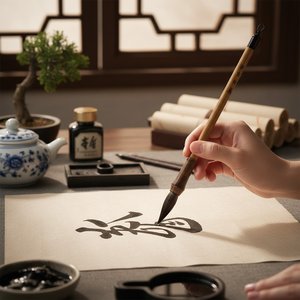
Jeong-hui's intellectual curiosity extended far beyond calligraphy. He embraced the Silhak (Practical Learning) school of thought, advocating for reform through engagement with diverse cultures and knowledge systems. A pivotal moment in his development came during a journey to Qing Dynasty China with his father. There, he immersed himself in Confucian scholarship, Buddhist philosophy, and, crucially, the study of ancient Chinese inscriptions – rubbings from stone tablets that preserved historical texts and artistic styles. This exposure profoundly impacted his approach to calligraphy. He wasn’t merely copying forms; he was delving into the very essence of character construction, seeking a deeper understanding of its history and meaning. Upon returning to Korea, Jeong-hui began to synthesize these influences, culminating in the creation of ‘Chusa-che,’ a unique calligraphic style that would become his signature. ‘Chusa-che’ wasn't simply a new aesthetic; it was a deliberate attempt to revitalize Korean epigraphy by drawing inspiration from ancient sources and imbuing them with a distinctly personal expression. The style is characterized by its angular lines, dynamic brushwork, varied line thickness, and an almost sculptural quality – each character possessing a powerful presence on the page.Beyond Calligraphy: Painting and Intellectual Pursuits
While renowned for his calligraphy, Kim Jeong-hui’s artistic talents weren't confined to ink and brush. He was also a gifted painter, particularly celebrated for his depictions of orchids – a subject deeply resonant with Confucian ideals of integrity and resilience. His orchid paintings are not mere botanical studies; they are imbued with symbolic meaning, reflecting his philosophical outlook and personal experiences. He approached painting with the same meticulous attention to detail and profound understanding of form that characterized his calligraphy. Beyond his artistic endeavors, Jeong-hui was a prolific scholar, deeply engaged in the study of Chinese classics, history, and literature. He held various government positions, reaching the rank of Vice-Minister of War, but his career was often disrupted by political factionalism. A period of exile to Jeju Island proved particularly challenging, yet even amidst hardship, he continued to create, producing some of his most poignant and expressive works.A Legacy Etched in Time
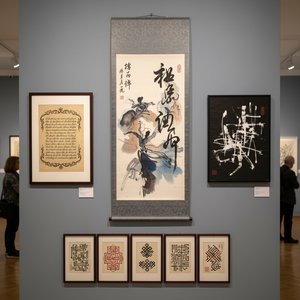
Kim Jeong-hui’s influence on Korean art and culture is immeasurable. He not only transformed the practice of calligraphy but also elevated epigraphy to a new level of artistic recognition. His ‘Chusa-che’ style became widely emulated, shaping the aesthetic sensibilities of generations of artists. He was related to Queen Jeongsun and served as a teacher to Heungseon Daewongun, King Gojong's father, further solidifying his position within the Korean aristocracy and ensuring the continuation of his artistic legacy. His work embodies a unique blend of tradition and innovation, intellectual rigor and emotional depth. Today, Kim Jeong-hui is remembered not only as a master calligrapher but also as a symbol of cultural resilience, a scholar who dared to challenge conventions, and an artist whose works continue to inspire awe and admiration. He left behind a vast body of work – calligraphy, paintings, epigraphic studies – that stands as a testament to his genius and a lasting contribution to the rich tapestry of Korean art history. His influence can still be seen in contemporary Korean calligraphy and painting, proving that his artistic vision continues to resonate across centuries.Major Achievements & Historical Significance
- Transformation of Korean Epigraphy: Jeong-hui’s systematic study of ancient inscriptions revolutionized the field, moving beyond mere copying to a deeper understanding of historical context and artistic expression.
- Creation of ‘Chusa-che’ Style: This unique calligraphic style, characterized by its angularity, dynamism, and personal touch, became his signature and profoundly influenced subsequent generations of artists.
- Revitalization of Orchid Painting: His orchid paintings transcended botanical representation, becoming imbued with symbolic meaning and philosophical depth.
- Advocacy for Silhak (Practical Learning): He championed a progressive approach to scholarship, emphasizing engagement with diverse cultures and knowledge systems.
- Cultural Icon: Jeong-hui’s life story – marked by both triumph and adversity – embodies the spirit of cultural resilience and intellectual pursuit, making him a lasting symbol in Korean history.
Întrebări și răspunsuri
De unde este Kim Jeong-Hui?
Kim Jeong-Hui s-a născut în South Korea.
Pot explora operele lui Kim Jeong-Hui pe baza unor cuvinte cheie?
Operele lui Kim Jeong-Hui pot fi explorate pe baza cuvintelor cheie, în pagina de După cuvinte cheie a artistului. Fiecare cuvânt cheie grupează operele aferente.
În ce perioade este împărțită cariera lui Kim Jeong-Hui?
O relatare cronologică a creației lui Kim Jeong-Hui este disponibilă pe pagina Cronica a artistului, unde operele de artă se succed în ordinea creației lor, capitol cu capitol.
Există un tur virtual 3D al operelor lui Kim Jeong-Hui?
O vizită virtuală este posibilă: pagina Muzeu 3D lui Kim Jeong-Hui prezintă lucrările artistului într-o galerie tridimensională.
În ce mișcări artistice a activat Kim Jeong-Hui?
Manifestările artistice în cadrul cărora a activat Kim Jeong-Hui pot fi vizualizate pe pagina de Toate mișcările a artistului, care grupează operele pe stiluri artistice.
În ce oraș și țară s-a născut Kim Jeong-Hui?
Kim Jeong-Hui s-a născut în Gyeongju, în South Korea.
Pot să explorez lucrările lui Kim Jeong-Hui în funcție de starea de spirit?
Operele lui Kim Jeong-Hui pot fi explorate în funcție de starea de spirit pe pagina Spațiu pe stări de spirit a artistului, care organizează lucrările după stările lor de spirit regăsite.
Cât de populare sunt operele lui Kim Jeong-Hui?
Există o pagină Statistici pentru Kim Jeong-Hui, care prezintă statistici despre operele de artă ale artistului pe acest site.