Portretul lui Henry Fuseli

Picturi Henry Fuseli: Cele 100 de cele mai faimoase, prin ochii unei galerii

Actualizat Noiembrie 2026 · clasat în funcție de scorul nostru de popularitate (căutări, vizite și comenzi pentru fiecare operă) · 161 lucrări ale lui Henry Fuseli în catalogul nostru

Pe scurt

În ochii galeriei, cea mai celebră pictură a lui Henry Fuseli este Coșmarul (1781), a cărei originală este expusă la Detroit Institute of Arts, Detroit. Titania și Bottom cu cap de asin și Coșmarul (1790) completează trioul pe care orice ochi îl recunoaște. Dintre cele 161 opere ale lui Henry Fuseli din catalogul nostru, galeria prezintă mai jos cele 100 cele mai faimoase, fiecare fiind originală, cu anul creării, muzeul de păstrare și elementul care o face unică.

1741 – 1825, Zürich Romantic baroque Cele mai multe lucrări: Kunsthaus Zürich

Cele mai apreciate 10 picturi ale lui Henry Fuseli din galerie

1
Coșmarul (1781) de Henry Fuseli

Coșmarul

1781 · Ulei pe pânză · Detroit Institute of Arts, Detroit

„Coșmarul” lui Henry Fuseli este o lucrare iconică ce surprinde esența horror-ului gotic și a Romantismului. Creată în 1781, această pictură în ulei reprezintă o explorare profundă a minții subconștiente, îmbinând o compoziție dramatică cu un simbolism bogat pentru a evoca un sentiment de neliniște și fascinație.

2
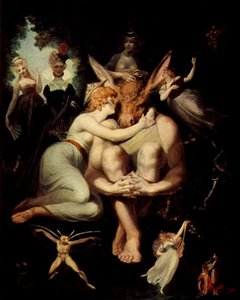
Titania și Bottom cu cap de asin de Henry Fuseli

Titania și Bottom cu cap de asin

Ulei pe pânză

În adâncurile umbroase, luminat de lună, ale unei păduri străvechi, Johann Heinrich Füssli ne invită într-un tărâm în care granițele dintre uman și supranatural se dizolvă complet. Capodopera sa, Titania și Bottom cu cap de asin, surprinde un moment crucial de transformare din piesa lui William Shakespeare, Vis de o noapte de vară. Compoziția este un vârtej uluitor de mișcare și mister, centrată în jurul eterei Regină Titania, în timp…

3
Coșmarul (1790) de Henry Fuseli

Coșmarul

1790 · Ulei pe pânză · Goethe-Museum, Frankfurt

In the shadowy realm of Johann Heinrich Füssli, the boundaries between sleep and wakefulness dissolve into a haunting spectacle of terror and desire. His seminal work, The Nightmare, stands as a profound exploration of the human psyche, capturing that breathless moment when the terrors of the unconscious manifest in the physical world. The painting presents a woman lying prostrate in bed, her limbs cast downward in a state of vulnerable,…

4
Lady Macbeth cu pumnalele (1812) de Henry Fuseli

Lady Macbeth cu pumnalele

1812 · Ulei pe pânză · Tate Gallery, Londra

To stand before this depiction of Lady Macbeth is to confront the very precipice of human ambition curdled by guilt. Johann Heinrich Friesli’s masterful rendering captures not merely a scene from Shakespeare, but the suffocating aftermath of moral transgression. The air in the painting feels thick, heavy with unspoken secrets and the metallic tang of spilled blood. It is an intensely dramatic tableau, steeped in the Romantic fascination with the…

5
The incubus leaving two young women (1794) de Henry Fuseli

The incubus leaving two young women

1794 · Oil On Canvas

The incubus leaving two young women is an oil on canvas painting by Henry Fuseli. Created about 1794, the work captures a moment of supernatural departure. It belongs to the realms of folklore and demons. The canvas holds a heavy, nocturnal stillness.

6
Artistul Dezgustat În Fața Magnitudinii Ruinelor Antice (1778) de Henry Fuseli

Artistul Dezgustat În Fața Magnitudinii Ruinelor Antice

1778 · Creta · Kunsthaus Zürich, Zurich

Johann Heinrich Füssli și „Artist Moved by Antique Fragments” – O Meditație asupra Dezastrului și Frumuseții Clasice „Artist Moved by Antique Fragments” este o lucrare impresionantă realizată de Johann Heinrich Fuseli în anul 1778, reprezentând un artist contemplând ruinele Colosseumului din Roma. Această imagine puternică nu doar surprinde emoția unei persoane în fața măreției trecutului, ci și exprimă o filozofie profundă despre timpul și schimbare, fiind unul dintre cele mai…

7
Hamlet and his father's Ghost (1785) de Henry Fuseli

Hamlet and his father's Ghost

1785 · Drawing

In this drawing from 1785, we find ourselves drawn into a moment of profound psychological unrest. The scene captures a dramatic encounter, likely inspired by the tension of Shakespearean tragedy, where the boundary between the living and the supernatural dissolves. A central figure, arms outstretched, appears caught in a state of sudden, violent realization. Around this focal point, other figures react with a mixture of struggle and silent observation, their…

8
The Night-Hag Visiting Lapland Witches (1796) de Henry Fuseli

The Night-Hag Visiting Lapland Witches

1796 · Oil On Canvas · Metropolitan Museum of Art, New York

Henry Fuseli's "The Night-Hag Visiting Lapland Witches," painted in 1796, isn’t merely a depiction of a scene; it’s an immersion into the shadowed heart of human psychology. This arresting oil on canvas, currently residing within the hallowed halls of The Metropolitan Museum of Art in New York City, pulsates with a potent blend of gothic horror and nascent Romanticism – a visual embodiment of fear, superstition, and the unsettling allure…

9
Portrait of a Young Woman (1781) de Henry Fuseli

Portrait of a Young Woman

1781 · Oil On Canvas · Detroit Institute of Arts, Detroit

The Portrait of a Young Woman by Henry Fuseli is a formal portrait of a woman that captures a quiet, contemplative presence. Painted in 1781, this oil on canvas work presents the subject in a way that invites a closer, more personal inspection of her features and expression. It is a piece that reflects the artist's specific interest in the psychological nuances of his sitters.

10
Scene of Witches, from The Masque of Queens by Ben Jonson (1785) de Henry Fuseli

Scene of Witches, from The Masque of Queens by Ben Jonson

1785 · Painting · Yale Center for British Art, New Haven

In the shadowy corridors of art history, few names evoke as much intrigue and nocturnal wonder as Johann Heinrich Füssli. Known to the English-speaking world as Henry Fuseli, this Swiss master was a pioneer of the Romantic movement, a painter who dared to venture into the deepest recesses of the human psyche. His work, particularly his depictions of the supernatural, serves as a bridge between the rational Enlightenment and the…

Picturi cu Henry Fuseli, clasate de la 11 la 100

11Head of a Damned Soul from Dante's "Inferno," (verso) (1774) de Henry FuseliHead of a Damned Soul from Dante's "Inferno," (verso)1774 · Art Institute of Chicago 12The insane Kate (1807) de Henry FuseliThe insane Kate1807 13Deutsch Titania liebkost den eselköpfigen Bottom (1794) de Henry FuseliDeutsch Titania liebkost den eselköpfigen Bottom1794 · Kunsthaus Zürich 14Leonora Discovers Alonzo’s Dagger (1792) de Henry FuseliLeonora Discovers Alonzo’s Dagger1792 · Nationalmuseum 15Celadon and Amelia (1801) de Henry FuseliCeladon and Amelia1801 · Staatliche Kunsthalle Karlsruhe 16John Milton's Paradise Lost, Satan and the Birth of Sin (Book II, 746-758)  Painting no. 6 from The Milton Gallery (1785) de Henry FuseliJohn Milton's Paradise Lost, Satan and the Birth of Sin (Book II, 746-758) Painting no. 6 from The Milton Gallery1785 · Dallas Museum of Art 17Study for the three witches in Macbeth (1783) de Henry FuseliStudy for the three witches in Macbeth1783 · Auckland Art Gallery Toi o Tāmaki 18Euphrosyne before the Imagination and the Temperance (1800) de Henry FuseliEuphrosyne before the Imagination and the Temperance1800 · Kurpfälzisches Museum 19Sketch for "Oath on the Rütli," Female Figure (verso) (1779) de Henry FuseliSketch for "Oath on the Rütli," Female Figure (verso)1779 · Art Institute of Chicago 20The Dream of Queen Katherine (from William Shakespeare's 'Henry VIII', Act IV, Scene 2) (1781) de Henry FuseliThe Dream of Queen Katherine (from William Shakespeare's 'Henry VIII', Act IV, Scene 2)1781 · Victoria and Albert Museum 21Prince Arthur and the Fairy Queen. (1788) de Henry FuseliPrince Arthur and the Fairy Queen.1788 · Kunstmuseum Basel 22Tekemessa and Eurysake (1805) de Henry FuseliTekemessa and Eurysake1805 · Yale Center for British Art 23Thetis asks Hephaistos to forge armor for her son Achilles (1803) de Henry FuseliThetis asks Hephaistos to forge armor for her son Achilles1803 · Kunsthaus Zürich 24Satan and Death with Sin Intervening (1792) de Henry FuseliSatan and Death with Sin Intervening1792 · Colecțiile Statale de Pictură din Bavaria 25Ariadne Watching the Struggle of Theseus with the Minotaur (1820) de Henry FuseliAriadne Watching the Struggle of Theseus with the Minotaur1820 · Yale Center for British Art 26Erotic Scene with a man and three women de Henry FuseliErotic Scene with a man and three women 27Danaë and Perseus on Seriphos (?) (1787) de Henry FuseliDanaë and Perseus on Seriphos (?)1787 · Yale University Art Gallery 28The Erinyes Drive Alcmaeon from the Corpse of his Mother, Eriphyle, Whom He Has Killed. (1821) de Henry FuseliThe Erinyes Drive Alcmaeon from the Corpse of his Mother, Eriphyle, Whom He Has Killed.1821 · Kunsthaus Zürich 29Satan Starting from the Touch of Ithuriels Spear de Henry FuseliSatan Starting from the Touch of Ithuriels Spear 30The Weird Sisters -The Three Witches de Henry FuseliThe Weird Sisters -The Three Witches 31Christ Disappearing at Emmaus (1792) de Henry FuseliChrist Disappearing at Emmaus1792 · Yale Center for British Art 32A Shakespearean Subject (1785) de Henry FuseliA Shakespearean Subject1785 33Psyche walks past the Fates undeterred (1780) de Henry FuseliPsyche walks past the Fates undeterred1780 34Laying Nude and piano player (1799) de Henry FuseliLaying Nude and piano player1799 · Kunstmuseum Basel 35Paolo Malatesta and Francesca da Polenta surprised by Gianciotto Malatesta (1785) de Henry FuseliPaolo Malatesta and Francesca da Polenta surprised by Gianciotto Malatesta1785 · Aargauer Kunsthaus 36The Three Conspirators Swear an Oath on the Rüthli Meadow (1779) de Henry FuseliThe Three Conspirators Swear an Oath on the Rüthli Meadow1779 · Kunsthaus Zürich 37Portrait of Joseph Priestley (1783) de Henry FuseliPortrait of Joseph Priestley1783 38The nightmare, Detroit Institute of (1781) de Henry FuseliThe nightmare, Detroit Institute of1781 39Selling of Cupids (1776) de Henry FuseliSelling of Cupids1776 · Yale Center for British Art 40The Daughters of Pandareos (1795) de Henry FuseliThe Daughters of Pandareos1795 · Kunsthaus Zürich 41The Vision of the Deluge (1800) de Henry FuseliThe Vision of the Deluge1800 42The loneliness at dawn (1796) de Henry FuseliThe loneliness at dawn1796 43A Scene from 'The Wife of Bath's Tale' (from Geoffrey Chaucer's, 'Canterbury Tales') (recto); Falstaff in the Laundry Basket mocked by Five Women (?) (verso) (1812) de Henry FuseliA Scene from 'The Wife of Bath's Tale' (from Geoffrey Chaucer's, 'Canterbury Tales') (recto); Falstaff in the Laundry Basket mocked by Five Women (?) (verso)1812 · Petworth House 44Puck (1810) de Henry FuseliPuck1810 45Untitled (AQR9W9) (1812) de Henry FuseliUntitled (AQR9W9)1812 46Kriemhild sees the dead Siegfried in a dream (1805) de Henry FuseliKriemhild sees the dead Siegfried in a dream1805 47Portrait of a Lady (1781) de Henry FuseliPortrait of a Lady1781 · Detroit Institute of Arts 48The Serpent tempting Eve (Satan's first address to Eve) (1802) de Henry FuseliThe Serpent tempting Eve (Satan's first address to Eve)1802 · Auckland Art Gallery Toi o Tāmaki 49Henry V' Act II Scene 2 Discovering the Conspirators (1790) de Henry FuseliHenry V' Act II Scene 2 Discovering the Conspirators1790 · Colecția Royal Shakespeare Company 50The Infant Shakespeare Between Tragedy and Comedy (1805) de Henry FuseliThe Infant Shakespeare Between Tragedy and Comedy1805 · University of London 51Ezzelin and Meduna (1779) de Henry FuseliEzzelin and Meduna1779 · Sir John Soane's Museum 52Silence (1799) de Henry FuseliSilence1799 · Kunsthaus Zürich 53Titania, Bottom and the Fairies (1794) de Henry FuseliTitania, Bottom and the Fairies1794 · Kunsthaus Zürich 54The Shepherd's Dream (1793) de Henry FuseliThe Shepherd's Dream1793 · Tate Gallery 55The Incubus Leaving Two Sleeping Women (1793) de Henry FuseliThe Incubus Leaving Two Sleeping Women1793 56Macbeth' Act I Scene 3 The Weird Sisters (1783) de Henry FuseliMacbeth' Act I Scene 3 The Weird Sisters1783 · Colecția Royal Shakespeare Company 57Woman Sitting, Curled up (1778) de Henry FuseliWoman Sitting, Curled up1778 · Galeria Națională a Danemarcei 58The Shepherd (1786) de Henry FuseliThe Shepherd1786 · Albertina 59Portrait of the Artist (1790) de Henry FuseliPortrait of the Artist1790 · Muzeul de Artă Fine din Budapesta 60Dante and Virgil on the Ice of Kocythos (1774) de Henry FuseliDante and Virgil on the Ice of Kocythos1774 · Kunsthaus Zürich 61Untitled (AQR9WB) (2006) de Henry FuseliUntitled (AQR9WB)2006 62The Death of Cardinal Beaufort de Henry FuseliThe Death of Cardinal Beaufort 63Huon and Amanda with the Dead Alphonso de Henry FuseliHuon and Amanda with the Dead Alphonso 64Teiresias Foretells the Future to Odysseus, 1780-1785 (1785) de Henry FuseliTeiresias Foretells the Future to Odysseus, 1780-17851785 · Albertina 65Bust Portrait of a Woman with Bonnet de Henry FuseliBust Portrait of a Woman with BonnetKupferstichkabinett 66Swiss; practiced in England, ) (1741) de Henry FuseliSwiss; practiced in England, )1741 67Deutsch Der Feuerkönig English The Fire King Русский Король огня (1810) de Henry FuseliDeutsch Der Feuerkönig English The Fire King Русский Король огня1810 68The Great Father and Ancient Night de Henry FuseliThe Great Father and Ancient Night 69King Lear Banishing Cordelia (1784) de Henry FuseliKing Lear Banishing Cordelia1784 70Dispute between Hotspur, Glendower, Mortimer and Worcester (from Shakespeare's Henry IV Part 1) (1784) de Henry FuseliDispute between Hotspur, Glendower, Mortimer and Worcester (from Shakespeare's Henry IV Part 1)1784 · Birmingham Museums And Art Gallery 71The Italian Count (also known as Ezzelin Bracciaferro, Musing over Meduna, Destroyed by him for Disloyalty) (1780) de Henry FuseliThe Italian Count (also known as Ezzelin Bracciaferro, Musing over Meduna, Destroyed by him for Disloyalty)1780 72Untitled (AQR9VM) (1790) de Henry FuseliUntitled (AQR9VM)1790 · Museum of All Saints 73Hagen and the Nymphs of the Danube (1802) de Henry FuseliHagen and the Nymphs of the Danube1802 · Metropolitan Museum of Art 74German Gertrud, Hamlet und der Geist des Vaters (1793) de Henry FuseliGerman Gertrud, Hamlet und der Geist des Vaters1793 75Milton Dictating to His Daughter (1794) de Henry FuseliMilton Dictating to His Daughter1794 · Art Institute of Chicago 76The Elf Queen Titania and labels, the weavers with donkey's head (1794) de Henry FuseliThe Elf Queen Titania and labels, the weavers with donkey's head1794 77Macbeth, Banquo and the Witches ('Macbeth' Act I Scene 3) (1794) de Henry FuseliMacbeth, Banquo and the Witches ('Macbeth' Act I Scene 3)1794 · Petworth House 78Mamillius Conjuring up Sprites and Goblins for His Mother (1786) de Henry FuseliMamillius Conjuring up Sprites and Goblins for His Mother1786 79Deutsch Belindas Traum English Dream of Belinda Русский Сон Белинды (1790) de Henry FuseliDeutsch Belindas Traum English Dream of Belinda Русский Сон Белинды1790 80Titania is leevtallig met Bottom met de daare Eselkopp (1794) de Henry FuseliTitania is leevtallig met Bottom met de daare Eselkopp1794 81Deutsch Das Erwachen der Elfenkönigin Titania English The Awakening of the Fairy Queen Titania (1790) de Henry FuseliDeutsch Das Erwachen der Elfenkönigin Titania English The Awakening of the Fairy Queen Titania1790 82Milton When a Boy Instructed by His Mother (1799) de Henry FuseliMilton When a Boy Instructed by His Mother1799 83The Ladies of Hastings (1800) de Henry FuseliThe Ladies of Hastings1800 84Horseman attacked by a giant snake (1800) de Henry FuseliHorseman attacked by a giant snake1800 85Deutsch Das Schweigen English The Silence Русский Тишина (1801) de Henry FuseliDeutsch Das Schweigen English The Silence Русский Тишина1801 86Kriemhild is haunted by her remorse (1805) de Henry FuseliKriemhild is haunted by her remorse1805 87La débutante (1807) de Henry FuseliLa débutante1807 88Brunhilde Observing Gunther, Whom She Has Tied to the Ceiling (1807) de Henry FuseliBrunhilde Observing Gunther, Whom She Has Tied to the Ceiling1807 · City Museum and Art Gallery 89Kriemhild zeigt Gunther im Gefängnis den Nibelungenring (1807) de Henry FuseliKriemhild zeigt Gunther im Gefängnis den Nibelungenring1807 90The fairy queen Titania finds the magic ring on the beach (1805) de Henry FuseliThe fairy queen Titania finds the magic ring on the beach1805 91Kriemhild zeigt Hagen das Haupt Gunthers (1805) de Henry FuseliKriemhild zeigt Hagen das Haupt Gunthers1805 92The Fire King (1810) de Henry FuseliThe Fire King1810 93Deutsch Cerasimus und Huon fliehen vor dem Elfenkönig Oberon (1805) de Henry FuseliDeutsch Cerasimus und Huon fliehen vor dem Elfenkönig Oberon1805 94Kriemhild throws herself on the dead Siegfried (1817) de Henry FuseliKriemhild throws herself on the dead Siegfried1817 95Leonore Discovering the Dagger Left by Alonzo de Henry FuseliLeonore Discovering the Dagger Left by Alonzo 96Portrait of Magdalena Hess from Zurich de Henry FuseliPortrait of Magdalena Hess from Zurich 97The Enchanted Island. Before the Cell of Prospero de Henry FuseliThe Enchanted Island. Before the Cell of Prospero 98PERSEUS RETURNING THE EYE OF THE GRAII de Henry FuseliPERSEUS RETURNING THE EYE OF THE GRAII 99Die Hexe de Henry FuseliDie Hexe 100Puck de Henry FuseliPuck

Piesele celebre ale lui Henry Fuseli, perioadă cu perioadă

Subiectele care i-au captivat privirea lui Henry Fuseli

Cele patru teme care revin cel mai des în aceste opere originale, fiecare având cel mai sublim exemplu.

Muzeele care păstrează originalele lui Henry Fuseli

Cele 8 muzee care dețin cele mai multe dintre picturile de pe această pagină.

Muzee Oraș Lucrări lui Henry Fuseli Picturi din această listă
Kunsthaus Zürich, ZurichKunsthaus Zürich Zurich 12 Artistul Dezgustat În Fața Magnitudinii Ruinelor Antice, Deutsch Titania liebkost den eselköpfigen Bottom, Thetis asks Hephaistos to forge armor for her son Achilles
Yale Center for British Art, New HavenYale Center for British Art New Haven 7 Scene of Witches, from The Masque of Queens by Ben Jonson, Tekemessa and Eurysake, Ariadne Watching the Struggle of Theseus with the Minotaur
Detroit Institute of Arts, DetroitDetroit Institute of Arts Detroit 3 Coșmarul, Portrait of a Young Woman, Portrait of a Lady
Art Institute of Chicago, ChicagoArt Institute of Chicago Chicago 3 Head of a Damned Soul from Dante's "Inferno," (verso), Sketch for "Oath on the Rütli," Female Figure (verso), Milton Dictating to His Daughter
Metropolitan Museum of Art, New YorkMetropolitan Museum of Art New York 3 The Night-Hag Visiting Lapland Witches, Hagen and the Nymphs of the Danube
Tate Gallery, LondraTate Gallery Londra 2 Lady Macbeth cu pumnalele, The Shepherd's Dream
Auckland Art Gallery Toi o Tāmaki, AucklandAuckland Art Gallery Toi o Tāmaki Auckland 2 Study for the three witches in Macbeth, The Serpent tempting Eve (Satan's first address to Eve)
Kunstmuseum Basel, BaselKunstmuseum Basel Basel 2 Prince Arthur and the Fairy Queen., Laying Nude and piano player

Henry Fuseli, o pictură emblematică pe deceniu

Lucrări pe deceniu

Alege o deceniu pentru a descoperi opera originală care îl definește.

Picturile lui Henry Fuseli: răspunsurile galeriei

Care este cea mai celebră pictură a lui Henry Fuseli?Află răspunsul

Coșmarul (1781), Detroit Institute of Arts, Detroit. Urmează Titania și Bottom cu cap de asin și Coșmarul (1790).

Ce vârstă avea Henry Fuseli când a finalizat Coșmarul?Află răspunsul

40 ani: Coșmarul datează din 1781, iar Henry Fuseli s-a născut în 1741.

Care sunt cele mai importante 10 picturi ale lui Henry Fuseli?Află răspunsul

Coșmarul, Titania și Bottom cu cap de asin, Coșmarul, Lady Macbeth cu pumnalele, The incubus leaving two young women, Artistul Dezgustat În Fața Magnitudinii Ruinelor Antice, Hamlet and his father's Ghost, The Night-Hag Visiting Lapland Witches, Portrait of a Young Woman și Scene of Witches, from The Masque of Queens by Ben Jonson. Clasamentul de mai sus indică anul și muzeul pentru fiecare piesă.

Câte lucrări a creat Henry Fuseli?Află răspunsul

Catalogul nostru cuprinde 161 lucrări ale lui Henry Fuseli, datate între 1774 și 1821.

Unde sunt expuse cele mai celebrele opere originale ale lui Henry Fuseli?Află răspunsul

În principal în Kunsthaus Zürich (Zurich), Yale Center for British Art (New Haven) și Detroit Institute of Arts (Detroit). Tabelul cu muzee de mai sus le enumeră pe toate.

Când a creat Henry Fuseli cele mai faimoase picturi?Află răspunsul

În 1790s: 25 dintre cele 100 lucrări de pe această pagină au fost realizate atunci, fiind Coșmarul dintre acestea.

Care sunt cele mai vechi și cele mai recente opere celebre ale lui Henry Fuseli?Află răspunsul

Pe această pagină, cea mai veche lucrare datează din Head of a Damned Soul from Dante's "Inferno," (verso) (1774), iar cea mai recentă este din The Erinyes Drive Alcmaeon from the Corpse of his Mother, Eriphyle, Whom He Has Killed. (1821).

La ce subiecte s-a întors cel mai des Henry Fuseli?Află răspunsul

Woman (22), Man (19) și Shadows (17), din cele 100 lucrări de pe această pagină.

În ce tehnică a lucrat cel mai mult Henry Fuseli?Află răspunsul

Oil On Canvas, pentru 36 dintre cele 100 lucrări de pe această pagină.

Cu ce mișcare este asociat(ă) Henry Fuseli?Află răspunsul

Romantic baroque, judecând după originalele de pe această pagină.

Ce opere originale ale lui Henry Fuseli deține Kunsthaus Zürich?Află răspunsul

Artistul Dezgustat În Fața Magnitudinii Ruinelor Antice, Deutsch Titania liebkost den eselköpfigen Bottom și Thetis asks Hephaistos to forge armor for her son Achilles: Kunsthaus Zürich, Zurich deține 9 dintre lucrările de pe această pagină.

Henry Fuseli: artistul

Tinerețe, Familie și Formare

Johann Heinrich Füssli s-a născut pe 7 februarie 1741 în Zürich, Elveția. A crescut într-o familie numeroasă, fiind al doilea dintre cei 18 copii. Tatăl său, Johann Caspar Füssli, a fost un om al brush-ului și al peniței, lucrând ca pictor de portrete și peisaje, dar fiind în același timp și autorul lucrării Lives of the Helvetic Painters. Acest mediu familial i-a oferit un fundal constant, deși aglomerat, primilor săi ani de viață.

Educația sa a urmat un parcurs structurat la Collegium Carolinum din Zürich, unde a studiat clasicile. Această formare formală în limbaj și istorie avea să îi coloreze, în anii ce vor urma, modul în care a abordat subiectele sale artistice. Totuși, drumul vieții sale nu a condus direct către pânză. În 1761, a depus jurământul de creștin și a petrecut o perioadă servind ca pastor.

Calea unui cleric nu a fost însă destinația sa finală. Primii săi ani au fost marcați de o tensiune subtilă între viața religioasă pentru care fusese pregătit și lumea vizuală a tatălui său. Această perioadă de studiu și dedicare spirituală i-a oferit fundația intelectuală ce va susține, în cele din urmă, interesele sale ulterioare, mult mai dramatice și pline de intensitate.

Evoluția artistică în Anglia și Italia

În anul 1765, Henry Fuseli a ajuns în Anglia, căutând modalități de a se întreține prin diverse activități de scriere. Tocmai în această perioadă a întâlnit pe Sir Joshua Reynolds. După ce a văzut schițele sale, Reynolds i-a sugerat să își abandoneze alte pasiuni pentru a se dedica în întregime picturii. Acest sfat a reprezentat un véritable punct de cotitură în direcția sa artistică.

În 1770, a pornit spre o pelerinaj artistic în Italia, unde a locuit până în 1778. În perioada petrecută la Roma, și-a dedicat o mare parte din timp contemplării operelor lui Michelangelo și a statuilor de marmură de pe Monte Cavallo. Tocmai în acei ani de formare în Italia, a ales să își schimbe numele, trecând de la Füssli la Fuseli, un nume cu o sonoritate mult mai italiană.

Cariera în Britania și Academia Regală

La întoarcerea sa în Britania la începutul anului 1779, Henry Fuseli și-a găsit locul în scena artistică londreză datorită unei comenzi primite de la Alderman John Boydell. Această colaborare l-a implicat în proiectul Galeriei Shakespeare, o oportunitate rară care i-a permis să traducă literatura dramatică în forme vizuale pline de forță. Prezența sa în metropolă a crescut constant, pe măsură ce urca pe scările ierarhice ale Academiei Regale, fiind numit asociat în 1788 și devenind Academician de rang înalt până în anul 1790.

Influența sa în cadrul Academiei a depășit limitele propriilor sale pântece de pictură. Henry Fuseli a deținut responsabilități administrative și de predare de o importanță majoră, servind ca Custode și, ulterior, ca Profesor de Pictură. Aceste roluri l-au plasat chiar în epicentrul educației artistice britanice. Viața sa din Londra a fost definită de aceste atribuții oficiale și de căsătoria cu Sophia Rawlins, una dintre modelele sale. El a rămas o figură centrală în structura Academiei pentru mulți ani de zile.

Opere Cheie și Subiecte Picturale

O mare parte din creația sa artistică se îndreaptă spre umbrele profunde ale minții umane. În pictura sa realizată în jurul anului 1781, The Nightmare, artistul explorează greutatea tulburătoare și apăsătoare a viselor și a subconștientului. Henry Fuseli și-a îndreptat adesea atenția către tensiunea dramatică prezentă în literatură, realizând numeroase lucrări pentru Galeria Shakespeare a lui John Boydell, cu un accent deosebit pe piesele lui William Shakespeare. Interesul său pentru poveștile Bardului l-a condus să reia scene precum cele din Macbeth, capturând cu măiestrie efortul psihologic și starea de agonie a personajelor.

Dincolo de scena teatrală, Henry Fuseli a căutat inspirație în temele antice și sacre. Pânzele sale interpretează frecvent povești mitologice și biblice, utilizând adesea o scară idealizată pentru a amplifica senzația de fantastic. De asemenea, și-a dedicat eforturile dezvoltării unei serii de picturi bazate pe operele lui John Milton, încercând să traducă viziunile epice ale poetului într-o formă vizuală. Aceste subiecte i-au permis să navigheze liber între tărâmurile divinului și cele ale grotescului.

Moștenire și Influență

Henry Fuseli a făcut mai mult decât a participa pur și simplu la mișcarea Romantică; el a ajutat la aprinderea scânteii care a alimentat-o. Opera sa s-a îndepărtat de logica strictă a Iluminismului, căutând în schimb refugiu în ceea ce este visceral și emoțional. Această schimbare de paradigmă a ajutat la deschiderea drumului către un nou tip de limbaj vizual în Marea Britanie. Preocuparea sa constantă pentru subconștient și pentru irational a lăsat o amprentă profundă pe peisajul artistic britanic, influențând direcția pe care mulți artiști mai tineri o vor urma în deceniile ce au urmat.

Îi putem observa umbra în opera lui William Blake, care a împărtășit un interes similar pentru dimensiunea vizionară și intensă a existenței. Capacitatea lui Henry Fuseli de a extrage teme din adâncurile viselor și din tărâmurile supranaturale a oferit un model pentru explorarea psihicului uman prin intermediul picturii. Chiar și astăzi, focalizarea sa asupra elementelor tulburătoare și fantastice continuă să atragă publicul. Interesul său pentru modul în care un coșmar este simțit, și nu doar pentru aspectul său vizual, rămâne o componentă centrală a prezenței sale în istoria artei.

  • The Nightmare
  • Dante and Virgil on the Ice of Kocythos
  • Lady Macbeth with the Daggers