Early Life and Artistic Beginnings
Edward Onslow Ford, born in Islington, London, on July 27th, 1852, emerged into a world poised between Victorian tradition and the burgeoning currents of artistic innovation. His upbringing was one carefully steered towards nurturing an innate talent for art. Though his father was a businessman, it was his mother who recognized and championed his early inclinations, initiating his formal training with painting studies at the Royal Academy of Fine Arts in Antwerp around 1870. This initial foray into painting proved pivotal; however, it was a subsequent move to Munich and tutelage under Michael Wagmüller that would fundamentally alter Ford’s artistic trajectory. Wagmüller astutely advised him to transition from painting to modelling, a decision that unlocked his true potential as a sculptor. Before leaving Munich in 1874, a personal milestone occurred – his marriage to Anne Gwendoline von Kreusser, an event that would provide both emotional support and inspiration throughout his career.
The Rise of a Portrait Sculptor
Upon returning to England, Ford established himself in Blackheath, dedicating himself to portrait sculpture. This period marked the beginning of his ascent within the art world. From 1875 onwards, he consistently exhibited at the Royal Academy Summer Exhibition, showcasing busts that quickly garnered attention for their refined elegance and striking likenesses. These were not merely representations; they were carefully constructed portrayals designed to present sitters in their most favorable light. His ability to capture character and convey a sense of dignity earned him a growing clientele among prominent figures of the era. The
meticulous detail, tasteful conception, and verisimilitude of his work set him apart, establishing a reputation for portraiture that would underpin many subsequent commissions for public monuments both domestically and abroad. He moved his studio operation to Sydney Mews in 1881, finding himself amongst other artists like
Alfred Gilbert with whom he experimented with lost wax casting techniques.
Embracing the New Sculpture Movement
Ford’s artistic evolution wasn't confined to portraiture alone. The mid-1880s witnessed a shift towards more imaginative and allegorical works, most notably with his 1885 bronze nude, *Linus*, followed by *
Folly* in 1886. This marked a turning point, aligning him firmly with the burgeoning New Sculpture movement. Reacting against what they perceived as the blandness of conventional Victorian sculpture, artists like Ford sought to infuse their work with greater
emotional depth and aesthetic dynamism. *
Folly*, acquired by the Chantrey Fund for the Tate, became emblematic of this new direction—a delicate bronze statuette depicting an adolescent girl in a pose suggestive of mythology or allegory. Subsequent variations on this theme – *
Peace* (1887), *
The Singer* (1889), *
Applause* (1893), and *Echo* (1895) – further solidified his position as a leading exponent of the movement, celebrated for their charm, daintiness, and innovative approach to form.
Major Achievements and Lasting Legacy
Ford’s career culminated in several significant public commissions that showcased both his technical skill and artistic vision. The statue of Sir Rowland Hill (1882), erected outside the Royal Exchange, demonstrated his ability to create monumental works with a sense of gravitas. *Henry Irving as Hamlet* (1883), now housed in the
Guildhall Art Gallery, captured the essence of the celebrated actor’s iconic role. Later achievements included the colossal statue of General Charles Gordon mounted on a camel for Chatham, and the equestrian statue of Lord Strathnaim at Knightsbridge. However, it was perhaps his *Shelley Memorial* (1892) at University College, Oxford, and the memorial to Queen
Victoria in Manchester (1901) that best exemplified his ability to blend portraiture with allegorical elements. Beyond Britain, Ford’s work found resonance internationally, notably with the equestrian statue of Maharaja Chamarajendra Wadiyar X installed in Bangalore, India.
Ford's untimely death on December 23rd, 1901, at the age of 49, cut short a promising career. Yet, his influence endured. He was not only admired for his artistic talent but also cherished for his amiable disposition and willingness to experiment. A monument erected in St John’s Wood by friends and colleagues stands as a testament to his lasting impact on British sculpture, cementing his place as a pivotal figure in the transition from Victorian formalism to the more expressive and dynamic aesthetics of the 20th century. His work continues to captivate with its refined elegance,
emotional depth, and enduring beauty.


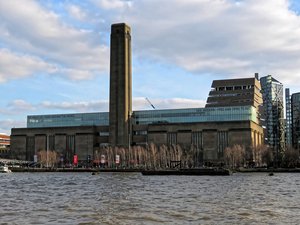 Tate Gallery
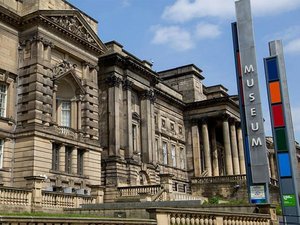 Muzeele Naționale Liverpool


