Portretul lui Alphonse Legros

Picturi Alphonse Legros: Cele 66 de cele mai faimoase, prin ochii unei galerii

Actualizat Noiembrie 2026 · clasat în funcție de scorul nostru de popularitate (căutări, vizite și comenzi pentru fiecare operă) · 73 lucrări ale lui Alphonse Legros în catalogul nostru

Pe scurt

În ochii galeriei, cea mai celebră pictură a lui Alphonse Legros este Women in Prayer (1888), a cărei originală este expusă la Tate Gallery, Londra. Portrait of Edouard Manet (1863) și L'Angelus (1859) completează trioul pe care orice ochi îl recunoaște. Dintre cele 73 opere ale lui Alphonse Legros din catalogul nostru, galeria prezintă mai jos cele 66 cele mai faimoase, fiecare fiind originală, cu anul creării, muzeul de păstrare și elementul care o face unică.

1837 – 1911, Dijon Contemporary realism Cele mai multe lucrări: National Gallery of Art

Cele mai apreciate 10 picturi ale lui Alphonse Legros din galerie

1
Women in Prayer (1888) de Alphonse Legros

Women in Prayer

1888 · Oil On Canvas · Tate Gallery, Londra

Alphonse Legros's “Women in Prayer” isn’t merely a depiction of a religious scene; it’s an invitation to contemplate the quiet power of devotion. Painted in 1888, this oil on canvas transports us to a dimly lit interior space – likely a church or chapel – where nine women are immersed in prayer. The work immediately establishes a mood of solemnity and introspection, achieved through Legros's masterful manipulation of light, tone,…

2
Portrait of Edouard Manet (1863) de Alphonse Legros

Portrait of Edouard Manet

1863 · Oil On Canvas · Petit Palais, Paris

In this 1863 portrait, we find ourselves in a quiet, intimate space with Edouard Manet. He sits in a wooden armchair, his body relaxed yet his posture suggesting a deep, internal contemplation. There is a certain gravity to his presence, a weight that comes from the way he rests his head against his hand, lost in thought. The composition is deliberate, placing him slightly off-center to create a sense of…

3
L'Angelus (1859) de Alphonse Legros

L'Angelus

1859 · Oil

In 1859, Alphonse Legros painted L'Angelus, a work that captures a quiet pause in the rhythm of labor. The scene focuses on a group of peasants caught in a moment of prayer. They exist within the heavy, still air of their daily lives, their bodies bowed in a shared act of devotion. This depiction of the working class avoids the grand or the theatrical, choosing instead to find weight in…

4
The Lectern (1865) de Alphonse Legros

The Lectern

1865 · Oil · Petit Palais, Paris

The Lectern is an oil painting by Alphonse Legros, created about 1865. The work depicts four male figures dressed in religious attire during a moment of liturgical solemnity. The scene captures a religious ceremony, likely a Mass or a formal reading, within a quiet and focused setting. The composition centers on the interaction between the clerics as they participate in the ritual.

5
The Baptism (1869) de Alphonse Legros

The Baptism

1869 · Oil On Canvas

The Baptism is an oil painting on canvas by Alphonse Legros. Created about 1869, the work depicts a scene within a dimly lit, gothic-style church. Three women are positioned around an infant, with the central figure holding the baby. To the left, a statue of a saint is visible against the architectural backdrop. The setting is defined by arches and columns that frame the figures.

6
Le Repas des Pauvres (1877) de Alphonse Legros

Le Repas des Pauvres

1877 · Oil

In the quiet, shadowed corners of a dimly lit interior, three men gather for a meal. This is Le Repas des Pauvres, a work by Alphonse Legros. The scene unfolds around a rectangular table, where the simple presence of bowls and single glasses speaks to a life of profound modesty. There is a heavy, somber weight to the air as the figures occupy their shallow space, their worn clothing and…

7
The Geography Lesson (1874) de Alphonse Legros

The Geography Lesson

1874 · Oil On Canvas · Wallraf-Richartz-Museum, Cologne

In The Geography Lesson, Alphonse Legros captures a quiet moment of instruction. The scene is set within a classroom where a female teacher gestures toward a large terrestrial globe. Around her, six young girls gather in a tight semi-circle. They lean inward, their gazes fixed upon the sphere. This shared focus creates a sense of stillness. The air in the room feels heavy with the weight of learning.

8
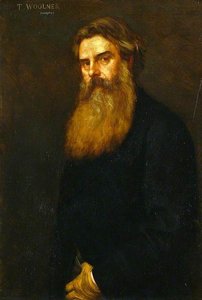
Portrait of a Woman (1880) de Alphonse Legros

Portrait of a Woman

1880 · Oil On Canvas · Petit Palais, Paris

The Portrait of a Woman by Alphonse Legros captures a single female figure in a moment of quietude. This profile portrait, rendered in oil, presents the subject looking toward the left edge of the frame. The artist, Alphonse Legros, focuses on the contours of the face and the texture of the hair, creating a sense of stillness. It is a study of a person caught in a private, contemplative gaze.

9
The Reverend Robert Burn (1880) de Alphonse Legros

The Reverend Robert Burn

1880 · Oil On Canvas · Muzeul Fitzwilliam din Cambridge, Cambridge

Alphonse Legros' "The Reverend Robert Burn," painted in 1880, is more than just a portrait; it’s a carefully constructed tableau of Victorian sensibilities and the quiet contemplation of a man steeped in faith. This oil-on-canvas work, currently residing within The Fitzwilliam Museum’s collection, offers a glimpse into a bygone era – an era defined by meticulous detail, restrained emotion, and a profound respect for tradition. Legros, a French-British artist who…

10
Cupid and Psyche (1867) de Alphonse Legros

Cupid and Psyche

1867 · Oil On Canvas · Tate Gallery, Londra

Cupid and Psyche, an 1867 oil on canvas, is a history painting by Alphonse Legros. The work draws its narrative from the classical traditions of Greek mythology and Ancient Roman literature. It captures a specific moment of intimacy between the two mythological figures, set within a serene outdoor environment.

Picturi cu Alphonse Legros, clasate de la 11 la 66

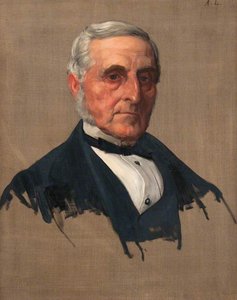
11Interior with an Organist and a Procession (1865) de Alphonse LegrosInterior with an Organist and a Procession1865 · Muzeul Ashmolean de Artă și Arheologie 12William Cosens Way (1833–1905) (1862) de Alphonse LegrosWilliam Cosens Way (1833–1905)1862 13Rehearsing the Service (1870) de Alphonse LegrosRehearsing the Service1870 · Tate Gallery 14The Pilgrimage (1871) de Alphonse LegrosThe Pilgrimage1871 15Sir Edward Burne Jones (1833–1898), ARA (1869) de Alphonse LegrosSir Edward Burne Jones (1833–1898), ARA1869 16The Communion (1865) de Alphonse LegrosThe Communion1865 17The Sermon (1871) de Alphonse LegrosThe Sermon1871 · Scottish National Gallery 18Centaur Woman (1911) de Alphonse LegrosCentaur Woman1911 19Death and the Woodcutter (1877) de Alphonse LegrosDeath and the Woodcutter1877 · National Gallery of Canada 20Portrait of a Woman (1875) de Alphonse LegrosPortrait of a Woman1875 · National Gallery of Art 21The Tinker (1874) de Alphonse LegrosThe Tinker1874 22Tired Wanderer (1878) de Alphonse LegrosTired Wanderer1878 23Blessing the Sea (1872) de Alphonse LegrosBlessing the Sea1872 24Portrait of Léon Gambetta (1875) de Alphonse LegrosPortrait of Léon Gambetta1875 25Head of a Man Looking Upwards and Sideways (1877) de Alphonse LegrosHead of a Man Looking Upwards and Sideways1877 26Thomas Carlyle (1795–1881), Historian and Essayist (1877) de Alphonse LegrosThomas Carlyle (1795–1881), Historian and Essayist1877 · Galeria Națională a Scottei 27Study of a Head (1878) de Alphonse LegrosStudy of a Head1878 · Walker Art Gallery 28Saint Jerome (1881) de Alphonse LegrosSaint Jerome1881 · Muzeul de Artă Manchester 29John Gray (1883) de Alphonse LegrosJohn Gray1883 30Alexander Walker, LLD (1880) de Alphonse LegrosAlexander Walker, LLD1880 31Head of an Old Man (1881) de Alphonse LegrosHead of an Old Man1881 · Muzeul de Artă Manchester 32J. Dove Wilson (1833–1908), LLD (1882) de Alphonse LegrosJ. Dove Wilson (1833–1908), LLD1882 33Sir Edward Coley Burne Jones (1833–1898) (1879) de Alphonse LegrosSir Edward Coley Burne Jones (1833–1898)1879 34Portrait of a Lady (1879) de Alphonse LegrosPortrait of a Lady1879 · Sunderland Museum - Winter Gardens 35Robert Browning (1812–1889) (1879) de Alphonse LegrosRobert Browning (1812–1889)1879 36Thomas Dixon (1831–1880) (1879) de Alphonse LegrosThomas Dixon (1831–1880)1879 · Sunderland Museum - Winter Gardens 37Professor John Marshall (1818–1891), FRS, Surgeon (1879) de Alphonse LegrosProfessor John Marshall (1818–1891), FRS, Surgeon1879 38Thomas Huxley (1825–1895), FRS (1880) de Alphonse LegrosThomas Huxley (1825–1895), FRS1880 39George Wallis (1811–1891), FSA, Keeper of the Art Collections in the South Kensington Museum (1863–1891) (1891) de Alphonse LegrosGeorge Wallis (1811–1891), FSA, Keeper of the Art Collections in the South Kensington Museum (1863–1891)1891 40An Approaching Storm (1897) de Alphonse LegrosAn Approaching Storm1897 41Head of a Man with Upturned Eyes de Alphonse LegrosHead of a Man with Upturned EyesNational Gallery of Art 42The Confession de Alphonse LegrosThe Confession 43Thomas Woolner de Alphonse LegrosThomas Woolner 44Le Calvaire de Alphonse LegrosLe CalvaireMusée d'Orsay 45Le Christ mort de Alphonse LegrosLe Christ mort 46Study of a Head de Alphonse LegrosStudy of a Head 47Léon Gambetta de Alphonse LegrosLéon GambettaMusée d'Orsay 48UNE AMENDE HONORABLE de Alphonse LegrosUNE AMENDE HONORABLEMusée d'Orsay 49Charles G. Milnes Gaskell, Chairman of the County Council of the West Riding of Yorkshire (1893–1910) de Alphonse LegrosCharles G. Milnes Gaskell, Chairman of the County Council of the West Riding of Yorkshire (1893–1910)Wakefield County Hall 50Landscape with a Stream and Hills (1882) de Alphonse LegrosLandscape with a Stream and Hills1882 · Victoria and Albert Museum 51Landscape with a Road over a Hill (1885) de Alphonse LegrosLandscape with a Road over a Hill1885 · Victoria and Albert Museum 52Interior of a Church with kneeling Figures (1865) de Alphonse LegrosInterior of a Church with kneeling Figures1865 · Ashmolean Museum 53Interior with an Organist and a Procession (1865) de Alphonse LegrosInterior with an Organist and a Procession1865 · Ashmolean Museum 54A May Service for Young Women (1868) de Alphonse LegrosA May Service for Young Women1868 · Victoria and Albert Museum 55Hilly Landscape (1876) de Alphonse LegrosHilly Landscape1876 · Victoria and Albert Museum 56Portrait of an Old Man de Alphonse LegrosPortrait of an Old ManNational Gallery of Art 57Memory Copy of Holbein's Erasmus de Alphonse LegrosMemory Copy of Holbein's ErasmusNational Gallery of Art 58Landscape de Alphonse LegrosLandscape 59John Bolton, Kendal Town Clerk de Alphonse LegrosJohn Bolton, Kendal Town Clerk 60Thomas Woolner de Alphonse LegrosThomas Woolner 61Portrait of a Gentleman de Alphonse LegrosPortrait of a Gentleman 62John Polson, Esq de Alphonse LegrosJohn Polson, EsqPaisley Art Institute Collection 63Portrait of a Gentleman de Alphonse LegrosPortrait of a Gentleman 64John Bolton, Kendal Town Clerk (1832–1874) de Alphonse LegrosJohn Bolton, Kendal Town Clerk (1832–1874)Kendal Town Hall 65Interior with an Organist and three Figures de Alphonse LegrosInterior with an Organist and three FiguresMuzeul Ashmolean de Artă și Arheologie 66The Tinker de Alphonse LegrosThe Tinker

Piesele celebre ale lui Alphonse Legros, perioadă cu perioadă

Subiectele care i-au captivat privirea lui Alphonse Legros

Cele patru teme care revin cel mai des în aceste opere originale, fiecare având cel mai sublim exemplu.

Muzeele care păstrează originalele lui Alphonse Legros

Cele 8 muzee care dețin cele mai multe dintre picturile de pe această pagină.

Muzee Oraș Lucrări lui Alphonse Legros Picturi din această listă
National Gallery of Art, WashingtonNational Gallery of Art Washington 4 Portrait of a Woman, Head of a Man with Upturned Eyes, Portrait of an Old Man
Victoria and Albert Museum, LondraVictoria and Albert Museum Londra 4 Landscape with a Stream and Hills, Landscape with a Road over a Hill, A May Service for Young Women
Tate Gallery, LondraTate Gallery Londra 3 Women in Prayer, Cupid and Psyche, Rehearsing the Service
Petit Palais, ParisPetit Palais Paris 3 Portrait of Edouard Manet, The Lectern, Portrait of a Woman
Musée d'Orsay, ParisMusée d'Orsay Paris 3 Le Calvaire, Léon Gambetta, UNE AMENDE HONORABLE
Muzeul Ashmolean de Artă și Arheologie, OxfordMuzeul Ashmolean de Artă și Arheologie Oxford 2 Interior with an Organist and a Procession, Interior with an Organist and three Figures
Muzeul de Artă Manchester, ManchesterMuzeul de Artă Manchester Manchester 2 Saint Jerome, Head of an Old Man
Sunderland Museum - Winter Gardens, SunderlandSunderland Museum - Winter Gardens Sunderland 2 Portrait of a Lady, Thomas Dixon (1831–1880)

Alphonse Legros, o pictură emblematică pe deceniu

Lucrări pe deceniu

Alege o deceniu pentru a descoperi opera originală care îl definește.

Picturile lui Alphonse Legros: răspunsurile galeriei

Care este cea mai celebră pictură a lui Alphonse Legros?Află răspunsul

Women in Prayer (1888), Tate Gallery, Londra. Urmează Portrait of Edouard Manet (1863) și L'Angelus (1859).

Ce vârstă avea Alphonse Legros când a finalizat Women in Prayer?Află răspunsul

51 ani: Women in Prayer datează din 1888, iar Alphonse Legros s-a născut în 1837.

Care sunt cele mai importante 10 picturi ale lui Alphonse Legros?Află răspunsul

Women in Prayer, Portrait of Edouard Manet, L'Angelus, The Lectern, The Baptism, Le Repas des Pauvres, The Geography Lesson, Portrait of a Woman, The Reverend Robert Burn și Cupid and Psyche. Clasamentul de mai sus indică anul și muzeul pentru fiecare piesă.

Câte lucrări a creat Alphonse Legros?Află răspunsul

Catalogul nostru cuprinde 73 lucrări ale lui Alphonse Legros, datate între 1859 și 1911.

Unde sunt expuse cele mai celebrele opere originale ale lui Alphonse Legros?Află răspunsul

În principal în National Gallery of Art (Washington), Victoria and Albert Museum (Londra) și Tate Gallery (Londra). Tabelul cu muzee de mai sus le enumeră pe toate.

Când a creat Alphonse Legros cele mai faimoase picturi?Află răspunsul

În 1870s: 20 dintre cele 66 lucrări de pe această pagină au fost realizate atunci, fiind Le Repas des Pauvres dintre acestea.

Care sunt cele mai vechi și cele mai recente opere celebre ale lui Alphonse Legros?Află răspunsul

Pe această pagină, cea mai veche lucrare datează din L'Angelus (1859), iar cea mai recentă este din Centaur Woman (1911).

La ce subiecte s-a întors cel mai des Alphonse Legros?Află răspunsul

Landscape (5), Portrait (4) și Church interior (4), din cele 66 lucrări de pe această pagină.

În ce tehnică a lucrat cel mai mult Alphonse Legros?Află răspunsul

Oil On Canvas, pentru 12 dintre cele 66 lucrări de pe această pagină.

Cu ce mișcare este asociat(ă) Alphonse Legros?Află răspunsul

Contemporary realism, judecând după originalele de pe această pagină.

Ce opere originale ale lui Alphonse Legros deține National Gallery of Art?Află răspunsul

Portrait of a Woman, Head of a Man with Upturned Eyes și Portrait of an Old Man: National Gallery of Art, Washington deține 4 dintre lucrările de pe această pagină.

Alphonse Legros: artistul

O viață care unește națiuni: Călătoria artistică a lui Alphonse Legros

Alphonse Legros, născut la Dijon, în Franța, în 1837, a fost un artist al cărui destin și operă au întruchipat o intersecție fascinantă între mișcări artistice și identități naționale. Calea sa nu a fost una a succesului imediat, ci mai degrabă o dezvăluire graduală a unui talent hrănit prin studiu dedicat și printr-o dorință de a îmbrățișa ideali estetici în continuă evoluție. Pornind de la origini umile, ca fiul unui contabil din Véronnes, tânărul Alphonse a găsit inspirație timpurie în peisajele rurale care îi înconjurau familia, scene care aveau să pătrundă ulterior în mare parte din creația sa artistică. Formarea sa inițială a început la școala de arte din Dijon, unde a fost ucenic la un decorator de case, o experiență fundamentală ce i-a oferit o înțelegere practică a materialelor și a formei. Aceasta a fost urmată de o perioadă ca pictor itinerant în Lyon, perfecționându-și abilitățile în timp ce contribui la proiecte decorative de amploare. Acești ani formativi nu au fost vorba doar despre măiestrie tehnică; ei au reprezentat absorbția lumii din jurul său – texturile vieții rurale, jocul luminii pe piatră, demnitatea muncii de zi cu zi — elemente care aveau să devină embleme ale stilului său matur.

De la Realism la Renașterea Gravurii: Dezvoltare Artistică și Influențe

Sosirea lui Legros la Paris în 1851 a marcat un punct de cotitură. El s-a imersat în mediul artistic vibrant, studiind cu Charles-Antoine Cambon, un scenograf, și frequentând prestigioasa școală de desen Lecoq de Boisbaudran, unde a întâlnit artiști precum Auguste Rodin și Jules Dalou. Această perioadă i-a adus primele incursuni în sistemul Salonului, obținând recunoaștere pentru portretele care au atras atenția unor figuri influente precum Champfleury, un susținător al mișcării Realiste conduse de Gustave Courbet. Primele lucrări ale lui Legros, precum L'Angelus (1859), au demonstrat un angajament profund de a surprinde scene din viața cotidiană cu onestitate și profunzime emoțională. Totuși, explorarea gravurii pe ac<\/t>id a fost cea care l-a際distins cu adevărat. În esență, el s-a autoformat în această tehnică, captivat de potențialul său de a surprinde nuanțe subtile de ton și textură. Această dedicare l-a condus în cele din urmă să devină o figură centrală în renașterea gravurii britanică. În 1863, încurajat de James McNeill Whistler, Legros s-a mutat în Anglia, o decizie care i-a modelat profund cariera. S-a impus rapid ca un profesor influent, mai întâi la South Kensington School of Art și ulterior ca Profesor Slade la University College London, cultivând generații întregi de artiști în arta gravurii.

Un maestru al multiplor medii: Pictură, Sculptură și Medalistă

Deși Legros este adesea celebrat pentru gravurile sale, a-l defini exclusiv prin acest medium ar fi o nedreptate adus talentului său multifacetat. Era la fel de priceput ca pictor și sculptor, creând, de asemenea, medalii remarcabile. Picturile sale încadrau frecvent scene de devotament religios — vederi interioare ale bisericilor cu figuri în genunchi, surprinzând intensitatea liniștită a credinței — și portrete care dezvăluiau o perspicacitate psihologică acută asupra subiectelor sale. Aceste lucrări sunt caracterizate printr-o paletă de culori restrânsă, detalii meticuloase și un sentiment de solemnitate. Nu era interesat de narațiuni grandioase sau de demonstrații flamboyante; în schimb, se concentra pe momentele intime ale experienței umane. Opera sa sculpturală, deși mai puțin prolifică decât picturile și gravurile sale, a demonstrat un angajament similar față de realism și profunzime emoțională. Mai mult, îndemânarea lui Legros s-a extins până la arta medalelor, producând piese admirate pentru măiestria și valoarea lor artistică. El aborda fiecare mediu cu o dedicare față de măiestria tehnică și cu dorința de a transmite o semnificație profundă.

Moștenire și Semnificație Istorică

Alphonse Legros a decedat în Watford în 1911, lăsând în urmă o moștenire bogată, atât ca artist, cât și ca educator. Influența sa asupra scenei artistice britanice a fost considerabilă, în special prin predarea sa la Slade School of Art, unde a transmis o abordare riguroasă a desenului și gravurii numeroasei generații de studenți. El a apărat valorile artistice tradiționale — importanța desenului, observația atentă și abilitatea tehnică — îmbrățișând în același timp idei și tehnici noi. Opera lui Legros rămâne o mărturie a puterii contemplării liniștite și a atractivității durabile a esteticii Realiste. Picturile și gravurile sale pot fi găsite în muzee de renume, precum Ashmolean Museum din Oxford și Tate Gallery din Londra, asigurându-se că viziunea sa artistică continuă să inspire și să captive publicul de astăzi. El reprezintă o punte între tradițiile artistice franceze și britanice, întruchipând un angajament atât față de excelența tehnică, cât și față de onestitatea emoțională — calități care continuă să rezoneze atât cu privitorii, cât și cu artiștii. Dedicarea sa de a încuraja talentul artistic i-a consolidat locul de figură esențial în dezvoltarea artei britanice moderne.