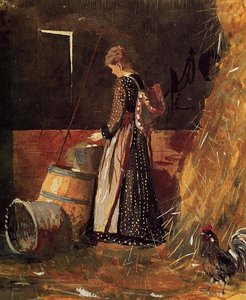
- Acasă

- Reproducere Tablou în Ulei
- Winslow Homer
- Below Zero

 Comandă tipăritul Cumpără imaginea
 Trimite
 Distribuie
 Detalii despre lucrare
 Adaugă la favorite

 Descarcă
 Similare
 Radiografie
 Diaporama
Below Zero
 Acrylic On Canvas
- WallArt
- Realist Painting
 Early Medieval
 60.0 x 71.0 cm
 Vezi mai mult
Reproducere manuală în ulei
Pictură în ulei pe pânză, pictată manual, la dimensiunea și ramele dorite de dumneavoastră, realizată la comandă de artiștii noștri.




P118B $10

P118H $10

P118W $10

P438Z $10

P508JH $12

P508YH $12

P805H $10

P805Z $10

P919BZ $10

P919G $10

P919XJ $10

P959ZH $10

P968JZ $12

W106C $8

W218G $10

W218JH $8

W218Y $10

W307PJ $10

W316G $10

W316PJ $8

W316Y $10

W398PJ $8

W4111J $10

W500HY $15

W500JH $15

W692G $12

W849H $8

W940BG $15

W953PJ $8




Alegeți dintre dimensiunile noastre prestabilite, care respectă proporțiile originale ale operei de artă.

Puteți introduce propriile dimensiuni pentru a se potrivi unui anumit cadru sau spațiu. Dacă dimensiunea selectată nu corespunde proporțiilor imaginii originale, vom decupa opera de artă sau vom extinde pictura cu elemente suplimentare pictate manual. O simulare digitală vă va fi trimisă pentru aprobare înainte de începerea producției.
Vă rugăm să rețineți că previzualizarea de pe ecran nu reflectă decuparea sau extinderea reală. Doar macheta va arăta cu exactitate compoziția finală.
Deși sunt disponibile dimensiuni personalizate, vă recomandăm să selectați o dimensiune din lista predefinită pentru a păstra proporțiile originale.
După plasarea comenzii, echipa OriginalUniqueArt.com va trimite clientului instrucțiuni prin e-mail și îi va furniza o previzualizare a machetei
Livrare în întreaga lume () în 3/4 săptămâni, în loc de cele 5 săptămâni standard. (18 Iulie). Fără compromisuri în ceea ce privește calitatea.

Livrare expres gratuită la nivel mondial

Pânză de in de înaltă calitate

Asigurare completă pentru transport

Garanție de rambursare a taxelor vamale

Garanția fidelității culorilor

Politica de retur de 60 de zile (doar pentru defecte)

Garanție 100% de rambursare

Reducere la comenzi multiple
 Opțiunea cu sticlă este disponibilă doar pentru dimensiuni de sub 110 cm

Below Zero
Tehnică de reproducere
Dimensiune reproducere
-


Preț total calculat
-
Descriere operă de artă
The Stark Beauty of Winslow Homer's Below Zero
Winslow Homer’s “Below Zero,” painted circa 1893, isn’t merely a depiction of a winter landscape; it’s a profound meditation on human endurance against the relentless indifference of nature. This iconic work, currently residing in the Yale University Art Gallery, immediately commands attention with its monochrome palette – a carefully orchestrated symphony of grays and whites that evokes the biting cold and desolate beauty of a northern winter. Homer masterfully utilizes tonal variations to sculpt form and texture, creating an illusion of depth and roughness within the snowdrifts and the figures’ heavy coats, suggesting both the physical burden of travel and the protective layers against the elements.
The composition is deceptively simple yet powerfully effective. Two bundled figures, their faces obscured by fur caps, struggle through a vast expanse of snow, their sleds trailing behind them like extensions of their weary bodies. The strategic placement of three sleds acts as leading lines, drawing the viewer’s eye into the heart of the scene and emphasizing the arduous journey ahead. The low horizon line amplifies the scale of the landscape, dwarfing the figures and underscoring their vulnerability within this immense, unforgiving environment. Homer eschews sentimentality; there's no dramatic rescue or heroic gesture here, only a quiet determination etched onto the faces of those who persevere.
A Realist’s Observation: Technique and Materials
Homer’s approach to “Below Zero” is firmly rooted in realism, a departure from the romanticized landscapes often favored by his contemporaries. He achieved this through painstaking observation and a deliberate restraint in his brushwork. The painting likely originated with charcoal or graphite on paper, meticulously rendered before being translated into grayscale tones – a technique that allowed Homer to control light and shadow with exceptional precision. The subtle gradations of tone create an astonishing sense of texture; the snow appears not as a uniform surface but as a complex interplay of ridges, drifts, and shadowed recesses. The artist’s skillful manipulation of value—the delicate shifts between dark and light—is what truly breathes life into this otherwise stark scene.
Historical Context: The American Experience
To understand “Below Zero,” it's crucial to consider the historical context in which Homer painted. The late 19th century was a period of rapid industrialization and urbanization in America, yet many rural communities still clung fiercely to traditional ways of life. Homer’s work often explored these themes – the dignity of labor, the challenges faced by ordinary people, and the enduring connection between humanity and the natural world. “Below Zero” can be seen as a reflection on this broader American experience, capturing the spirit of resilience in the face of hardship. Interestingly, Homer himself spent time living in Belmont, Massachusetts, at the Homer House, which served as inspiration for many of his works depicting rural life.
Symbolism and Emotional Resonance
Beyond its literal depiction of a winter journey, “Below Zero” resonates with deeper symbolic meanings. The figures’ struggle against the elements represents humanity's ongoing battle against adversity – a theme that transcends specific historical contexts. The cold itself can be interpreted as a metaphor for isolation, hardship, and the challenges of survival. Yet, despite the bleakness of the scene, there is also a sense of quiet dignity and perseverance in the figures’ actions. “Below Zero” isn't about celebrating triumph; it’s about acknowledging the inherent difficulty of life while simultaneously affirming the human spirit’s capacity to endure. The painting leaves the viewer with a profound sense of respect for those who face hardship with unwavering determination, reminding us of our own resilience in the face of life’s inevitable challenges.
Biografie artist
A Brush with the American Spirit: The Life and Art of Winslow Homer
Winslow Homer, born in Boston in 1836, wasn’t sculpted by the traditional European art academies that shaped so many of his contemporaries. Instead, he emerged from a distinctly American experience, one rooted in practicality and observation. His journey began not with grand historical canvases, but as a commercial illustrator at the tender age of twelve for Harper's Weekly. This early apprenticeship was formative, honing an exceptional ability to capture scenes with clarity and detail – skills that would become hallmarks of his mature work. He wasn’t learning perspective in Paris; he was learning to *see* America, its people, and its unfolding story. The bustling streets of Boston, the quiet dignity of rural New England life, these were his first subjects, rendered with a precision born of necessity for the demands of print media. This foundation allowed him to transition into painting, initially in watercolor, before fully embracing the expressive potential of oil paints.From Pastoral Scenes to the Raw Power of Nature
Homer’s early paintings often depicted idyllic scenes – children playing, farmers tending their fields, quiet moments of domesticity. These works, while charming, hinted at a deeper artistic sensibility waiting to be unleashed. The catalyst for this transformation was undoubtedly the Civil War. As a war correspondent for Harper's Weekly, Homer witnessed firsthand the brutal realities of conflict. He didn’t focus on heroic battles or grand strategies; instead, he documented the everyday lives of soldiers and civilians, the quiet moments of grief and resilience amidst chaos. This experience profoundly altered his artistic vision. The pastoral scenes gave way to more challenging subjects: veterans grappling with trauma, freed slaves navigating a new world, and the stark beauty of landscapes touched by hardship. He began to explore themes of struggle, isolation, and humanity’s precar He wasn't interested in imitating European styles; he wanted to create an art that was uniquely American, reflecting its landscapes, its people, and its challenges. His style also evolved, becoming bolder and more direct, reflecting the raw emotional impact of what he had witnessed. Breezing Up (A Fair Wind), painted in 1876, exemplifies this skill – a quintessential depiction of American maritime life, brimming with energy and movement. The Gulf Stream, created decades later, is perhaps his most iconic work, a powerful and symbolic portrayal of a lone man battling the forces of nature, a metaphor for human struggle against overwhelming odds. He possessed an extraordinary ability to capture light, whether it was the dazzling glare of the sun on the ocean or the soft glow of twilight over a rural landscape. This mastery extended to his watercolors, where he achieved remarkable atmospheric effects through vibrant colors and delicate washes. Innocence, a poignant portrayal of childhood set against the backdrop of nature, and **Man of Science** demonstrate this commitment.Mastering Light, Texture, and the American Landscape
Winslow Homer's artistic technique is immediately recognizable for its solidity and texture. He wasn’t interested in fleeting impressions; he wanted to build up a sense of tangible reality on the canvas. His oil paintings are characterized by a direct painting approach – layers of paint applied with confidence, creating depth and luminosity. He possessed an extraordinary ability to capture light, whether it was the dazzling glare of the sun on the ocean or the soft glow of twilight over a rural landscape. This mastery extended to his watercolors, where he achieved remarkable atmospheric effects through vibrant colors and delicate washes. His unwavering dedication to observation—a cornerstone of American Realism—allowed him to translate the visual world onto canvas with unparalleled accuracy and emotional resonance.A Legacy Forged in American Realism
Winslow Homer's art offers a profound window into 19th-century America, providing invaluable insights into the social, political, and cultural landscape of his time. His paintings are not merely beautiful representations; they are powerful statements about human resilience, the beauty and power of nature, and the complexities of the American experience. He died in 1910, leaving behind a prolific body of work that continues to resonate with audiences today. His ability to depict America with honesty and authenticity—rejecting romantic idealism for gritty realism—established him as one of America’s most important and enduring artists. He wasn't just painting pictures; he was documenting a moment in time, preserving it for generations to come.- His work continues to inspire contemporary artists.
- Homer remains a pivotal figure in the development of American Realism.
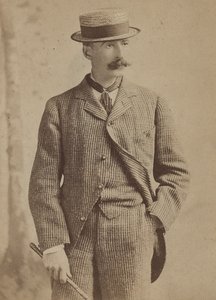
Winslow Homer
1836 - 1910 , Statele Unite ale Americii
Detalii rapide
- Artistic Movement Or Style: Realism american
- Artists Or Movements Influenced By This Artist: ['Pictori americani']
- Artists Who Influenced This Artist:
- Barbizon
- Courbet
- Millet
- Date Of Birth: 3 octombrie 1836
- Date Of Death: 1910
- Full Name: Winslow Homer
- Nationality: American
- Notable Artworks:
- Breezing Up
- Gulf Stream
- Inocență
- Place Of Birth: Boston, SUA
Articole conexe

Eleganța Subtilă a Non-Culorilor: Explorarea Abstracțiilor în Alb, Negru și Gri pentru Interioare Moderne
Descoperă arta subtilă a designului interior modern cu alb, negru și gri! Ghid complet cu inspirație, istorie artistică & sfaturi de la experți pentru interioare elegante și rafinate. OriginalUniqueArt.
Top 10 Tablouri Celebre Îmbrățișate de Albul Zăpezii | Artă, Decor & Inspirație
Descoperă top 10 tablouri celebre dominate de albul zăpezii! Explorează poveștile din spatele capodoperelor lui Monet, Van Gogh și alți artiști renumiți. Găsește inspirație pentru decorul casei tale cu artă impresionistă și reproduceri de calitate pe OriginalUniqueArt.com.
Winslow Homer: Cele Mai Iconice 25 De Opere – Artă, Istorie și Decorațiuni Excepționale
Descoperă cele mai frumoase 25 de picturi Winslow Homer! Explorează operele iconice ale artistului american, acuarele vibrante și peisaje marine impresionante. Găsește inspirație pentru decorul casei tale cu reproduceri artă de calitate muzeală pe OriginalUniqueArt.com.
Top 10 Capodopere Picturale Dominante de Nuanțe de Negru Intens – Artă și Decor
Descoperă Top 10 picturi celebre dominate de nuanțe intense de negru! Explorează poveștile lui Rembrandt, Goya și alți maeștri ai artei. Reproduceri de calitate muzeală & idei decor pe OriginalUniqueArt.com
Top 10 Capodopere Picturale Dominante de Tonuri 'Mars Black' | Artă & Decor
Descoperă top 10 picturi celebre dominate de tonuri 'Mars Black', de la Rembrandt la Picasso. Explorează istoria, tehnicile și emoțiile din spatele acestor capodopere artistice. Reproduceri tablouri de calitate muzeală pe OriginalUniqueArt.com!